
Published 2 Aug 2026· Updated 29 Aug 2026
What Is an RSC Box? Regular Slotted Cartons Explained
A plain-language explanation of what an RSC box is, why it's the default shipping carton style, where it falls short, and what to specify when ordering.
Key Takeaways
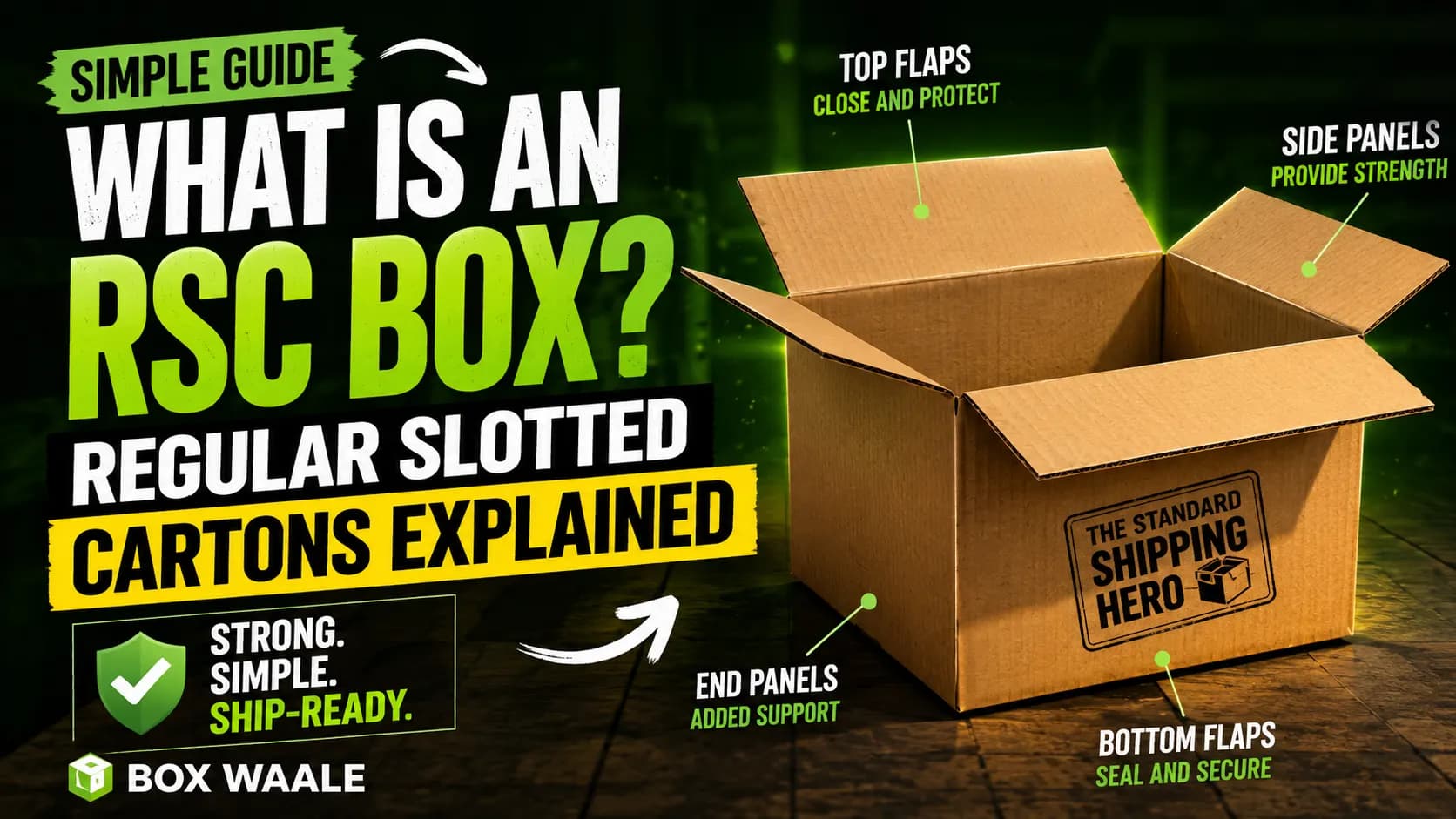
- RSC stands for Regular Slotted Container, sometimes called a Regular Slotted Carton, and is built from a single corrugated blank with four flaps folding inward on both the top and bottom.
- RSC boxes are cut using standard slotting tooling rather than a custom die, which keeps setup cost and lead time lower than a custom die-cut format.
- Because its flaps meet at the centre without a locking mechanism, an RSC box needs tape, glue or stitching along the seam to stay closed securely.
- An RSC offers less design flexibility than a die-cut box, with no built-in locking tabs, windows or non-rectangular shapes possible without switching formats.
- A style reference such as code 0201 used by some suppliers is simply a naming convention for the RSC shape, not a certification or guaranteed performance rating.
- Delicate or irregularly shaped products generally need an added insert, partition or cushioning inside an RSC, since the plain box alone is usually not enough protection.
What Is an RSC Box? Regular Slotted Cartons Explained
Table of Contents
If you've ever ordered a plain rectangular shipping carton with four flaps meeting in the middle on both the top and bottom, you've already used an RSC, even if nobody called it that. This article explains what defines the style, why it's become the default for so many businesses, where it doesn't work as well, and what to specify when you order one.
What Makes a Box an RSC
RSC stands for Regular Slotted Container, sometimes written as Regular Slotted Carton. It's constructed from a single corrugated blank that's scored, slotted and folded into a rectangular tube, with a manufacturer's joint closing one side. On both the top and bottom, all four flaps fold inward: the two longer flaps meet, or nearly meet, at the centre, while the two shorter flaps fold in on either side beneath or above them. This is the style most people picture when they think of a generic cardboard shipping box, and within the industry it's often referred to by a standard style reference, sometimes noted as code 0201 in supplier catalogues, though this is simply a naming convention for the style rather than a certification or guaranteed performance rating. Because the entire box comes from one blank with no separate lid, base or additional panel to attach, there are also fewer manufacturing steps involved than in most other corrugated formats, which is part of why RSC has remained the reference point that other box styles are often compared against.
Why RSC Is the Default Choice for Most Businesses
RSC has stayed the most common corrugated box style for practical reasons. It doesn't require a custom cutting die, since it's cut using standard slotting tooling that most converting lines already have set up, which keeps setup time and cost down compared to a custom die-cut shape. That makes it economical even for moderate order volumes, and it's compatible with standard case-sealing equipment and tape, which most warehouses and fulfilment operations are already set up to handle.
Because the format is so standardised, RSC boxes are also widely available in commonly stocked dimensions, which can shorten lead time for businesses that don't need a fully custom size. For pure shipping and storage use cases, where the priority is protecting and moving a product rather than a retail shelf presentation, RSC generally covers the requirement well. It's also a familiar format for warehouse and logistics staff, which matters more than it might seem: teams handling, palletising and sealing boxes every day work faster and more consistently with a shape and closure method they already know, compared to a less common format that needs extra handling instructions.
Where RSC Falls Short
The same simplicity that makes RSC economical also limits what it can do. Because the outer flaps meet at the centre without a locking mechanism, the box depends on tape or another external seal along that seam to stay closed, which means the finish is more functional than polished — not ideal for a box meant to be opened and displayed as part of a retail unboxing experience. The centre seam itself is also a point that needs full sealing coverage, since any gap in the tape there is a weak point.
RSC also offers less design flexibility than a die-cut box; there's no scope for built-in locking tabs, windows, or a non-rectangular shape without moving to a custom die-cut format instead. And for delicate or irregularly shaped products that need internal support, a plain RSC alone usually isn't enough — it typically needs to be paired with an insert, partition or additional cushioning to protect the contents properly. It's also worth noting that because the top and bottom flaps only meet rather than overlap fully, an RSC by itself offers less built-in resistance to top-load crushing than some double-flap or fully overlapping designs, which is a factor worth discussing with a supplier if a shipment will be stacked high or held under load for an extended period.
What to Specify When Ordering an RSC Box
Because RSC is a flexible format within a fixed structural style, getting the right box still depends on specifying several details clearly. Internal dimensions should be based on the product's actual size with enough clearance to fit comfortably, while external dimensions matter separately if the box needs to fit a pallet pattern or courier size slab. Ply and general board grade should be chosen based on product weight and expected stacking, with single, three or five ply options generally available depending on how much load the box needs to carry. It's also worth confirming single wall versus double wall construction, whether print is needed, and which joint type (glued or stitched) is preferred for the manufacturer's joint. You can browse general construction options on the corrugated boxes page to see how these specifications typically come together before finalising an order.
How Boxwaale Helps
Boxwaale manufactures RSC boxes in single, three and five ply constructions to match different product weights, in both stock and custom sizes. For businesses placing repeat bulk orders, Boxwaale keeps the approved specification on record so reorders of the same RSC size and ply can be placed without re-specifying every detail from scratch.
Frequently Asked Questions
Related Packaging Guide
Planning a packaging order?
Turn this guidance into a box specification
Share the product dimensions, packed weight, quantity, printing requirement and delivery postcode. Boxwaale will help narrow down the appropriate size, ply and board specification before quoting.
Frequently Asked Questions
Related Products
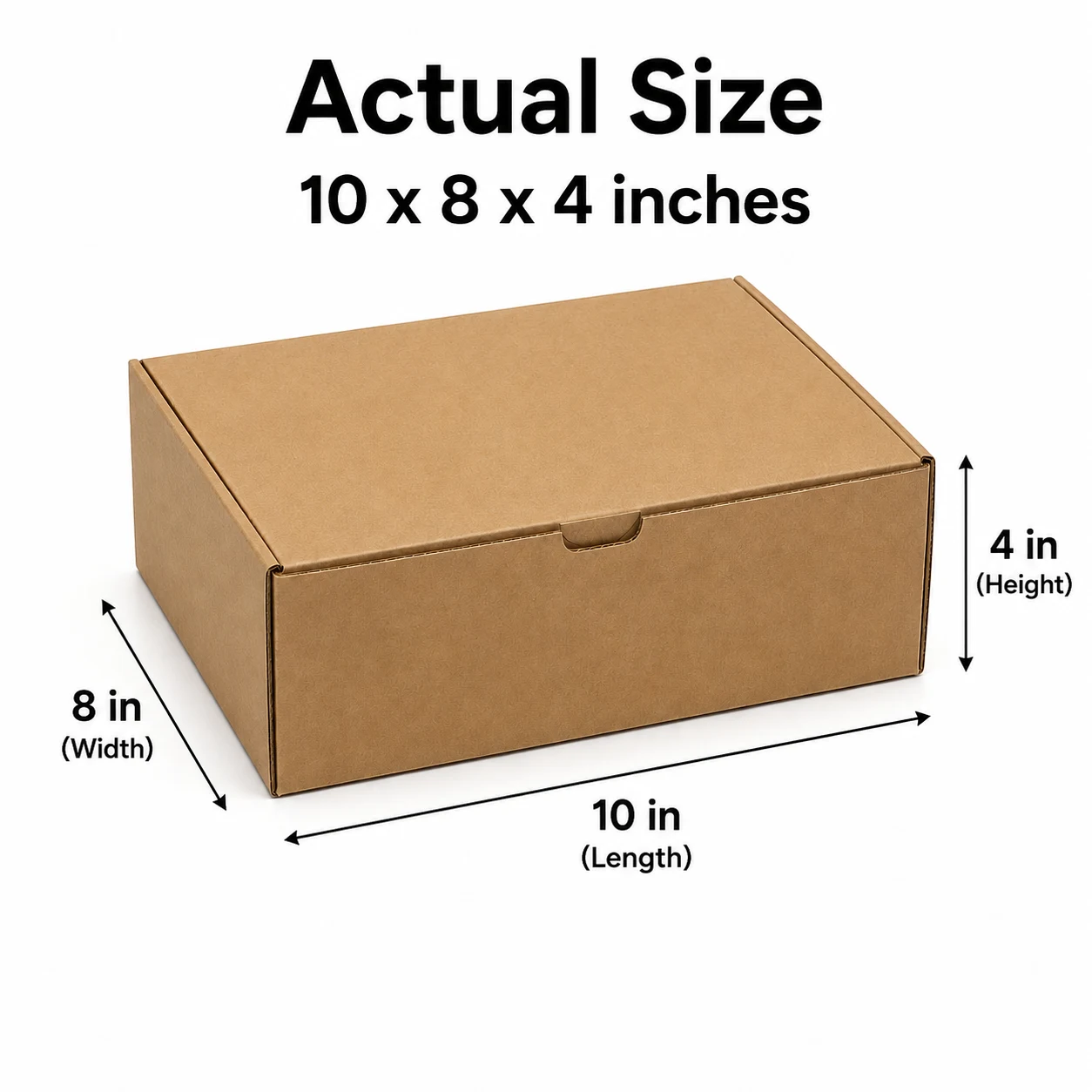
10x8x4 Inch Brown Corrugated Courier Box for E-commerce Shipping
Durable 10x8x4 inch brown corrugated courier box designed for e-commerce shipping, product delivery, storage, and secure packaging.
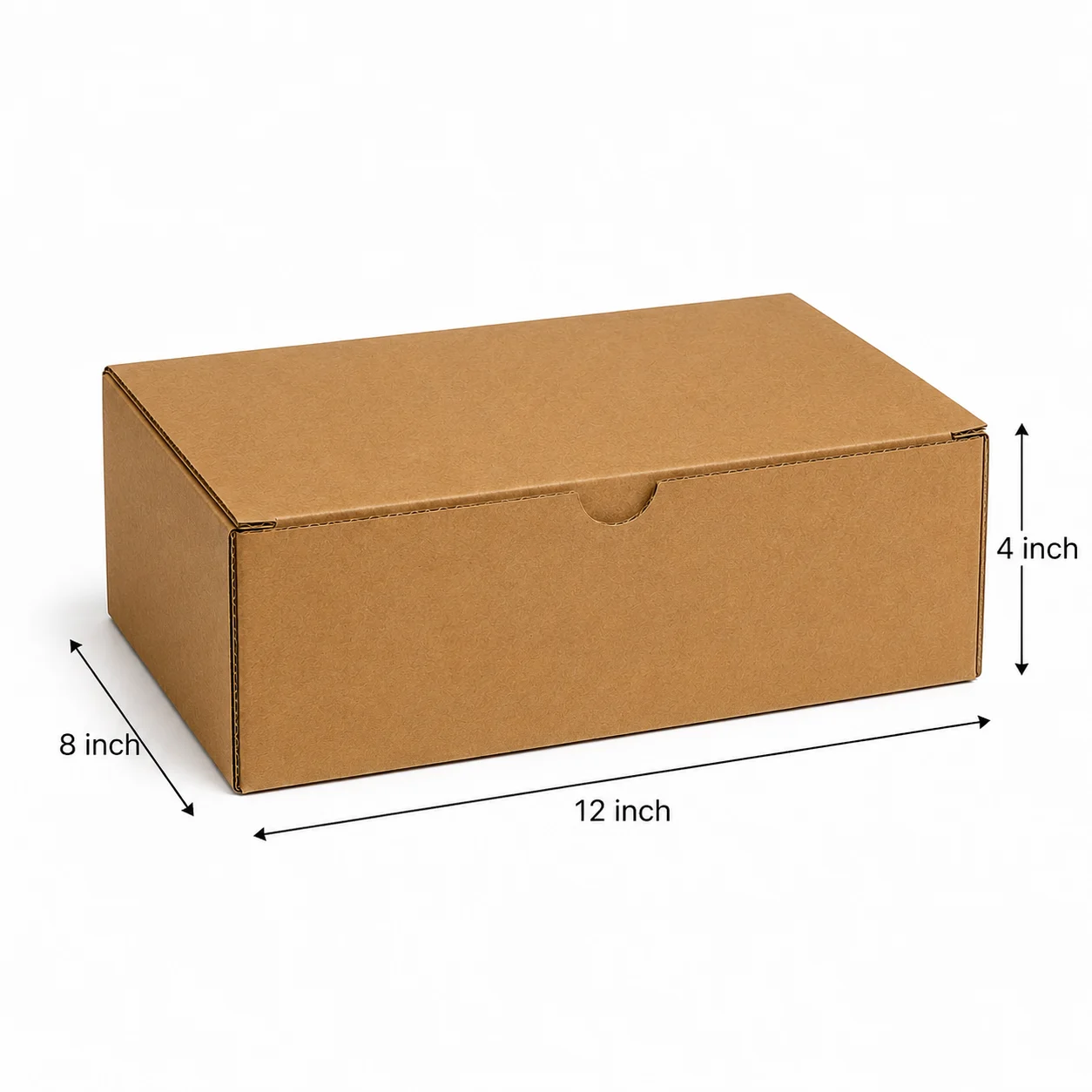
12x8x4 Inch Brown Corrugated 6 Bottle Nail Paint Packaging Box
Durable 12x8x4 inch brown corrugated nail paint box with six internal compartments, designed for cosmetic packaging, storage, gifting, and safe delivery.
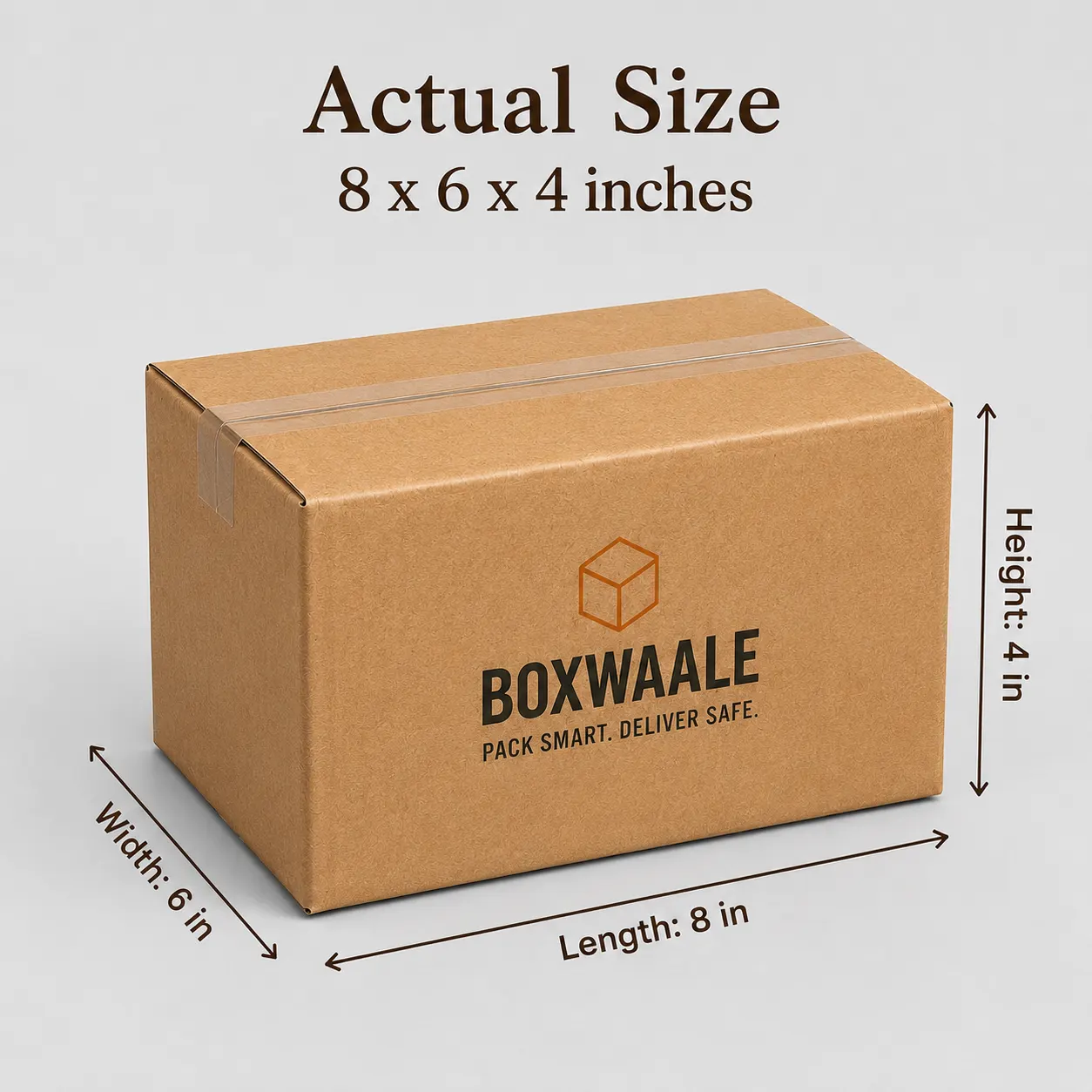
Custom Printed Brown Corrugated Courier Box with Logo
Custom printed brown corrugated courier box with logo designed for online sellers, D2C brands, retail businesses, and branded product delivery.
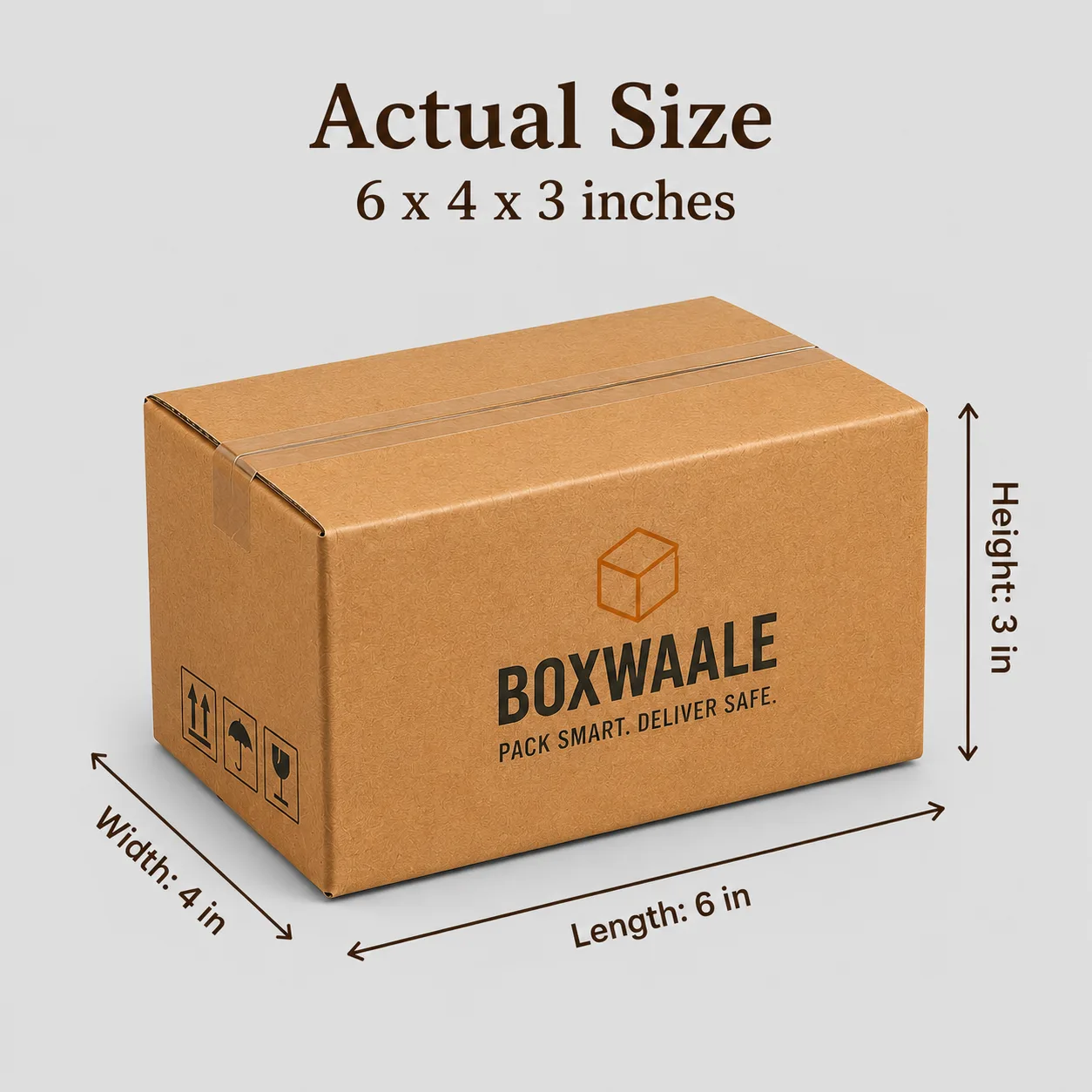
6x4x3 Inch Small Brown Corrugated Courier Box for Jewellery, Cosmetics & Accessories
Compact 6x4x3 inch brown corrugated small courier box designed for jewellery, cosmetics, mobile accessories, samples, and small product shipping.
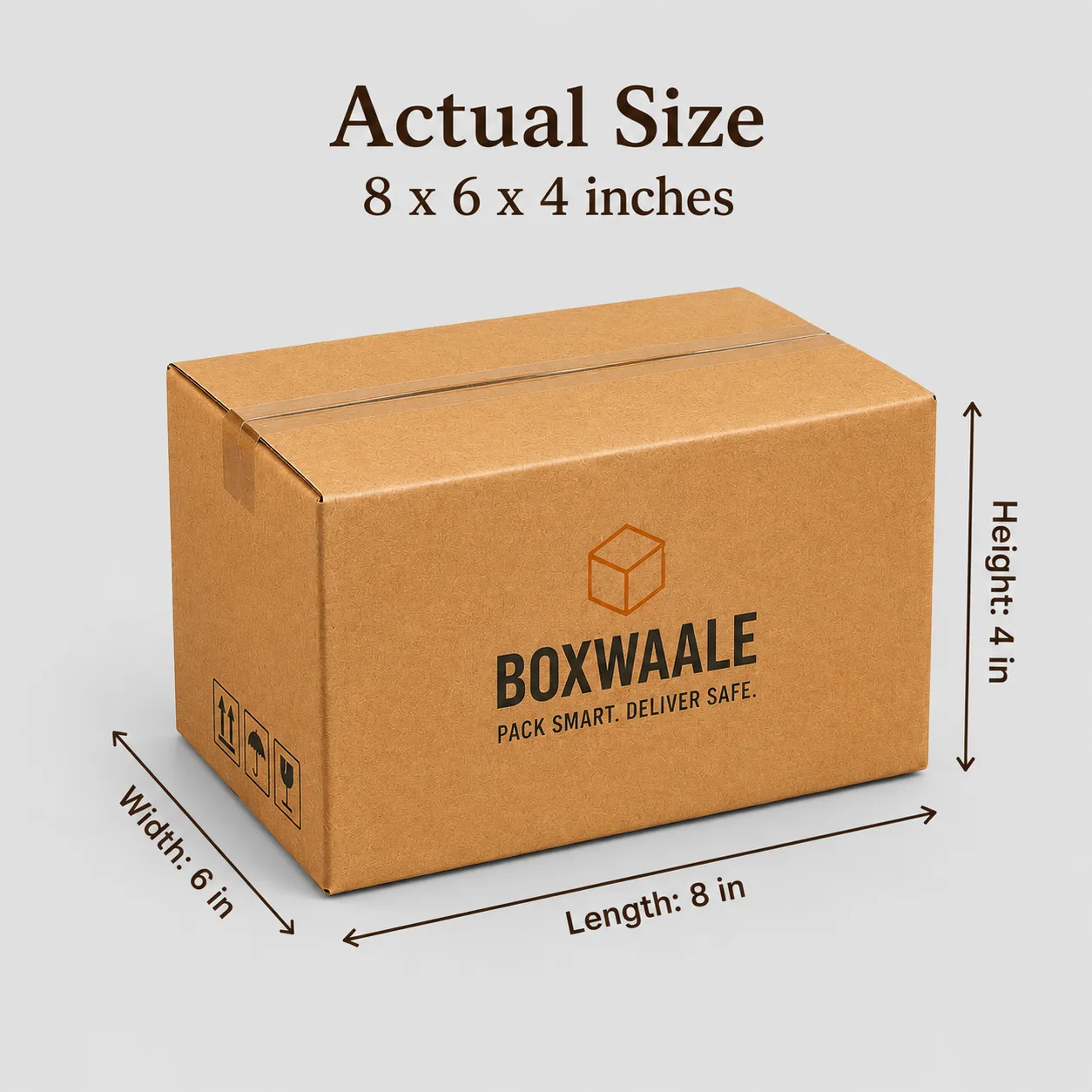
8x6x4 Inch Brown Corrugated Courier Box for E-commerce Shipping
Durable 8x6x4 inch brown corrugated courier box designed for e-commerce shipping, D2C delivery, retail product packing, and safe courier dispatch.
Related Buying Guides
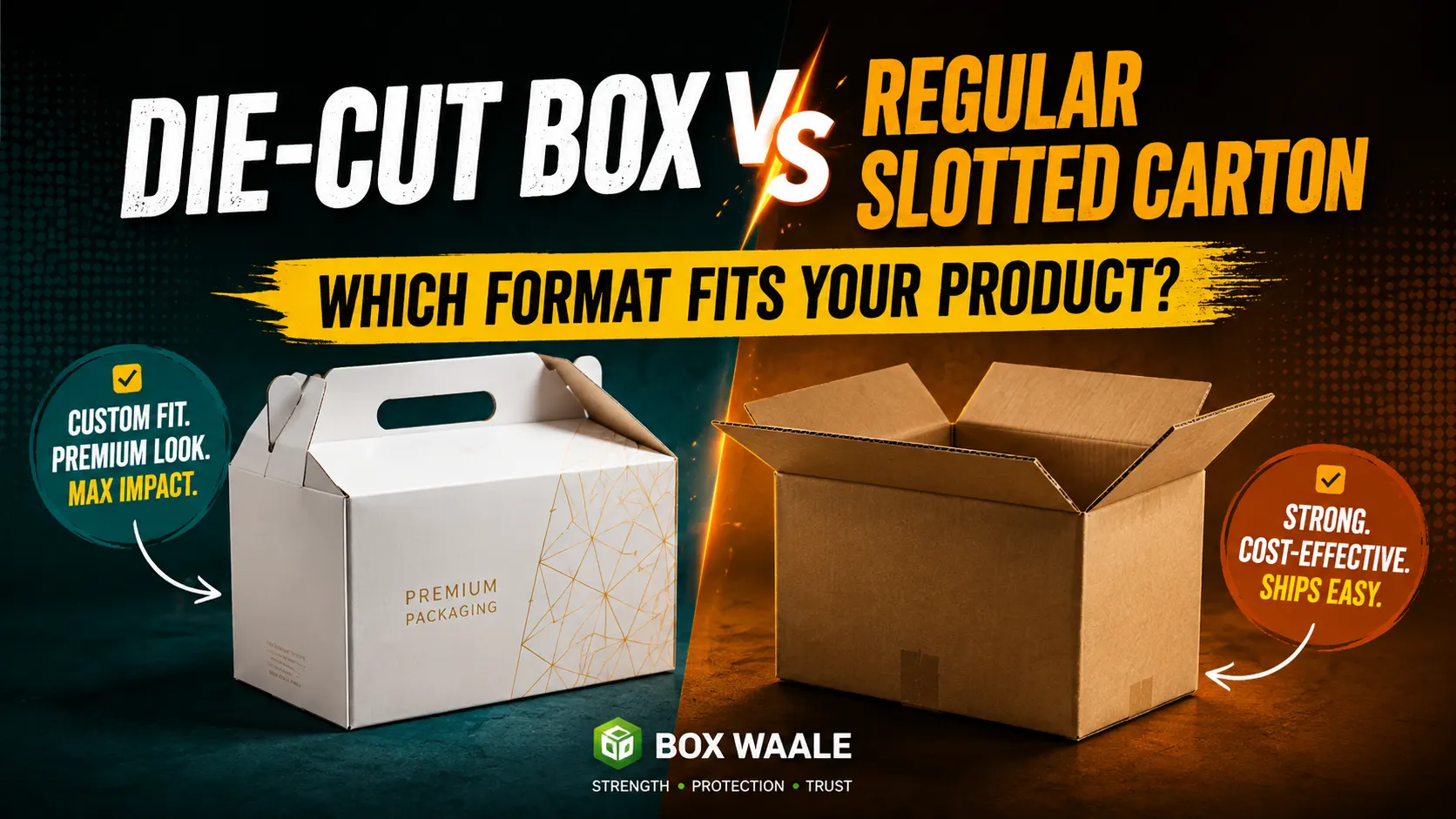
Die-Cut Box vs Regular Slotted Carton: Which Format Fits Your Product?
Read guide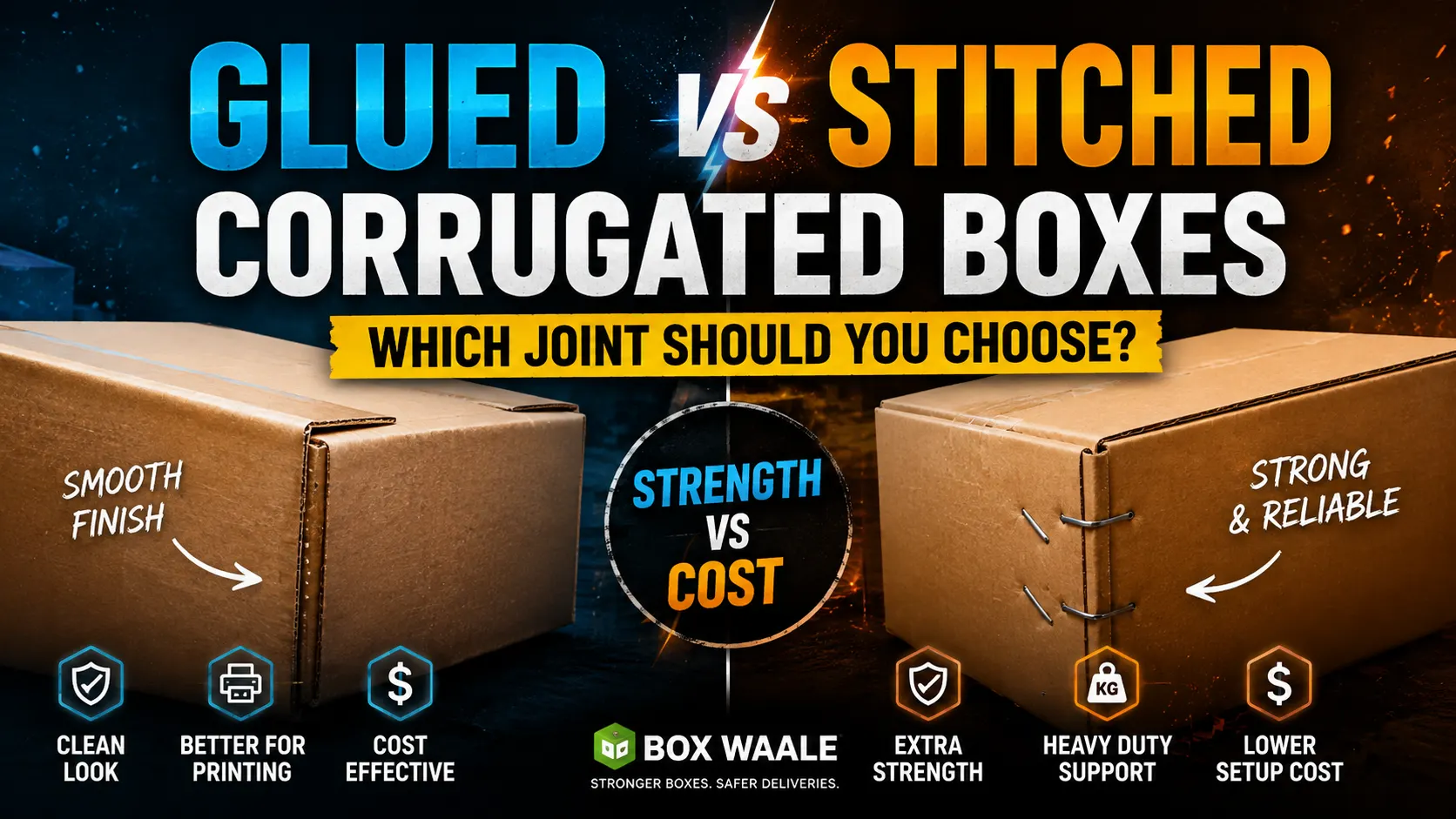
Glued vs Stitched Corrugated Boxes: Which Joint Should You Choose?
Read guide
Mono Carton vs Corrugated Box: Construction, Uses and Cost Compared
Read guide
Corrugated Rolls, Sheets and Boxes: Which Protective Format Do You Need?
Read guide