
Published 2 Aug 2026· Updated 29 Aug 2026
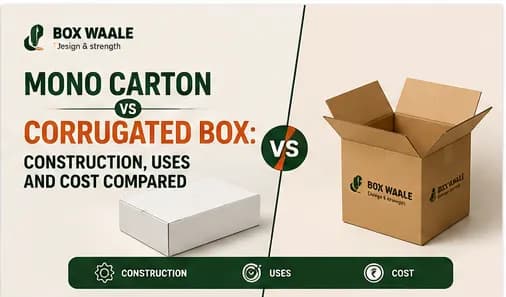
Mono Carton vs Corrugated Box: Construction, Uses and Cost Compared
A clear comparison of mono cartons and corrugated boxes covering construction, strength, print quality, cost and which one fits primary presentation versus protective shipping needs.
Key Takeaways
- A mono carton, also called a folding carton or duplex box, is made from a single layer of solid paperboard, while a corrugated box has a fluted medium sandwiched between an outer and inner liner.
- The fluted layer in a corrugated box provides cushioning and stacking strength that a flat, single-ply mono carton cannot structurally match to the same degree.
- A mono carton alone as an outer shipping container generally offers far less cushioning and compression resistance than a comparably sized corrugated box, making it a poor substitute for anything travelling any real distance or being stacked in transit.
- Mono cartons generally have better print quality than corrugated boxes because their smooth, even surface suits high-resolution offset printing, while corrugated board's outer liner can show subtle flute-line texture.
- Many products use both formats together: a mono carton for shelf appeal around the product, packed inside an outer corrugated box that handles the actual shipping stress.
- Mono cartons are often cheaper per unit for smaller sizes, but if the product also needs protective outer packaging, the combined cost of a mono carton plus corrugated box should be compared against a single well-designed corrugated solution.
Mono Carton vs Corrugated Box: Construction, Uses and Cost Compared
Table of Contents
Buyers new to packaging procurement sometimes assume "carton" and "corrugated box" are interchangeable terms for the same thing. They're not, and mixing them up in a brief can lead to ordering the wrong product entirely. Here's what actually separates a mono carton from a corrugated box, and how to decide which one — or both — your product needs.
Construction Differences: Single-Ply vs Fluted
A mono carton, sometimes called a folding carton or duplex box, is made from a single solid sheet of paperboard — smooth on the outside and often on the inside too, without any internal fluted layer. It folds flat for shipping and assembles into shape (usually by hand or on an automated line) at the point of packing.
A corrugated box is built from at least three layers: an outer liner, an inner liner, and a fluted (wavy) medium sandwiched between them. That fluted layer is what gives corrugated board its characteristic cushioning and stacking strength — air pockets in the flute structure absorb shock and resist crushing under stacked weight, something a flat, single-ply mono carton structurally can't do to the same degree.
| Aspect | Mono Carton | Corrugated Box |
|---|---|---|
| Construction | Single-ply solid paperboard | Fluted medium between liners |
| Primary role | Product presentation, branding | Protective transit packaging |
| Cushioning/stacking strength | Low | Moderate to high, depending on grade |
| Print surface quality | Smooth, high-detail print | Slight texture, print process-dependent |
| Typical use | Retail shelf packaging | Shipping cartons, outer transit boxes |
The material weight itself also differs meaningfully — mono cartons are typically specified in the 250-450 GSM solid board range for their single layer, while corrugated board's effective strength comes from the combined liners and flute structure rather than a single sheet weight, which is why comparing the two purely by paper weight doesn't give an accurate picture of relative strength.
Strength and Protection: Presentation vs Transit
This is the core practical distinction: a mono carton is primary packaging designed to present a product attractively and protect it from minor handling within a controlled retail environment. A corrugated box is protective packaging designed to survive the far rougher conditions of warehouse handling, stacking and transit. Using one in place of the other is where problems show up — a mono carton alone as an outer shipping container will generally offer far less cushioning and compression resistance than a comparably sized corrugated box, making it a poor substitute for anything travelling any real distance or being stacked in transit.
In practice, many products use both: a mono carton around the product itself for shelf appeal, packed inside an outer corrugated box that handles the actual shipping stress. The mono carton doesn't need to do the structural work when it has a corrugated outer layer doing that job for it.
There's also a practical middle ground worth knowing about: heavier-grade duplex or coated board mono cartons can offer somewhat more rigidity than lighter folding cartons, narrowing the protection gap slightly for lightweight products, though they still don't approach corrugated board's cushioning once a product has any real weight or fragility to it.
Print Quality and Branding Considerations
Mono cartons generally win on print quality. Their smooth, even surface is well suited to high-resolution offset printing, producing sharp detail, fine text and consistent colour — important for retail shelf packaging where the box itself is part of the customer's buying decision. Corrugated board's outer liner, by contrast, can show a subtle flute-line texture depending on the printing process used, which limits how fine a print detail reliably reproduces, though it's entirely adequate for logos, brand colours and clear labelling on shipping cartons.
If your box is the product's primary shelf presence — think consumer electronics, cosmetics, or retail-packaged goods — the print quality difference is a real factor. If the box is purely a shipping container that customers see briefly before unboxing, corrugated print quality is usually more than sufficient.
Assembly speed is another practical factor worth considering alongside print quality. Mono cartons often use tuck-in or lock-bottom closures suited to fast manual or semi-automated assembly on a packing line, while corrugated boxes typically involve taping as a separate step — a small detail, but one that affects your packing line throughput at volume.
Cost and Choosing the Right One for Your Product
Per unit, mono cartons are often cheaper for smaller sizes since they use less material and are commonly produced at high volumes for retail packaging runs. But that comparison is incomplete if your product also needs protective outer packaging — at that point, you're really comparing the combined cost of a mono carton plus an outer corrugated box against a single, well-designed corrugated solution that handles both jobs adequately.
The right choice comes down to your distribution model. If your product sits on a retail shelf and needs strong shelf presence, a mono carton (often paired with corrugated for shipping) makes sense. If your product ships directly to customers and shelf presentation isn't a factor — as with many e-commerce and B2B shipments — a single, well-specified corrugated box can often do the whole job without the added cost of a separate primary carton.
One more consideration worth flagging: if you're currently using a mono carton alone as your outer shipping unit and seeing damage in transit, that's often a sign you need a corrugated outer layer added to your packaging design rather than a heavier mono carton, since the underlying issue is usually cushioning capacity, not board thickness.
How Boxwaale Helps
Boxwaale focuses on corrugated packaging and helps buyers figure out whether they actually need a separate mono carton at all, or whether a well-designed corrugated box can serve both presentation and protection needs for their specific product and channel. Where a mono carton genuinely makes sense for retail shelf presence, we can advise on how to pair it with the right corrugated outer for transit.
Frequently Asked Questions
Related Packaging Guide
Planning a packaging order?
Turn this guidance into a box specification
Share the product dimensions, packed weight, quantity, printing requirement and delivery postcode. Boxwaale will help narrow down the appropriate size, ply and board specification before quoting.
Frequently Asked Questions
Related Products
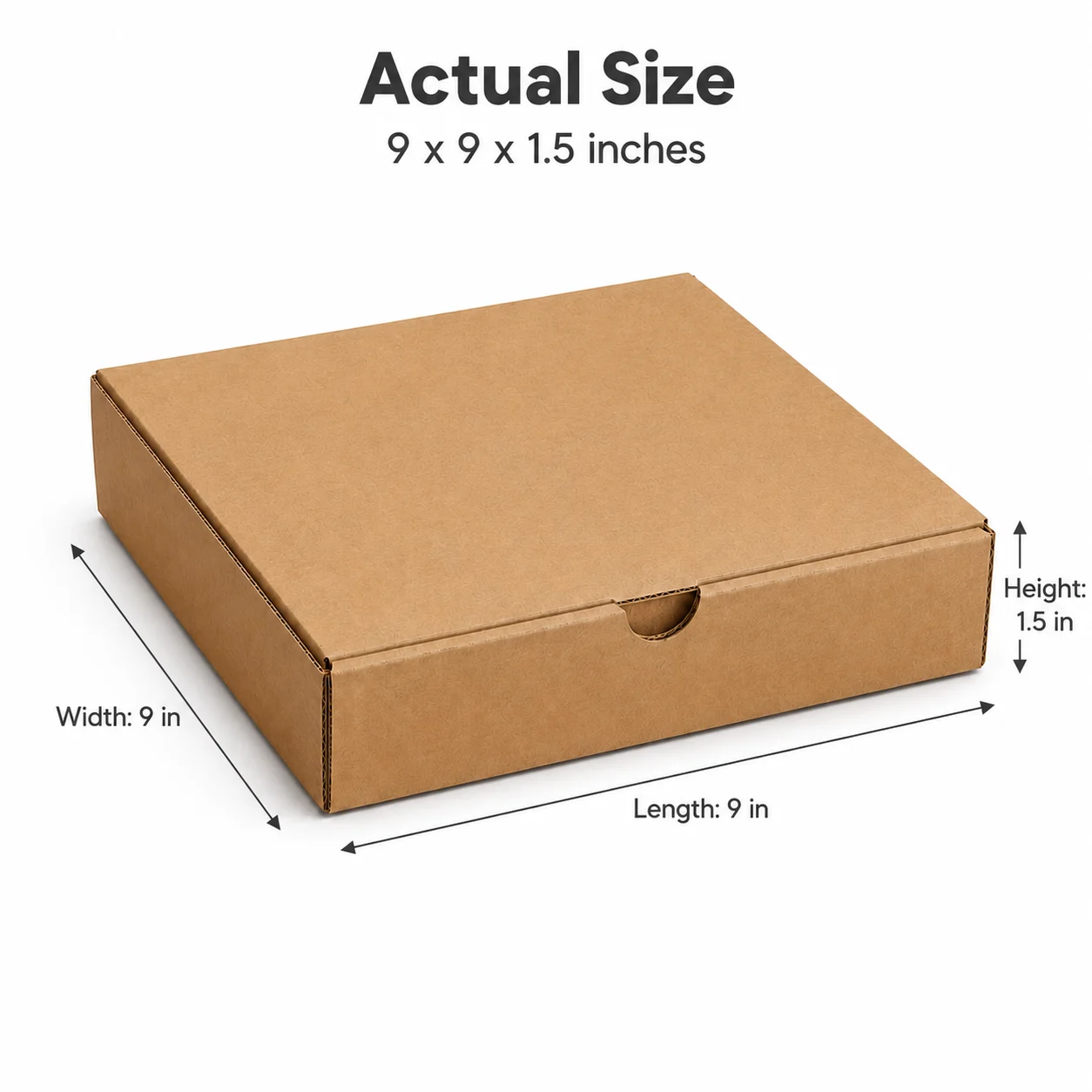
9x9 Inch Brown Corrugated Pizza Box for Food Delivery
Durable 9x9 inch brown corrugated pizza box designed for restaurants, cafes, cloud kitchens, and food delivery businesses.
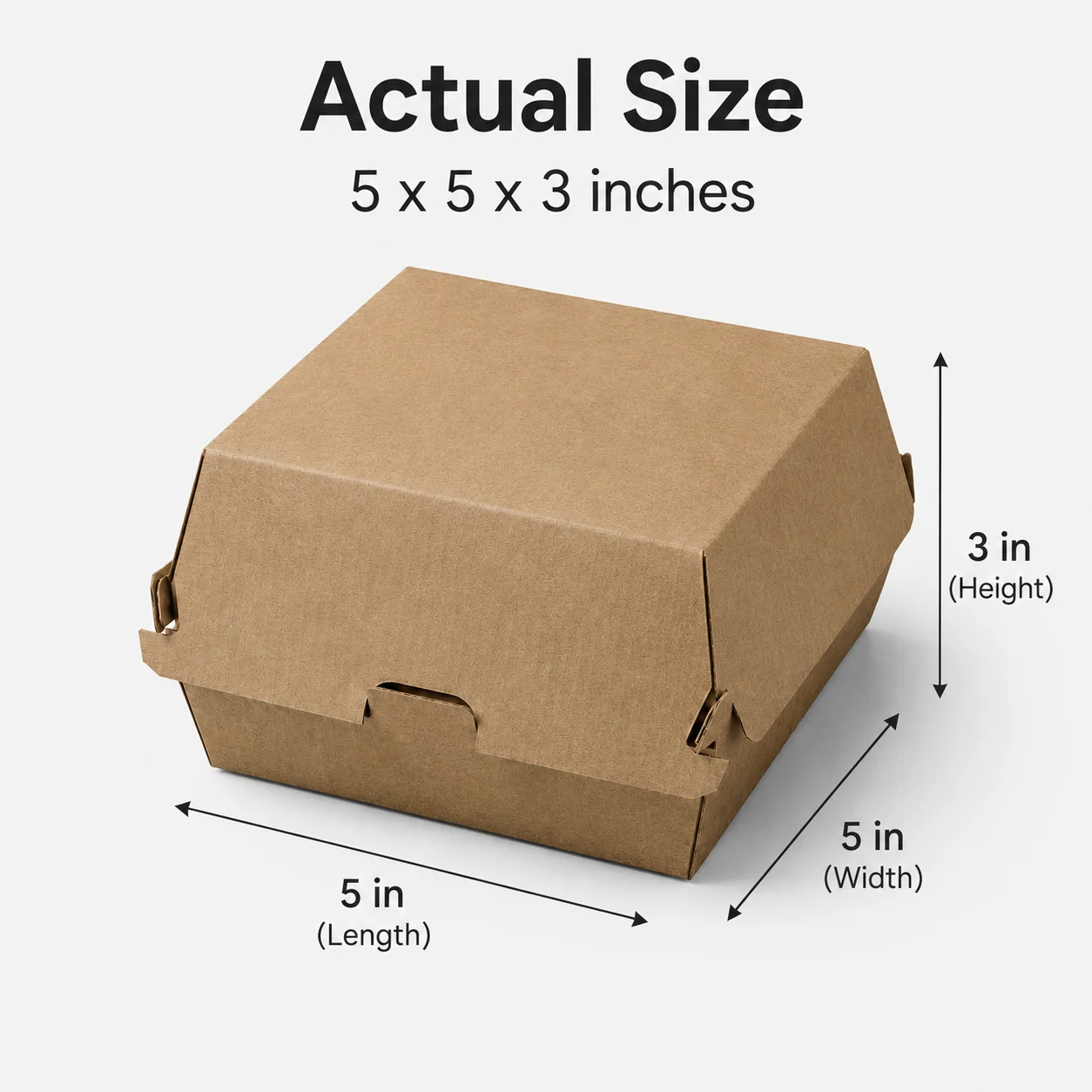
5x5 Inch Brown Kraft Burger Box for Takeaway & Food Delivery
Durable 5x5 inch brown kraft burger box designed for restaurants, cafes, cloud kitchens, and takeaway food packaging.

8x8 Inch Brown Kraft Cake Box for Bakery & Pastry Packaging
Premium 8x8 inch brown kraft cake box designed for bakeries, cafes, cloud kitchens, pastry shops, and dessert packaging.
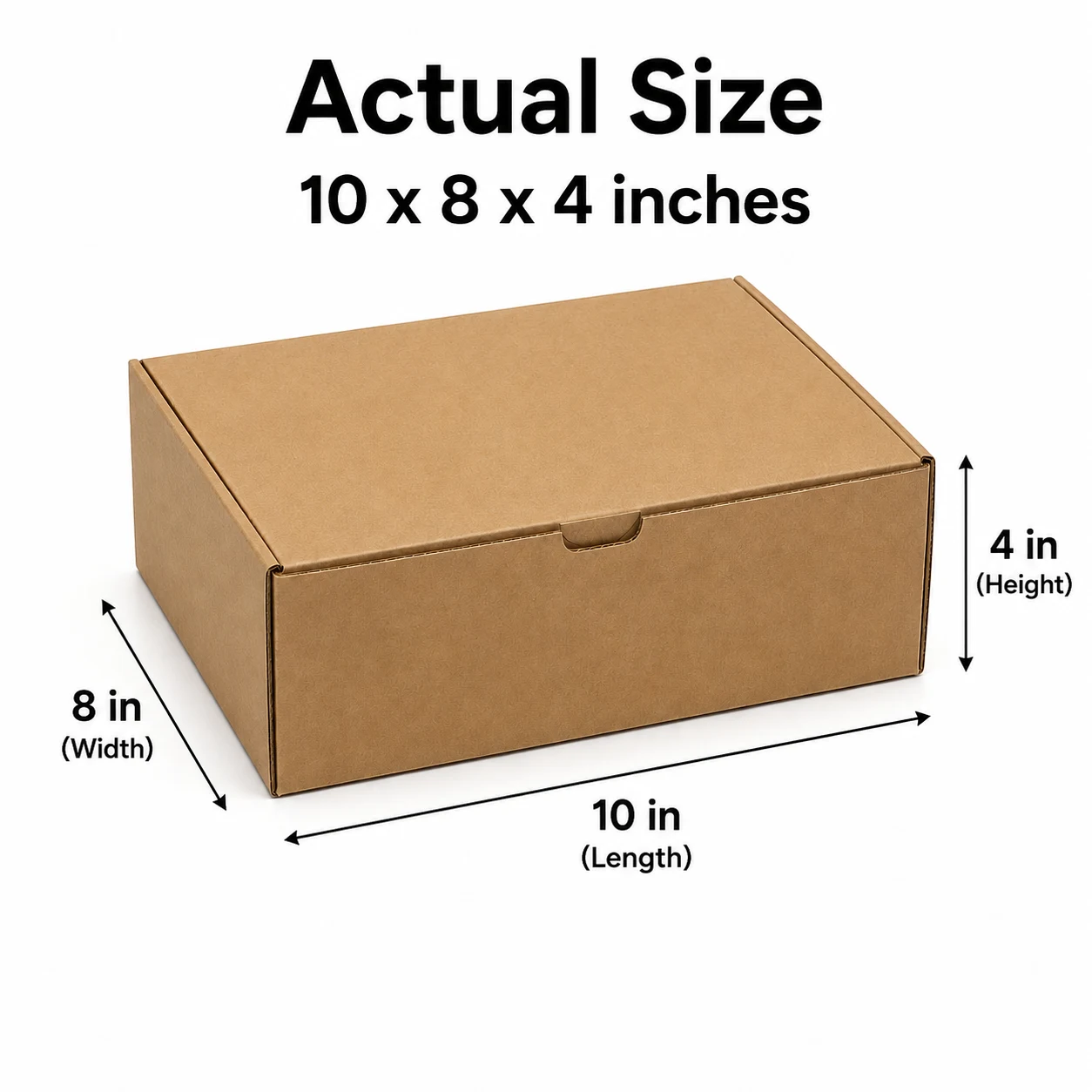
10x8x4 Inch Brown Corrugated Courier Box for E-commerce Shipping
Durable 10x8x4 inch brown corrugated courier box designed for e-commerce shipping, product delivery, storage, and secure packaging.
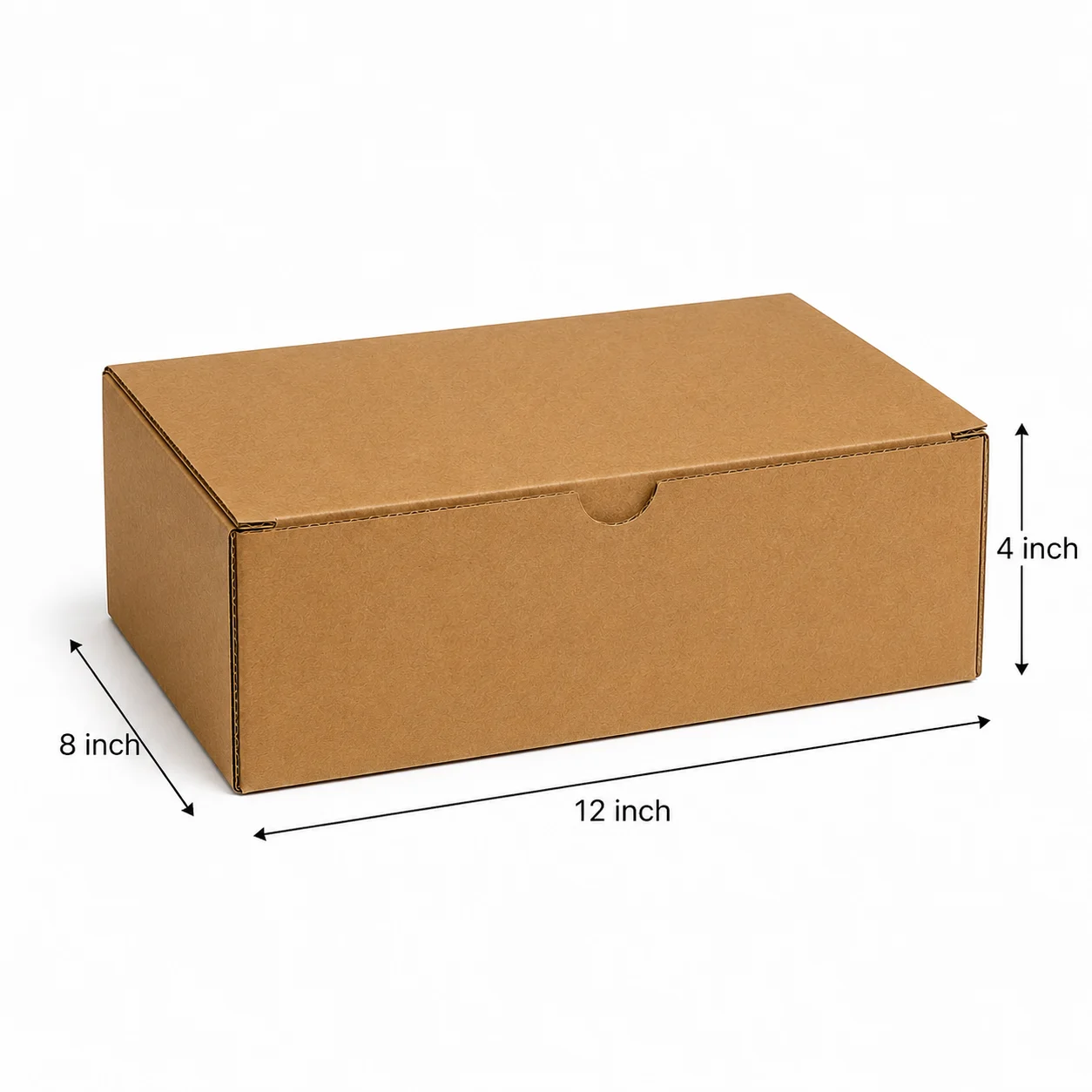
12x8x4 Inch Brown Corrugated 6 Bottle Nail Paint Packaging Box
Durable 12x8x4 inch brown corrugated nail paint box with six internal compartments, designed for cosmetic packaging, storage, gifting, and safe delivery.
Related Buying Guides
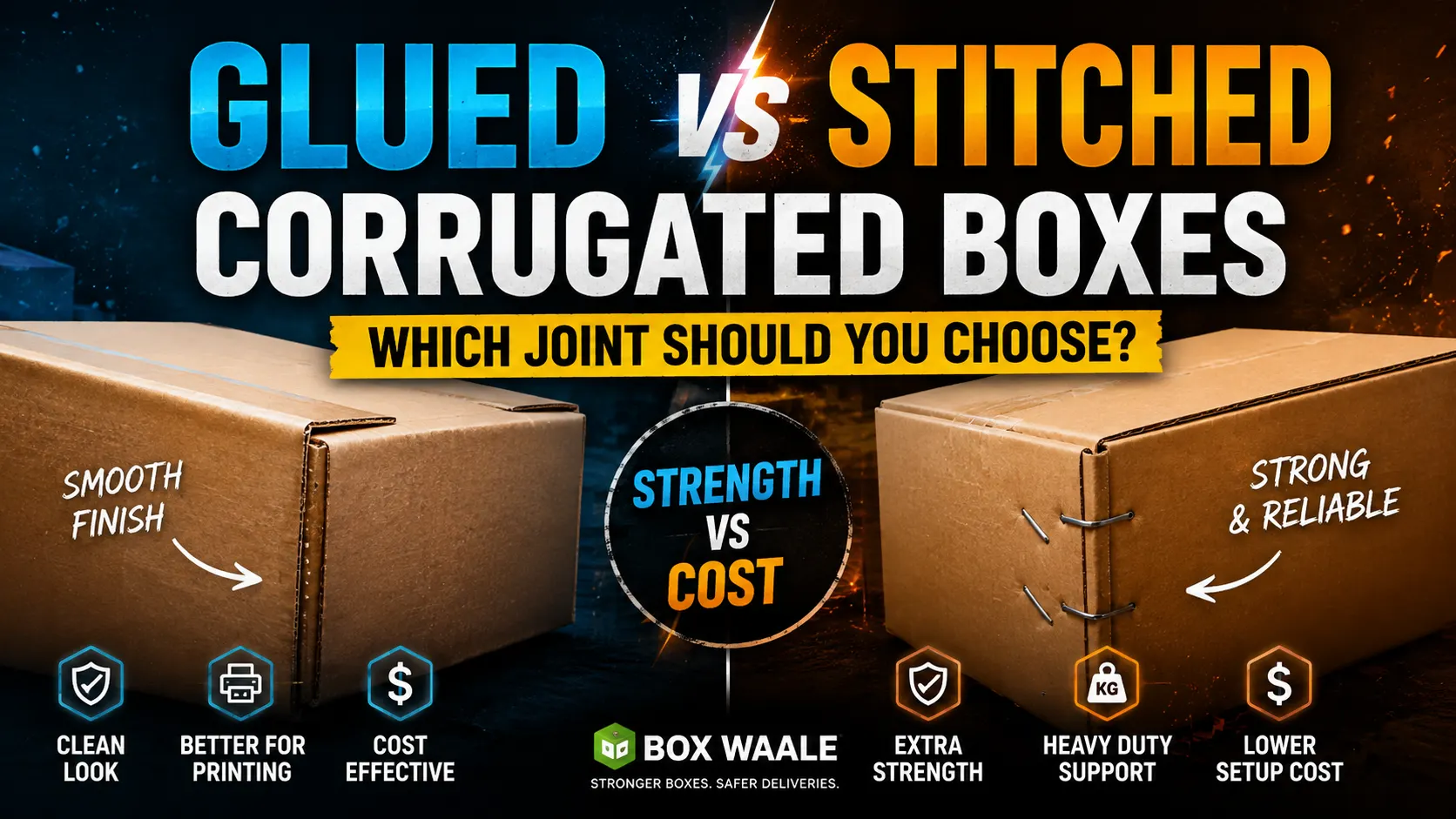
Glued vs Stitched Corrugated Boxes: Which Joint Should You Choose?
Read guide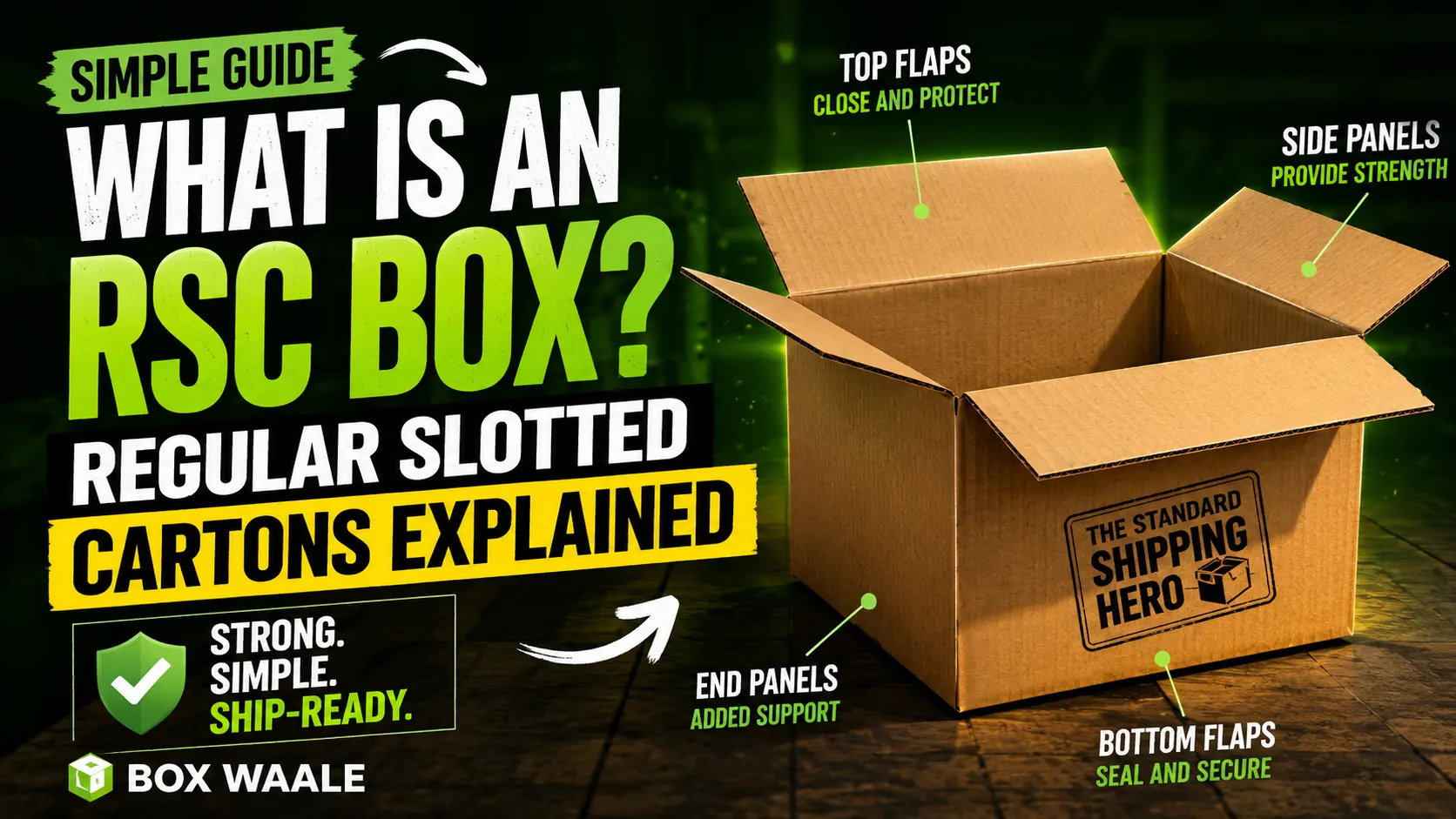
What Is an RSC Box? Regular Slotted Cartons Explained
Read guide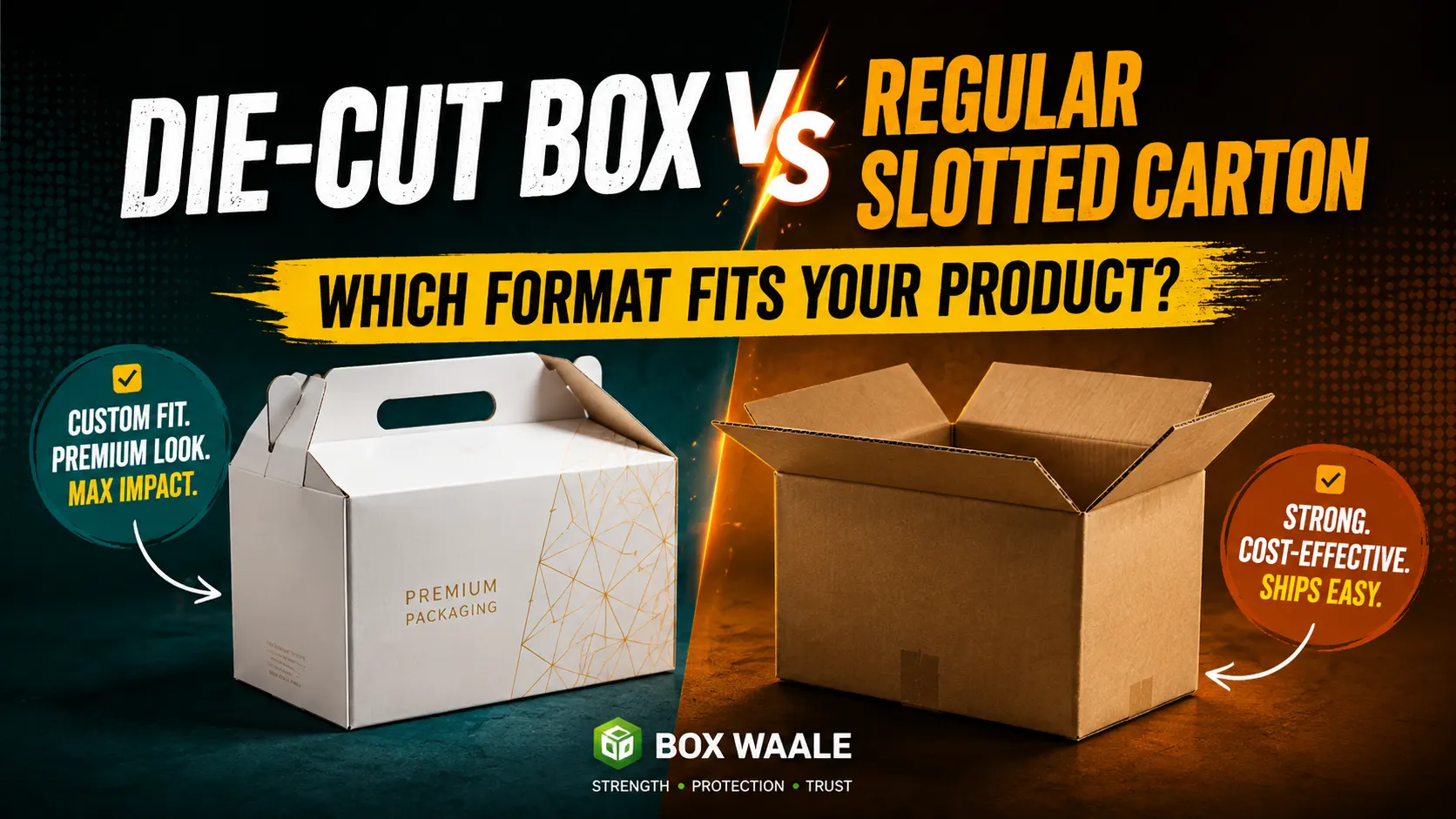
Die-Cut Box vs Regular Slotted Carton: Which Format Fits Your Product?
Read guide
Corrugated Rolls, Sheets and Boxes: Which Protective Format Do You Need?
Read guide