
Published 2 Aug 2026· Updated 29 Aug 2026
Corrugated Box Flute Types: A, B, C, E and F Flute Compared
A side-by-side comparison of A, B, C, E and F flute corrugated board covering thickness, cushioning, print quality and common applications, so you can choose the right profile for your product and budget.
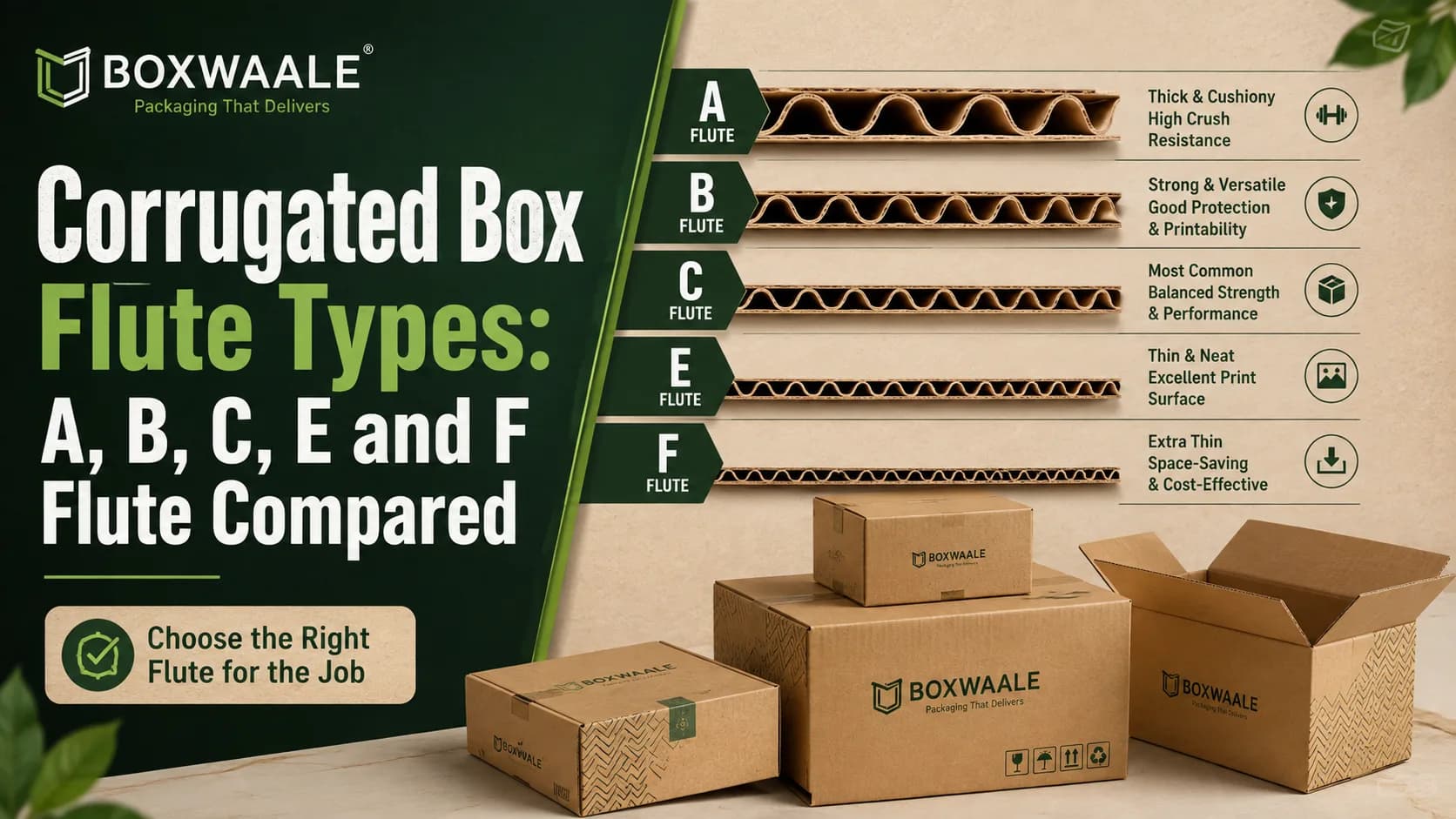
Key Takeaways
- A corrugated flute is the wavy paper layer sandwiched between the flat liners, and its wave height and frequency determine the board's thickness, cushioning and stacking behaviour.
- Flute letters such as A, B, C, E and F were assigned roughly in the order the profiles were historically developed, so the letters do not run in a simple thickest-to-thinnest sequence.
- A flute is generally the thickest of the common profiles, followed by C, then B, with E and F progressively thinner and finer.
- Thicker flutes like A and C generally provide stronger cushioning and stacking strength, making them common for shipping cartons and fragile goods.
- Thinner flutes like E and F offer better print detail and a smoother surface, which suits retail cartons and point-of-sale boxes.
- A thicker flute is not automatically a stronger one, since thickness affects cushioning and stacking differently than raw strength, which also depends on paper quality and ply construction.
Corrugated Box Flute Types: A, B, C, E and F Flute Compared
Table of Contents
The flute profile is one of the least visible but most consequential decisions in a corrugated box specification. Below, we compare the five common flute types on thickness, cushioning, printability and typical use so you can talk to your packaging supplier in specifics rather than guesswork.
What a Corrugated Flute Is and Why Its Size Matters
A corrugated board is built from flat paper liners glued to a middle layer that has been shaped into a continuous wave — the flute. That wave shape is what gives corrugated board its rigidity and cushioning compared to plain flat cardboard. The height and frequency of the wave (how many waves fit per linear foot) is what distinguishes one flute type from another, and each combination behaves differently under pressure, in printing, and in storage.
Flute letters (A, B, C, E, F, and others like BC or EB for multi-wall boards) are industry shorthand for these different wave profiles. They were assigned roughly in the order flutes were developed historically, which is why the letters don't run in a simple thickest-to-thinnest sequence — something worth knowing so you aren't misled by the alphabet.
Flute Types Compared: A, B, C, E and F
The table below gives a general, practical comparison. Exact wave counts and heights can vary slightly between manufacturers and paper suppliers, so treat these as typical ranges rather than fixed universal figures.
| Flute | Relative thickness | Cushioning | Printability | Typical uses |
|---|---|---|---|---|
| A flute | Thickest of the common profiles | Strong cushioning, good stacking strength | Coarser surface, less suited to fine detail | Shipping cartons, fragile goods, export boxes |
| C flute | Between A and B | Good balance of cushioning and rigidity | Moderate, widely used for general print | The most common general-purpose shipping and retail box flute |
| B flute | Thinner than A and C | Lower cushioning, good crush resistance | Smooth surface, better print detail than A/C | Die-cut cartons, canned goods, point-of-sale boxes |
| E flute | Thin, fine wave | Light cushioning | Very good, close to solid board look | Retail packaging, small cartons, printed display boxes |
| F flute | Very thin, finest wave | Minimal cushioning | Excellent, near-litho quality achievable | Premium retail boxes, small product packaging |
Note that within a category like corrugated boxes, the flute is only one variable — paper GSM, number of plies and box design all interact with flute choice to determine final performance, so the table above should be read as a starting point for conversation with your manufacturer, not a spec sheet on its own.
It also helps to think about flute choice in terms of the whole supply chain, not just the moment the box leaves the production line. A flute that performs well in a controlled warehouse environment may behave differently after several handling touchpoints, temperature changes, or a long-haul transit route, so it is worth mentioning your full shipping journey to your supplier rather than only the immediate packing requirement. Buyers who skip this step sometimes find that a flute which looked adequate on paper underperforms once real logistics are factored in, which usually shows up as crushed corners or soft panels on arrival rather than outright box failure.
Choosing a Flute for Cushioning, Print Quality or Space
In practice, most flute decisions come down to balancing three things: how much cushioning the product needs, how important fine print detail is, and how much wall thickness you can afford to give up to shipping volume or shelf space.
- Heavier or fragile products generally benefit from A or C flute, where the thicker wave absorbs more shock during handling and transit.
- Retail-facing boxes with branding often move toward B, E or F flute, where the finer wave gives a smoother printing surface and crisper graphics.
- Space-constrained shipments (for example, when courier volumetric weight matters) may favour a thinner flute to reduce overall carton bulk, provided the product doesn't need heavy cushioning.
There is rarely a single "correct" flute for a product category — it is a trade-off exercise specific to your product's weight, fragility, and how the box will be presented or handled.
Common Flute Combinations in Multi-Wall Boards
Single flute boards aren't the only option. Double wall board combines two flute layers (commonly written as BC, meaning a B flute layer next to a C flute layer) to get benefits from both profiles in one board — the coarser flute contributing strength and cushioning, the finer flute improving the outer print surface. Triple wall board extends this further for heavy-duty industrial use.
When specifying board for a project, it helps to describe the outcome you want (stacking strength, cushioning, print quality, or a mix) rather than just naming a flute letter, since your manufacturer can often suggest a combination that meets several of those goals at once rather than forcing a single-flute compromise.
How Boxwaale Helps
Boxwaale stocks a range of flute profiles and ply combinations and can talk through which one suits your product's weight, fragility and branding needs before you commit to a specification. If you're unsure whether your current box is over- or under-specified on flute, share your product details with our team and we'll suggest a practical starting point rather than a one-size-fits-all answer.
Frequently Asked Questions
Related Packaging Guide
Planning a packaging order?
Turn this guidance into a box specification
Share the product dimensions, packed weight, quantity, printing requirement and delivery postcode. Boxwaale will help narrow down the appropriate size, ply and board specification before quoting.
Frequently Asked Questions
Related Products
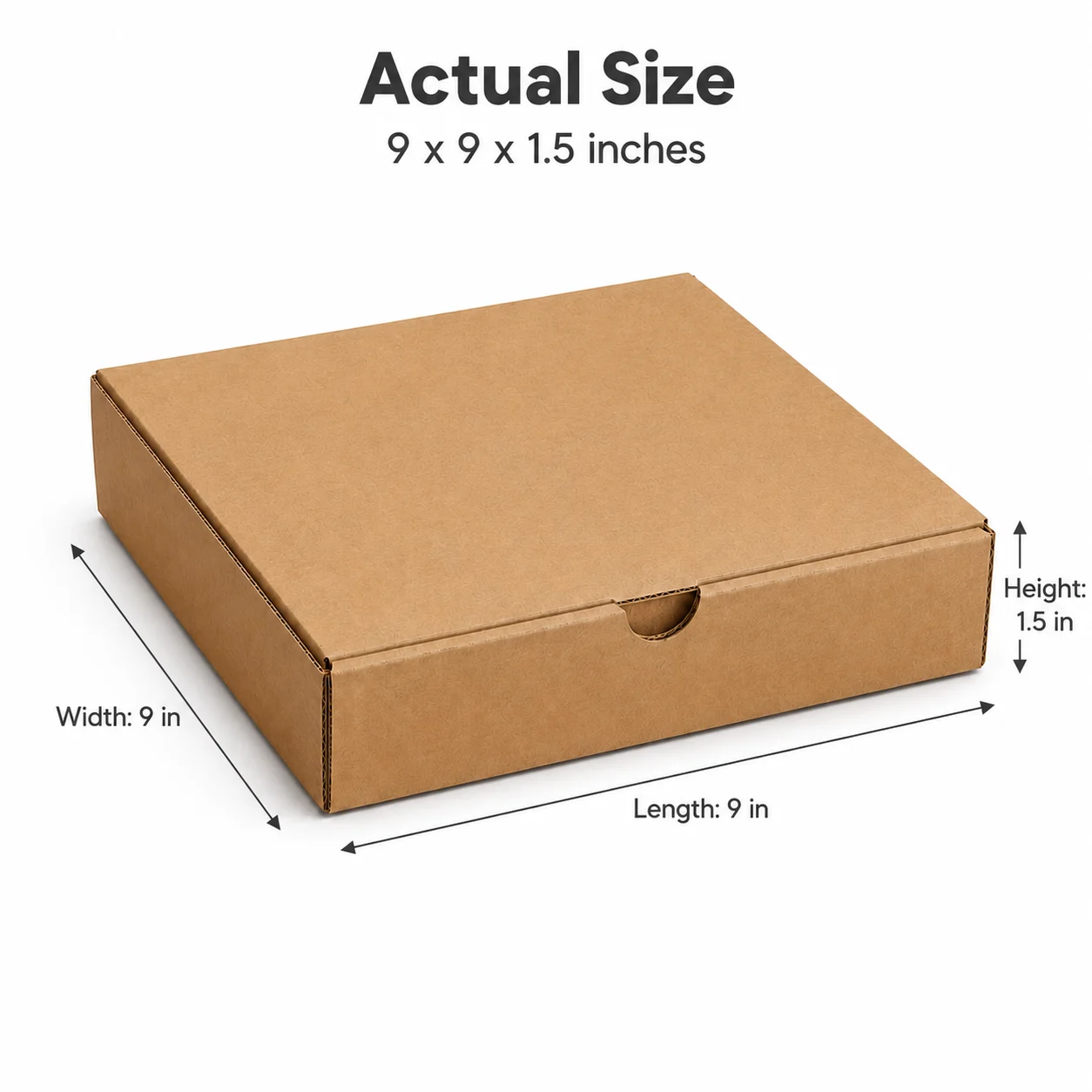
9x9 Inch Brown Corrugated Pizza Box for Food Delivery
Durable 9x9 inch brown corrugated pizza box designed for restaurants, cafes, cloud kitchens, and food delivery businesses.
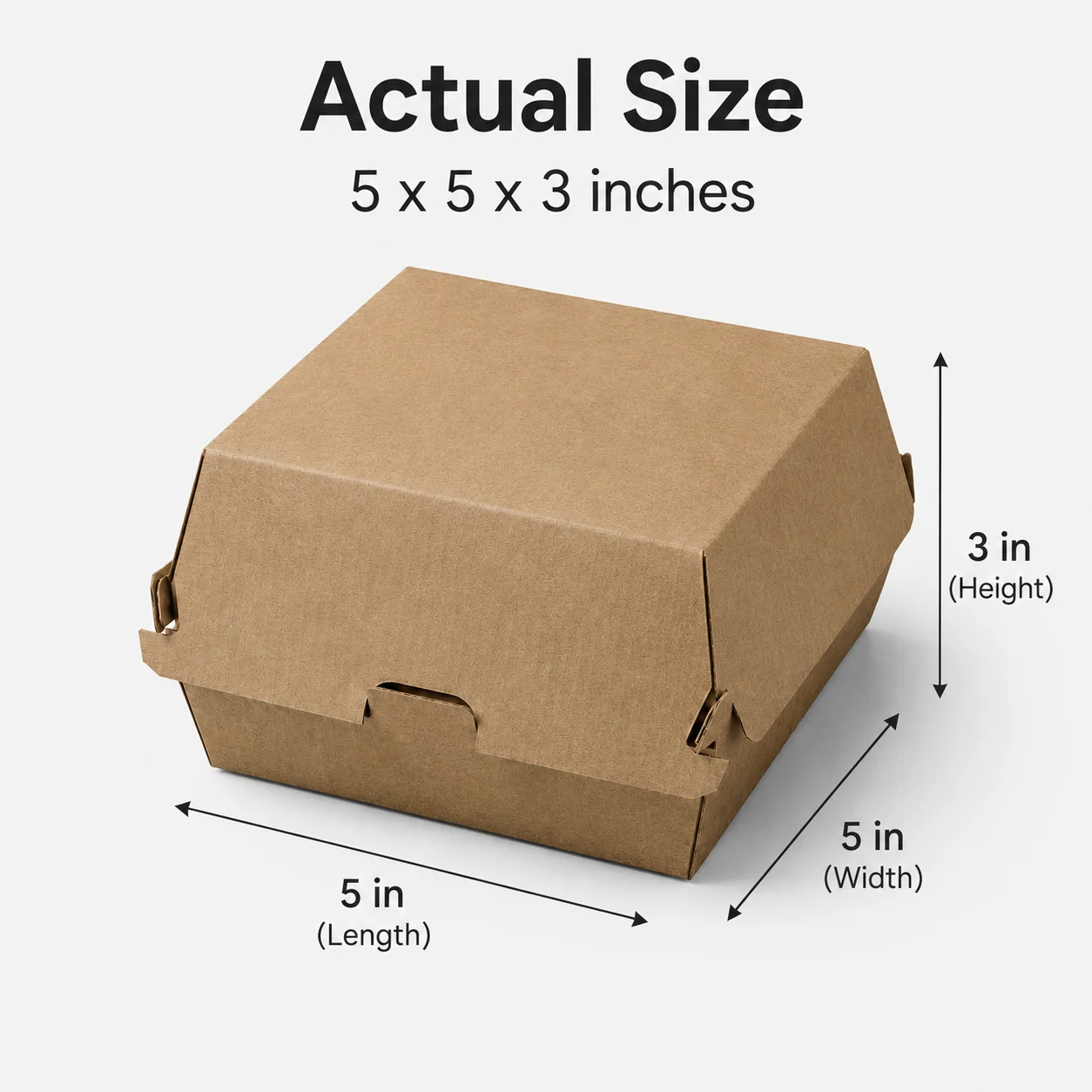
5x5 Inch Brown Kraft Burger Box for Takeaway & Food Delivery
Durable 5x5 inch brown kraft burger box designed for restaurants, cafes, cloud kitchens, and takeaway food packaging.

8x8 Inch Brown Kraft Cake Box for Bakery & Pastry Packaging
Premium 8x8 inch brown kraft cake box designed for bakeries, cafes, cloud kitchens, pastry shops, and dessert packaging.
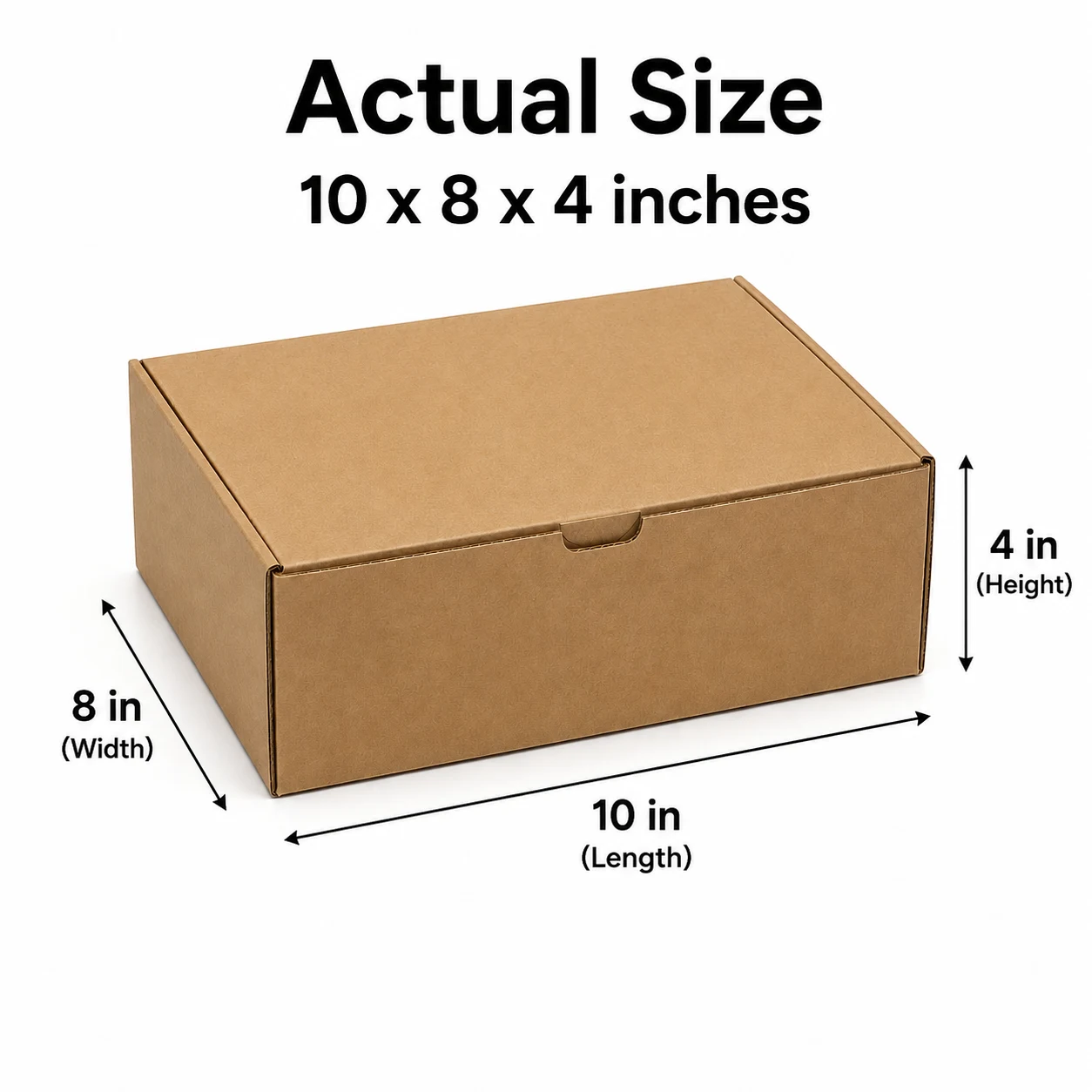
10x8x4 Inch Brown Corrugated Courier Box for E-commerce Shipping
Durable 10x8x4 inch brown corrugated courier box designed for e-commerce shipping, product delivery, storage, and secure packaging.
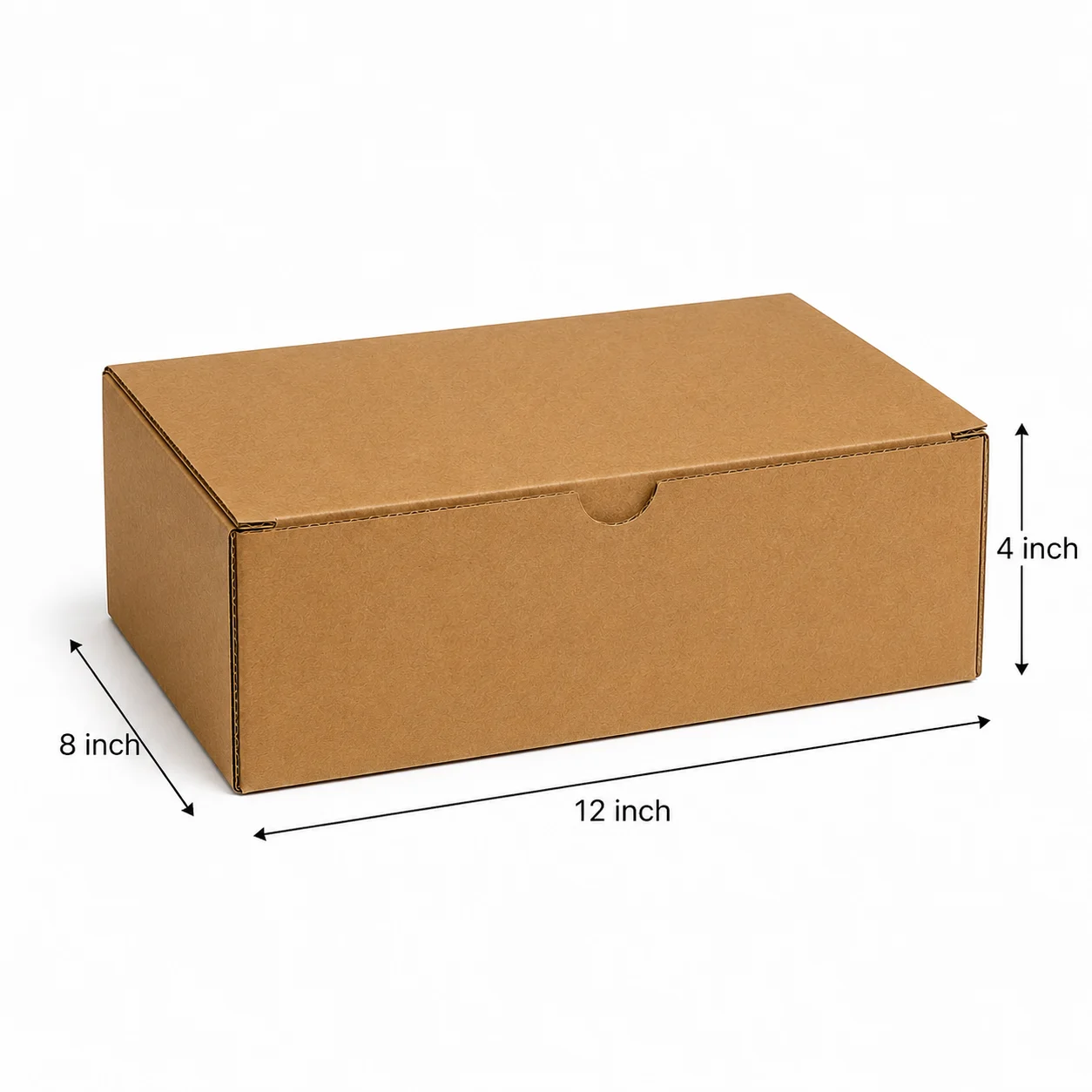
12x8x4 Inch Brown Corrugated 6 Bottle Nail Paint Packaging Box
Durable 12x8x4 inch brown corrugated nail paint box with six internal compartments, designed for cosmetic packaging, storage, gifting, and safe delivery.
Related Buying Guides
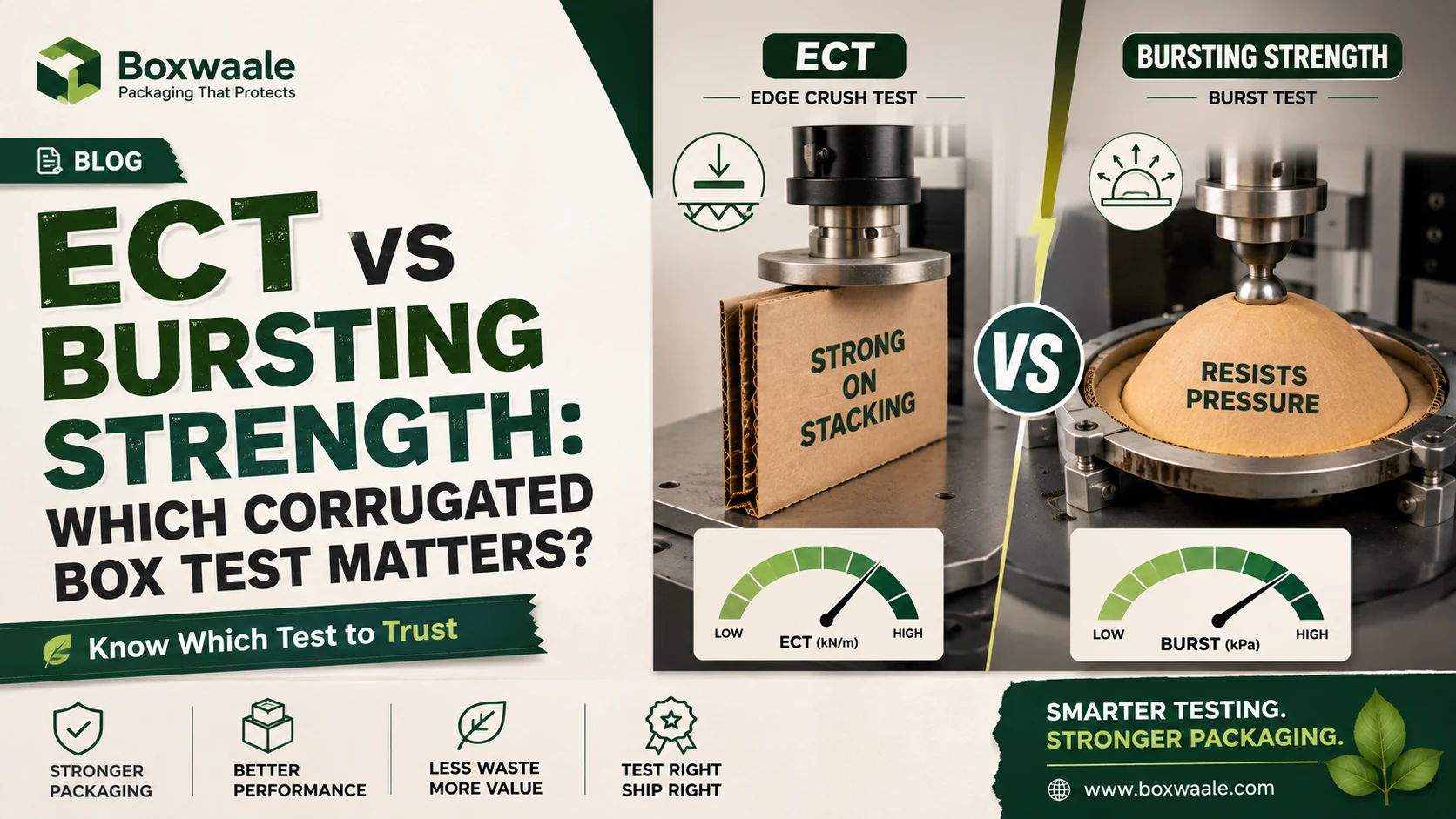
ECT vs Bursting Strength: Which Corrugated Box Test Matters?
Read guide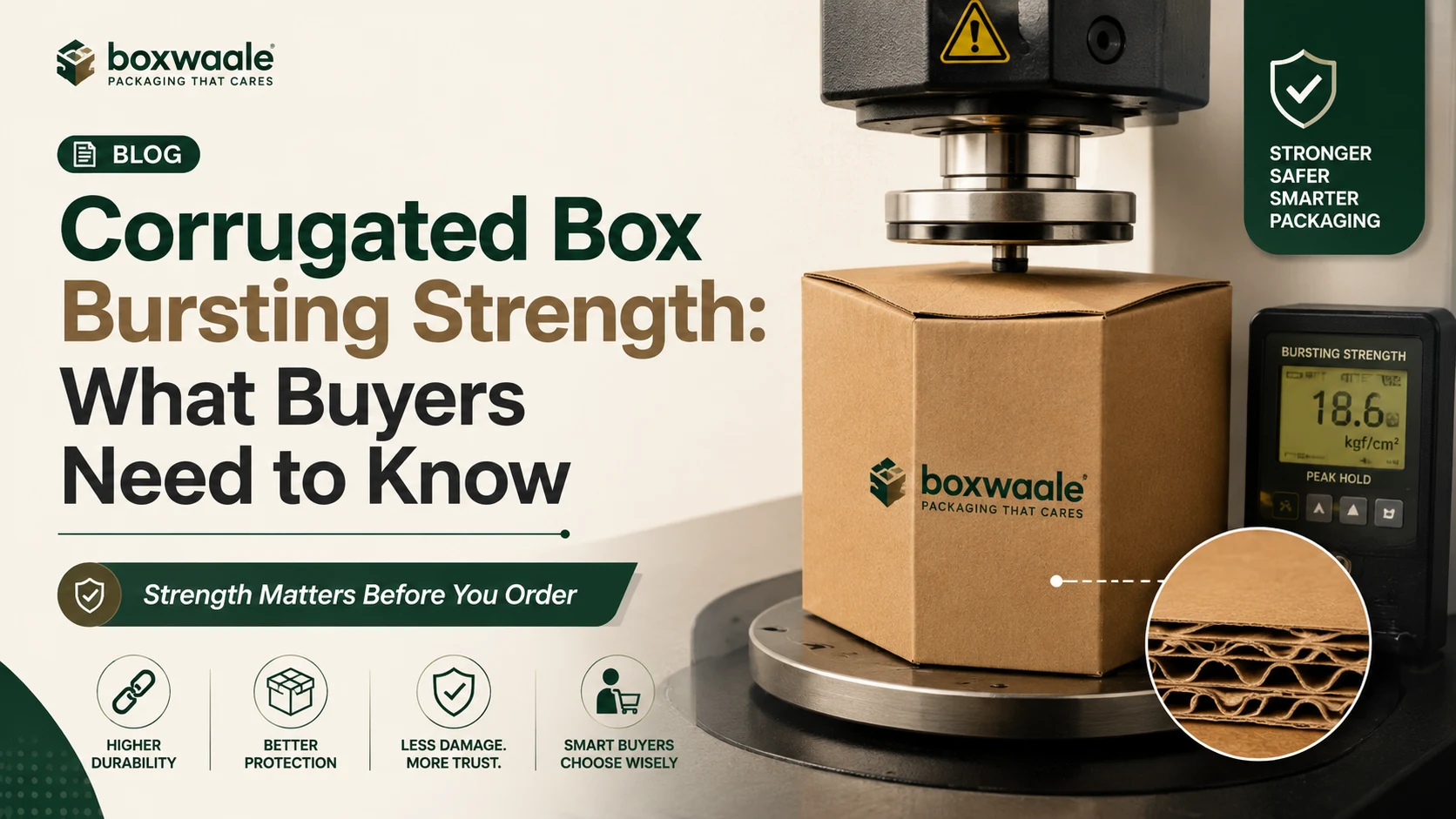
Corrugated Box Bursting Strength: What Buyers Need to Know
Read guide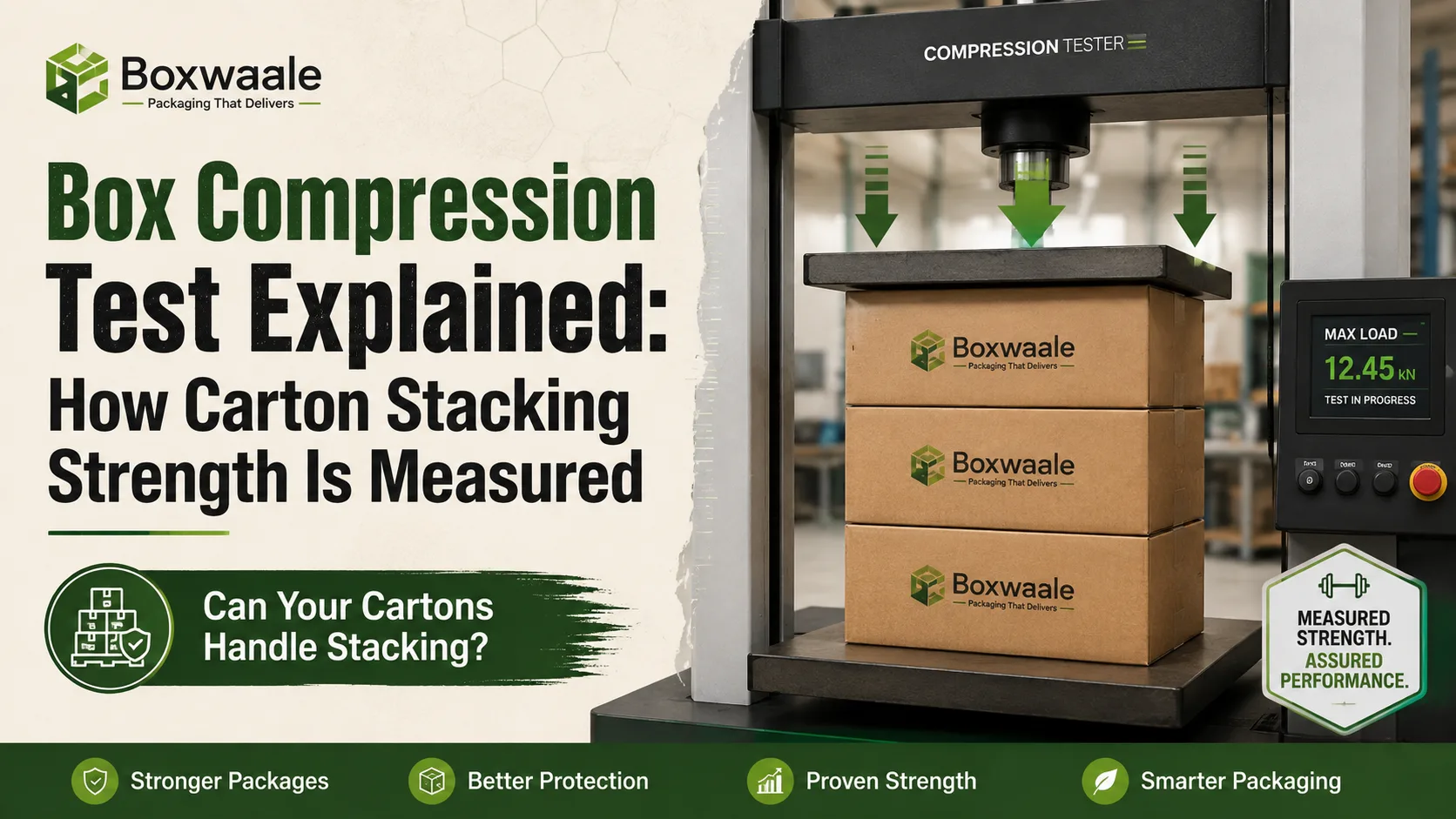
Box Compression Test Explained: How Carton Stacking Strength Is Measured
Read guide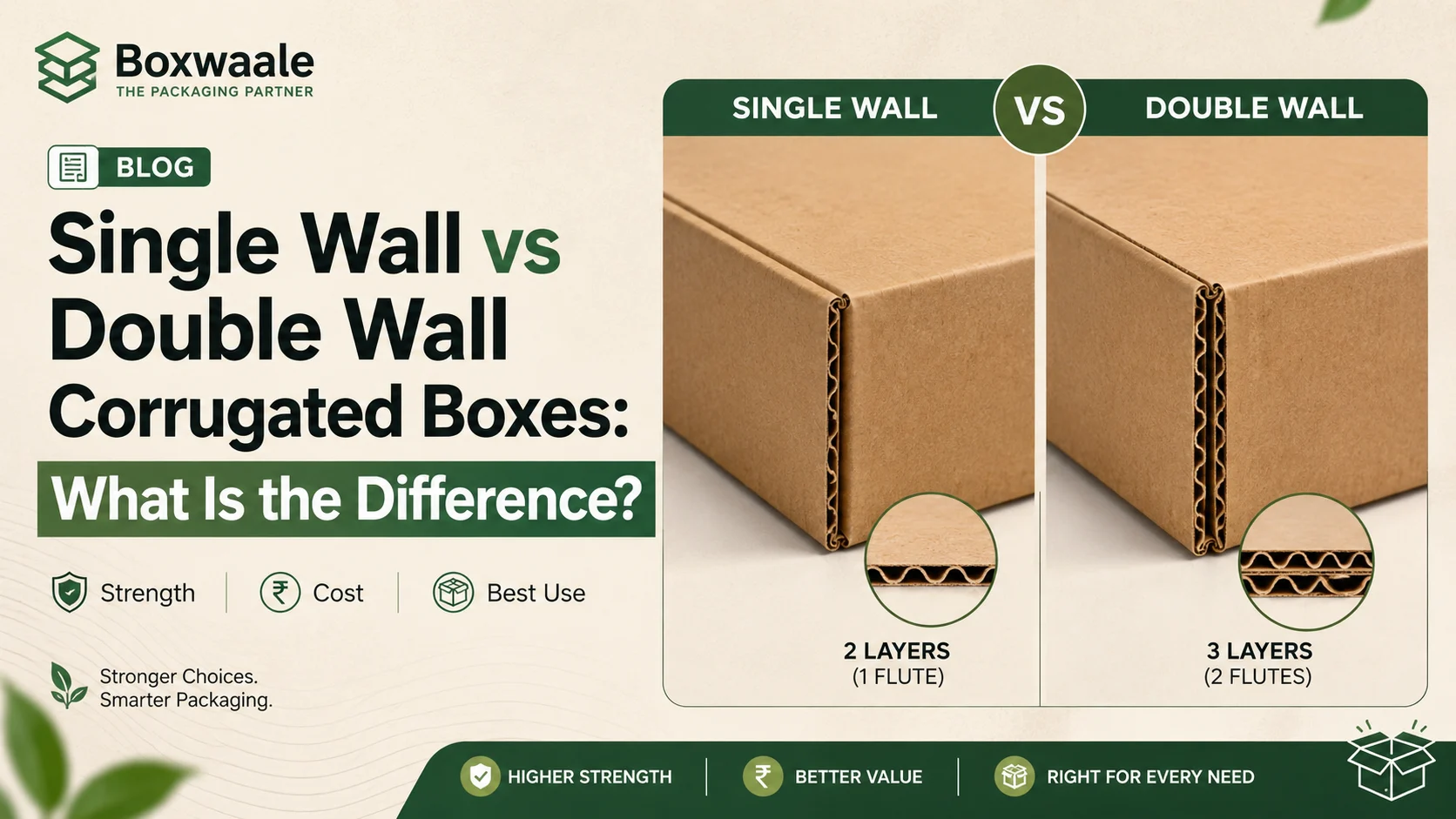
Single Wall vs Double Wall Corrugated Boxes: What Is the Difference?
Read guide
How Humidity and Moisture Affect Corrugated Box Strength
Read guide