
Published 2 Aug 2026· Updated 29 Aug 2026
Corrugated Box Bursting Strength: What Buyers Need to Know
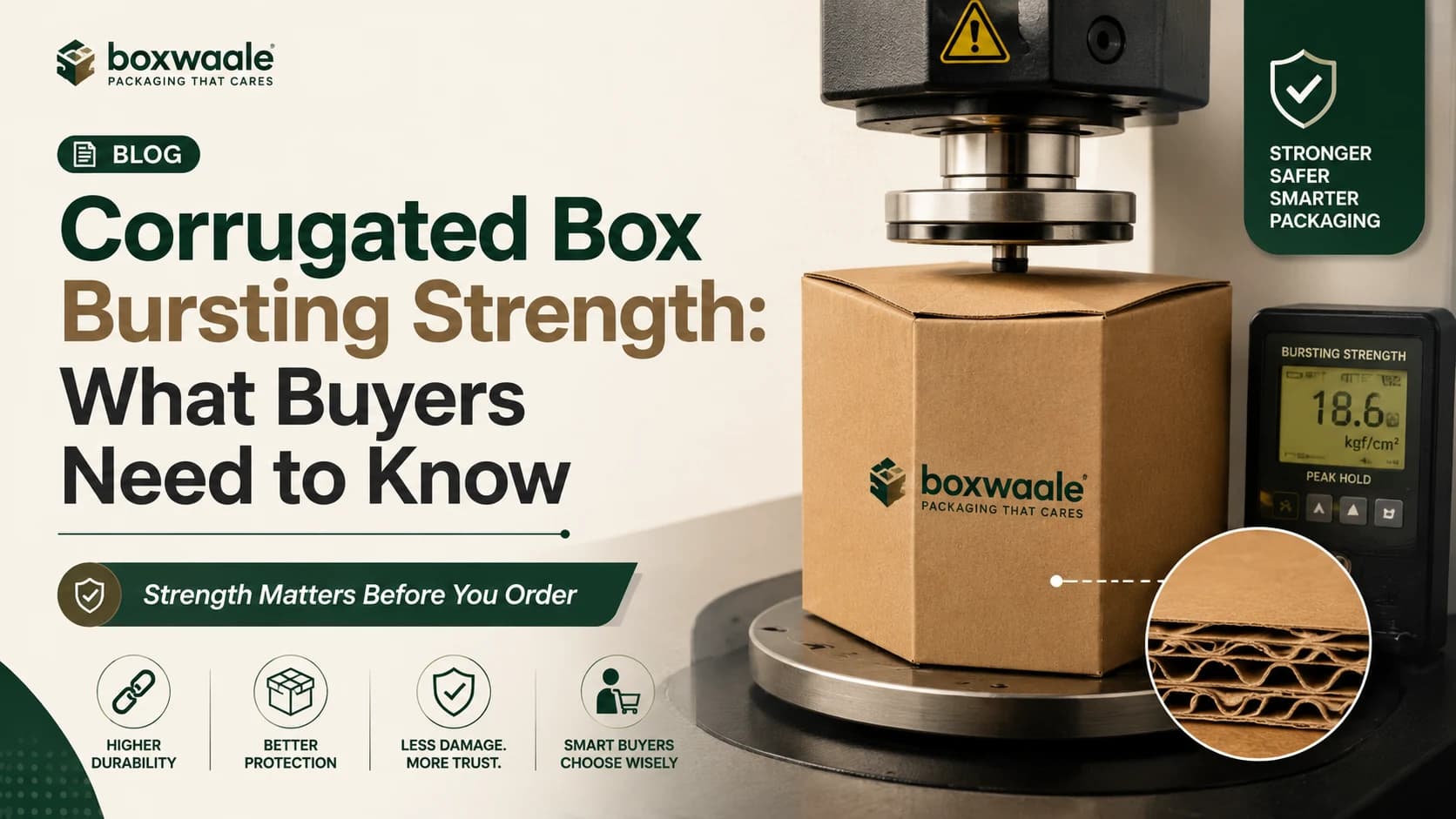
An explainer on the bursting strength test for corrugated boxes: what it measures, why a high BS number alone doesn't guarantee real-world box performance, and what else buyers should ask suppliers for.
Key Takeaways
- Bursting strength (BS) measures the pressure a flat piece of corrugated board can withstand before it ruptures, typically tested using a diaphragm-style burst tester.
- The bursting strength test predates many modern compression and edge-crush tests and remains widely quoted partly because it is simple to run and easy to communicate as a single number.
- A high BS number does not guarantee overall box performance, since it says nothing about stacking collapse, which relates more to edge crush and compression behaviour.
- BS is a property of the corrugated board tested as a flat sheet, not of the finished, assembled box, so box design, taping and closure also affect how the final carton performs.
- BS ratings are mainly driven by the quality and GSM weight of the liner paper, and different manufacturers may test and report BS slightly differently.
- Buyers should ask about ply construction, GSM, flute type and expected handling and stacking conditions alongside BS rather than relying on a single figure.
Corrugated Box Bursting Strength: What Buyers Need to Know
Table of Contents
Procurement teams often see "BS" quoted on a corrugated board specification sheet and treat it as the single number that settles whether a box is strong enough. It's a useful data point, but on its own it answers a narrower question than most buyers assume. Here's what bursting strength actually tells you, and where it falls short.
What the Bursting Strength Test Actually Measures
Bursting strength testing applies steadily increasing pressure to a flat piece of corrugated board through a rubber diaphragm until the board ruptures. The pressure at the point of rupture is recorded as the board's bursting strength. Conceptually, it's a measure of how much direct, evenly distributed force the board's fibre structure can take before failing outright.
This kind of stress resembles what a box surface might experience from a sharp poke, an object pressing into it, or rough handling that puts localized pressure on one panel — not the slow, distributed load of boxes stacked on top of each other for days in a warehouse.
Where the Bursting Strength Test Came From
The bursting strength test predates many of the compression and edge-crush tests used today, and it remains widely referenced partly out of habit and partly because it is simple to run and easy to communicate as a single number. That history is worth knowing, because it explains why BS still appears on so many supplier spec sheets even though, for many modern shipping scenarios, it answers a narrower question than buyers assume it does. Understanding the test's origin helps put today's reliance on it in perspective rather than treating it as the newest or most complete measure available.
How a BS Rating Gets Assigned to Corrugated Board
BS ratings are generally driven by the quality and weight (GSM) of the paper used in the liners and flute, along with how well those layers are bonded together. Heavier, higher-quality kraft paper liners typically contribute to a higher burst rating than lighter or recycled-heavy paper, all else being equal.
Different paper mills and manufacturers may test and report BS slightly differently depending on their equipment and sampling method, which is one reason it's worth treating any quoted BS figure as an indicative reference rather than a strictly comparable, universal constant across every supplier.
Why a High BS Number Doesn't Guarantee Box Performance
This is the part that trips up a lot of first-time industrial buyers: a box made from board with a strong burst rating can still fail in transit if the actual problem is stacking collapse, not puncture. Burst resistance and stacking (compression) resistance draw on different structural properties of the board, so a board optimised for one doesn't automatically excel at the other.
Other factors that BS alone says nothing about include:
- How the box is designed — slot depth, flap overlap, and corner construction all affect real-world strength
- How the box is closed and sealed, since a weak taping job undermines even a strong board
- Environmental conditions such as humidity, which can reduce corrugated board's strength regardless of its rated BS
- How the load is distributed when boxes are stacked or palletised
If you're specifying board for a box that will be stacked in a warehouse or during transit, it's worth reading up on the related corrugated boxes strength considerations around edge crush and compression testing, since those speak more directly to stacking performance than BS does.
Reading a BS Figure in Context
A useful habit when reviewing a supplier's BS figure is to ask what board construction produced it — the same nominal BS rating can come from different combinations of liner GSM, flute type and ply count, and those combinations don't necessarily perform identically once assembled into a box and put under real stacking or handling stress. Two boards with an identical BS number on paper can still behave differently once flap design, box height and closure method are factored in, which is why the number works best as one input among several rather than a stand-alone pass/fail threshold.
It is also worth asking whether the BS figure quoted reflects the actual board being supplied for your order, or a general specification sheet for that board grade. Paper supply can vary slightly between batches, and a manufacturer working to a target BS range, rather than a single fixed number, is being realistic about how paper-based materials behave rather than overstating precision that natural material variation doesn't really support.
What Else Buyers Should Ask For Besides BS
A well-rounded conversation with your packaging supplier usually covers more than one number. Useful questions to ask alongside or instead of BS include:
- What is the ply construction (3-ply, 5-ply) and flute type being proposed?
- What GSM are the liners, and is any recycled paper content involved?
- How will the box actually be stacked, transported and handled — by hand, pallet, or courier?
- Has the box design (slots, flaps, joints) been reviewed for the product's weight and shape?
Framing the conversation around how the box will actually be used, rather than chasing a single specification number, tends to produce a more reliable outcome than optimising for BS in isolation.
How Boxwaale Helps
Boxwaale helps buyers translate a target BS figure (or an existing spec sheet from a previous supplier) into a practical board and ply recommendation suited to how the box will actually travel and stack. Rather than quoting a number in isolation, our team asks about your product weight, transit route and stacking pattern so the board you order is matched to real use, not just a test result on paper.
Frequently Asked Questions
Related Packaging Guide
Planning a packaging order?
Turn this guidance into a box specification
Share the product dimensions, packed weight, quantity, printing requirement and delivery postcode. Boxwaale will help narrow down the appropriate size, ply and board specification before quoting.
Frequently Asked Questions
Related Products
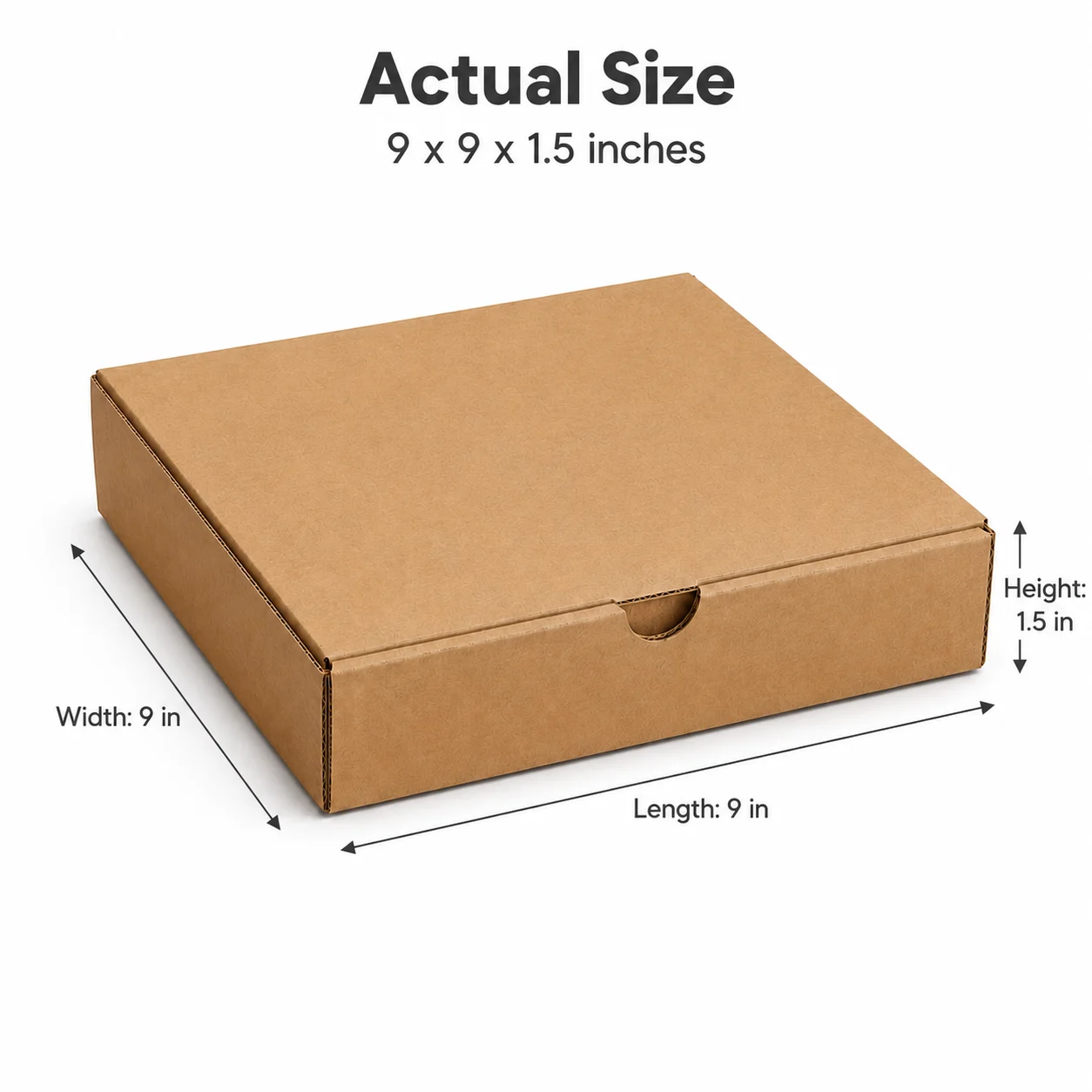
9x9 Inch Brown Corrugated Pizza Box for Food Delivery
Durable 9x9 inch brown corrugated pizza box designed for restaurants, cafes, cloud kitchens, and food delivery businesses.
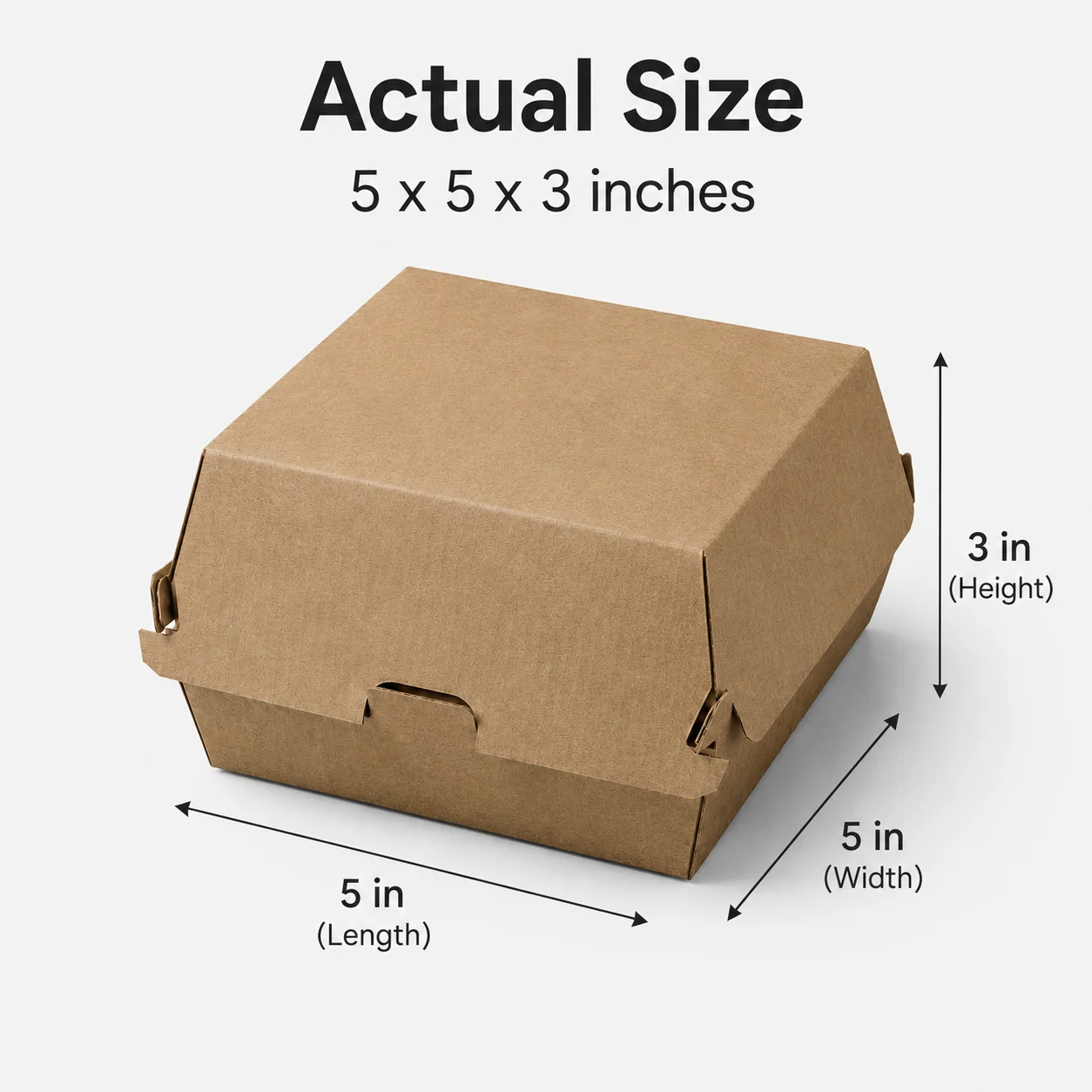
5x5 Inch Brown Kraft Burger Box for Takeaway & Food Delivery
Durable 5x5 inch brown kraft burger box designed for restaurants, cafes, cloud kitchens, and takeaway food packaging.

8x8 Inch Brown Kraft Cake Box for Bakery & Pastry Packaging
Premium 8x8 inch brown kraft cake box designed for bakeries, cafes, cloud kitchens, pastry shops, and dessert packaging.
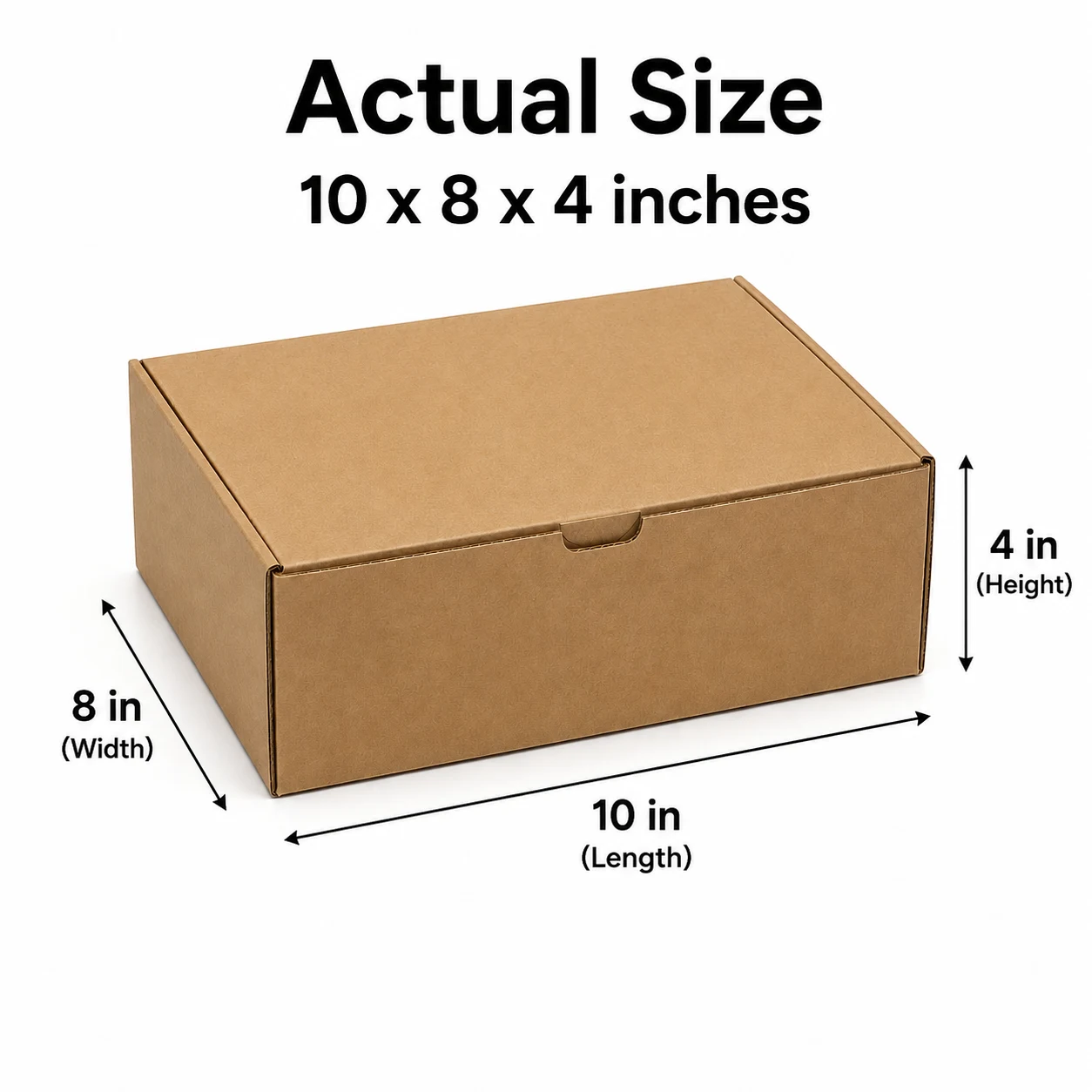
10x8x4 Inch Brown Corrugated Courier Box for E-commerce Shipping
Durable 10x8x4 inch brown corrugated courier box designed for e-commerce shipping, product delivery, storage, and secure packaging.
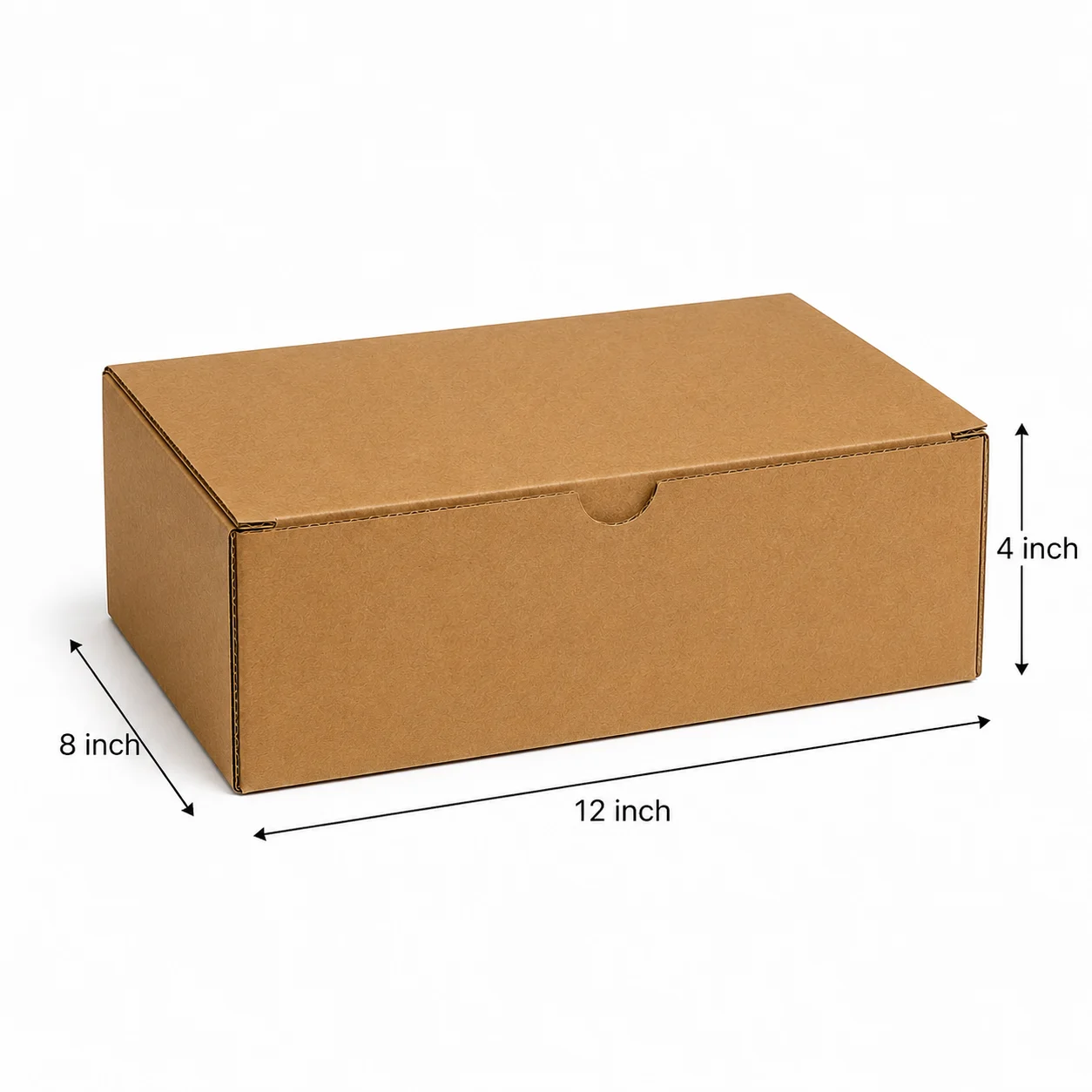
12x8x4 Inch Brown Corrugated 6 Bottle Nail Paint Packaging Box
Durable 12x8x4 inch brown corrugated nail paint box with six internal compartments, designed for cosmetic packaging, storage, gifting, and safe delivery.
Related Buying Guides
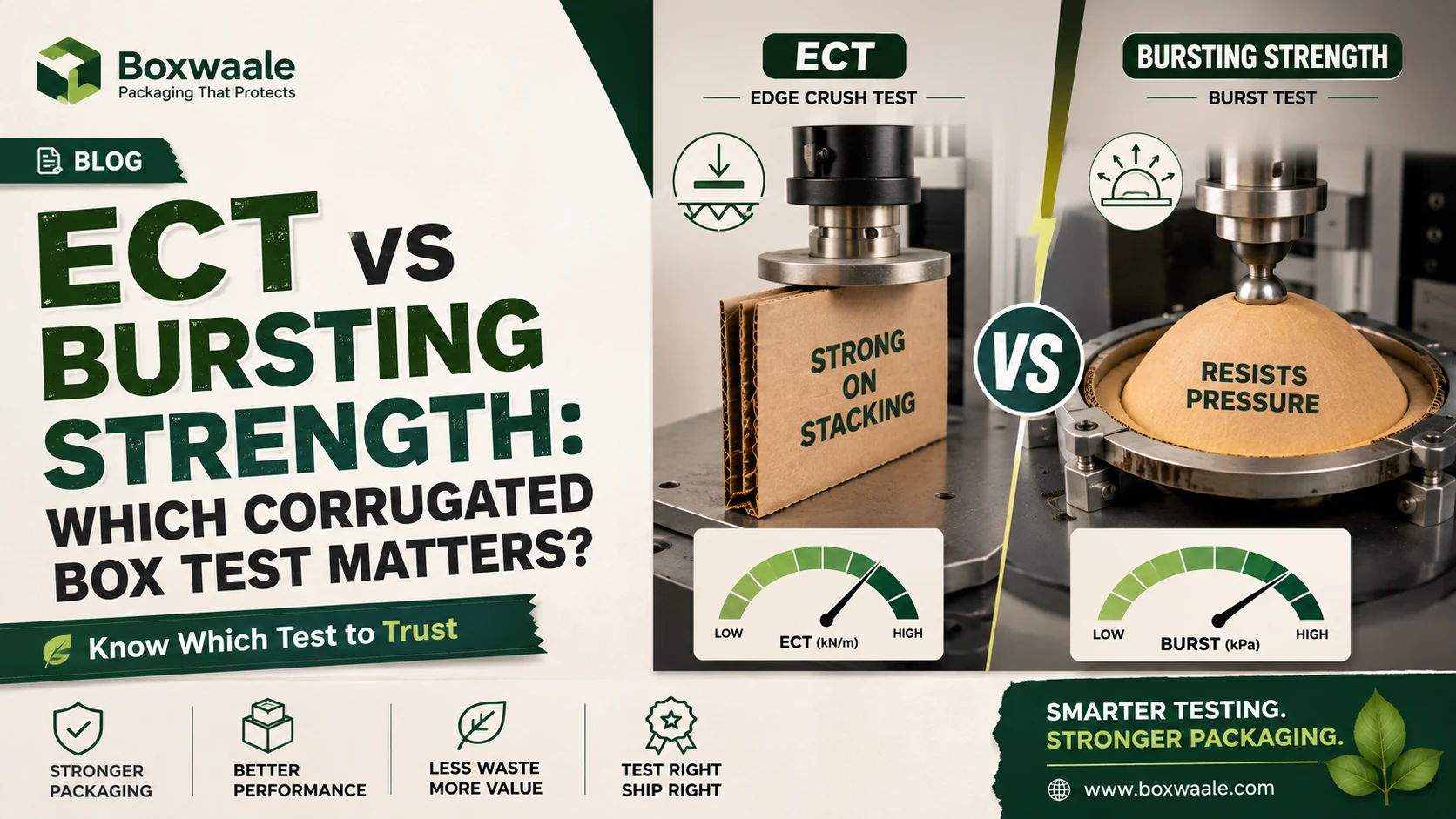
ECT vs Bursting Strength: Which Corrugated Box Test Matters?
Read guide
Box Compression Test Explained: How Carton Stacking Strength Is Measured
Read guide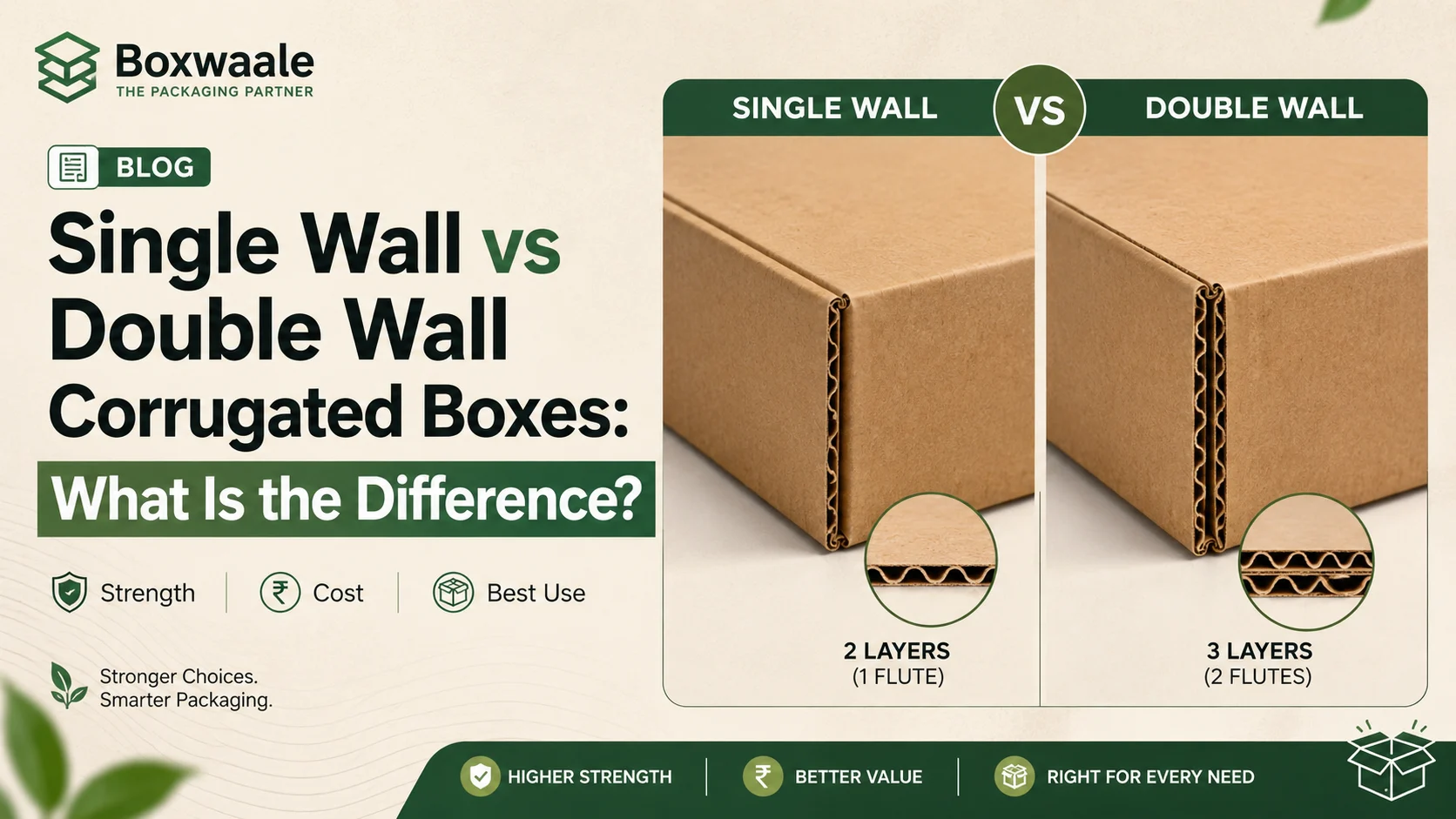
Single Wall vs Double Wall Corrugated Boxes: What Is the Difference?
Read guide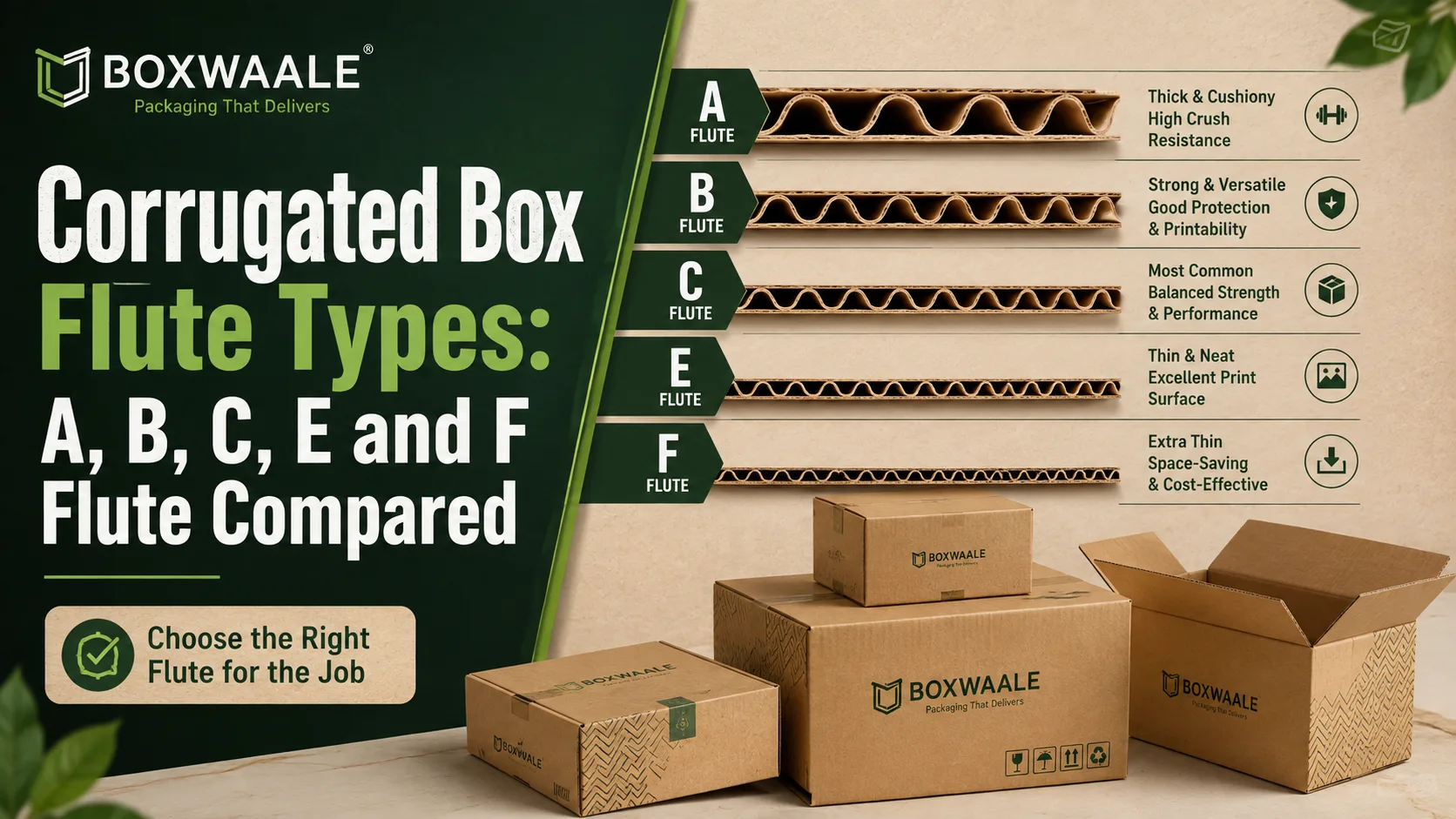
Corrugated Box Flute Types: A, B, C, E and F Flute Compared
Read guide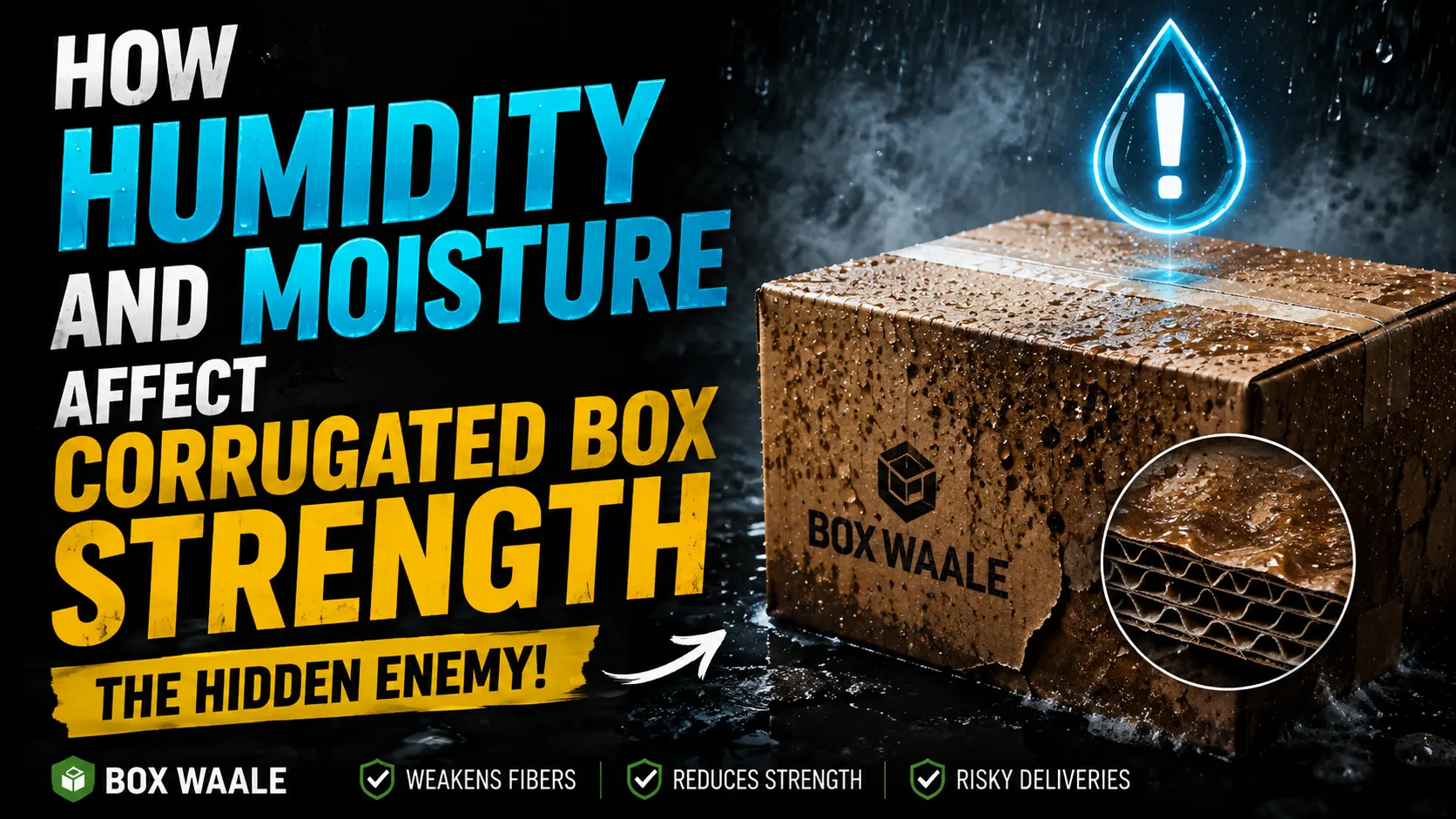
How Humidity and Moisture Affect Corrugated Box Strength
Read guide