
Published 2 Aug 2026· Updated 29 Aug 2026
ECT vs Bursting Strength: Which Corrugated Box Test Matters?
Edge crush test versus bursting strength: what each one measures, when each matters most for stacking or impact risk, and how procurement teams can specify the right test instead of treating them as interchangeable.
Key Takeaways
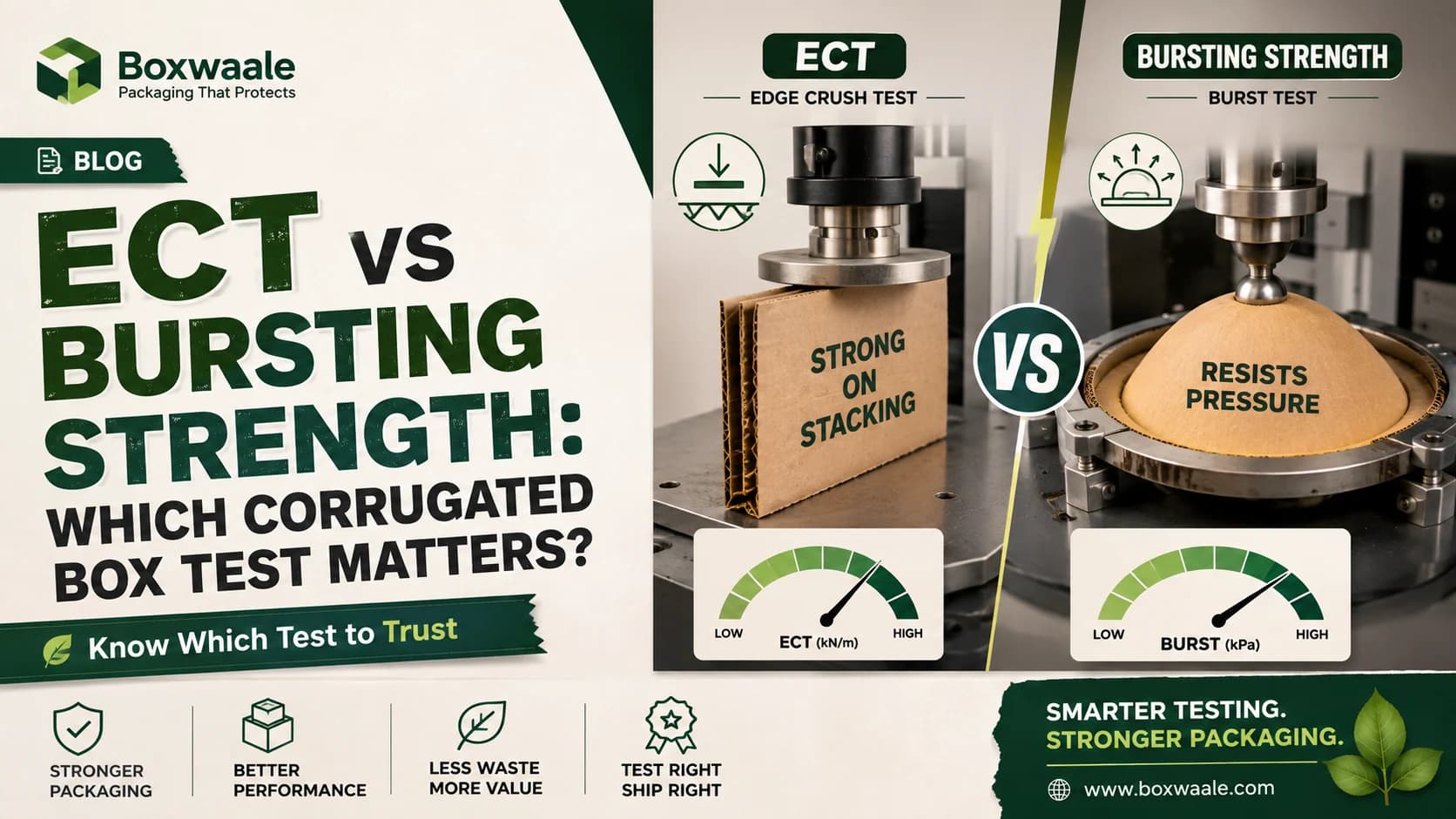
- ECT (Edge Crush Test) measures how much force a corrugated board can withstand when compressed along its edge, in the same direction stacking weight applies pressure.
- Bursting strength measures how much pressure a flat piece of board can take before it ruptures, which relates more closely to puncture and impact resistance.
- ECT correlates more closely with a box's stacking and compression performance, making it generally more relevant for boxes that will be palletised or stacked.
- Bursting strength is generally more relevant when the concern is a sharp, concentrated force against the box surface, such as from an irregularly shaped item.
- A board can have a good ECT rating but a weaker bursting strength, or vice versa, because the two properties draw on different aspects of the board's structure.
- Both ECT and bursting strength describe the corrugated board itself, not the finished box, so flap design, corner construction and box sizing also affect real-world performance.
ECT vs Bursting Strength: Which Corrugated Box Test Matters?
Table of Contents
Procurement teams sourcing corrugated packaging often see both ECT and BS mentioned on spec sheets and assume one can stand in for the other. It can't. Each test answers a different question about how a board will behave, and mixing them up is one of the more common specification mistakes buyers make. This comparison lays out the difference so you can ask for the right one.
Two Different Tests, Two Different Questions
At the simplest level: ECT asks "how much can this board resist being crushed edge-on, the way weight presses down through a stacked box?" Bursting strength asks "how much pressure can this flat board take before it ruptures?" Those are genuinely different kinds of mechanical stress, and a board can perform differently on each depending on how it's constructed.
Neither test is "better" in a general sense — they're suited to different failure modes, and a good specification decision starts with understanding which failure mode you're actually worried about for a given product and shipping route.
Why This Confusion Is So Common
Part of the reason ECT and bursting strength get treated as interchangeable is that both produce a single number on a spec sheet, and both are described loosely as measures of "strength" without further explanation. To someone comparing two supplier quotes side by side, two strength numbers can look like they are answering the same question when they are not. Taking a moment to ask what each figure actually measures, rather than assuming a higher number always means a stronger box in every sense, is the simplest way to avoid a mismatch between the test used and the risk you are actually trying to manage.
What Edge Crush Test (ECT) Measures
The edge crush test takes a small sample of corrugated board and applies compressive force along its edge — essentially the same direction that weight travels down through a stacked box's walls. The force at which the sample crushes is recorded as the ECT value.
Because this mimics the direction stacking weight actually loads a box, ECT correlates fairly well with a box's overall stacking, or compression, performance. It's a board-level test, though, not a test of the finished box, so real box compression strength (covered in our guide to corrugated boxes and how box design and construction affect stacking) still depends on additional factors like box height, flap design and how well the box is assembled.
What Bursting Strength (BS) Measures
Bursting strength, by contrast, applies expanding pressure to a flat area of board through a rubber diaphragm until it ruptures. This measures the board's resistance to a concentrated, localized force — closer to what happens when a sharp object presses against a box panel, or when a box takes an impact during rough handling.
BS has historically been a common specification in many markets because it's a relatively simple test to standardise and communicate. But its relevance to modern logistics, where stacking and palletisation are often the bigger risk than puncture, is more limited than its widespread use might suggest.
Which Specification Should Procurement Teams Ask For
The practical answer depends on your actual risk. A useful way to think about it:
| Concern | More relevant test | Why |
|---|---|---|
| Boxes stacked on pallets for storage or transit | ECT (and box compression testing) | Directly relates to the edge-wise, vertical load boxes experience when stacked |
| Boxes at risk of puncture or sharp impact | Bursting strength | Measures resistance to concentrated, localized pressure |
| Irregular, heavy, or protruding products | Bursting strength, alongside board GSM | Product shape can create localized pressure points against the panel |
| Long-distance or multi-handling shipments | Both, alongside box design review | Combines stacking risk with handling/impact risk over a longer journey |
Rather than defaulting to whichever test a previous supplier happened to quote, it's worth telling your manufacturer specifically how the box will be shipped, stored and handled, and letting that shape which specification (or combination) actually gets requested. A supplier who only ever quotes one figure, regardless of use case, isn't giving you the full picture.
Reading Supplier Spec Sheets Critically
When a supplier hands over a spec sheet quoting only one of these two figures, it is worth asking directly why that particular test was chosen and whether the other one is available too. A supplier who can explain the choice in terms of your actual product and shipping route is giving you useful, tailored advice; one who simply repeats a standard figure regardless of context may just be passing along whatever their paper mill quotes by default, without necessarily connecting it back to how your specific box will be used.
It is also worth remembering that both ECT and bursting strength describe the board, not the finished, assembled box. Box design choices — flap depth, corner construction, whether the box is sized correctly for its contents — interact with whichever board specification you choose, sometimes significantly. A well-designed box built from moderately specified board can outperform a poorly designed box built from board with a higher ECT or BS rating, which is a reminder that test figures are a starting point for a packaging conversation, not the entire conversation.
How Boxwaale Helps
Boxwaale's team talks through your actual shipping and stacking scenario before recommending a board specification, rather than defaulting to a single test figure across every order. If stacking is your primary concern we'll focus the conversation on edge crush and compression behaviour; if impact or puncture risk is the bigger issue, we'll weight the discussion toward bursting strength and GSM instead.
Frequently Asked Questions
Related Packaging Guide
Planning a packaging order?
Turn this guidance into a box specification
Share the product dimensions, packed weight, quantity, printing requirement and delivery postcode. Boxwaale will help narrow down the appropriate size, ply and board specification before quoting.
Frequently Asked Questions
Related Products
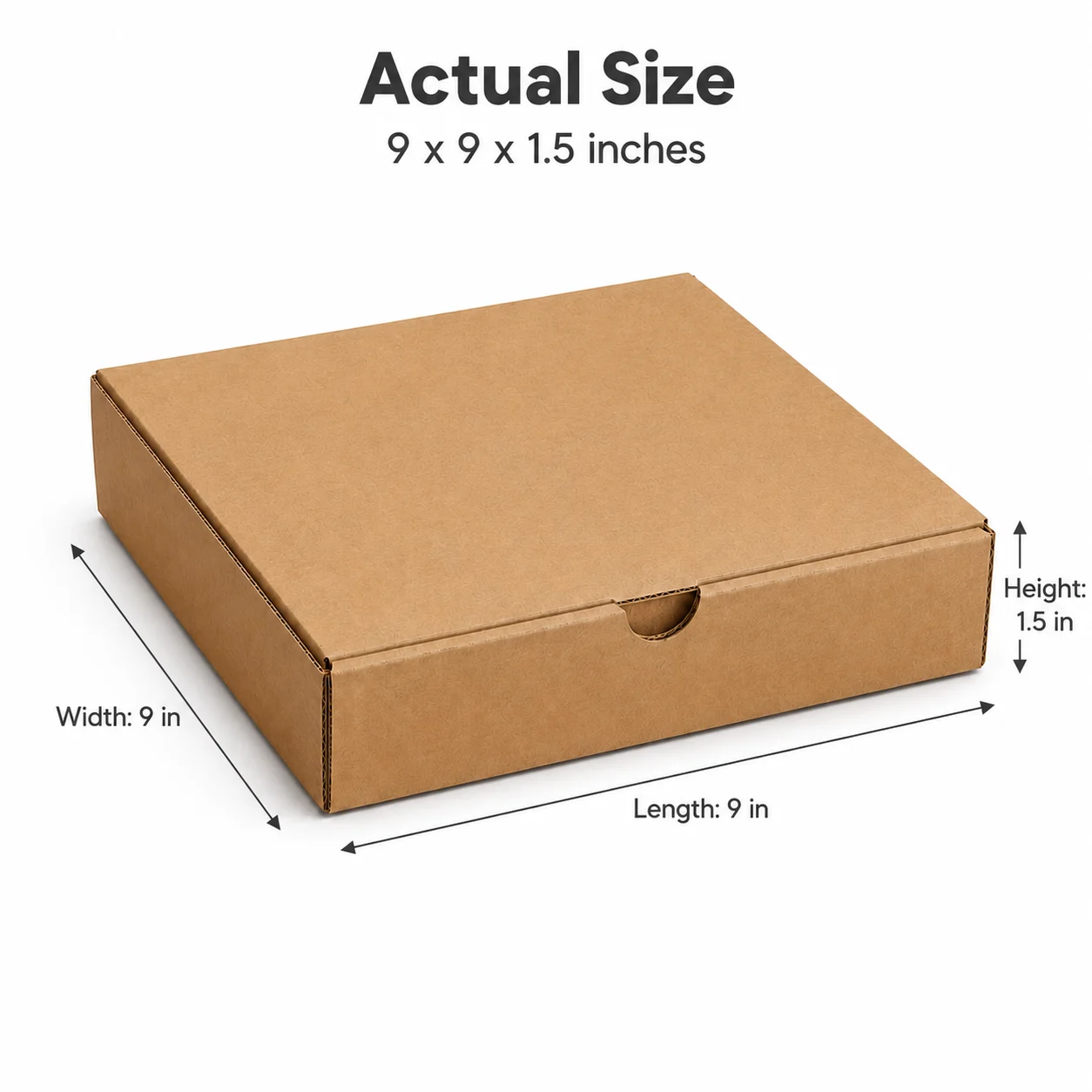
9x9 Inch Brown Corrugated Pizza Box for Food Delivery
Durable 9x9 inch brown corrugated pizza box designed for restaurants, cafes, cloud kitchens, and food delivery businesses.
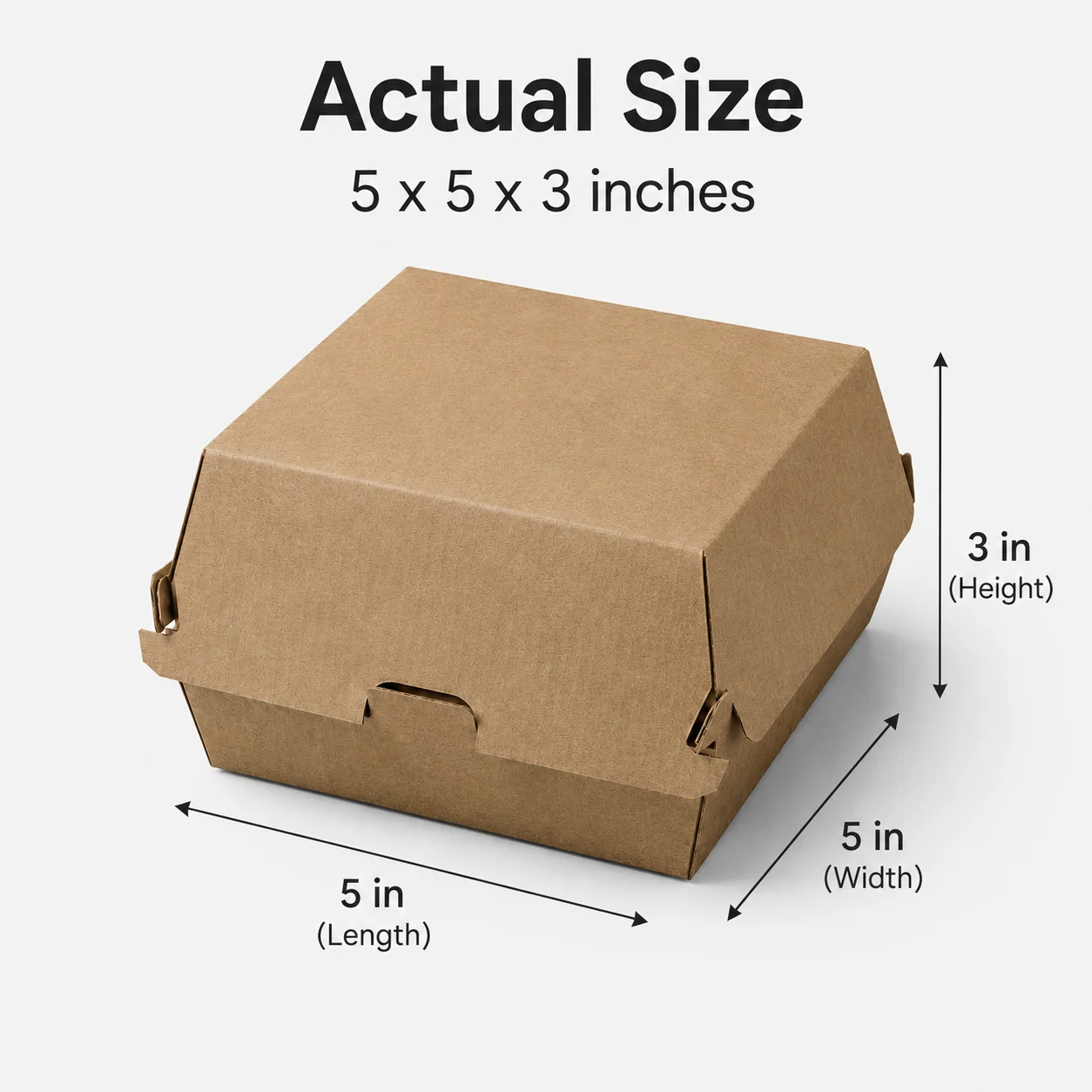
5x5 Inch Brown Kraft Burger Box for Takeaway & Food Delivery
Durable 5x5 inch brown kraft burger box designed for restaurants, cafes, cloud kitchens, and takeaway food packaging.

8x8 Inch Brown Kraft Cake Box for Bakery & Pastry Packaging
Premium 8x8 inch brown kraft cake box designed for bakeries, cafes, cloud kitchens, pastry shops, and dessert packaging.
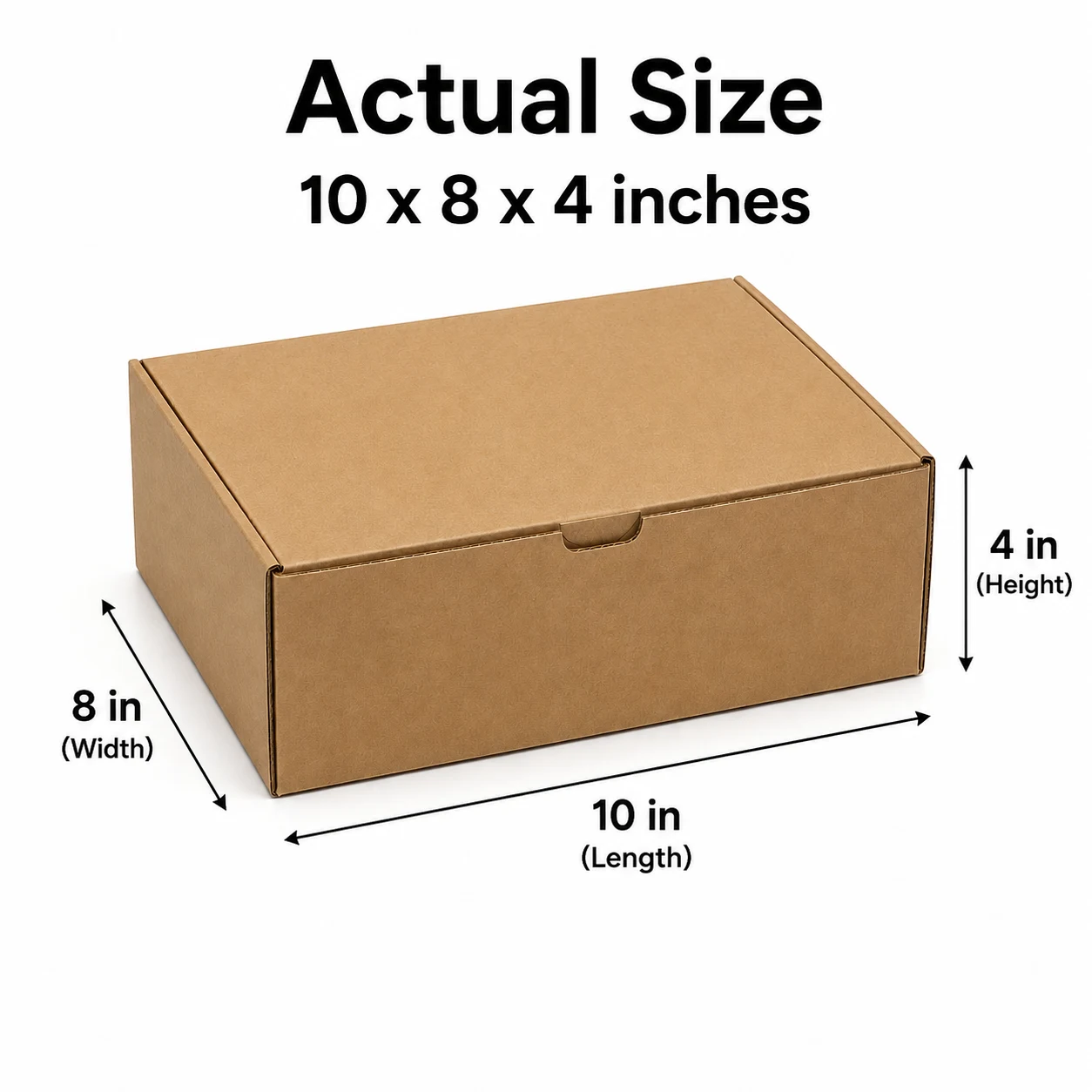
10x8x4 Inch Brown Corrugated Courier Box for E-commerce Shipping
Durable 10x8x4 inch brown corrugated courier box designed for e-commerce shipping, product delivery, storage, and secure packaging.
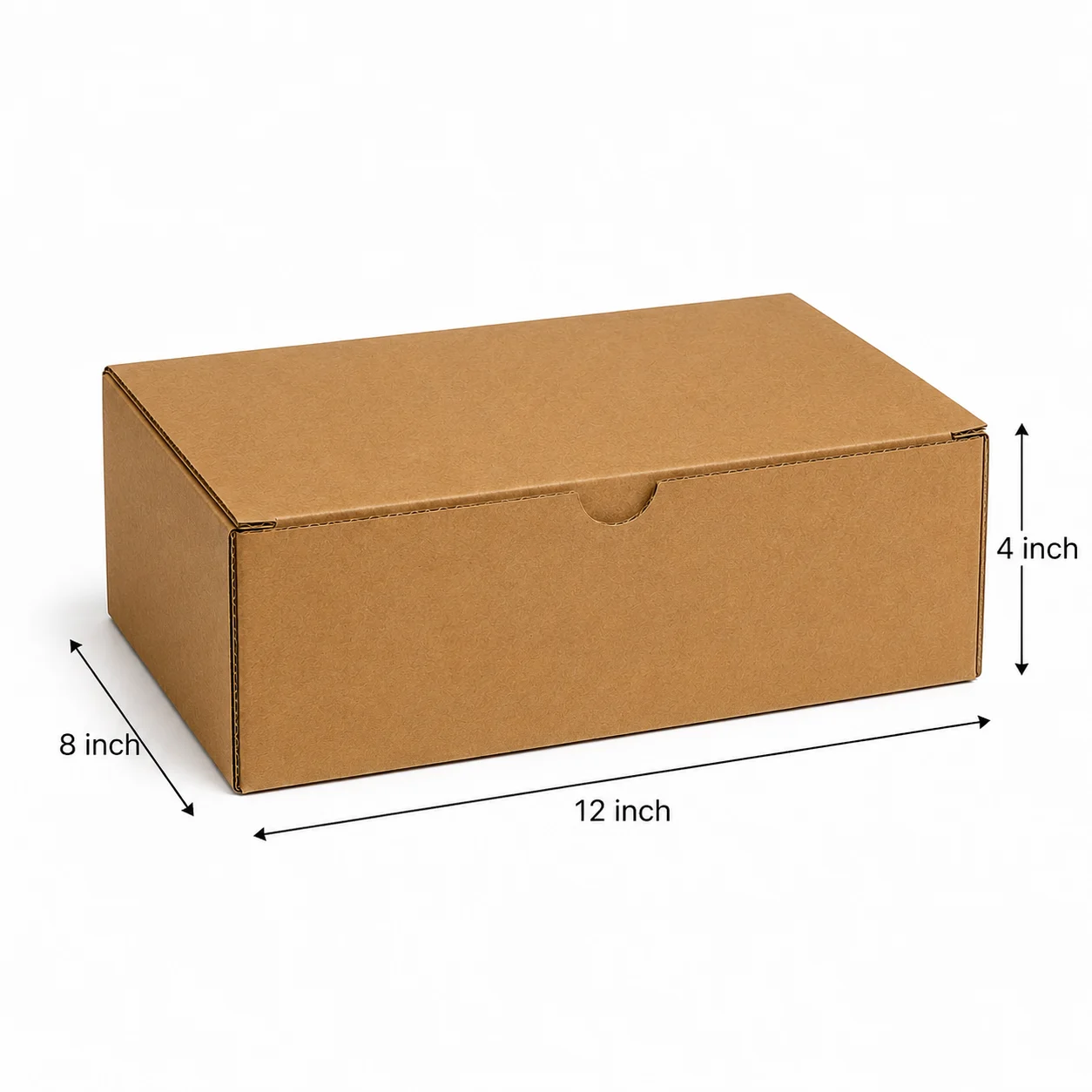
12x8x4 Inch Brown Corrugated 6 Bottle Nail Paint Packaging Box
Durable 12x8x4 inch brown corrugated nail paint box with six internal compartments, designed for cosmetic packaging, storage, gifting, and safe delivery.
Related Buying Guides
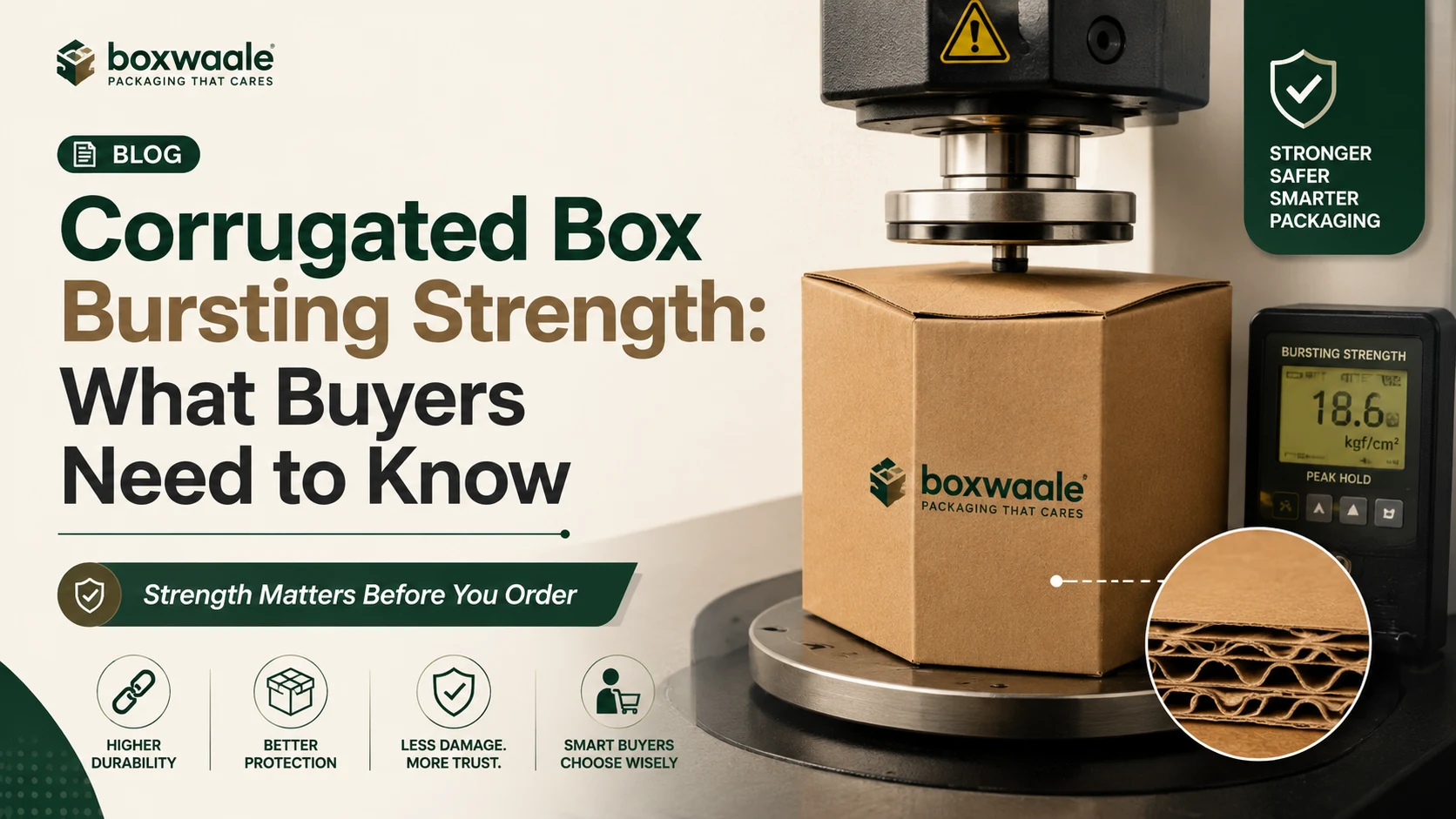
Corrugated Box Bursting Strength: What Buyers Need to Know
Read guide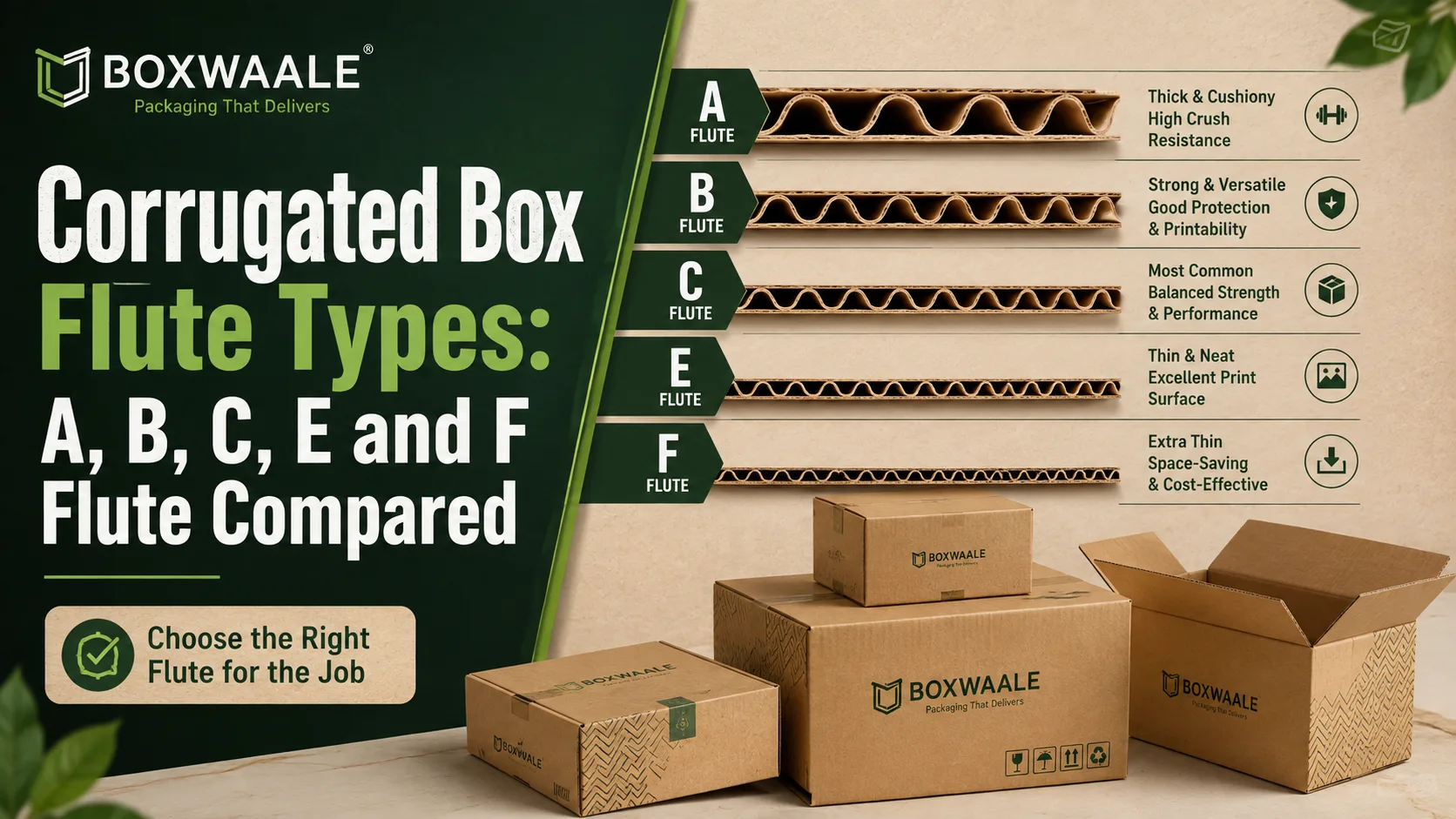
Corrugated Box Flute Types: A, B, C, E and F Flute Compared
Read guide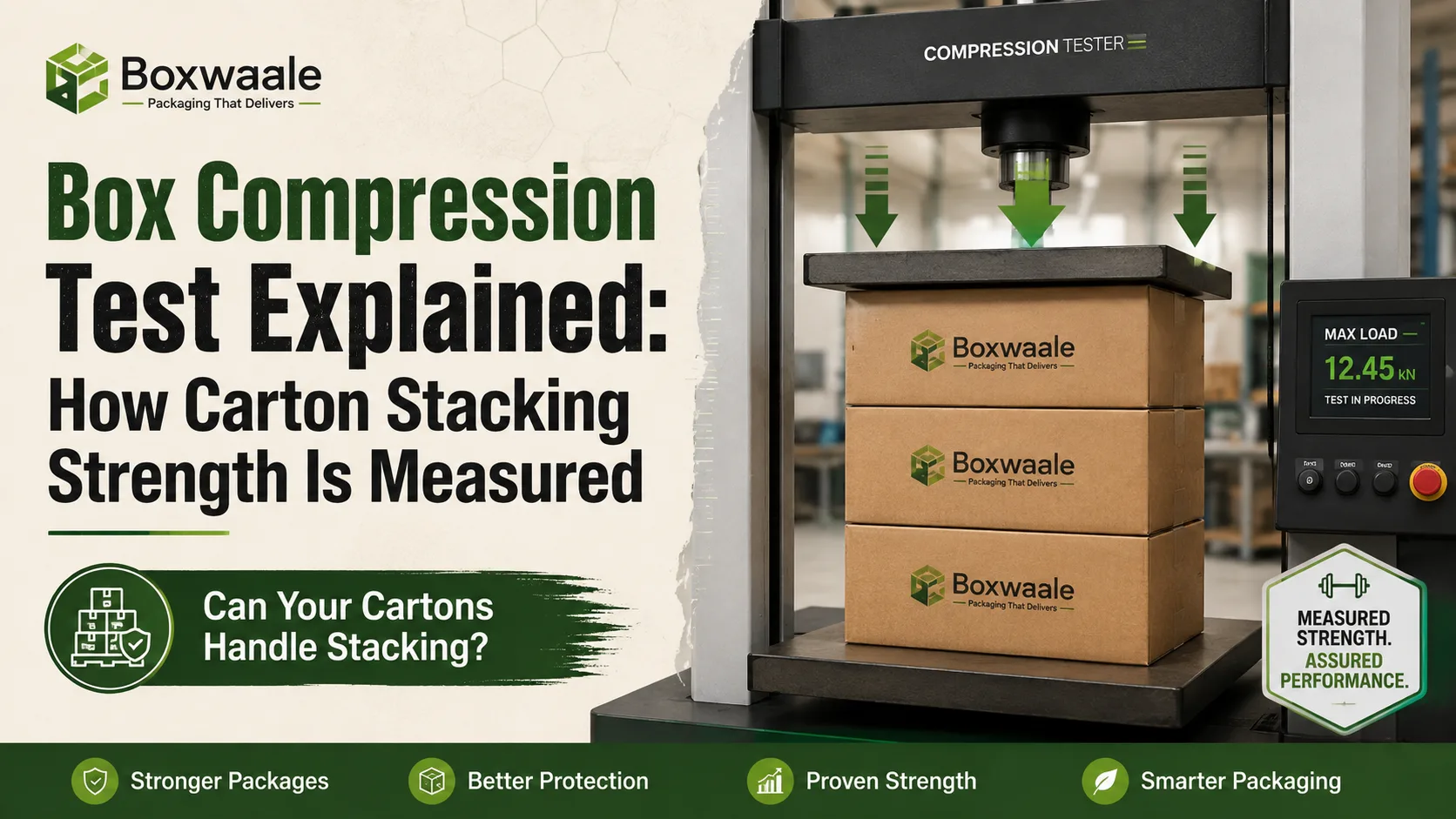
Box Compression Test Explained: How Carton Stacking Strength Is Measured
Read guide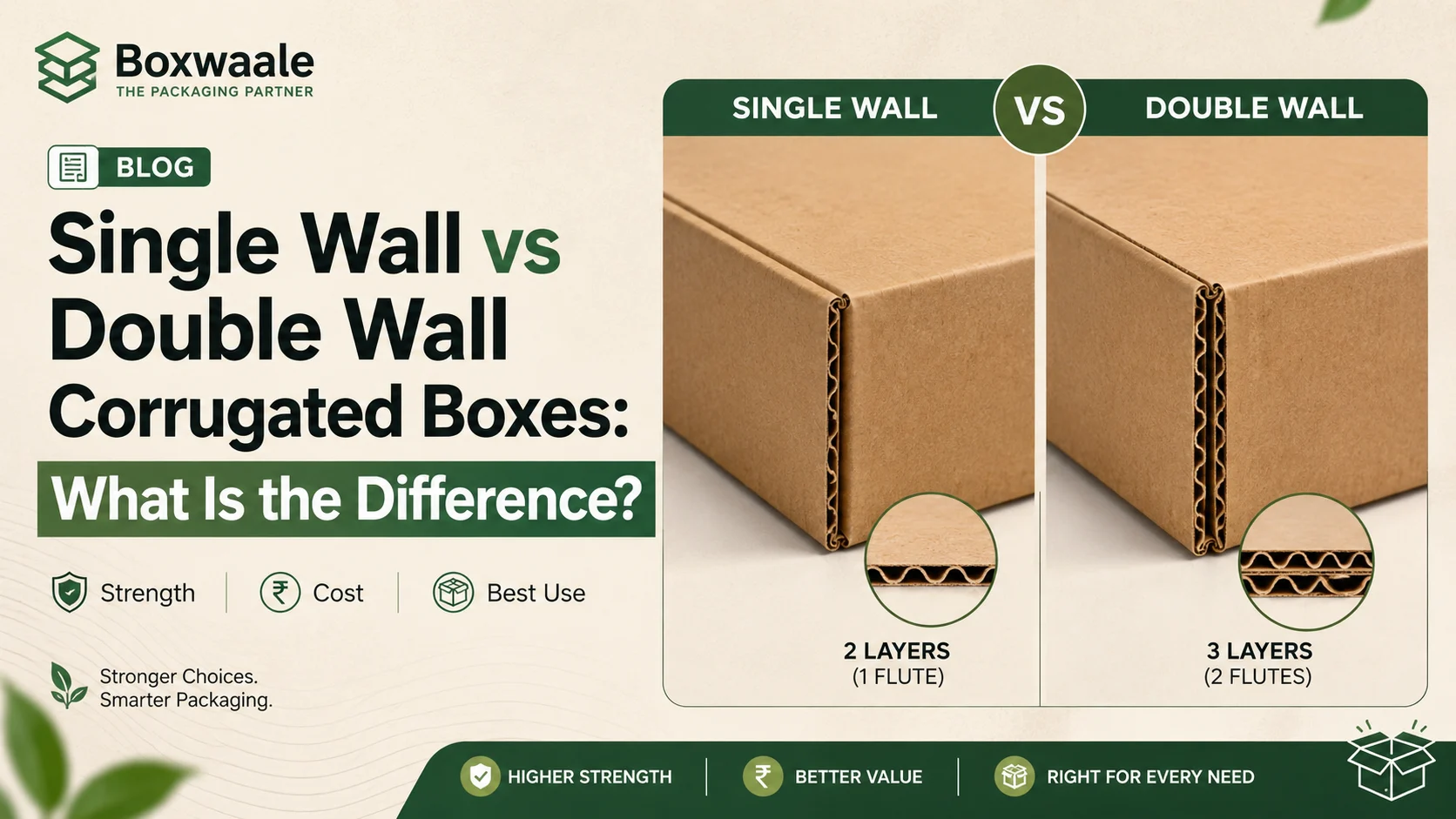
Single Wall vs Double Wall Corrugated Boxes: What Is the Difference?
Read guide
How Humidity and Moisture Affect Corrugated Box Strength
Read guide