
Published 2 Aug 2026· Updated 29 Aug 2026
Die-Cut Box vs Regular Slotted Carton: Which Format Fits Your Product?
Compare die-cut boxes and regular slotted cartons on tooling cost, closure design, presentation and production volume to choose the right packaging format.
Key Takeaways
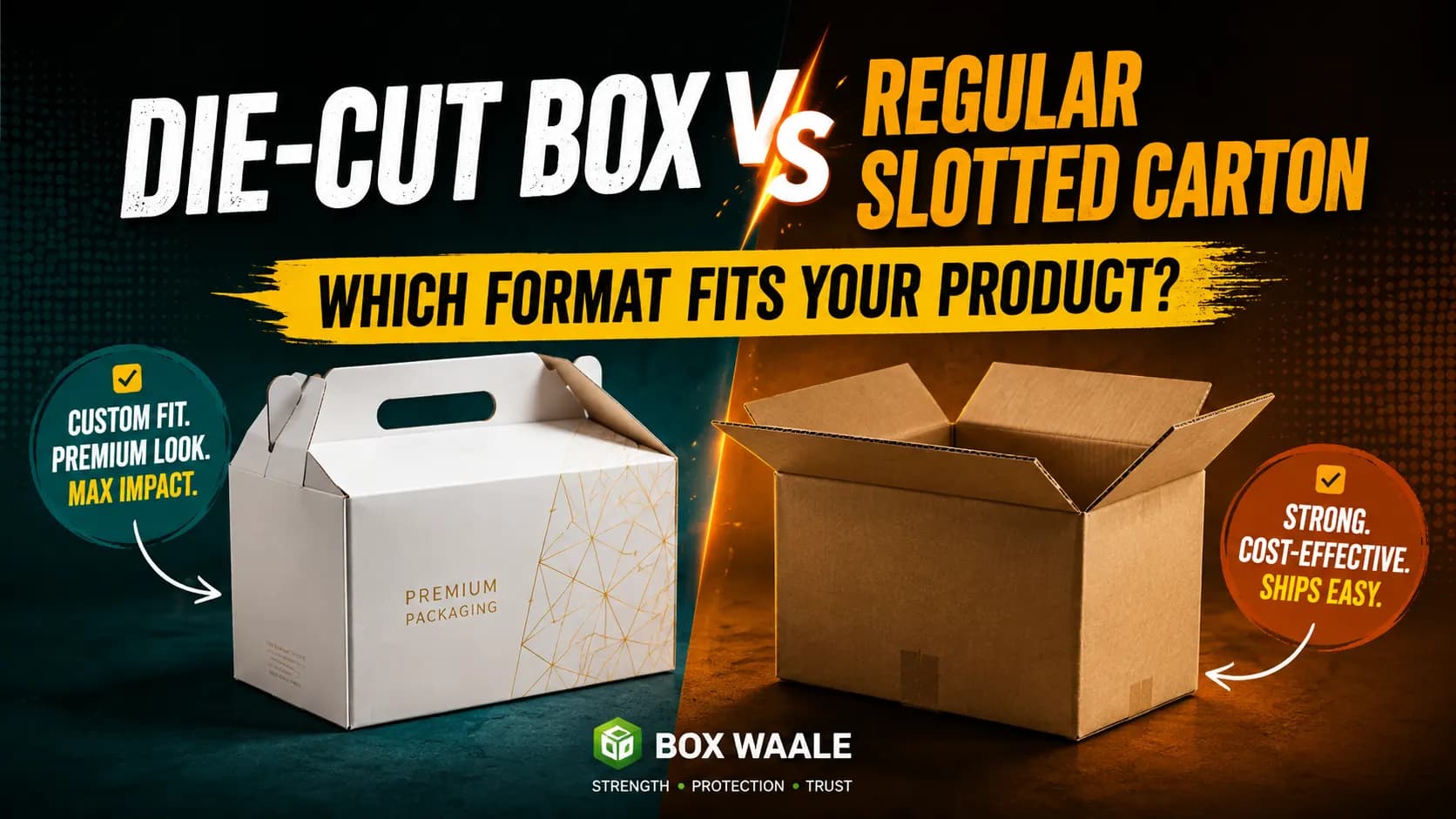
- A regular slotted carton is cut using standard slotting tooling, while a die-cut box is cut using a custom steel-rule die built specifically for that design's shape.
- Die-cutting allows a box to take shapes beyond a simple rectangle, such as a mailer box, tray, sleeve, or a box with built-in handles or a display window.
- Die-cut boxes carry a one-time tooling cost and a design and engineering step before production, while a stock RSC needs no custom die and can move into production faster.
- Many die-cut designs include tuck-in flaps, lock tabs or a crash-lock base that let the box close securely without tape, whereas an RSC generally relies on tape, glue or stitching along its centre seam.
- Die-cut formats tend to make more financial sense at higher volumes or for designs that will be reordered repeatedly, since the die cost is spread across more units over time.
- RSC is generally the more practical choice for testing a new product, running a limited batch, or situations where box sizes change frequently.
Die-Cut Box vs Regular Slotted Carton: Which Format Fits Your Product?
Table of Contents
Choosing between a die-cut box and a regular slotted carton usually comes down to one question that gets asked too late in the process: how much control do you actually need over the box's final shape and closure? This comparison walks through how the two formats are made, what changes structurally and visually, and how to match the right one to your production volume and budget.
Two Different Ways to Build a Box
A regular slotted carton, or RSC, is cut using standard slotting tooling that most converting lines keep set up as a default, producing the familiar rectangular box with four flaps folding in on the top and bottom. A die-cut box, by contrast, is cut using a custom steel-rule die built specifically for that design, which allows the blank to take almost any shape — a mailer box, a tray, a sleeve, a box with built-in handles or a display window, or any other form beyond a simple rectangle.
The core difference is that RSC works within one standard shape, while die-cutting lets the design go wherever the product or brand needs it to, at the cost of needing dedicated tooling made specifically for that shape before the first box can be produced. It's also worth knowing that a die can be designed to be relatively simple, cutting a straightforward tray or sleeve, or considerably more complex, incorporating handles, windows, or multiple fold lines in one piece, and design complexity generally has a direct bearing on both die cost and how carefully the design needs to be engineered before it goes into production.
Tooling, Setup and Minimum Order Quantity
Because die-cutting needs a custom die, there's a one-time tooling cost and a design and engineering step before production can start, which adds both cost and time upfront compared to a stock RSC. This makes die-cut boxes generally better suited to orders where volume is high enough to spread that upfront cost across many units, or where the design will be reordered repeatedly using the same die.
An RSC needs no custom die for standard sizes, so it can move into production faster and remains reasonable even for smaller or one-off orders. If you're testing a new product, running a limited batch, or need packaging quickly without a lengthy tooling lead-in, RSC is usually the more practical starting point.
Closure, Structural Behaviour and Presentation
Closure is one of the most noticeable differences between the two. Die-cut boxes often include tuck-in flaps, lock tabs, or a crash-lock base built directly into the design, which can let the box close securely without any tape at all. An RSC relies on tape, glue or stitching along its centre seam, since its flaps don't have a built-in locking mechanism.
Structurally, a die-cut design can also include reinforcement features cut directly into the shape, such as locking tabs that add rigidity at the corners, whereas an RSC's strength comes from its standard column construction rather than any added structural features. On presentation, die-cut boxes tend to suit branded, retail-facing or unboxing-focused use cases well, since the shape and finish can be designed around how the box will be seen and opened, while an RSC leans more utilitarian and is generally chosen for shipping and storage rather than shelf display. If you're weighing this trade-off for a specific product, it's worth browsing the custom packaging boxes range to see how die-cut formats are typically specified. Die-cut also allows a supplier to build in small functional details that an RSC simply can't accommodate, such as a hand-hole for easier lifting, a partial window for product visibility, or a base designed to lock flat without any tape at all, each of which changes how the box is actually used day to day, not just how it looks.
Matching Format to Production Volume and Budget
As a general guide, die-cut formats tend to make more financial sense at higher volumes or for designs that will be reordered repeatedly, since the die cost is a one-time investment that gets spread thinner as order volume grows. RSC tends to be the more economical and faster option for shipping-only use cases, lower volumes, or situations where box sizes change frequently and a dedicated die for each size wouldn't be practical. A useful way to frame the decision is to estimate how many times a design will be reordered over its expected lifetime: a shape that will be produced repeatedly over months or years justifies the upfront die investment far more easily than a one-off packaging need, where the tooling cost would be carried by a single run.
| Factor | Die-Cut Box | Regular Slotted Carton (RSC) |
|---|---|---|
| Tooling | Custom die required, one-time cost and lead time | Standard tooling, no custom die needed |
| Closure | Often tape-free with tuck-in or lock-tab designs | Generally needs tape, glue or stitching |
| Presentation | Suited to branded, retail-facing designs | More utilitarian, shipping-focused |
| Best fit | Higher volumes, repeat orders, retail packaging | Smaller volumes, frequent size changes, pure shipping |
How Boxwaale Helps
Boxwaale helps buyers decide whether a project genuinely needs a custom die-cut shape or works just as well as a stock RSC, based on branding goals, product shape and order volume, and produces both formats. This means the recommendation is based on what the product and budget actually call for, rather than defaulting to the more elaborate option by default.
Frequently Asked Questions
Related Packaging Guide
Planning a packaging order?
Turn this guidance into a box specification
Share the product dimensions, packed weight, quantity, printing requirement and delivery postcode. Boxwaale will help narrow down the appropriate size, ply and board specification before quoting.
Frequently Asked Questions
Related Products
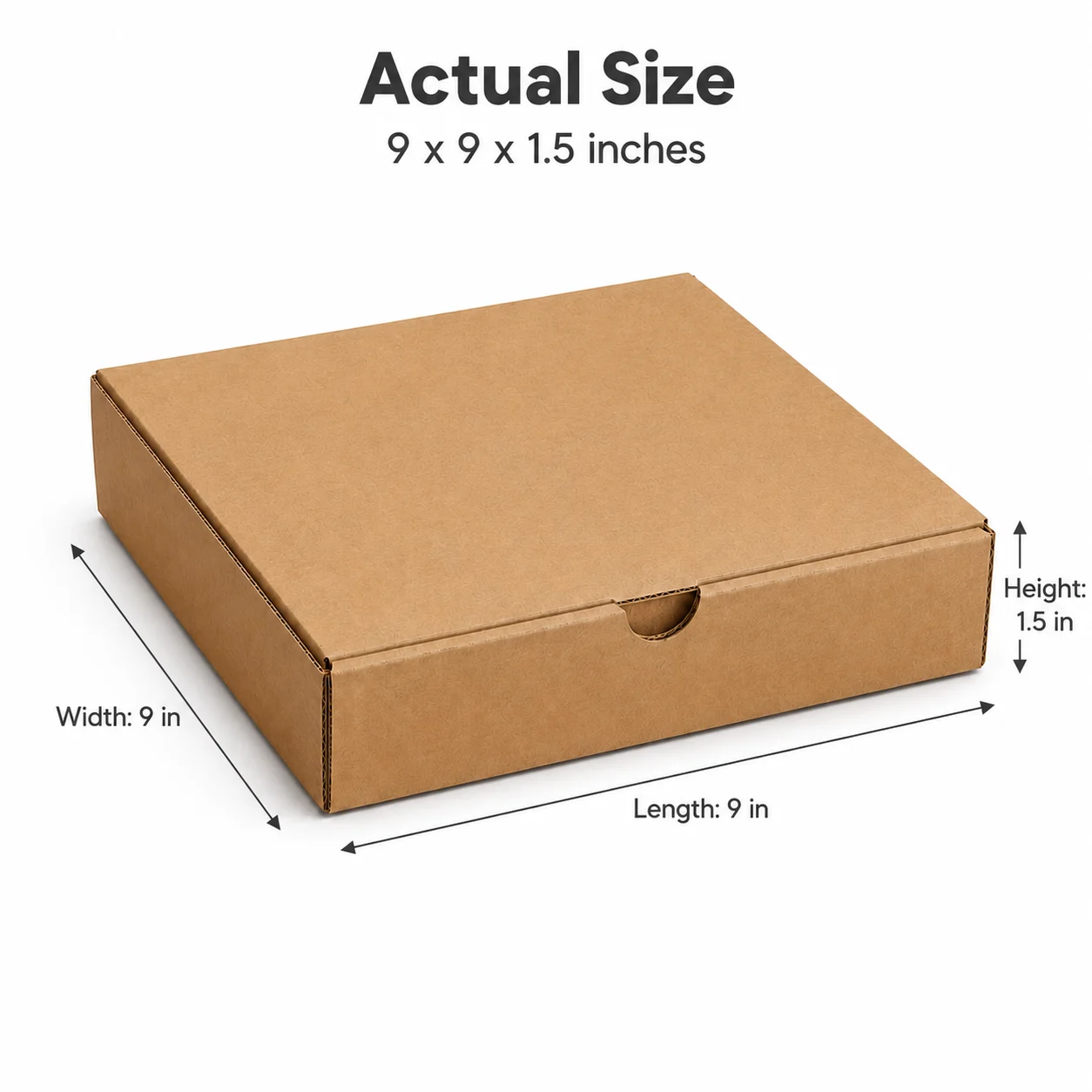
9x9 Inch Brown Corrugated Pizza Box for Food Delivery
Durable 9x9 inch brown corrugated pizza box designed for restaurants, cafes, cloud kitchens, and food delivery businesses.
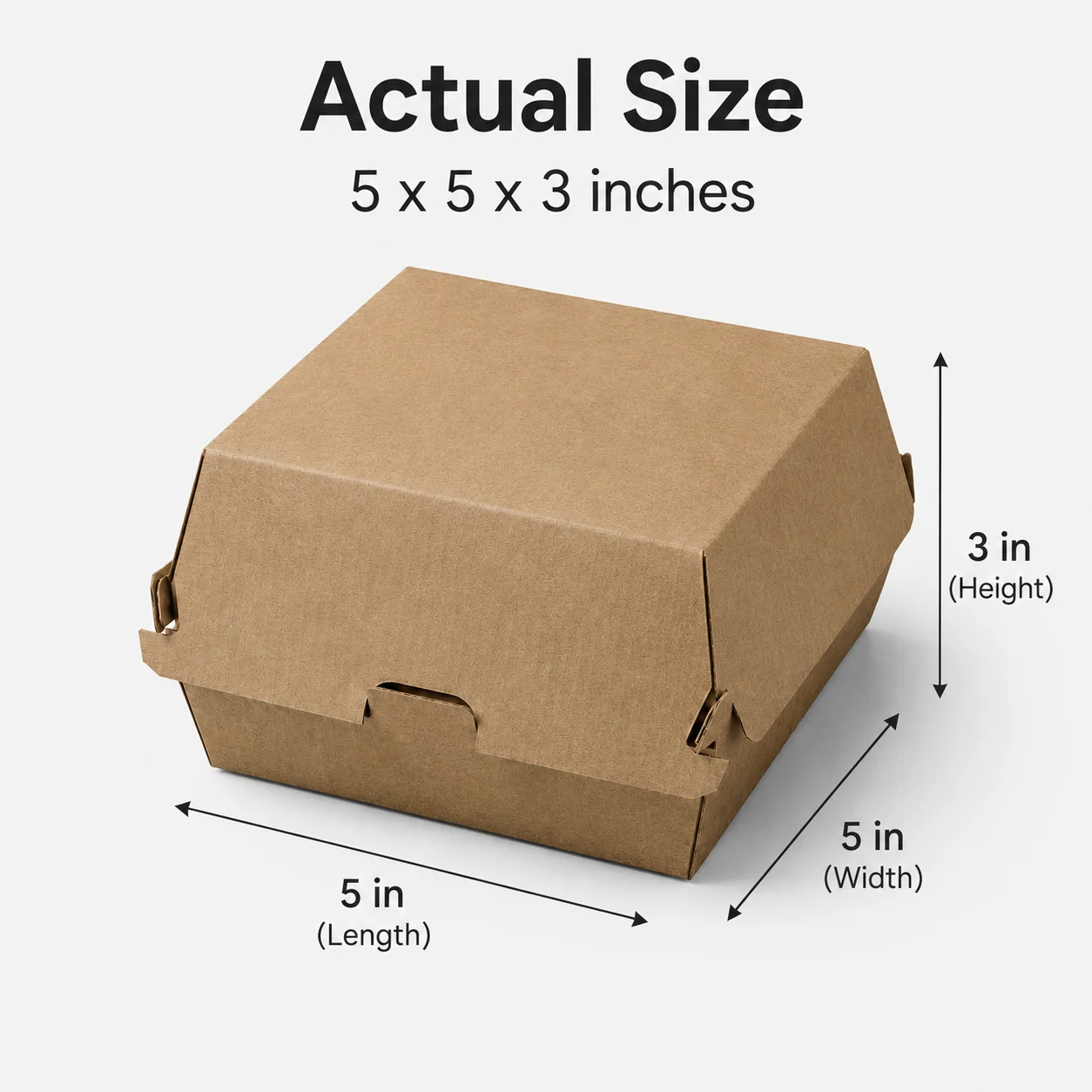
5x5 Inch Brown Kraft Burger Box for Takeaway & Food Delivery
Durable 5x5 inch brown kraft burger box designed for restaurants, cafes, cloud kitchens, and takeaway food packaging.

8x8 Inch Brown Kraft Cake Box for Bakery & Pastry Packaging
Premium 8x8 inch brown kraft cake box designed for bakeries, cafes, cloud kitchens, pastry shops, and dessert packaging.
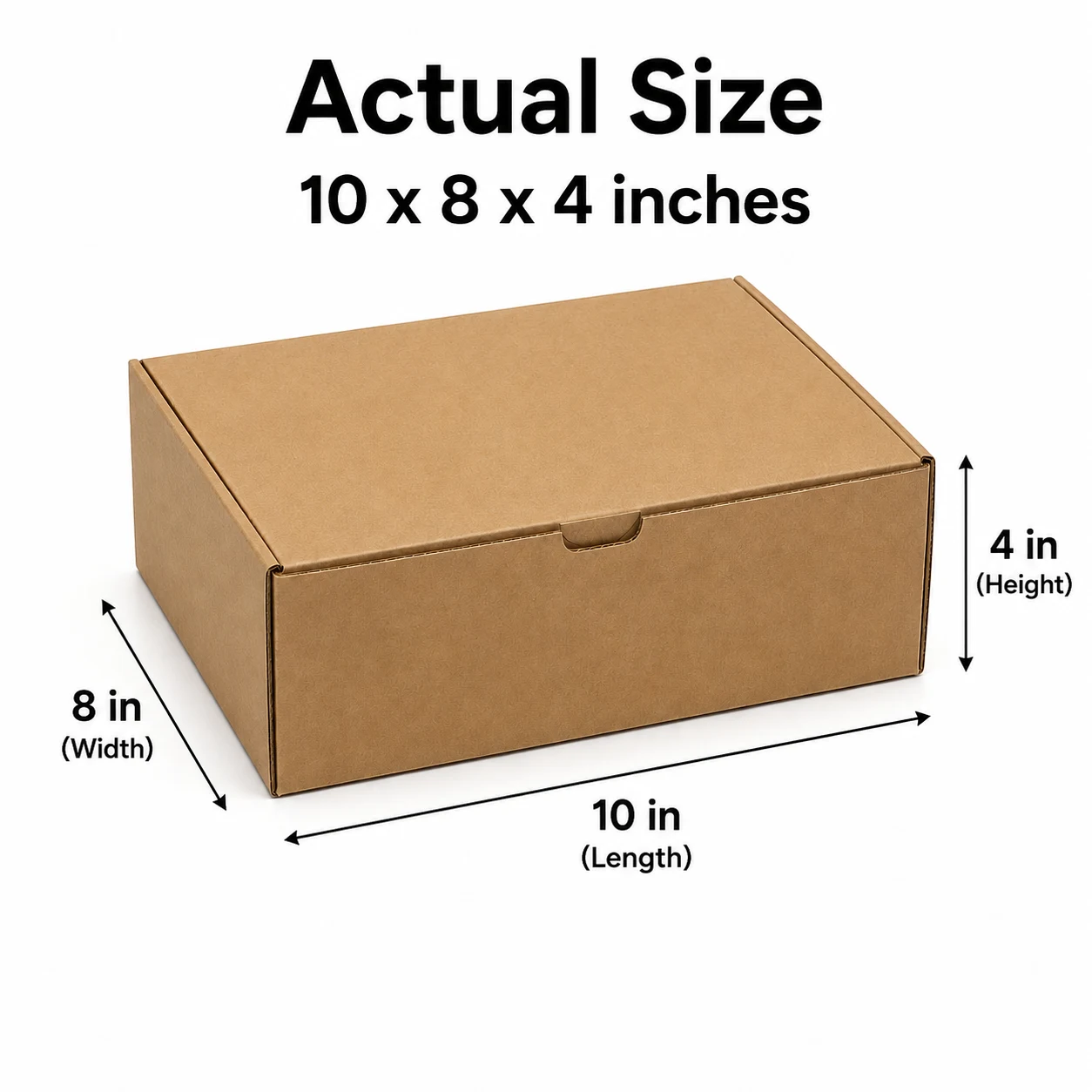
10x8x4 Inch Brown Corrugated Courier Box for E-commerce Shipping
Durable 10x8x4 inch brown corrugated courier box designed for e-commerce shipping, product delivery, storage, and secure packaging.
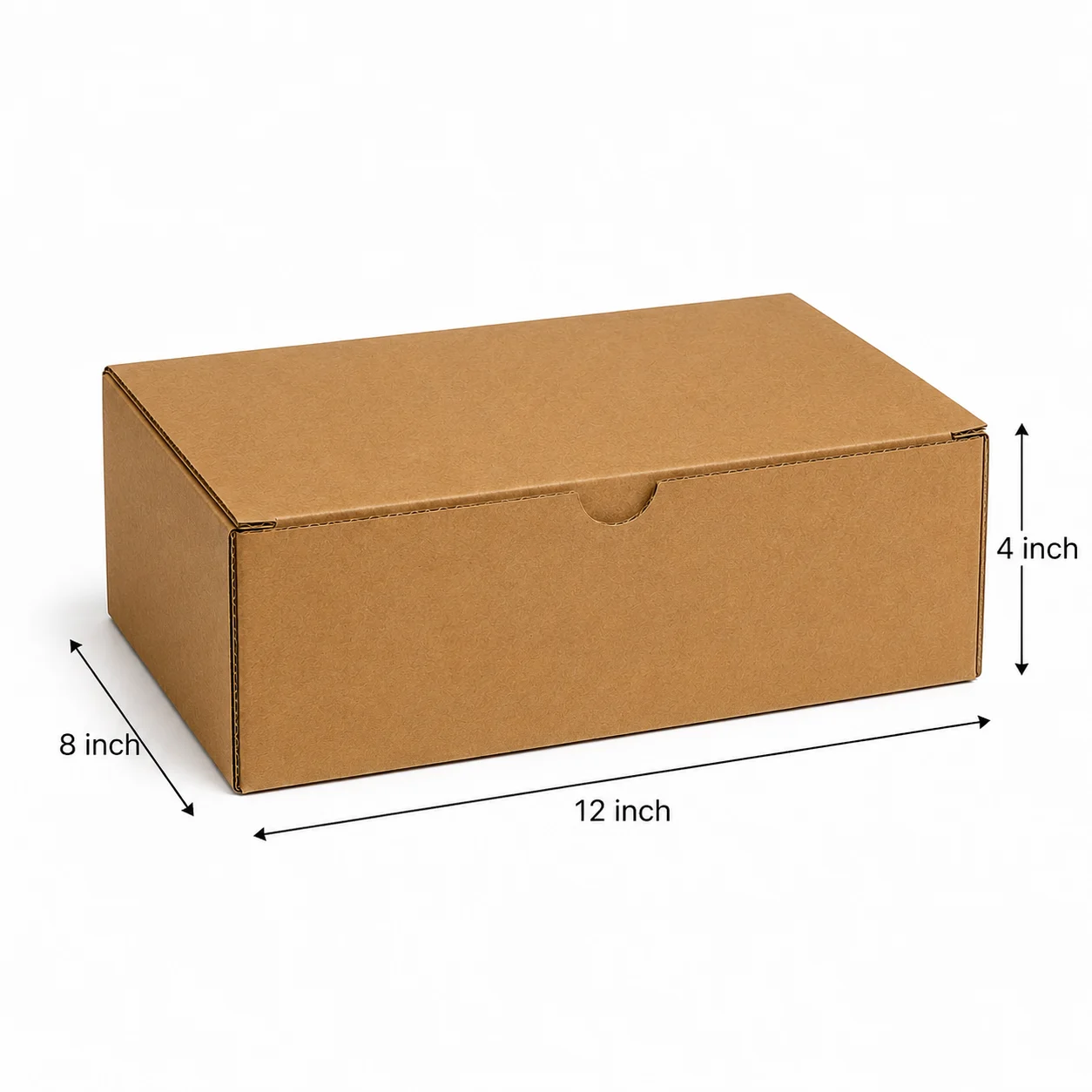
12x8x4 Inch Brown Corrugated 6 Bottle Nail Paint Packaging Box
Durable 12x8x4 inch brown corrugated nail paint box with six internal compartments, designed for cosmetic packaging, storage, gifting, and safe delivery.
Related Buying Guides
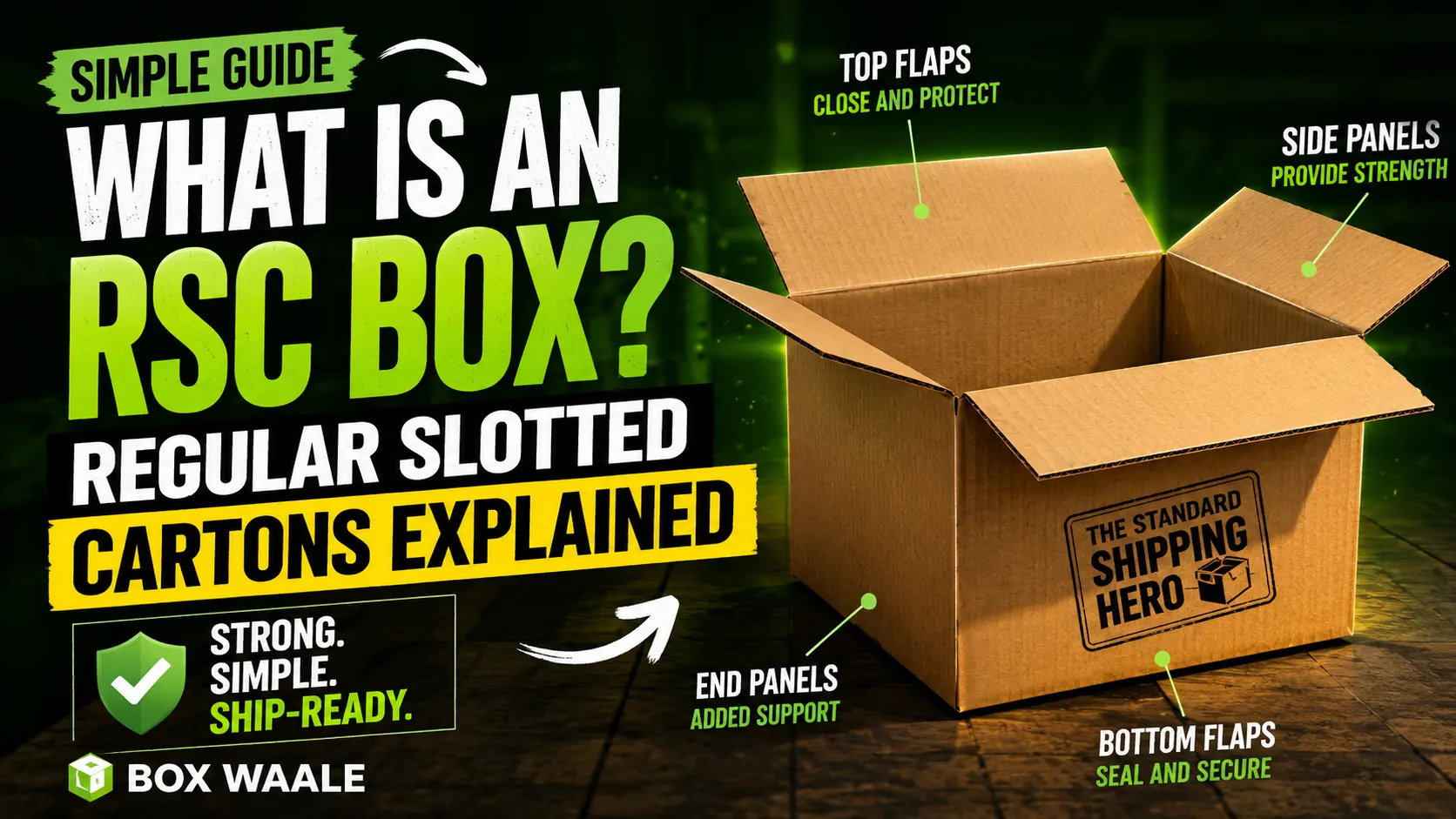
What Is an RSC Box? Regular Slotted Cartons Explained
Read guide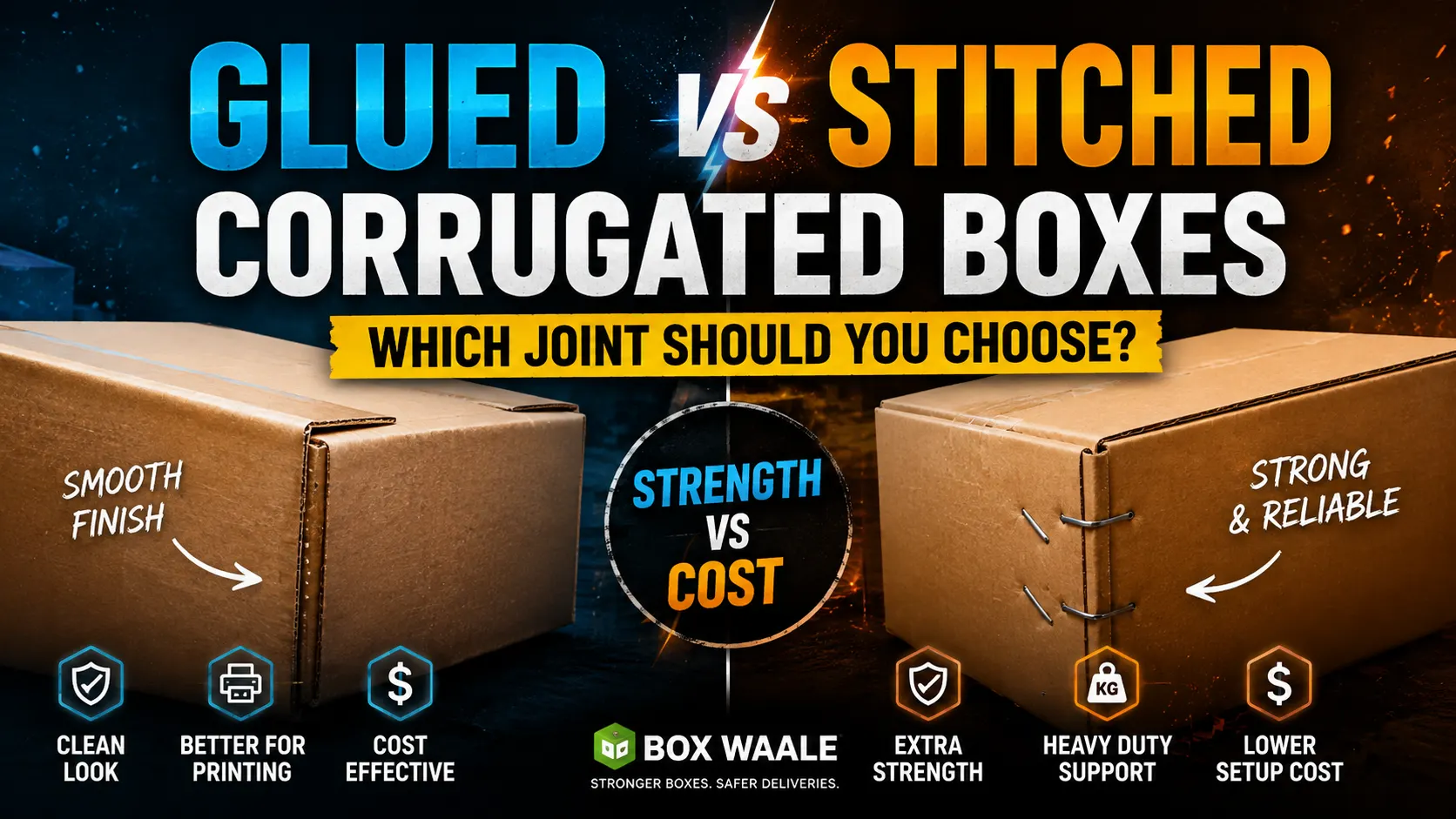
Glued vs Stitched Corrugated Boxes: Which Joint Should You Choose?
Read guide
Corrugated Rolls, Sheets and Boxes: Which Protective Format Do You Need?
Read guide
Mono Carton vs Corrugated Box: Construction, Uses and Cost Compared
Read guide