Published 2 Aug 2026· Updated 29 Aug 2026
Void Fill for Shipping Boxes: Paper, Air Pillows and Other Options Compared
Compare paper void fill, air pillows, foam peanuts and honeycomb wrap on movement control, fragility suitability, presentation and recyclability.
Key Takeaways
- Void fill's primary job is taking up empty space so a product cannot shift inside a box, while cushioning specifically absorbs shock from impacts like drops, and not every material does both equally well.
- Paper-based void fill is generally recyclable through standard paper recycling streams and low cost, but it needs to be used in sufficient volume to actually restrict movement.
- Air pillows are space-efficient in storage since a small amount of uninflated film expands to fill a lot of void, but the plastic film generally is not accepted in standard paper recycling streams.
- An air pillow can rupture or slowly deflate during a longer transit, which reduces its effectiveness partway through the journey in a way that is harder to catch than paper fill's more predictable failure mode of simply compacting.
- Corrugated inserts and shaped trays take more upfront design effort but offer structured, repeatable protection and can be reused across many shipments of the same recurring product.
- Void fill works best alongside a correctly sized box, since a box that already fits the product closely needs far less fill to prevent movement than an oversized one.
Void Fill for Shipping Boxes: Paper, Air Pillows and Other Options Compared
Table of Contents
A product that fits loosely inside a box will move during transit no matter how well the box itself is built, and void fill exists specifically to take up that extra space so contents don't shift, rattle or collide with the box walls. This comparison looks at paper-based fill, air pillows, and a few other common options, weighing them against movement control, fragility suitability, presentation, storage footprint and recyclability.
Why Empty Space Inside a Box Is a Packaging Problem
Even a strong, well-made box doesn't protect its contents if the product inside has room to move. Unrestrained movement during transit causes impact damage from the inside, as the product repeatedly strikes the box walls or other items with every turn, stop and bump along the route, regardless of how sturdy the outer carton is. This is worth separating from cushioning against drops: void fill's core job is restraining movement, while cushioning specifically absorbs shock from an impact. Some materials do both reasonably well; others are stronger at one than the other, which is part of why there isn't a single universal answer for every shipment. The right choice also depends on how the parcel will actually travel: a short domestic courier run with a handful of handling points is a different risk profile from a long-haul shipment passing through multiple sorting facilities, and void fill that's adequate for one may be under-specified for the other.
Paper-Based Void Fill
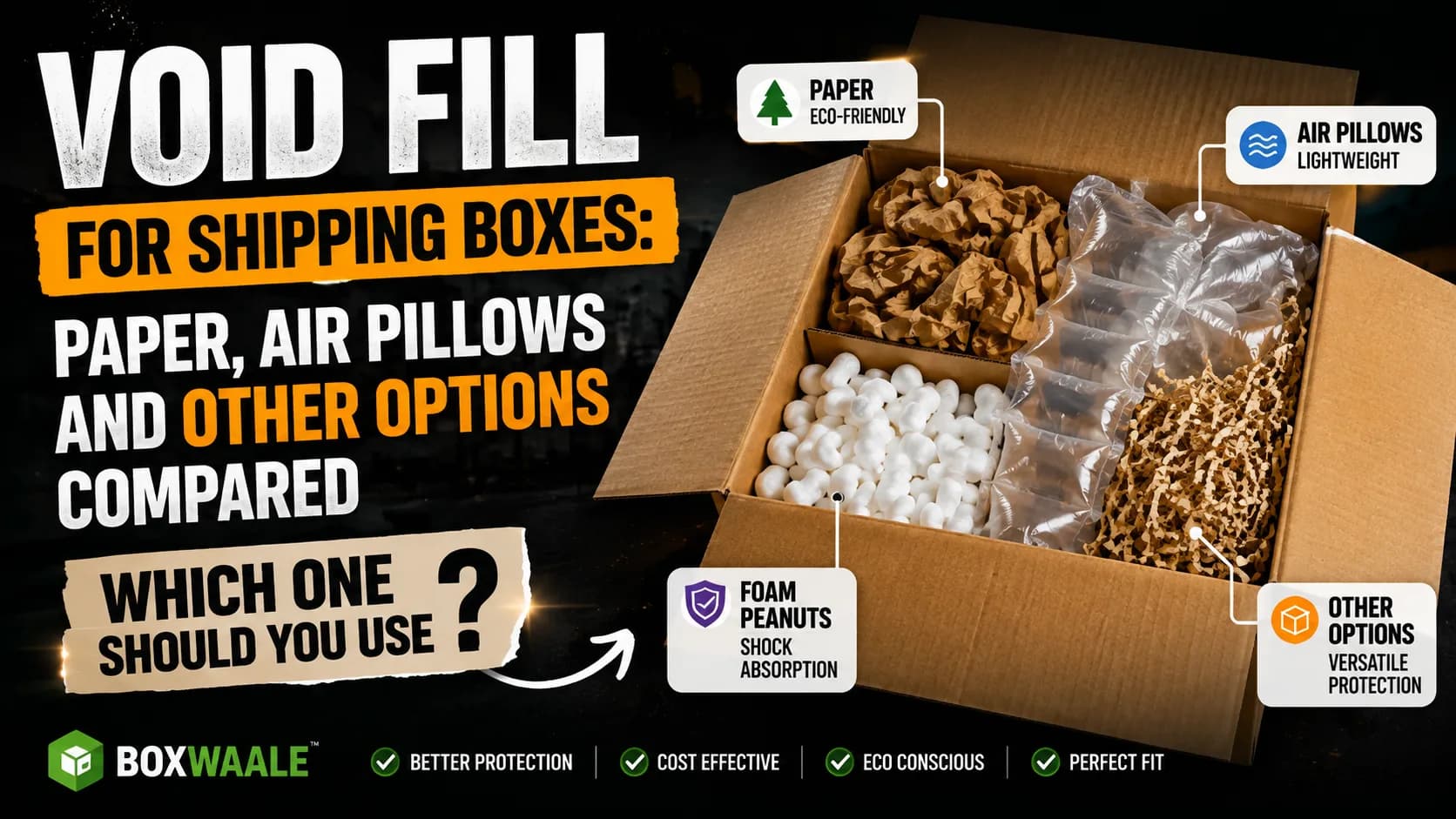
Crinkled kraft paper and paper pads are among the most widely used void fill materials, dispensed from rolls that crumple as they're fed into the box. Their main advantages are that they're generally recyclable through standard paper recycling streams, lightweight, low cost, and visually consistent with a brand's kraft or eco-conscious packaging look. They also compress and expand easily to fill irregular gaps around oddly shaped items.
The trade-off is that paper fill offers less structured cushioning against hard impacts compared to foam or engineered inserts, and it needs to be used in sufficient volume to actually restrict movement — underfilling is one of the most common reasons void fill fails to do its job. For moderately fragile items shipped through standard courier handling, paper void fill used generously is often a reasonable default.
Air Pillows and Inflatable Fill
Air pillows are sealed plastic pouches inflated with air, either using a dedicated inflator machine on-site or ordered pre-inflated. Their main advantage is efficiency of space: a large volume of packed pillows fills a lot of void from a very small footprint of uninflated film in storage, and the fill they provide tends to be fairly consistent from pillow to pillow.
The trade-off is largely environmental and logistical. The plastic film used generally isn't accepted in standard paper recycling streams, which matters for businesses trying to keep their packaging fully paper-based or reduce plastic use. There's also a practical risk that a pillow can rupture or slowly deflate over a longer transit, which reduces the void fill's effectiveness partway through the journey rather than at the point it was packed. Because that risk only becomes visible once the parcel is opened at the other end, it's harder to catch in routine quality checks than paper-based fill, which tends to fail more predictably by simply compacting rather than deflating unexpectedly.
Other Options: Foam, Corrugated Inserts and Honeycomb Wrap
Loose-fill foam peanuts offer effective cushioning and mould around irregular shapes easily, but they're messy to work with, prone to static cling, and generally more limited in terms of standard recycling acceptance compared to paper options. Corrugated inserts and shaped trays take more upfront design effort since they're built to a specific product's shape, but they offer structured, repeatable protection and can be reused across many shipments of the same item, which makes them a good fit for a recurring SKU rather than a one-off or highly variable product range.
Honeycomb paper wrap is a newer paper-based option that expands into a cushioned structure and offers a middle ground between the light protection of crinkled paper and the more structured cushioning of foam, while remaining a paper-based, generally more recyclable material. Choosing the right void fill works best alongside correctly sized packaging in the first place, since less empty space means less fill is needed to control movement — it's worth reviewing ecommerce packaging boxes sized closely to your typical product range before finalising a void fill strategy. In practice, many businesses end up using more than one option depending on the product line, using a structured corrugated insert for a recurring bestseller while relying on paper void fill for lower-volume or variable-sized items, rather than trying to standardise on a single material across every shipment.
| Option | Movement Control | Fragility Suitability | Presentation | Recyclability |
|---|---|---|---|---|
| Paper void fill | Good, needs adequate volume | Moderate | Neutral to premium, kraft look | Generally recyclable as paper |
| Air pillows | Good, space-efficient | Moderate | Neutral, less visible | Generally not standard paper recycling |
| Foam peanuts | Good, moulds to shape | Good | Lower, can look messy | Generally limited |
| Corrugated inserts | Very good, shape-specific | Good for repeat SKUs | High, structured | Generally recyclable as paper |
| Honeycomb wrap | Good | Moderate to good | Good | Generally recyclable as paper |
How Boxwaale Helps
Boxwaale supplies paper-based void fill and corrugated insert options for ecommerce sellers who want to reduce in-transit movement while keeping their packaging materials largely paper-based, and can suggest a combination of box size and fill based on product weight and typical shipping distance.
Frequently Asked Questions
Related Packaging Guide
Planning a packaging order?
Turn this guidance into a box specification
Share the product dimensions, packed weight, quantity, printing requirement and delivery postcode. Boxwaale will help narrow down the appropriate size, ply and board specification before quoting.
Frequently Asked Questions
Related Products
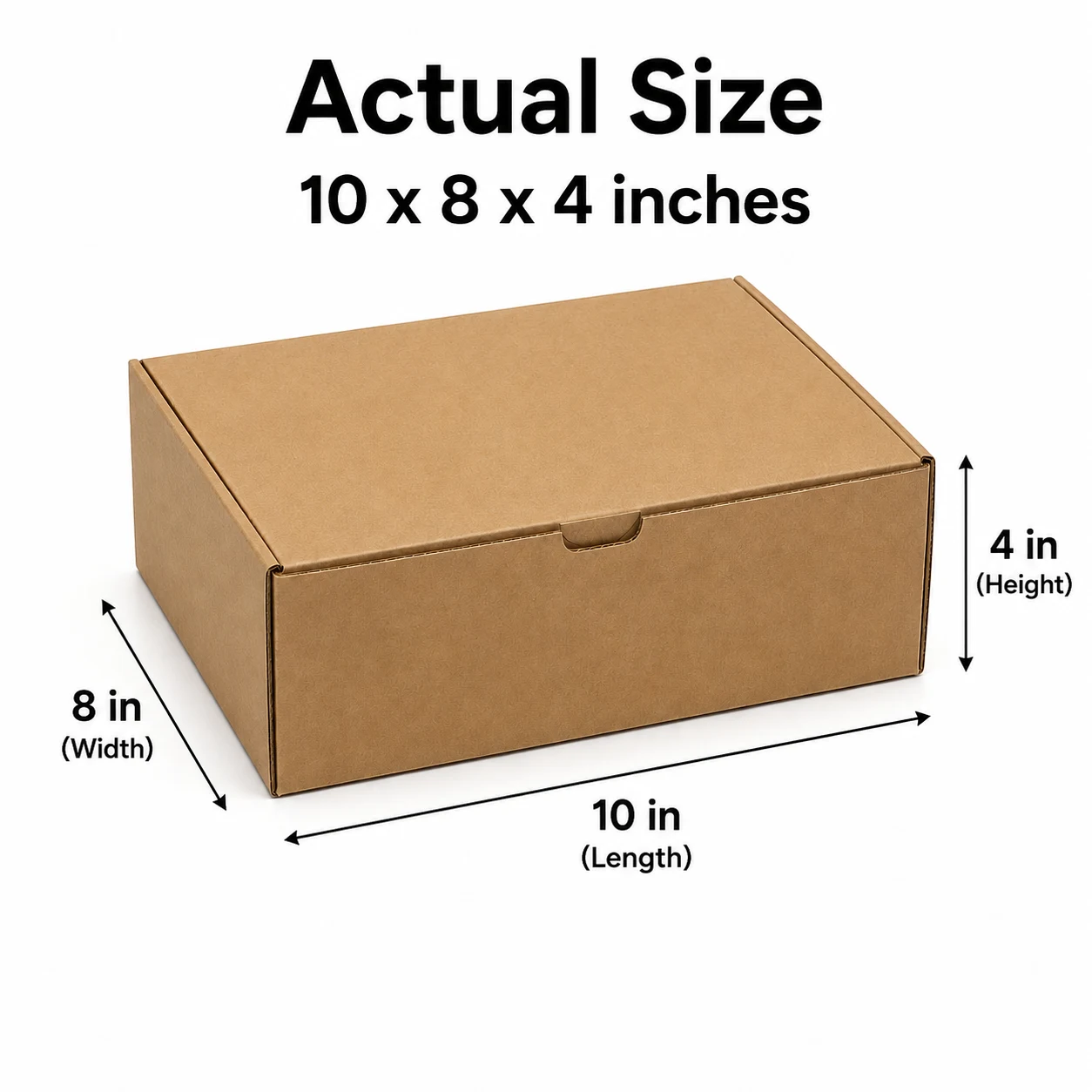
10x8x4 Inch Brown Corrugated Courier Box for E-commerce Shipping
Durable 10x8x4 inch brown corrugated courier box designed for e-commerce shipping, product delivery, storage, and secure packaging.
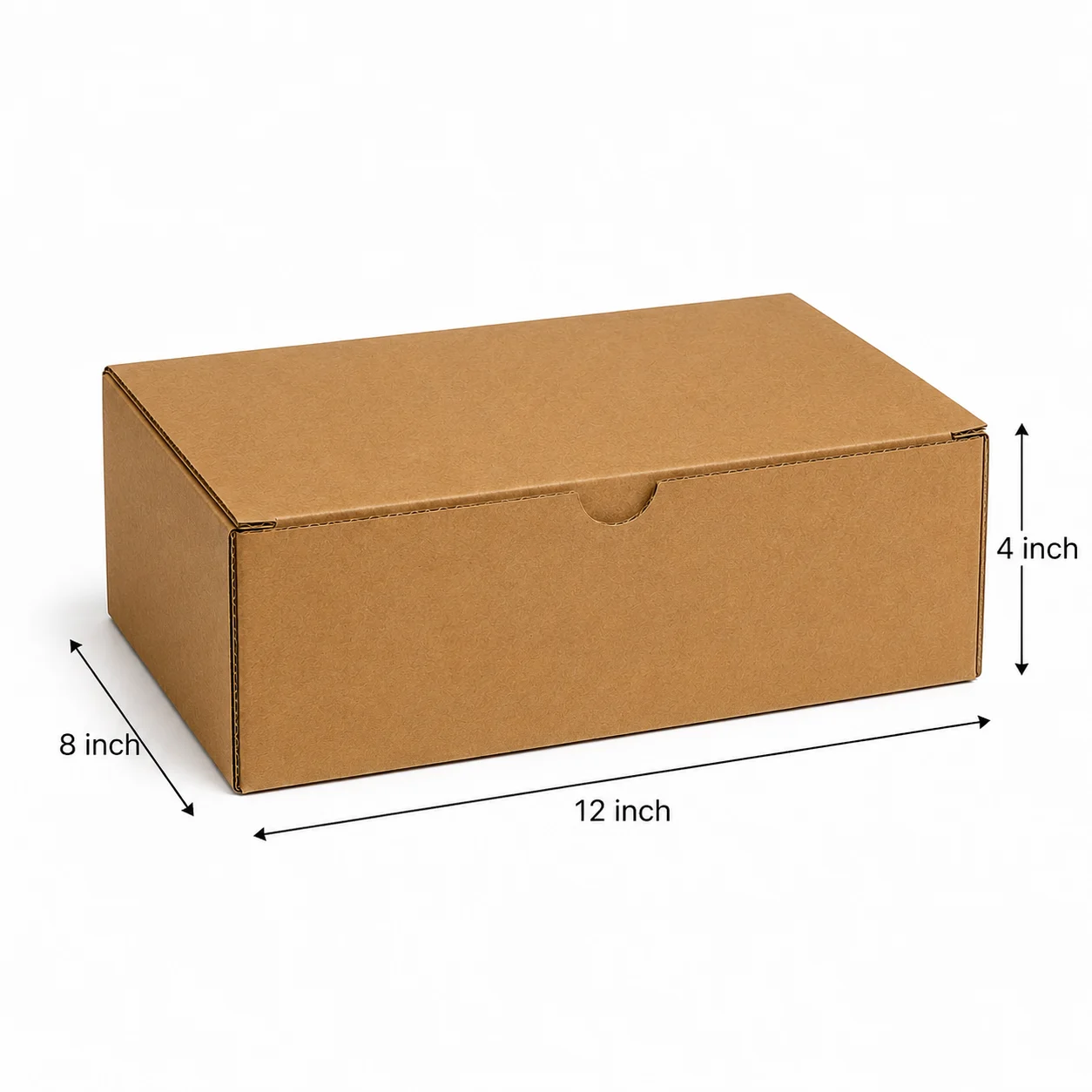
12x8x4 Inch Brown Corrugated 6 Bottle Nail Paint Packaging Box
Durable 12x8x4 inch brown corrugated nail paint box with six internal compartments, designed for cosmetic packaging, storage, gifting, and safe delivery.
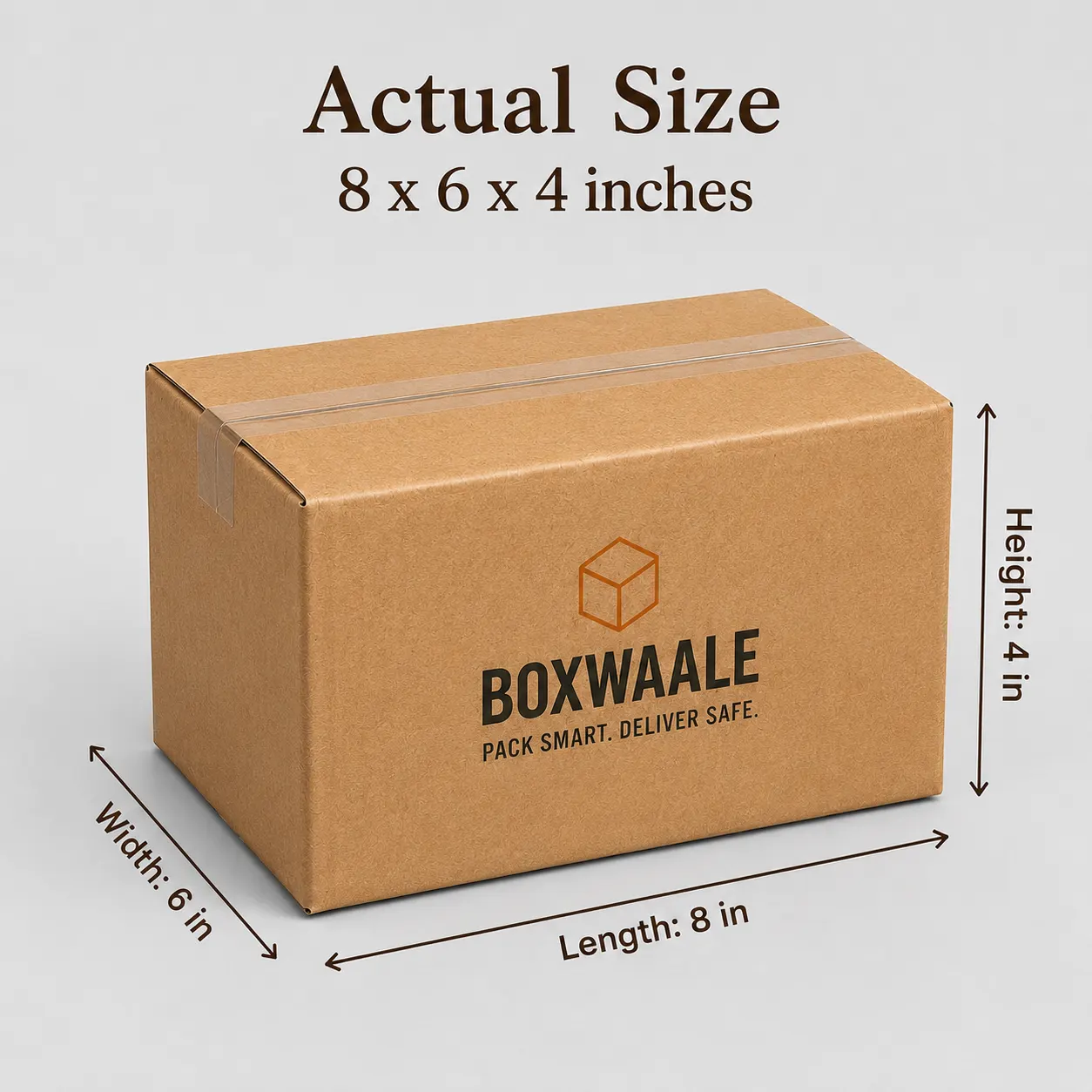
Custom Printed Brown Corrugated Courier Box with Logo
Custom printed brown corrugated courier box with logo designed for online sellers, D2C brands, retail businesses, and branded product delivery.
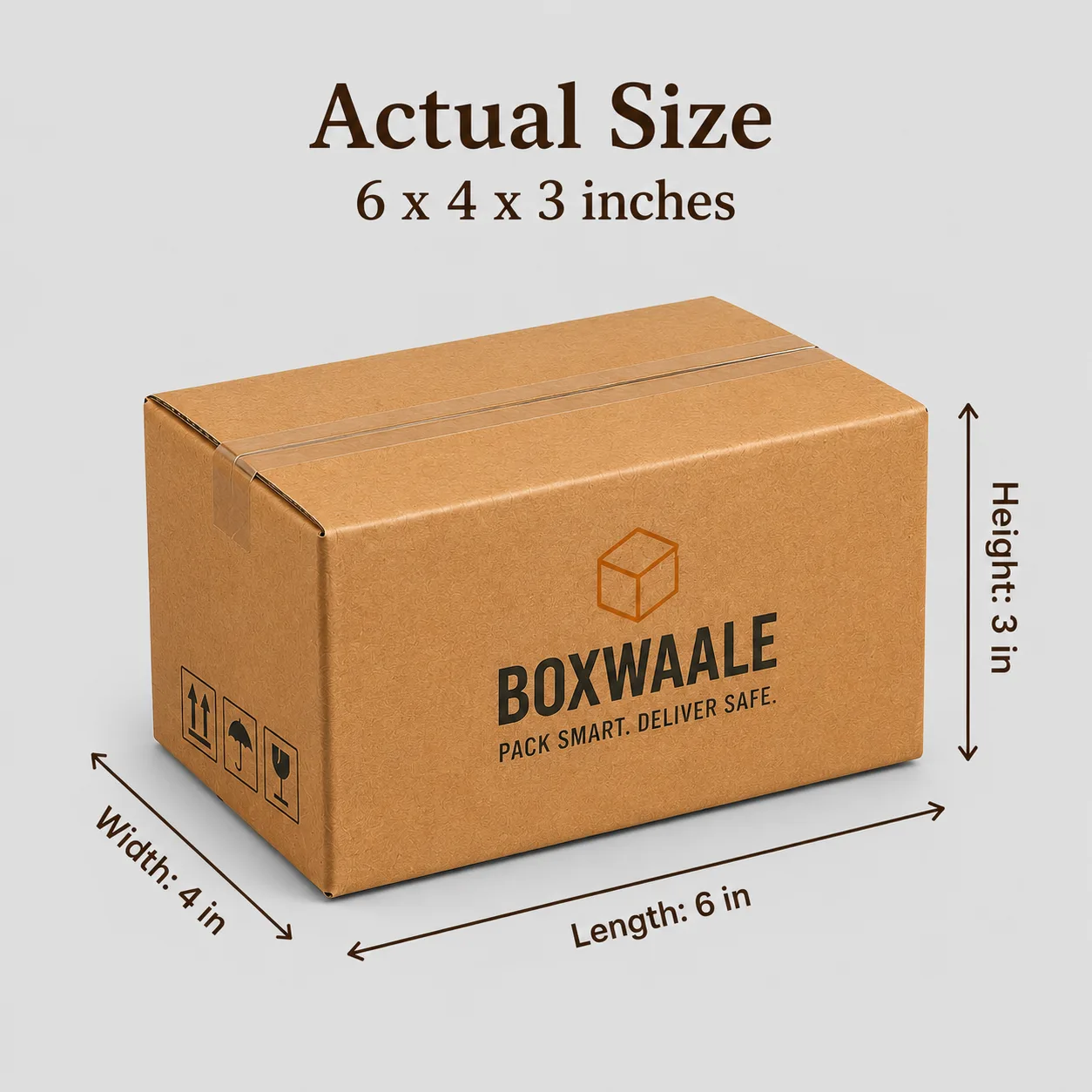
6x4x3 Inch Small Brown Corrugated Courier Box for Jewellery, Cosmetics & Accessories
Compact 6x4x3 inch brown corrugated small courier box designed for jewellery, cosmetics, mobile accessories, samples, and small product shipping.
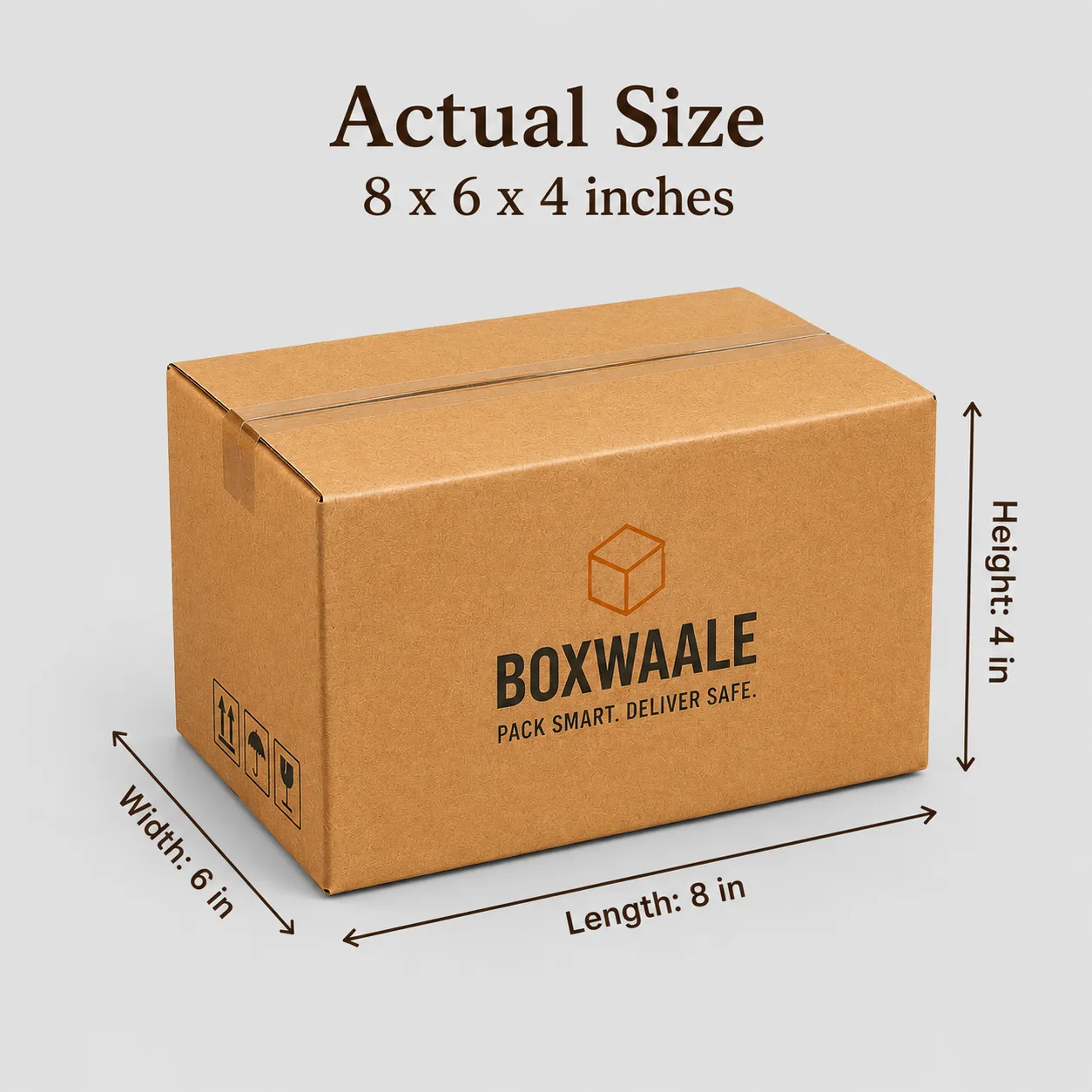
8x6x4 Inch Brown Corrugated Courier Box for E-commerce Shipping
Durable 8x6x4 inch brown corrugated courier box designed for e-commerce shipping, D2C delivery, retail product packing, and safe courier dispatch.