Published 2 Aug 2026· Updated 29 Aug 2026
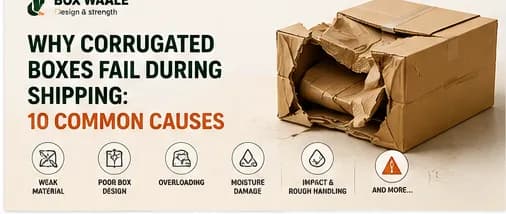
Why Corrugated Boxes Fail During Shipping: 10 Common Causes
A practical breakdown of the ten most common structural reasons corrugated boxes fail during shipping, covering specification, moisture, compression, closure and handling issues.
Key Takeaways
- Under-specifying the flute profile or paper grade for a product's actual weight and handling conditions is one of the most common root causes of corrugated box failure during shipping.
- A corrugated box can look structurally fine after mild humidity exposure while having already lost a meaningful share of its stacking strength, which is why boxes sometimes collapse well after loading.
- Corrugated board's compression limit decreases as humidity rises and as time under load increases, so boxes stacked past their design height can slowly buckle without any single dramatic impact.
- Taping only the centre seam or using low-tack tape can let flaps separate under vibration and stacking pressure even when the underlying board was correctly specified.
- Box failures are frequently caused by a combination of factors, such as a borderline specification combined with humid storage and extended transit time, rather than a single isolated cause.
- Matching the failure pattern to its likely cause, such as crushed corners pointing to handling, flap separation pointing to taping, and general sagging pointing to moisture, helps avoid over-correcting with an unnecessarily heavy specification.
Why Corrugated Boxes Fail During Shipping: 10 Common Causes
Table of Contents
A collapsed box at the receiving dock rarely has one single cause. Most failures trace back to a small set of recurring structural issues — some in the specification, some in how the box was handled or stored. This article walks through the ten most common ones so you can diagnose what actually went wrong instead of just switching to a heavier box and hoping.
Specification and Design Causes
These are the root causes that get baked into the box before it ever leaves the factory.
- Under-specified flute or paper grade: Choosing a lighter flute profile or lower paper weight than the product's actual weight and handling path requires is probably the single most common failure cause. It often passes an initial visual check and only fails once stacked or handled roughly.
- Wrong box style for the product: A standard regular slotted container used for an irregularly shaped or top-heavy product can distribute weight poorly, concentrating stress at weak points instead of across the full structure.
- Ignoring internal dimensions and void space: Too much empty space inside a box lets contents shift and slam into walls during transit, weakening the structure with every impact even if the board itself was correctly specified.
- Flute direction mismatched to the load path: Corrugated flutes provide their compression strength primarily in one direction; a box built with flute orientation not aligned to the main stacking load loses much of its rated strength.
These design issues are the ones most within your control at the ordering stage, and they're also the cheapest to fix — a specification correction costs nothing to implement on the next order, whereas a batch of collapsed boxes in a customer's warehouse costs replacement stock, freight, and goodwill.
Environmental and Handling Causes
Even a well-specified box can fail if it meets conditions outside what it was designed for.
- Moisture and humidity exposure: As covered in our guide to corrugated boxes and moisture resistance, damp conditions reduce compression strength well before any visible sagging appears, so a box can look fine and still be structurally compromised.
- Excessive stacking height or duration: Corrugated board has a compression limit that isn't fixed — it drops as humidity rises and as time under load increases. Boxes stacked past their design height, or held under load for an extended storage period, can slowly buckle without any single dramatic event.
- Rough handling and drops: Repeated impacts during loading, unloading and last-mile delivery accumulate stress on corners and edges, which are typically the first failure points on an otherwise sound box.
- Vibration during long-haul transit: Sustained vibration on trucks or trains can loosen taped seams and cause contents to settle and shift, especially over multi-day routes.
Environmental causes are harder to control directly since they often depend on your logistics partner's equipment and route, but they're not impossible to plan for. If you know a shipment is heading through a particularly humid season or region, or will sit in unclimatised storage for an extended period before final delivery, that information should feed back into your box specification rather than being treated as someone else's problem once the goods have left your dock.
Closure, Fill and Load Distribution Causes
These issues sit at the packing stage, not the box manufacturing stage, but they're just as responsible for failures.
- Inadequate or incorrect taping: Taping only the centre seam, using low-tack tape, or skipping corner reinforcement lets flaps separate under stacking pressure and vibration, even when the underlying board was correctly specified.
- Uneven weight distribution and overloading: Placing heavy items unevenly, or exceeding the box's intended weight capacity to save on box count, concentrates stress in a way the structure wasn't designed to handle.
Packing-stage causes are often the fastest to correct because they don't require a new box order at all — just a change in how the existing box is being packed. A short training session with warehouse staff on proper taping patterns (the H-taping method across both major and minor flaps, not just a single strip across the centre seam) can meaningfully reduce flap-separation failures without touching the box specification.
Reading Failures Correctly Before You Fix Them
The instinctive response to a batch of damaged shipments is often to jump straight to a heavier board — but that adds cost and doesn't always fix the actual problem. Before changing specification, it helps to separate the causes into categories: was it a design issue (wrong flute, wrong box style), an environmental issue (humidity, storage duration), or a handling and packing issue (taping, fill, weight distribution)? Many real-world failures are a combination — a borderline specification that would have survived on its own fails once combined with a humid warehouse and an extra week in transit.
A useful diagnostic step is to examine where the box actually failed: crushed corners point to handling and drops; bulging side walls point to overloading or void space issues; flap separation points to taping; and general softening or sagging points to moisture. Matching the failure pattern to the likely cause avoids over-correcting with an unnecessarily heavy specification when the real fix might be as simple as better taping or reduced stacking height.
It also helps to keep a simple log of damage incidents over time rather than reacting to each one individually — noting the product, route, season and failure pattern for each incident. A pattern that only shows up during monsoon months points to moisture; a pattern that only shows up on one specific route points to handling at a particular transit point. Without a log, each incident gets treated as a one-off, and the underlying pattern never gets addressed.
How Boxwaale Helps
When customers come to us with recurring shipping damage, we start by asking where and how the boxes are failing rather than jumping straight to a heavier board. Boxwaale helps diagnose whether the root cause is specification, moisture exposure, stacking practice or closure method, and adjusts the box design, flute grade or packing guidance accordingly so you're solving the actual problem, not just adding cost.
Frequently Asked Questions
Related Packaging Guide
Planning a packaging order?
Turn this guidance into a box specification
Share the product dimensions, packed weight, quantity, printing requirement and delivery postcode. Boxwaale will help narrow down the appropriate size, ply and board specification before quoting.
Frequently Asked Questions
Related Products
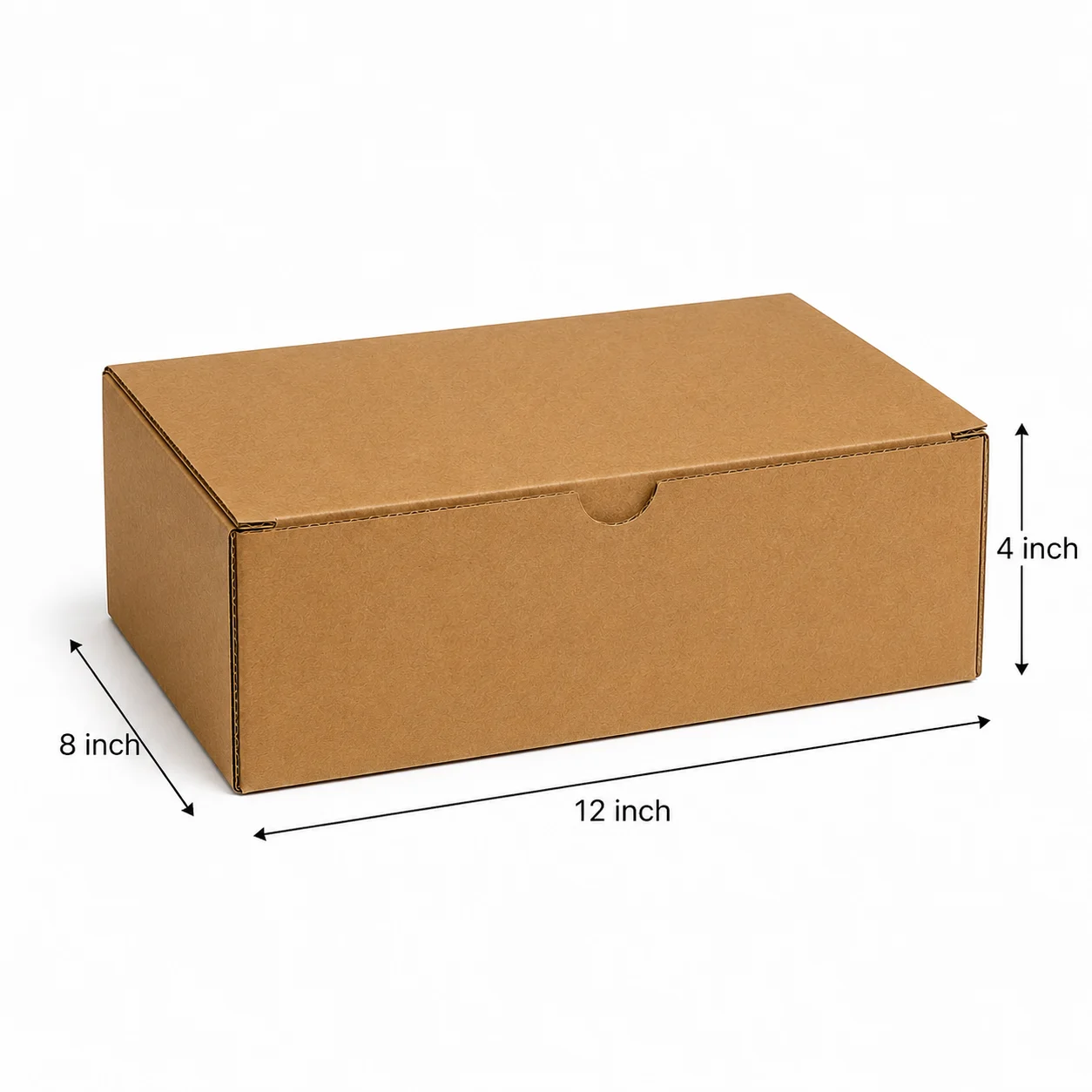
12x8x4 Inch Brown Corrugated 6 Bottle Nail Paint Packaging Box
Durable 12x8x4 inch brown corrugated nail paint box with six internal compartments, designed for cosmetic packaging, storage, gifting, and safe delivery.
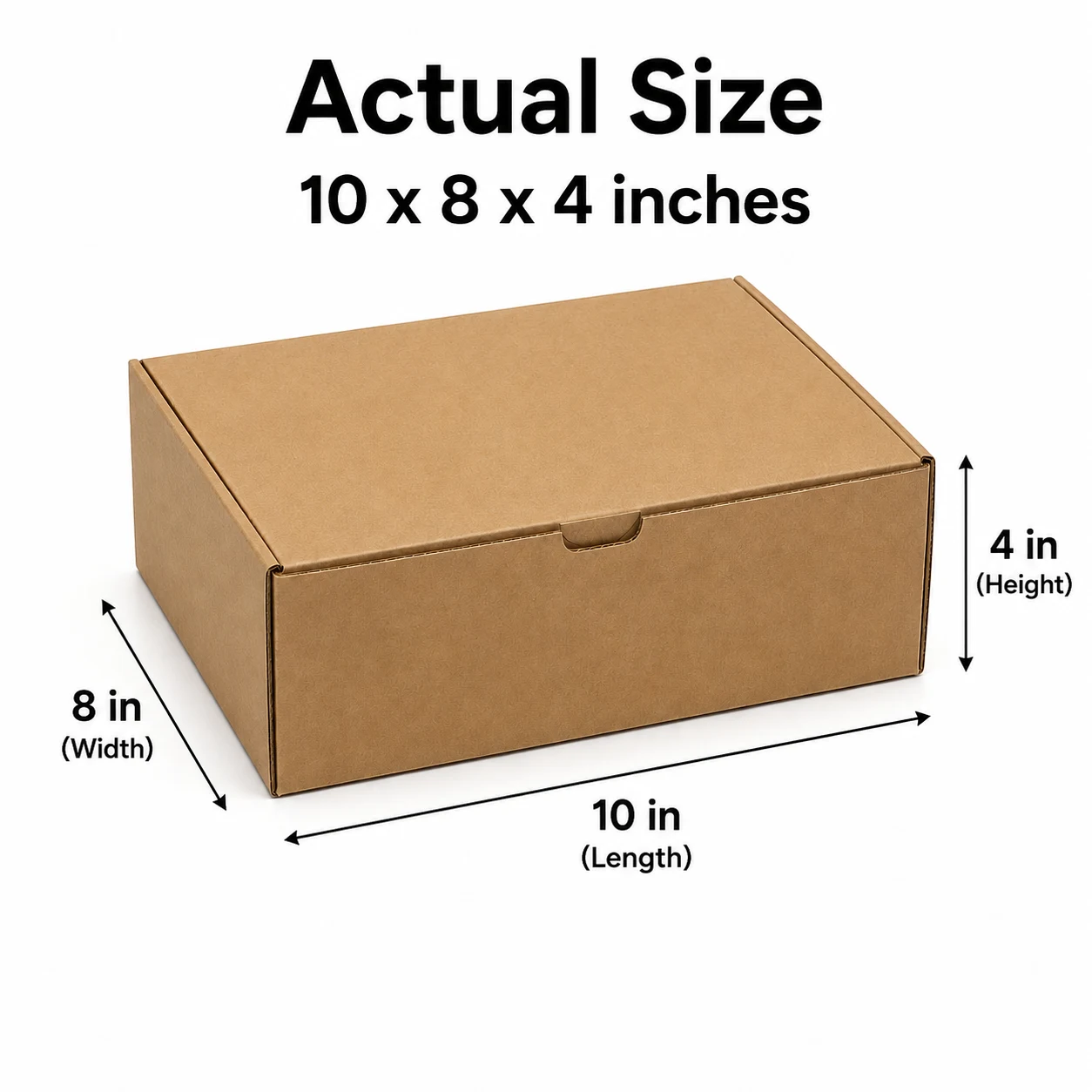
10x8x4 Inch Brown Corrugated Courier Box for E-commerce Shipping
Durable 10x8x4 inch brown corrugated courier box designed for e-commerce shipping, product delivery, storage, and secure packaging.
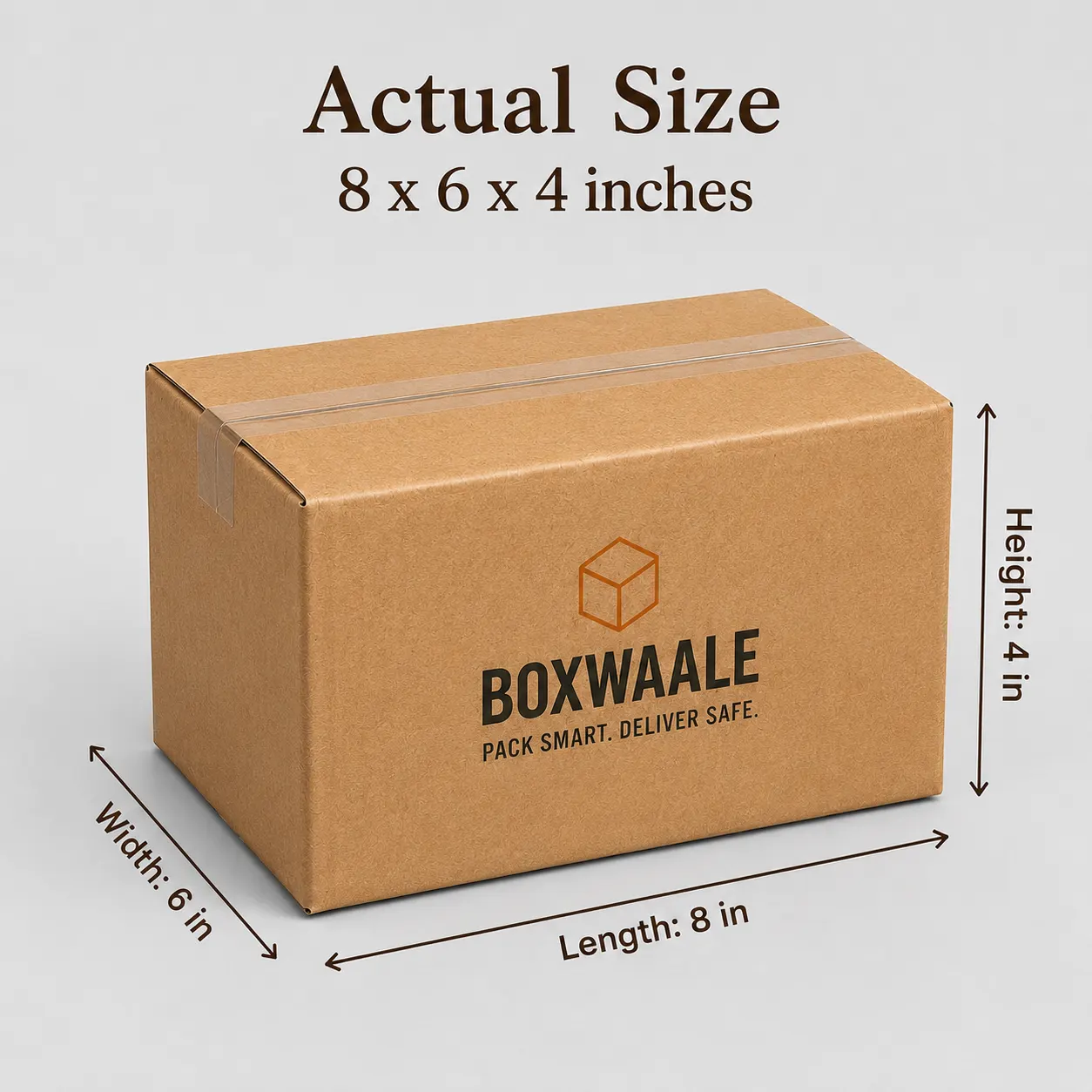
Custom Printed Brown Corrugated Courier Box with Logo
Custom printed brown corrugated courier box with logo designed for online sellers, D2C brands, retail businesses, and branded product delivery.
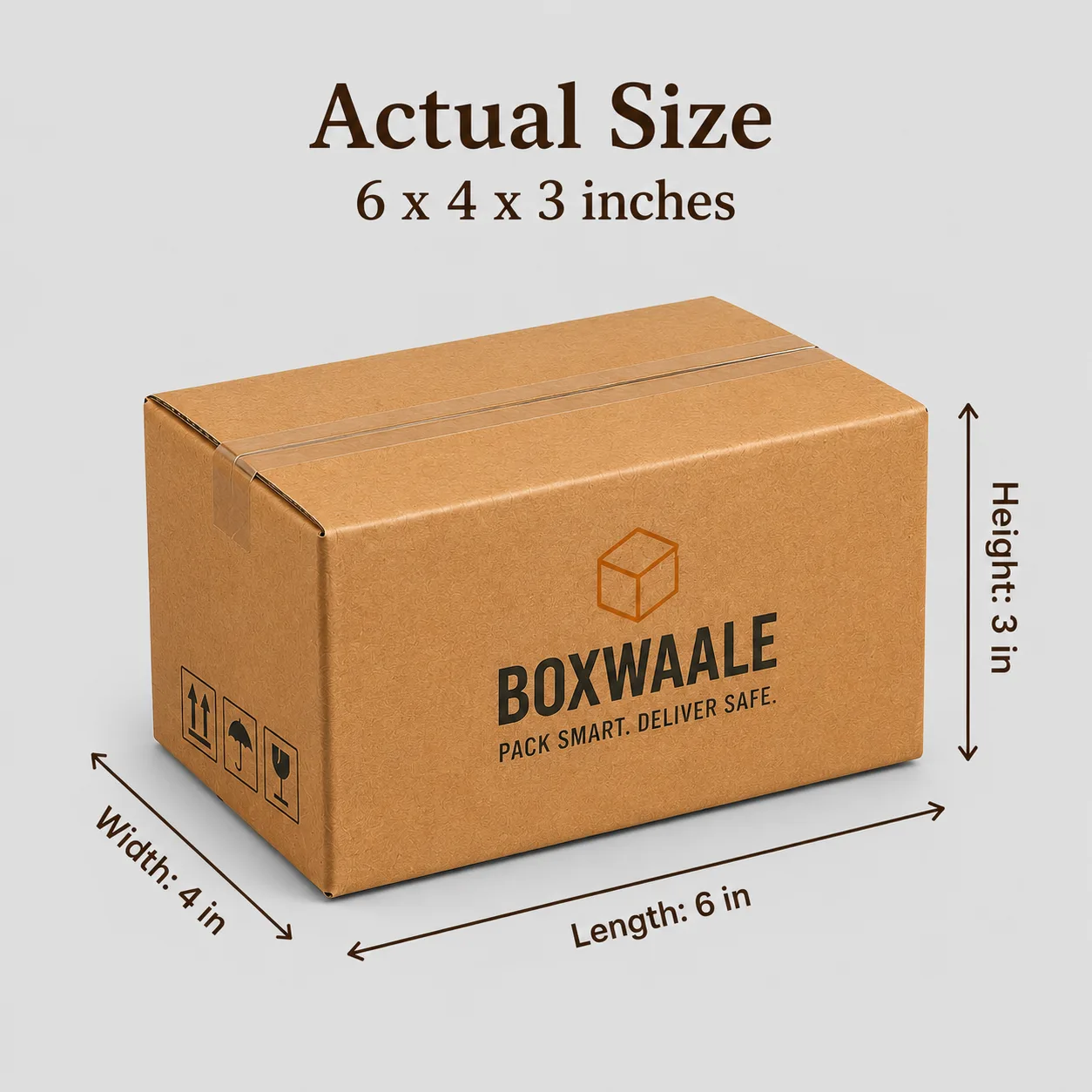
6x4x3 Inch Small Brown Corrugated Courier Box for Jewellery, Cosmetics & Accessories
Compact 6x4x3 inch brown corrugated small courier box designed for jewellery, cosmetics, mobile accessories, samples, and small product shipping.
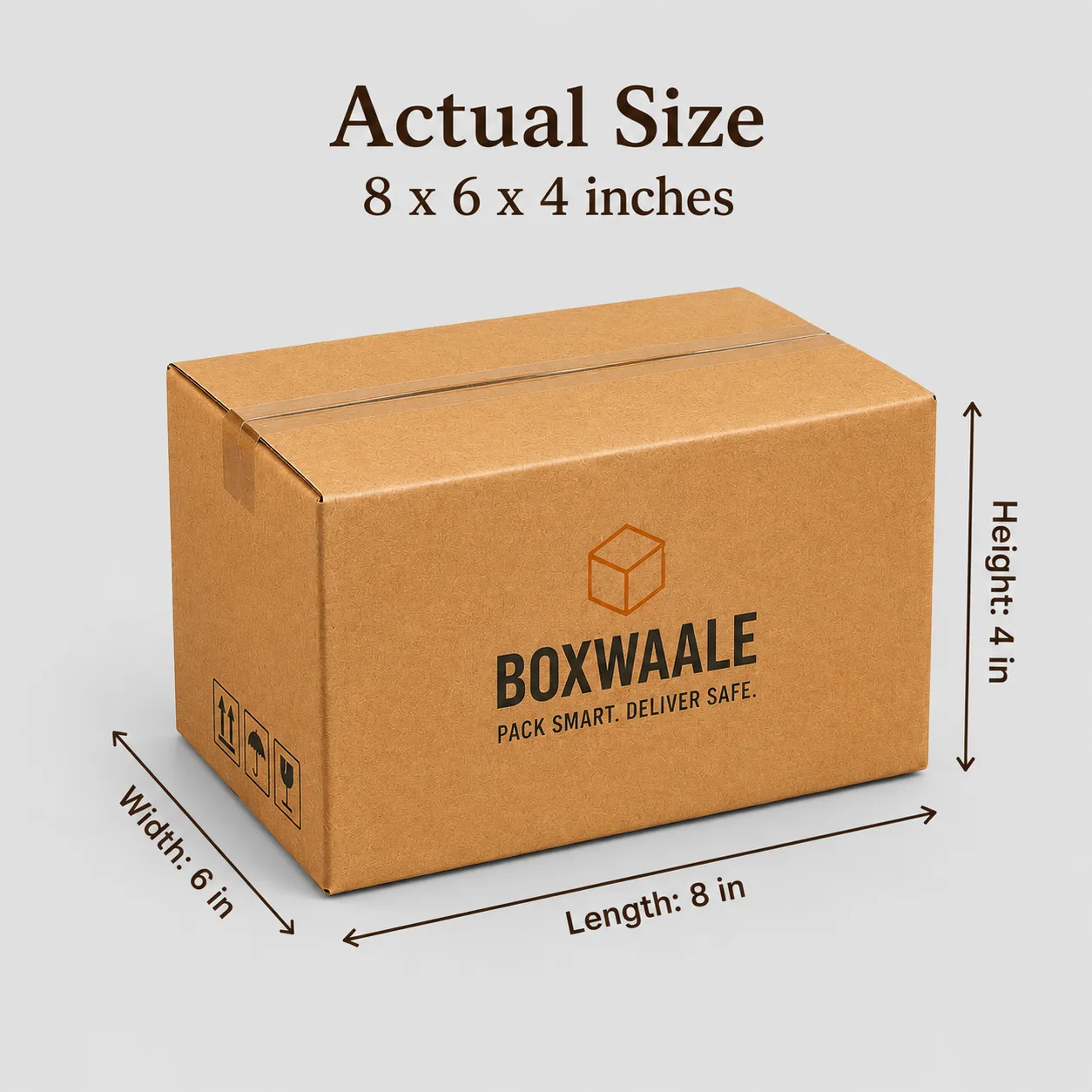
8x6x4 Inch Brown Corrugated Courier Box for E-commerce Shipping
Durable 8x6x4 inch brown corrugated courier box designed for e-commerce shipping, D2C delivery, retail product packing, and safe courier dispatch.