
Published 2 Aug 2026· Updated 29 Aug 2026
Corrugated Box Drop Testing: What Businesses Should Validate Before Shipping
A practical guide to planning corrugated box drop tests for e-commerce and shipping validation, covering test setup, height and orientation choices, and how to interpret results.
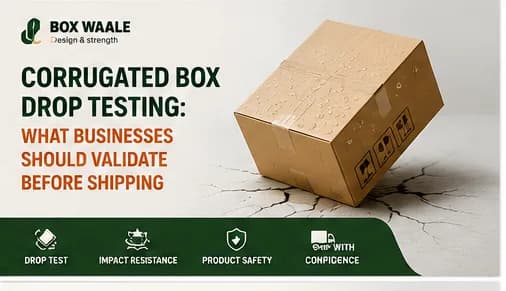
Key Takeaways
- A corrugated box drop test evaluates the product, its cushioning and the outer box together as a system, simulating impacts such as a courier setting a parcel down too fast or a box sliding off a conveyor.
- There is no single official drop height or number of drops that applies universally to every product; the right parameters depend on the product's weight, fragility and realistic handling conditions.
- Testing more than one drop orientation, such as flat, corner and edge drops, gives a more realistic picture than a single flat-face drop, since corners typically fail before flat faces do.
- A box can remain fully closed after a drop test and still have let the product take a damaging internal impact, so the product itself should be inspected, not just the outer packaging.
- Drop testing works best as an iterative design tool, testing, identifying the failure point, adjusting the box or cushioning, and retesting, rather than a one-time pass or fail check.
- Drop testing evaluates impact resistance only, so pairing it with basic compression and stacking checks gives a more complete picture, since a box can survive a drop test but still fail under sustained stacking load.
Corrugated Box Drop Testing: What Businesses Should Validate Before Shipping
Table of Contents
Drop testing is one of the few ways to catch a weak packaging design before a real customer does. This guide covers why the test matters, how to plan one that actually reflects your shipping reality, and how to read the results honestly instead of chasing an unofficial number that may not apply to your product.
What a Drop Test Is Actually Trying to Tell You
A corrugated box drop test evaluates the packed unit — the product, any internal cushioning or dividers, and the outer box — as a system, dropped onto a hard surface to simulate the kind of impact that happens during normal handling: a courier setting a parcel down too fast, a box sliding off a conveyor, or a stack shifting during loading. The goal isn't to prove the box is indestructible. It's to identify where the packaging design is weak before that weakness shows up as a damaged product at the customer's doorstep.
This is especially relevant for ecommerce packaging boxes, where a single box typically passes through more independent handling touchpoints — sorting hubs, delivery vans, doorstep drops — than a bulk pallet shipment would, and where there's no second layer of protection once it leaves the warehouse.
It helps to think of a drop test as answering a specific business question rather than producing a pass or fail label. The question might be "will this cushioning design keep breakage under an acceptable level for this product category" or "does switching from single wall to double wall board actually reduce damage on this route." Framing the test around a specific question makes the results far more actionable than a generic go/no-go check.
Planning a Drop Test: Height, Orientation and Conditions
Before running a single drop, define what you're actually testing for. A few decisions shape the whole exercise:
- Drop height: Choose a height that reflects realistic handling for your product's weight and how it typically moves through your supply chain — a hand-carried, sub-5kg parcel faces different realistic drop heights than a heavier package usually moved with equipment. There is no single unofficial number that applies uniformly to every product; the right height depends on your specific packaging, product fragility and handling path.
- Drop orientation: Test more than one orientation — a flat-face drop, a corner drop and an edge drop — since real mishandling rarely happens in just one consistent way, and corners typically fail before flat faces do.
- Number of repeat drops: A single successful drop tells you less than a repeated sequence, since real parcels are rarely dropped only once across their journey.
- Test surface: Use a hard, flat, level surface for consistency; testing on a soft or uneven surface will understate real-world impact.
- Product condition inside the box: Test with the actual product and actual cushioning/void-fill you intend to ship with, not a substitute — cushioning behaviour is a major variable in whether a drop causes damage.
It's also worth testing at more than one point in a product's life cycle where practical — for example, testing a sample after it has sat in storage for a period, not only when freshly packed, since board and adhesive can behave slightly differently after ageing or humidity cycling. This is particularly relevant for seasonal stock or products with a longer shelf life between packing and dispatch.
Running the Test and What to Look At Afterward
Once the drop is executed, resist the temptation to just check whether the box burst open. A box can stay fully closed and still have let the product take a damaging internal impact, especially if cushioning shifted or compressed unevenly. A thorough post-drop check includes:
- Inspecting the product itself for damage, not just the outer packaging
- Checking corners and seams for hidden cracking or delamination that isn't visible from a distance
- Looking at how internal cushioning, dividers or void-fill shifted during impact
- Noting whether tape or closure flaps separated, even partially
- Repeating the same drop on a second sample to see whether the first result was consistent or a one-off
Keep records of every test run — date, sample, drop height, orientation, and outcome — even for informal in-house testing. Over several iterations, this record becomes a useful reference for why a particular specification was chosen, which is valuable both for internal decision-making and if a customer or partner ever asks how the packaging was validated.
Interpreting Results Without Chasing a False Pass Standard
One of the most common mistakes businesses make is treating some number they found online — a specific drop height or number of drops — as an official universal pass/fail threshold that applies to every product. In reality, appropriate test parameters vary by product weight, fragility, value and how the item will actually be handled, and there isn't one unofficial figure that substitutes for planning a test around your specific shipment. Rather than asking "did it pass the standard test," a more useful question is "did the packaging protect the product under conditions that reasonably reflect how it will actually be shipped."
If you're working with a packaging supplier or a testing lab, it's worth discussing what test parameters make sense for your specific product category and shipping method rather than requesting a generic test and assuming the result is automatically meaningful for your situation. Treat drop testing as an iterative design tool — test, identify the failure point, adjust the box or cushioning, and retest — rather than a one-time checkbox exercise.
It's also worth remembering that drop testing is only one piece of validating a shipping design — pairing it with basic compression and stacking checks gives a more complete picture, since a box can survive a drop test well but still fail under sustained stacking load in a warehouse, which is a different kind of stress entirely.
How Boxwaale Helps
Boxwaale works with businesses to think through realistic drop and handling scenarios for their specific product and shipping route, rather than pointing them at a generic number. We help identify weak points in box design or cushioning through iterative testing so the packaging you finalise is validated against conditions that actually resemble your shipping reality.
Frequently Asked Questions
Related Packaging Guide
Planning a packaging order?
Turn this guidance into a box specification
Share the product dimensions, packed weight, quantity, printing requirement and delivery postcode. Boxwaale will help narrow down the appropriate size, ply and board specification before quoting.
Frequently Asked Questions
Related Products
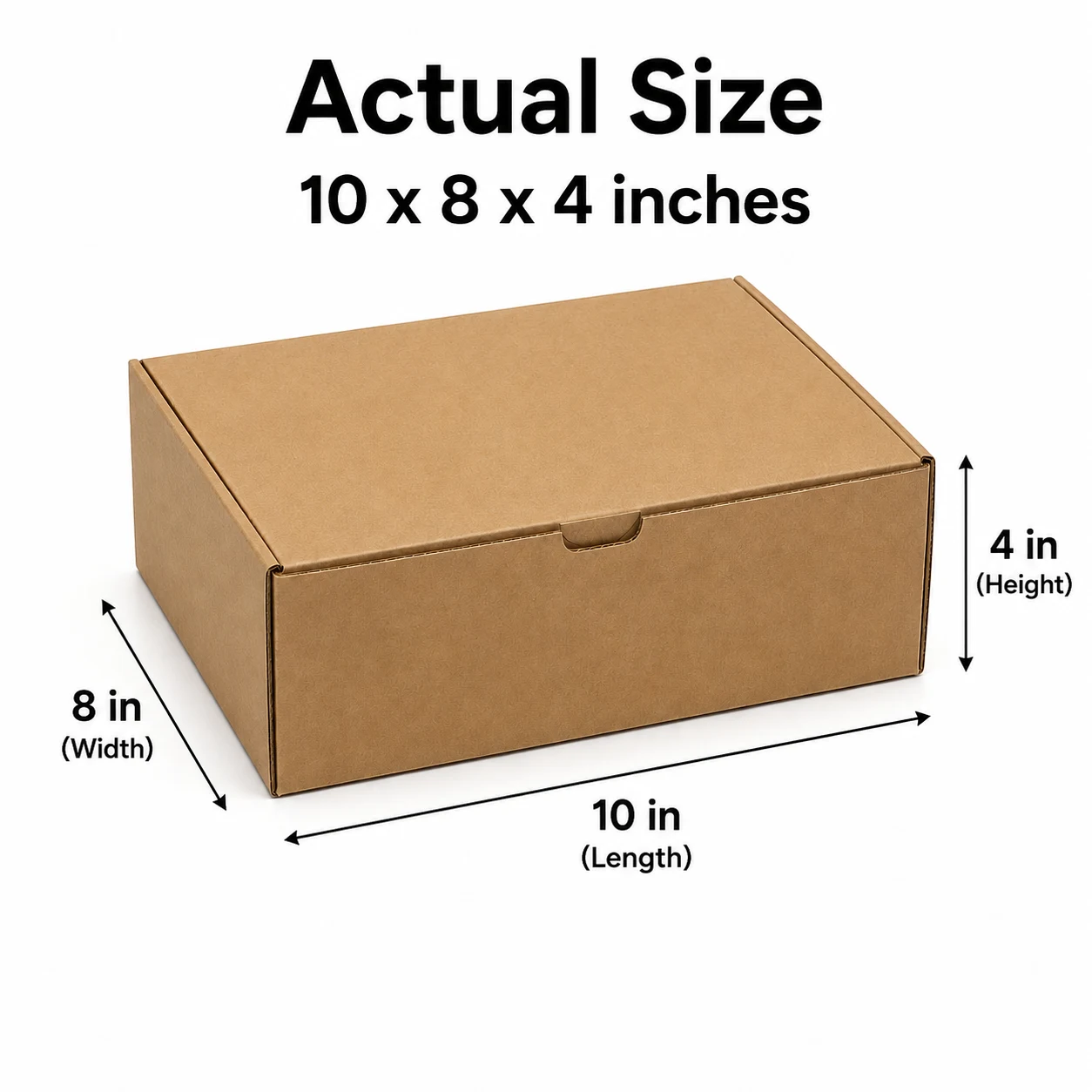
10x8x4 Inch Brown Corrugated Courier Box for E-commerce Shipping
Durable 10x8x4 inch brown corrugated courier box designed for e-commerce shipping, product delivery, storage, and secure packaging.
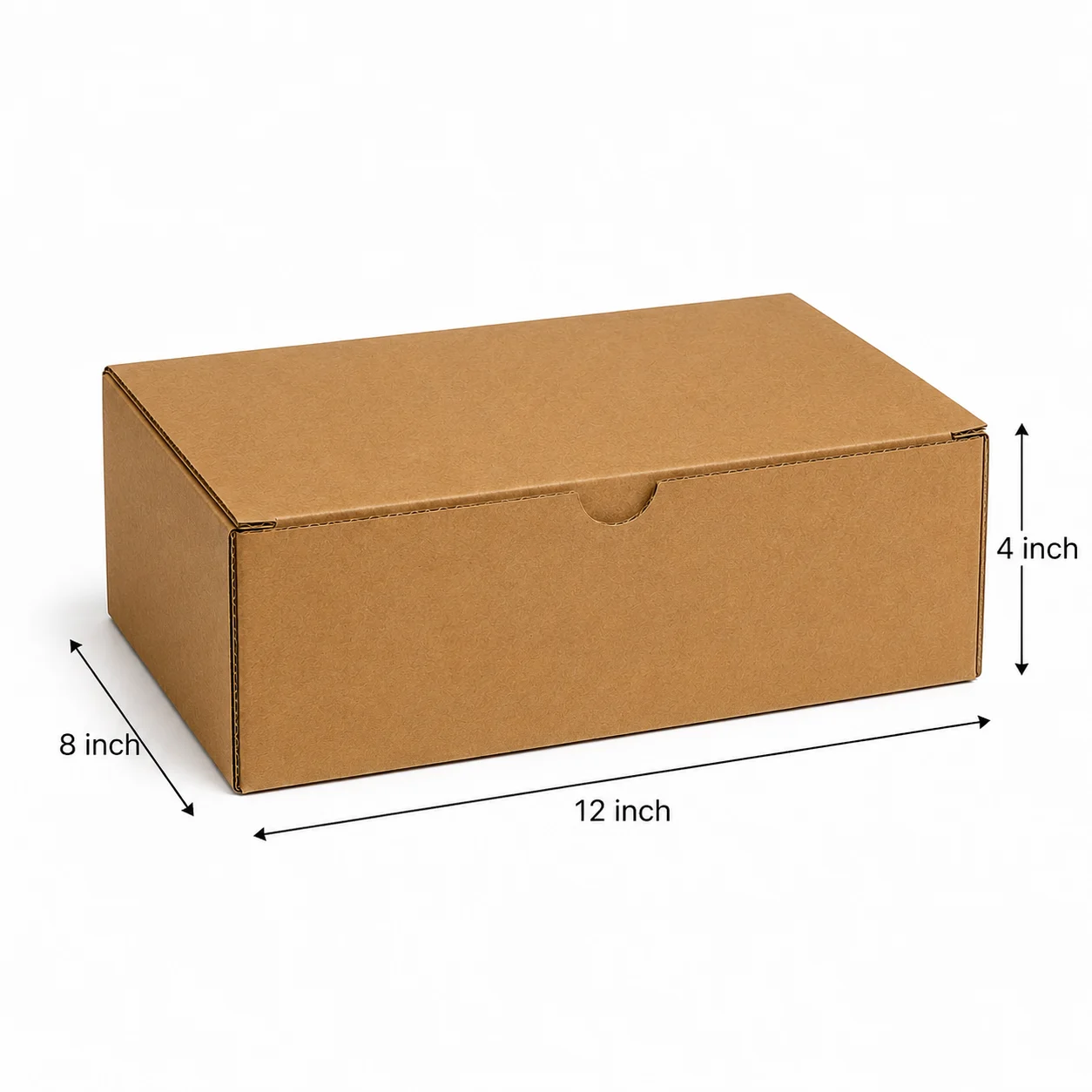
12x8x4 Inch Brown Corrugated 6 Bottle Nail Paint Packaging Box
Durable 12x8x4 inch brown corrugated nail paint box with six internal compartments, designed for cosmetic packaging, storage, gifting, and safe delivery.
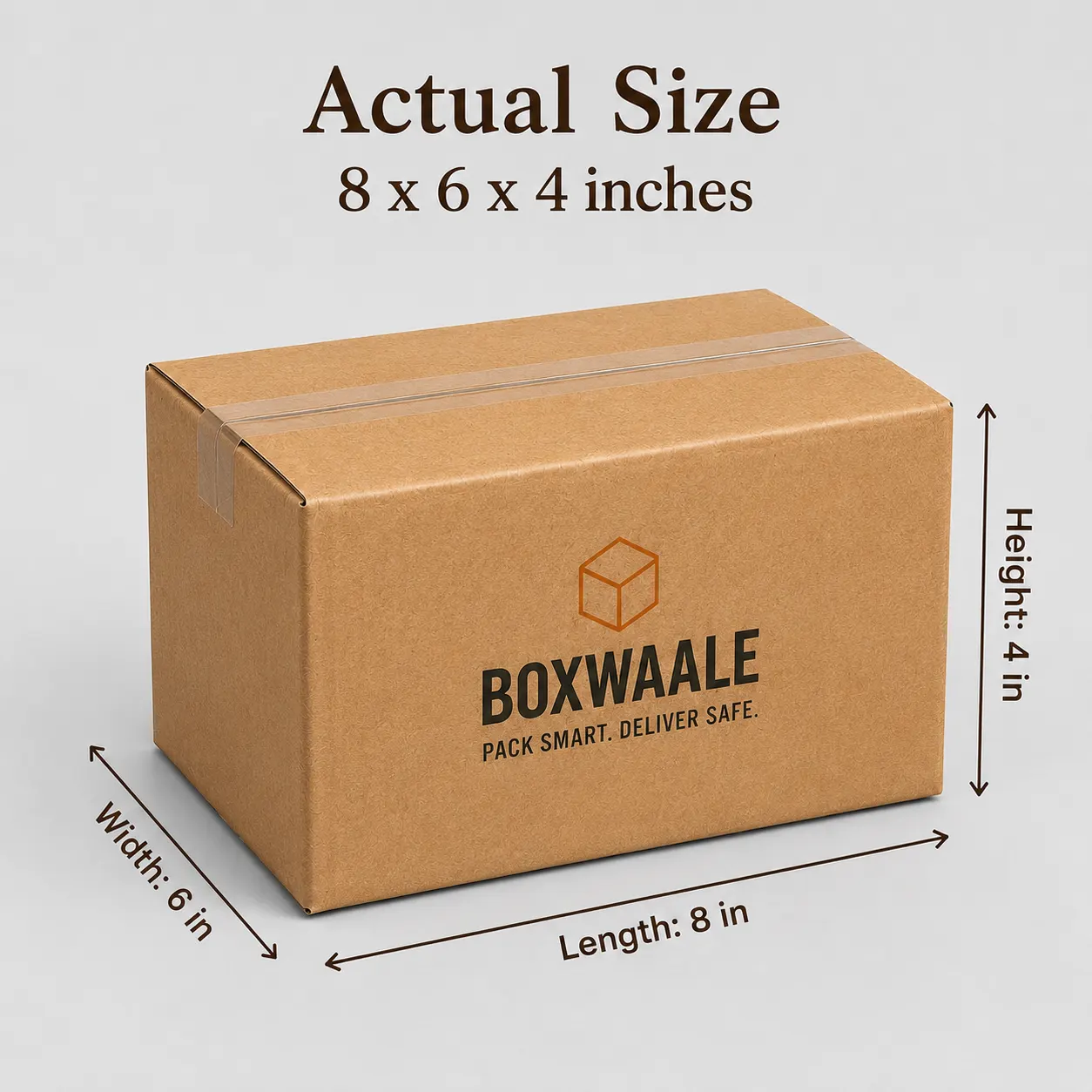
Custom Printed Brown Corrugated Courier Box with Logo
Custom printed brown corrugated courier box with logo designed for online sellers, D2C brands, retail businesses, and branded product delivery.
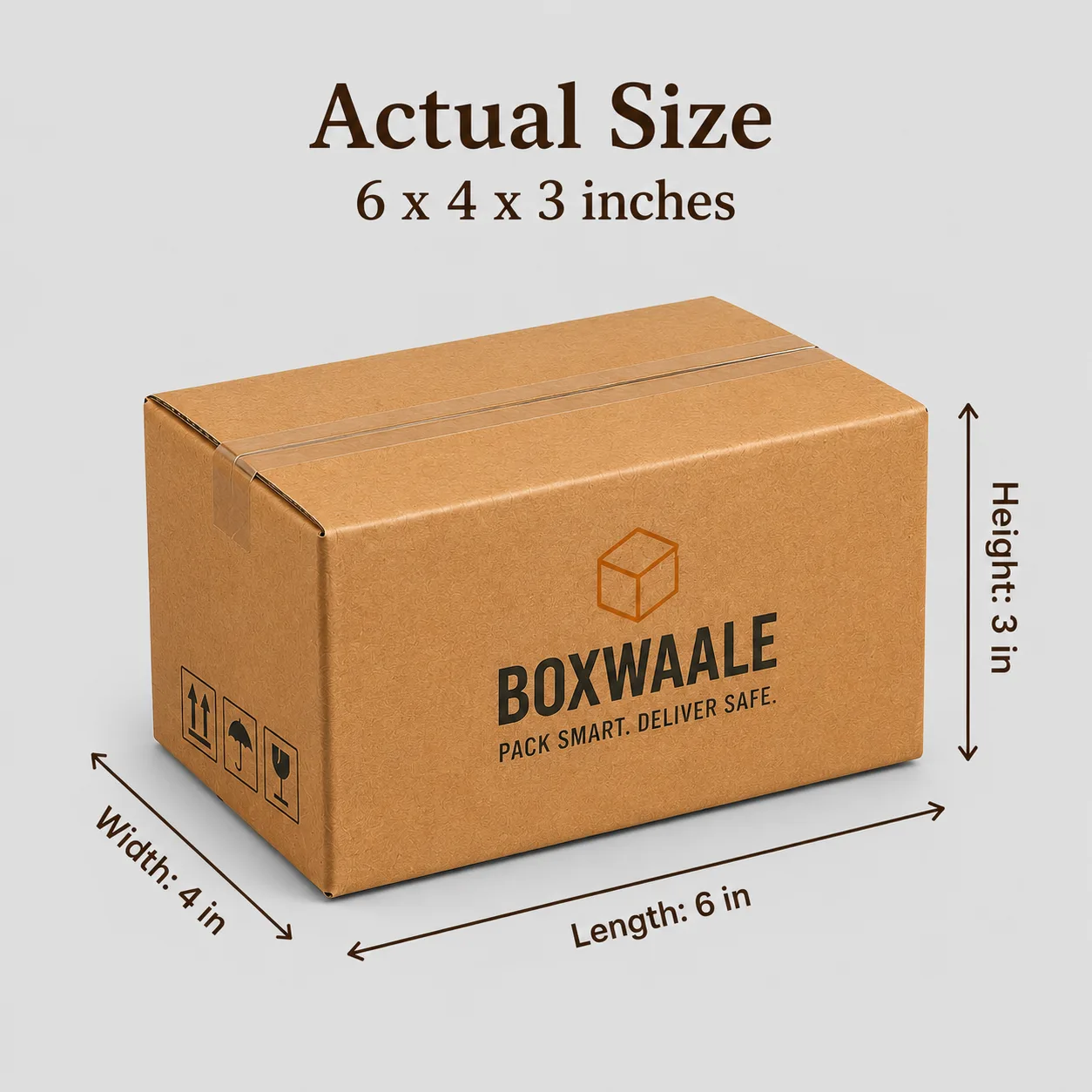
6x4x3 Inch Small Brown Corrugated Courier Box for Jewellery, Cosmetics & Accessories
Compact 6x4x3 inch brown corrugated small courier box designed for jewellery, cosmetics, mobile accessories, samples, and small product shipping.
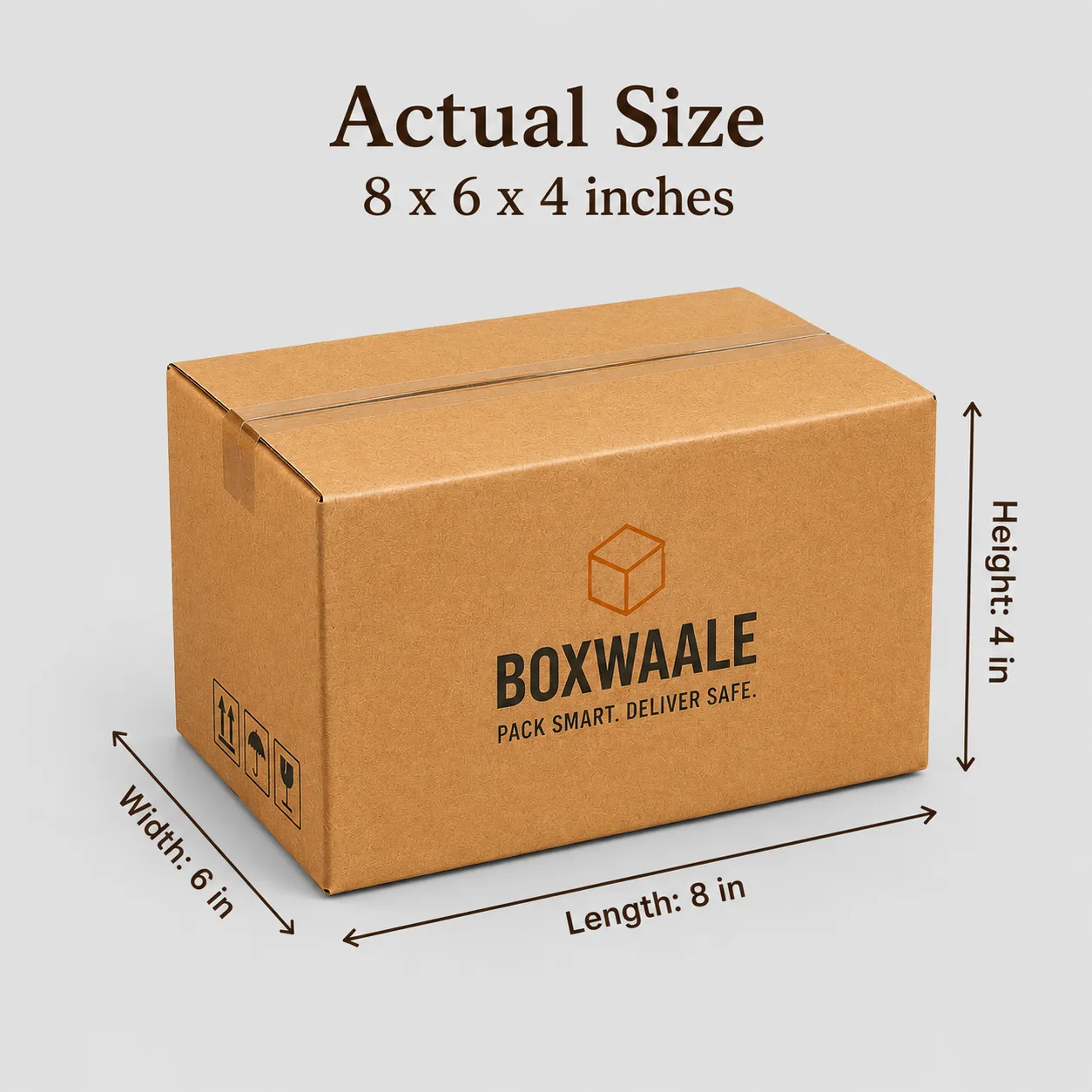
8x6x4 Inch Brown Corrugated Courier Box for E-commerce Shipping
Durable 8x6x4 inch brown corrugated courier box designed for e-commerce shipping, D2C delivery, retail product packing, and safe courier dispatch.
Related Buying Guides

Bulk Corrugated Boxes: Why Small Businesses Should Buy Packaging in Bulk
Read guide
Packaging Boxes for Amazon Sellers in India: What to Check Before Ordering
Read guide
13x8x5 Inch Brown Corrugated Shoe Box for Footwear Packaging – Complete Guide
Read guide
How to Choose the Right Packaging Box for Your Business
Read guide
Bulk Packaging Boxes: Why Businesses Should Buy Boxes in Bulk
Read guide