
Published 2 Aug 2026· Updated 29 Aug 2026
Recycled vs Virgin Kraft Paper for Corrugated Boxes
A side-by-side comparison of recycled and virgin kraft paper for corrugated boxes, covering strength consistency, appearance, cost and how to talk about sustainability claims responsibly.
Key Takeaways
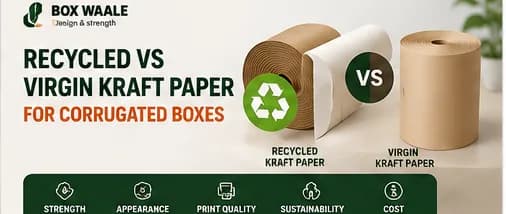
- Virgin kraft paper is made from fresh wood pulp with longer cellulose fibres, while recycled kraft paper is made from repulped fibre that has already been through at least one manufacturing cycle and is shorter as a result.
- At the same paper weight (GSM), virgin kraft liners generally deliver more consistent strength, while recycled kraft boards can vary more from batch to batch depending on the waste paper stream used.
- Blended or mixed-content kraft, combining recycled and virgin fibre in one liner, is a middle option that typically performs more predictably than fully recycled liners while costing less than pure virgin board.
- Recycled kraft is often cheaper than virgin kraft, but the price gap is not fixed and depends on paper mill supply and market conditions at the time of purchase.
- Absolute claims such as '100% eco-friendly' or guaranteed recyclability on packaging can be misleading, since actual recyclability depends on coatings, inks, contamination and local recycling infrastructure.
- A more defensible way to describe sustainability is to state the specific recycled content percentage used, rather than making a broad, unverified environmental claim.
Recycled vs Virgin Kraft Paper for Corrugated Boxes
Table of Contents
Procurement teams often ask for "kraft paper" without realising that recycled and virgin kraft behave differently on the factory floor and in transit. This comparison walks through the real, practical differences — strength, consistency, look and cost — so you can specify the right one instead of guessing.
What Actually Separates Recycled Kraft from Virgin Kraft
Virgin kraft paper is made from fresh wood pulp using the kraft chemical pulping process, which produces long, strong cellulose fibres. Recycled kraft paper is made by re-pulping used paper and cardboard — the fibre has already been through at least one manufacturing cycle, sometimes several. Each time fibre is repulped, it shortens slightly and loses some of its natural bonding capacity, which is why the two materials don't perform identically even at the same paper weight.
Neither option is inherently "better" in every sense — they're suited to different priorities. Virgin kraft is the default when a business needs predictable mechanical performance batch after batch. Recycled kraft is a practical choice when the box doesn't need to carry heavy loads and using reclaimed fibre matters to the buyer.
| Factor | Virgin Kraft | Recycled Kraft |
|---|---|---|
| Fibre length | Longer, less processed | Shorter, repulped one or more times |
| Strength at same GSM | Generally higher and more consistent | Generally lower, more batch variation |
| Appearance | Uniform tan/brown shade | Variable shade, visible flecks possible |
| Typical cost | Often higher | Often lower, but market-dependent |
| Best suited for | Heavier goods, high-value shipments | Lighter goods, cost-sensitive runs |
A growing middle option worth knowing about is blended or mixed-content kraft, which combines a share of recycled fibre with a share of virgin fibre in the same liner. This is often a practical compromise: it doesn't match pure virgin kraft on strength consistency, but it typically performs more predictably than fully recycled liners while costing less than pure virgin board. If a supplier offers this option, ask what the actual blend ratio is rather than accepting a vague "eco-friendly blend" description, since the ratio is what actually determines performance.
Strength and Consistency: What Buyers Notice
The clearest practical difference shows up in bursting strength and edge crush performance. At the same paper weight (GSM), virgin kraft liners typically hold up better under compression and rough handling because the fibre network bonds more tightly. This matters most for boxes that will be stacked, palletised, or shipped over long distances where cumulative handling stress adds up.
Recycled kraft's bigger practical issue for many buyers isn't average strength — it's consistency. Because the raw material stream depends on what waste paper was collected and processed, batch-to-batch variation in fibre quality can be more noticeable than with virgin kraft, which is made from a more controlled pulp source. If your product is fragile, heavy, or travels long distances, that variability is worth factoring into your specification and inspection process — see our related guidance on setting up a corrugated box specification that accounts for board grade rather than paper weight alone.
It's also worth building a simple incoming check into your process rather than assuming every delivery matches the first approved sample: pull a board sample from each batch and compare its stiffness and colour against a reference piece you've kept on file. This catches drift early, particularly with recycled kraft where the underlying raw material stream can shift from one production run to the next without any change on the purchase order.
Appearance, Print Quality and Cost
Virgin kraft has a cleaner, more uniform tan colour that takes print and branding more predictably, which is why premium retail-facing packaging often defaults to it even when strength requirements are moderate. Recycled kraft can show visible fibre flecks, a duller or uneven shade, and slightly rougher surface texture — some brands actually prefer this look for an intentionally "eco" aesthetic, while others find it inconsistent with their brand standards.
On cost, recycled kraft is often — but not always — the cheaper option. Pricing for both materials moves with pulp and waste paper market conditions, energy costs and mill capacity, so the gap between them isn't fixed. It's worth getting a current quote for both rather than assuming a set discount, especially for larger recurring orders where even small per-kg differences add up.
Printing behaviour is another practical difference worth planning for. Recycled kraft's less uniform surface can cause ink to sit slightly differently across a batch, so colours that look consistent on virgin kraft may show minor variation on recycled stock, especially for large solid-colour print areas or fine text. This usually isn't a problem for simple branding and barcodes, but it's worth requesting a printed sample on your actual chosen paper grade before committing to a large print run, rather than approving a proof printed on a different stock.
Talking About Sustainability Without Overclaiming
Recycled content is a genuine, reasonable thing to highlight to customers — but it's easy to overstate. Avoid absolute claims like "100% eco-friendly" or guaranteed recyclability on packaging, because actual recyclability depends on factors beyond the paper itself: inks used, any coatings or laminations applied, contamination during use, and what your local recycling infrastructure can actually process. A more defensible and accurate approach is to state the specific recycled content percentage you're using (if known and verifiable) rather than a broad sustainability claim.
The same caution applies to virgin kraft — sourcing wood pulp responsibly is a real consideration for some buyers, but making blanket claims about sustainable sourcing without a verifiable basis for them isn't something we'd recommend. When in doubt, describe what the material actually is (recycled content level, paper grade) and let buyers draw their own conclusions rather than attaching unverified labels to it.
A simple rule of thumb: describe what's verifiable (recycled content share, paper grade, source category) and avoid language that implies a guarantee (fully recyclable, zero impact, completely biodegradable) unless you can stand behind it with evidence. This keeps your packaging claims defensible if a customer or regulator ever asks for substantiation.
How Boxwaale Helps
Boxwaale supplies both recycled and virgin kraft corrugated boxes and helps buyers match the paper grade to what the shipment actually needs — heavier virgin-kraft-based board for load-bearing or long-distance shipments, and recycled kraft where cost and lighter-duty use make more sense. We're upfront about the strength and consistency trade-offs so you're not paying for performance you don't need, or under-specifying for goods that do.
Frequently Asked Questions
Related Packaging Guide
Planning a packaging order?
Turn this guidance into a box specification
Share the product dimensions, packed weight, quantity, printing requirement and delivery postcode. Boxwaale will help narrow down the appropriate size, ply and board specification before quoting.
Frequently Asked Questions
Related Products
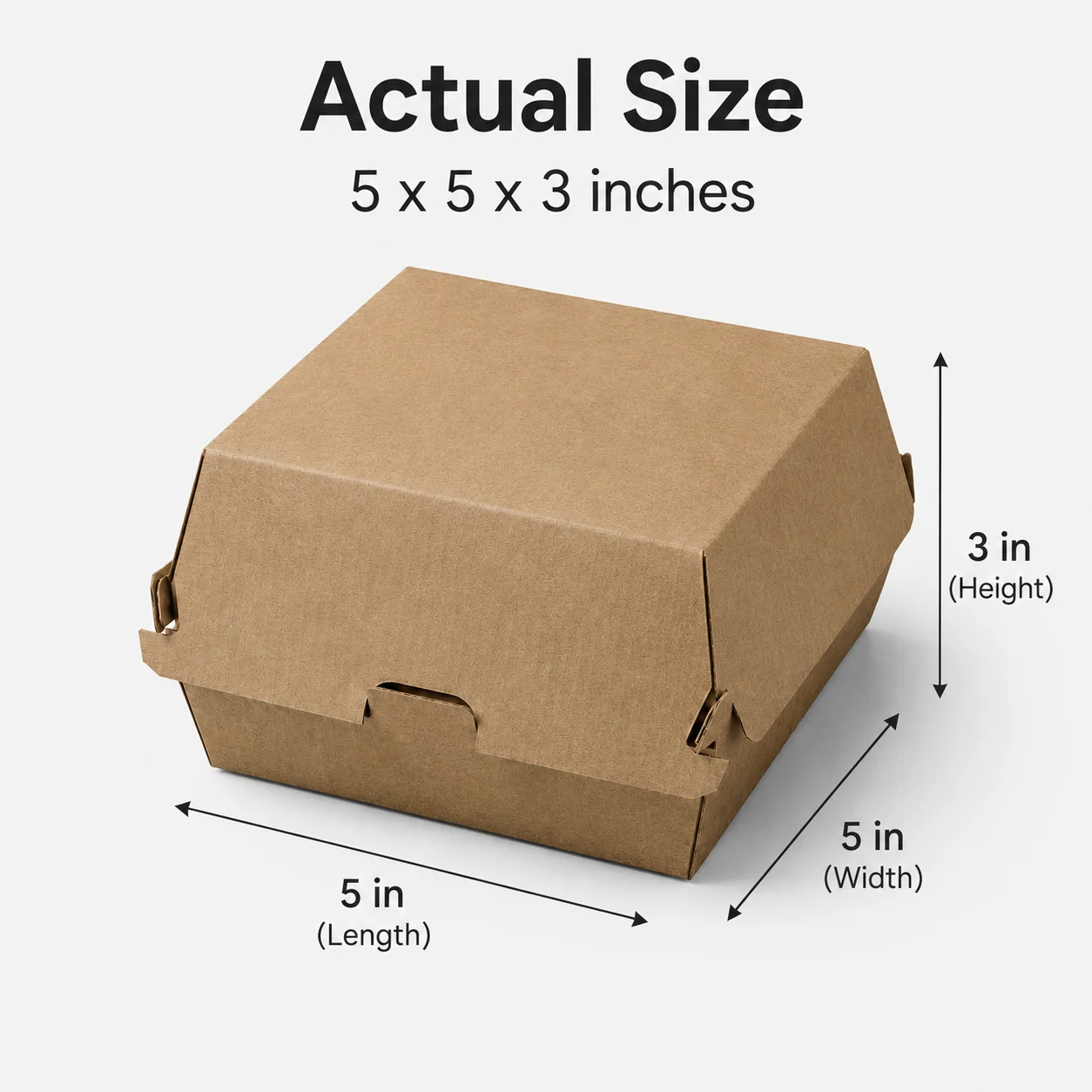
5x5 Inch Brown Kraft Burger Box for Takeaway & Food Delivery
Durable 5x5 inch brown kraft burger box designed for restaurants, cafes, cloud kitchens, and takeaway food packaging.

8x8 Inch Brown Kraft Cake Box for Bakery & Pastry Packaging
Premium 8x8 inch brown kraft cake box designed for bakeries, cafes, cloud kitchens, pastry shops, and dessert packaging.
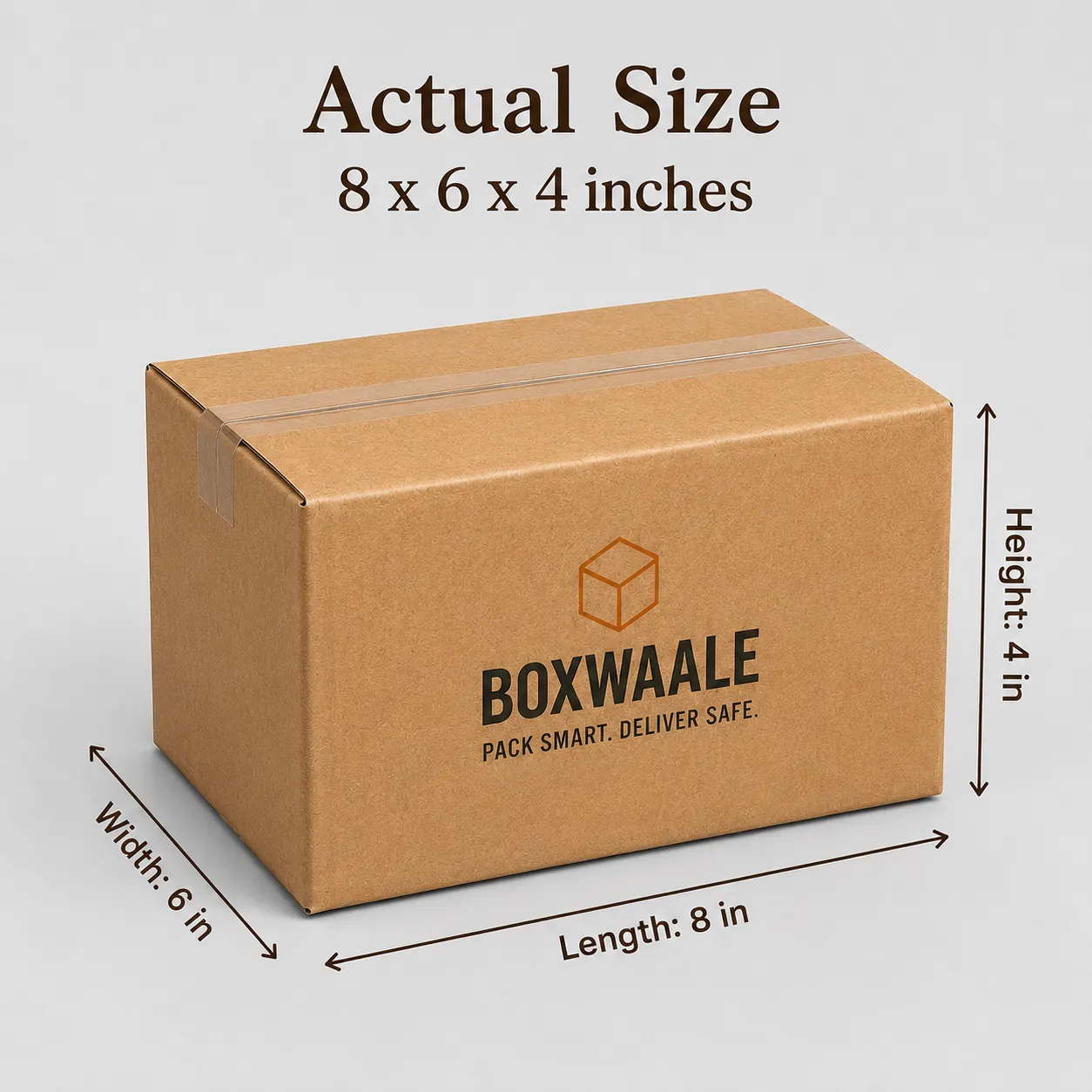
9x6x3 Inch Brown Corrugated Mailer Box for E-commerce Brands
Premium corrugated mailer box designed for e-commerce brands, subscription boxes, gifting, retail products, and custom branded packaging.
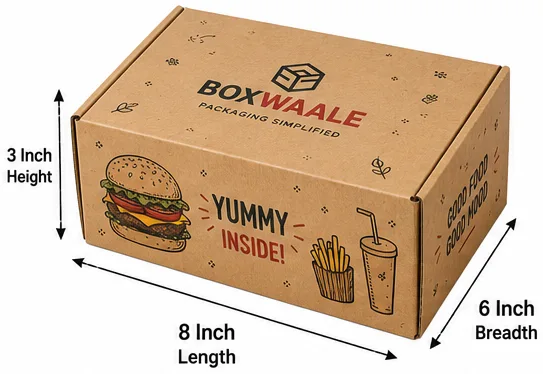
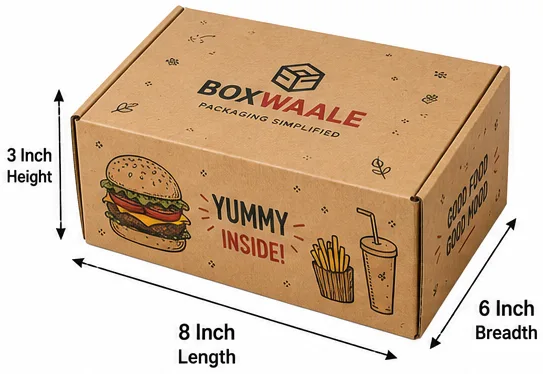
8x6x3 Inch Brown Kraft Burger Meal Combo Box for Food Delivery
Practical brown kraft burger meal combo box designed for burgers, fries, sides, snacks, and food delivery packaging.
10x10x5 Inch Brown Kraft 1 KG Cake Box for Bakeries
Premium 10x10x5 inch brown kraft 1 KG cake box designed for bakeries, home bakers, cafes, dessert brands, and safe cake delivery.
Related Buying Guides
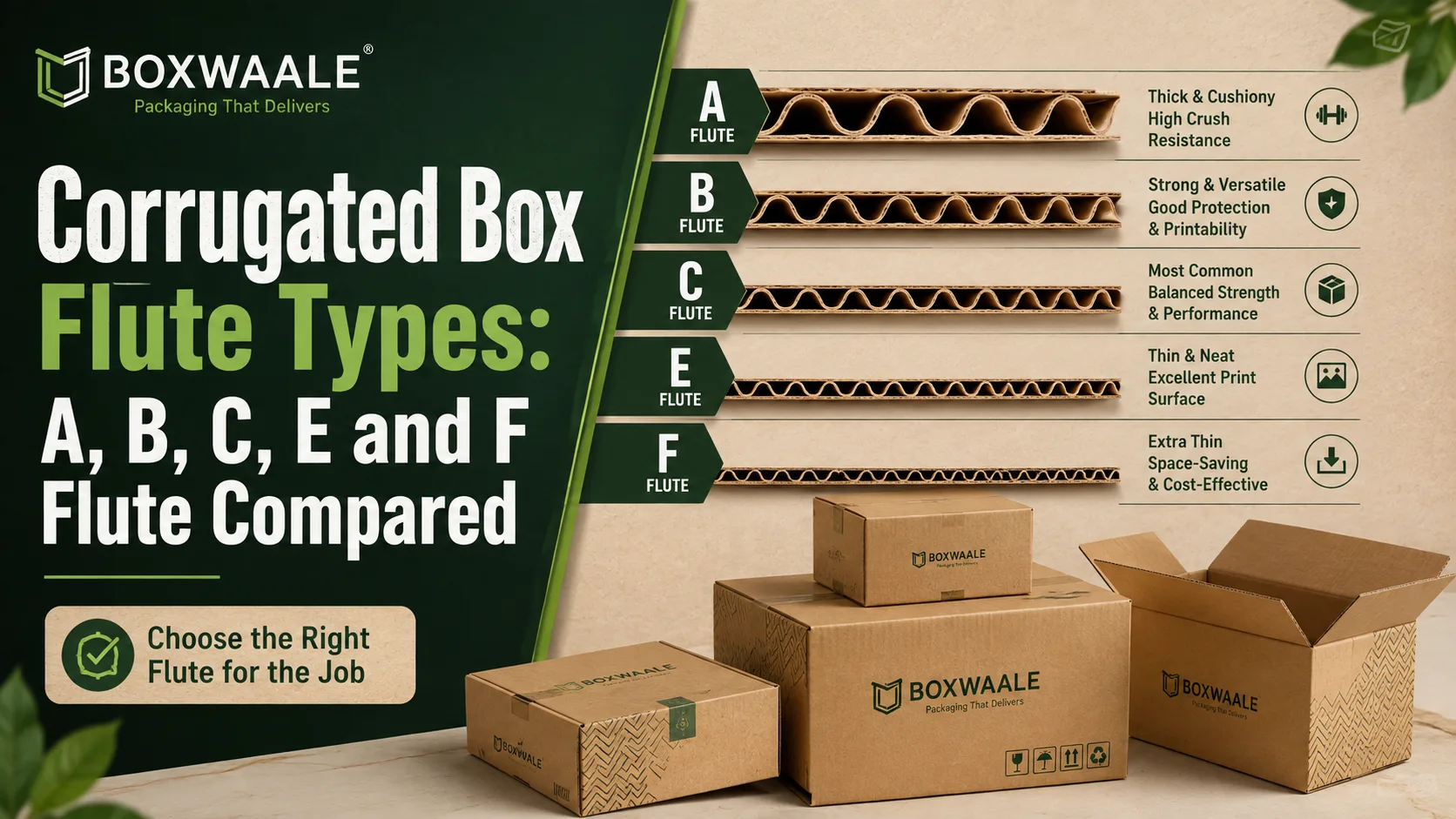
Corrugated Box Flute Types: A, B, C, E and F Flute Compared
Read guide
Corrugated Box Bursting Strength: What Buyers Need to Know
Read guide
Box Compression Test Explained: How Carton Stacking Strength Is Measured
Read guide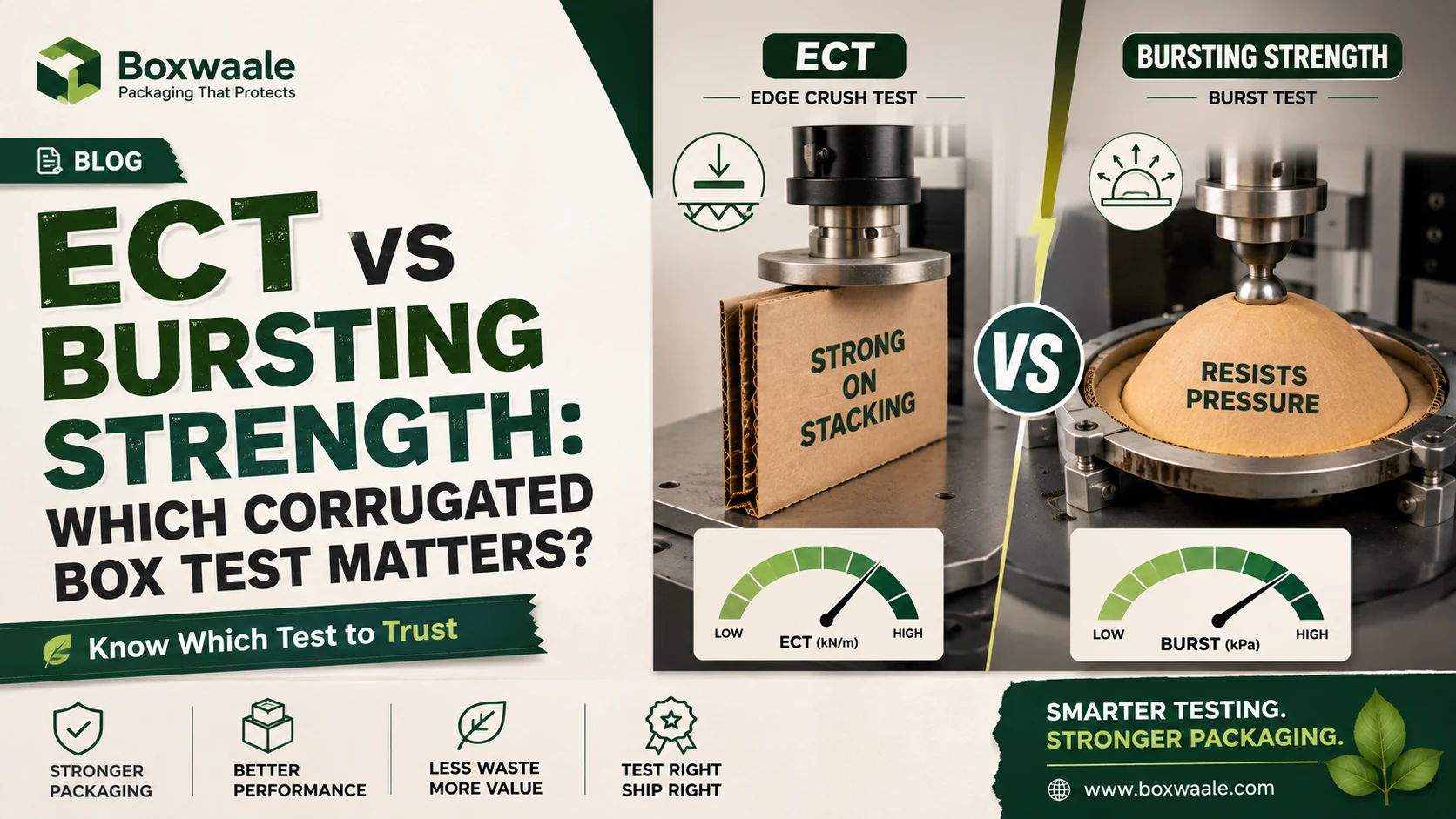
ECT vs Bursting Strength: Which Corrugated Box Test Matters?
Read guide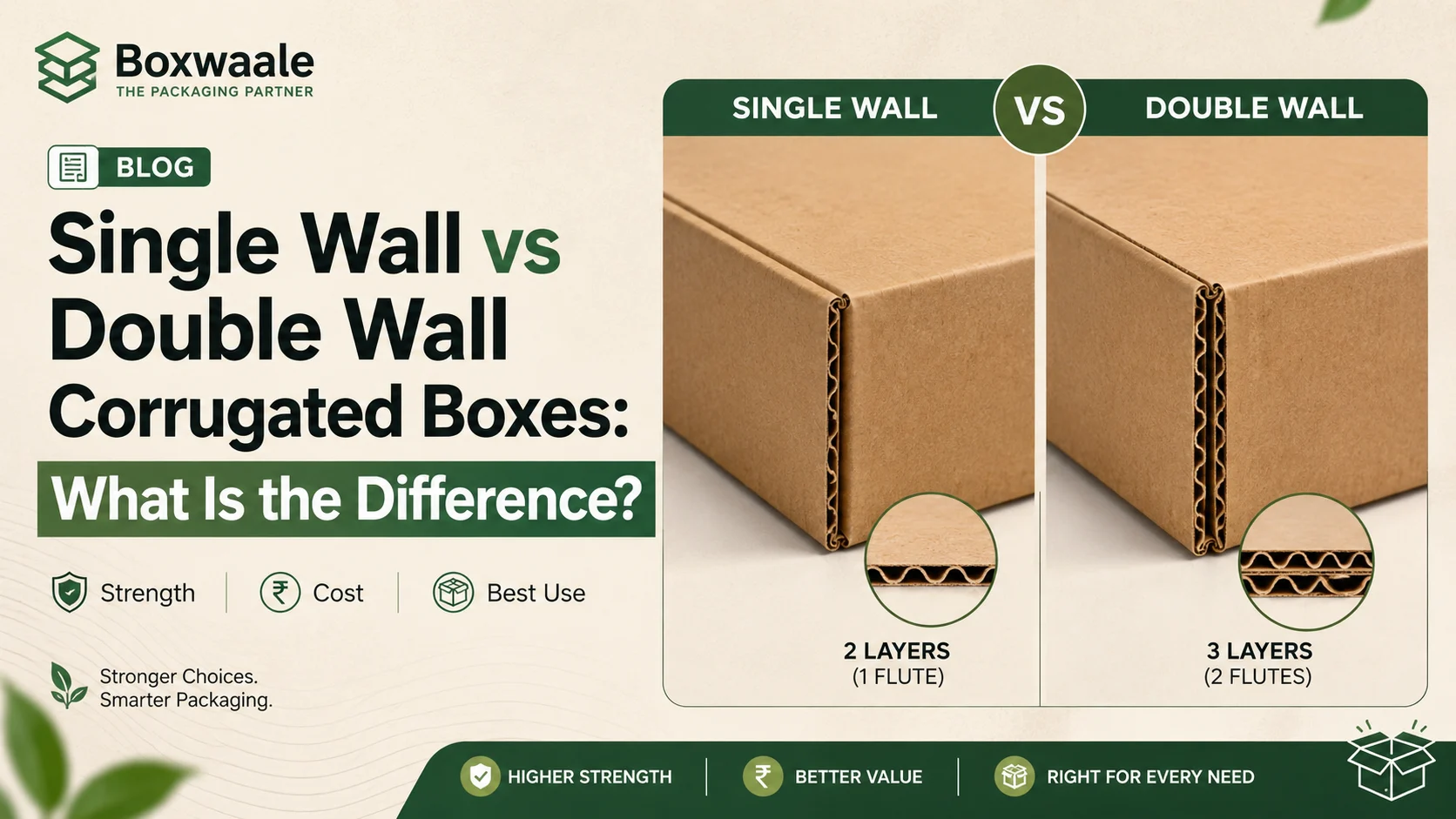
Single Wall vs Double Wall Corrugated Boxes: What Is the Difference?
Read guide