
Published 2 Aug 2026· Updated 29 Aug 2026
How to Plan Corrugated Box Inventory for Festive and Peak Seasons
A practical planning framework for sellers to forecast demand, time orders against lead time, manage storage and stock corrugated box inventory ahead of festive peak seasons.
Key Takeaways
- Many sellers begin planning festive-season packaging needs at least six to eight weeks ahead of the expected demand spike, since production and delivery both take time and last-minute orders often cost more.
- A reasonable demand forecast starts from the previous year's peak-season sales volume by SKU, adjusted for the current year's growth trend, new product lines and known promotional plans.
- Phased supply, an initial batch plus scheduled follow-up deliveries, can balance storage space and cash flow better than one large upfront order, though it requires closer coordination with the supplier.
- SKU rationalisation means reducing the number of distinct box sizes or designs used, which simplifies forecasting, storage and reordering, and can improve per-unit pricing by concentrating order volume on fewer specifications.
- Running out of packaging mid-season typically means delayed shipments, higher costs from a rushed emergency reorder, or falling back on mismatched or lower-quality packaging as a stopgap.
- Custom printed boxes generally take longer to produce than plain stock boxes because of plate-making and proofing steps, so peak-season orders involving custom print need extra lead time built in.
How to Plan Corrugated Box Inventory for Festive and Peak Seasons
Table of Contents
Every seller who has run out of shipping boxes in the middle of a festive sale learns the same lesson the hard way: packaging inventory planning has to start well before the demand spike, not during it. This article lays out a practical framework — forecasting, lead time, storage and SKU simplification — for planning corrugated box stock ahead of Diwali, end-of-year sales, or any other predictable peak period.
Starting With a Realistic Demand Forecast
The starting point for any packaging inventory plan is an honest estimate of how many boxes, by size and design, you'll actually need through the peak period. The most reliable source for this is your own history: last year's peak-season order volumes by SKU, adjusted for how your business has changed since then — new product lines, discontinued ones, a different marketing push, or a shift in average order size.
If this is your first peak season, or your business has grown enough that last year's numbers aren't a useful baseline, work from your production or procurement plan instead: how many units of each product do you expect to move, and how does that translate into carton counts given your current pack sizes. Build in a reasonable buffer above your point estimate, since peak-season demand is inherently less predictable than steady-state demand, and running short during your highest-revenue period is usually more costly than holding slightly excess stock.
- Break the forecast down by individual box SKU, not just a total unit count.
- Account for any new products or promotions that didn't exist in your prior year's data.
- Revisit the forecast once, roughly midway through your planning window, against early sales signals if you have them.
Working Backward From Supplier Lead Time
Once you have a demand estimate, the next step is working backward from your supplier's production and delivery lead time to figure out when you need to place orders. Custom printed boxes generally take longer than plain stock boxes because of plate-making and proofing steps, so if your peak-season packaging carries branding or custom print, build in extra time for that process ahead of the actual production run.
A rough planning sequence looks like: identify your target in-stock date (when you want packaging fully available in your warehouse), subtract your supplier's confirmed production and delivery lead time, and subtract further time for any proofing or approval steps if the order includes new or revised artwork. Many sellers find that starting this process six to eight weeks ahead of an expected demand spike leaves enough margin for normal production timelines plus some buffer for delays, though your specific supplier's lead time is the number to actually plan against, not a generic industry estimate.
Ordering early also generally gives you better access to standard bulk wholesale corrugated boxes pricing and scheduling flexibility, compared with placing a rush order once a supplier's production calendar is already full of other sellers' peak-season orders.
Storage Capacity and Phased Supply
A large upfront order solves the lead-time problem but creates a different one: where do you physically store several weeks or months of packaging inventory, and how much working capital does that tie up before you've generated the sales revenue to justify it. For many sellers, particularly smaller operations without dedicated warehouse space, a single large batch order simply isn't practical.
Phased supply is a common middle path: agree on a total order quantity with your supplier, but schedule it as a series of smaller deliveries timed to your actual consumption rate through the peak period, rather than one large delivery upfront. This approach:
- Reduces the peak storage space you need to hold at any one time.
- Spreads payment across the season rather than requiring full upfront capital.
- Still locks in your pricing and production slot early, which is the main benefit of ordering ahead.
The trade-off is that phased supply requires more coordination with your supplier and a reasonably accurate week-by-week consumption estimate, so it works best when paired with the demand forecasting discussed earlier, not as a substitute for it.
SKU Rationalisation to Simplify Planning
Sellers with many distinct box sizes and designs face a compounding planning problem during peak season: forecasting, ordering and storage all get harder to manage as the number of distinct SKUs grows, even if total unit volume stays the same. Reviewing your box SKU list before peak season and consolidating similar products onto shared box sizes — where the size difference genuinely doesn't matter to the product or the customer experience — can meaningfully simplify the rest of your planning process.
This doesn't mean every product needs to fit one universal box; that usually creates its own problems with wasted space and higher shipping costs. It means being deliberate about how many distinct sizes you actually need, since each additional SKU adds its own forecast, lead time, storage allocation and reorder point to manage, and unnecessary SKU proliferation is one of the more common, avoidable sources of peak-season packaging stress.
How Boxwaale Helps
Boxwaale works with sellers ahead of festive and other peak periods to plan order timing against realistic production lead times, and can structure phased delivery schedules so you're not forced to choose between running out of stock and overloading your storage space. We can also review your current box SKU range and flag consolidation opportunities that make peak-season forecasting and reordering simpler.
Frequently Asked Questions
Related Packaging Guide
Planning a packaging order?
Turn this guidance into a box specification
Share the product dimensions, packed weight, quantity, printing requirement and delivery postcode. Boxwaale will help narrow down the appropriate size, ply and board specification before quoting.
Frequently Asked Questions
Related Products
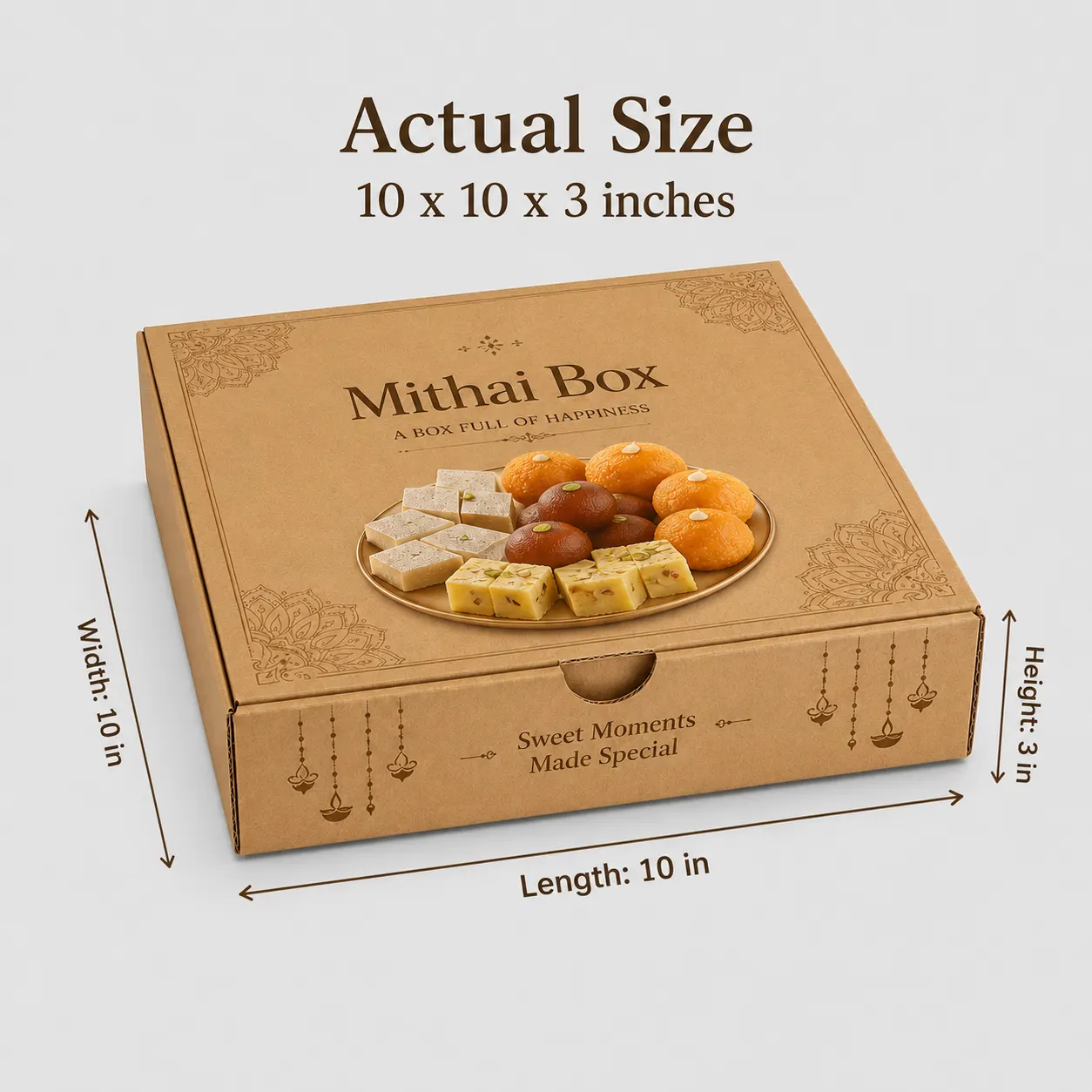
10x10x3 Inch Brown Corrugated Mithai Box for Sweet & Dry Fruit Packaging
Premium 10x10x3 inch brown corrugated mithai box designed for sweet shops, bakeries, dry fruit sellers, festive gifting, and safe delivery.
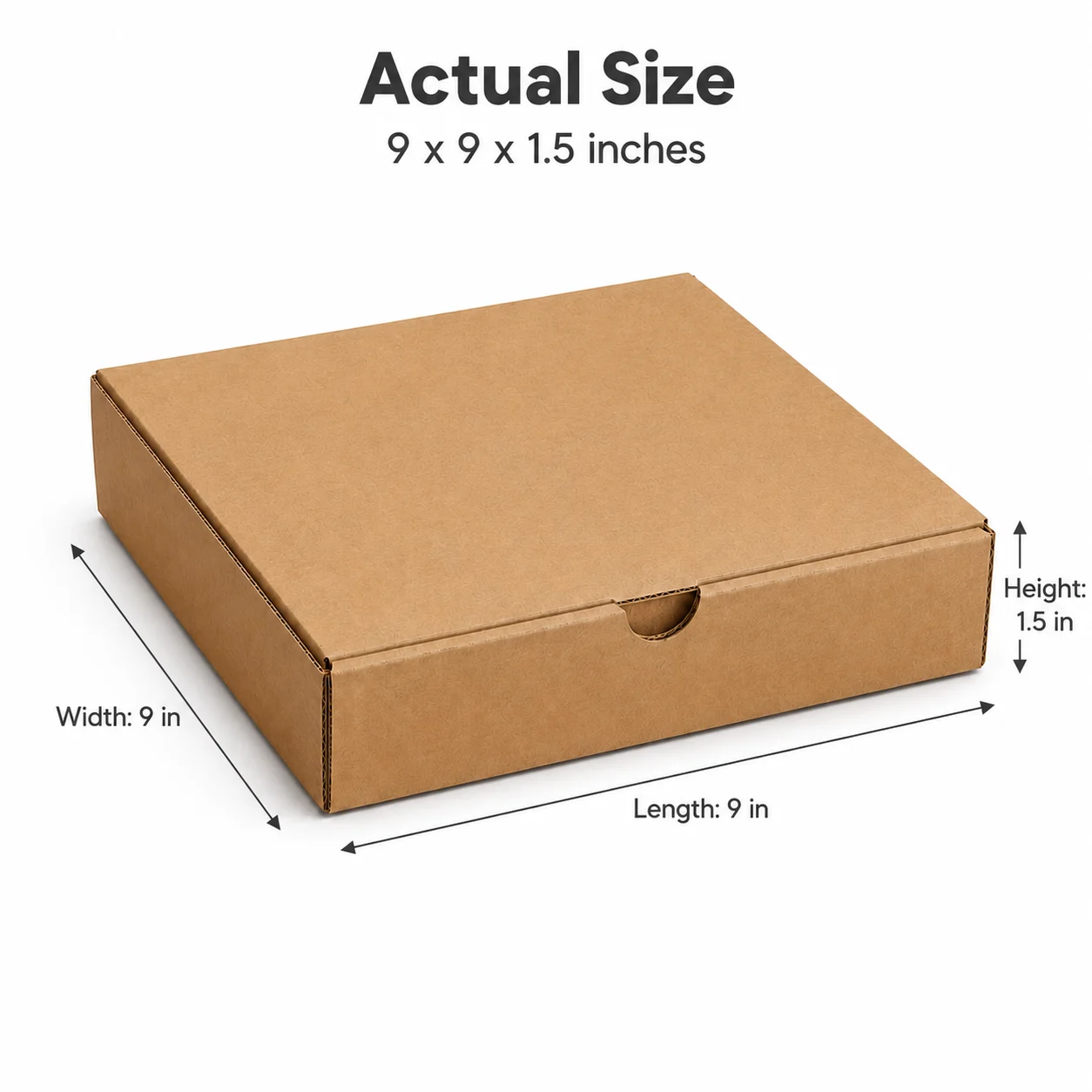
9x9 Inch Brown Corrugated Pizza Box for Food Delivery
Durable 9x9 inch brown corrugated pizza box designed for restaurants, cafes, cloud kitchens, and food delivery businesses.
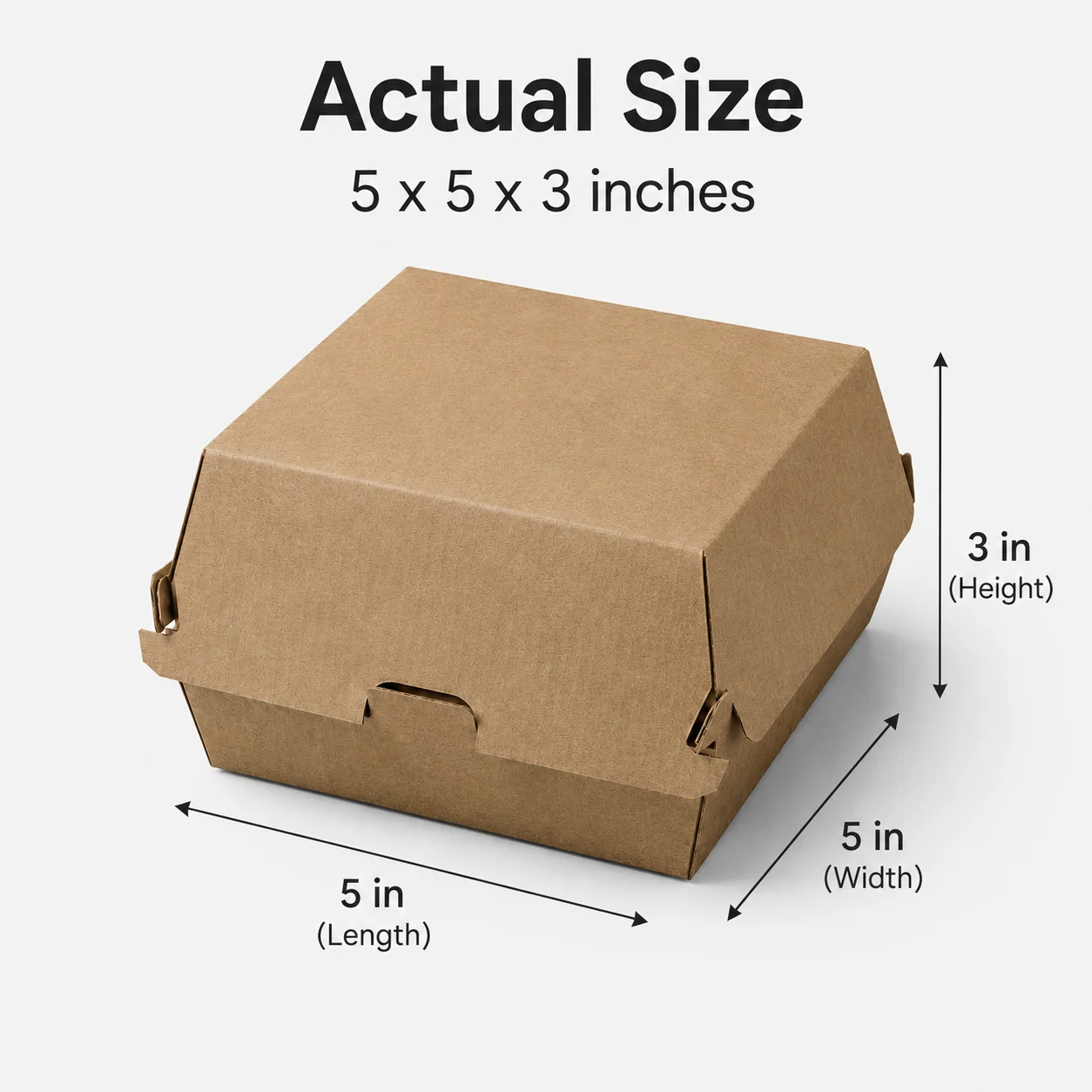
5x5 Inch Brown Kraft Burger Box for Takeaway & Food Delivery
Durable 5x5 inch brown kraft burger box designed for restaurants, cafes, cloud kitchens, and takeaway food packaging.

8x8 Inch Brown Kraft Cake Box for Bakery & Pastry Packaging
Premium 8x8 inch brown kraft cake box designed for bakeries, cafes, cloud kitchens, pastry shops, and dessert packaging.
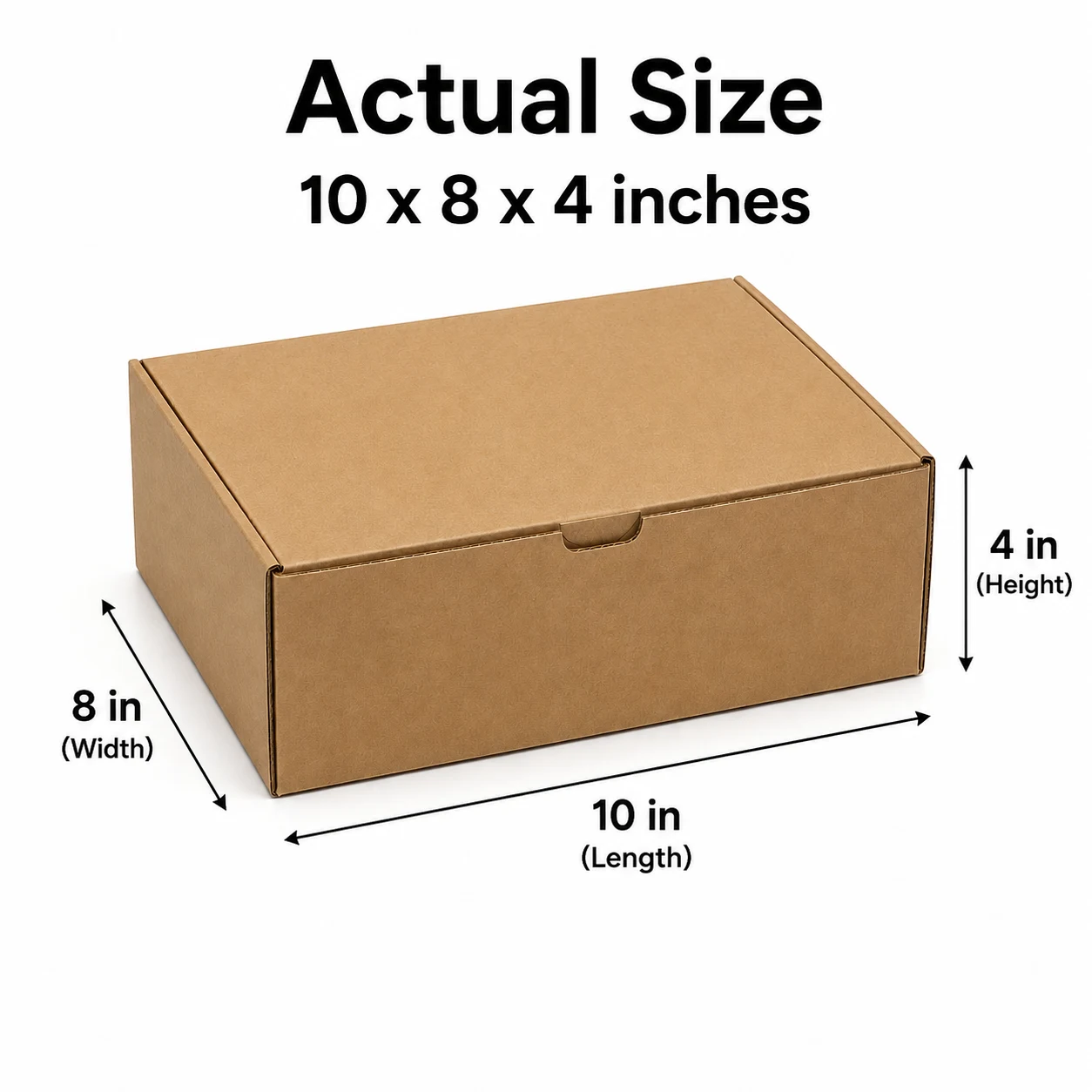
10x8x4 Inch Brown Corrugated Courier Box for E-commerce Shipping
Durable 10x8x4 inch brown corrugated courier box designed for e-commerce shipping, product delivery, storage, and secure packaging.
Related Buying Guides
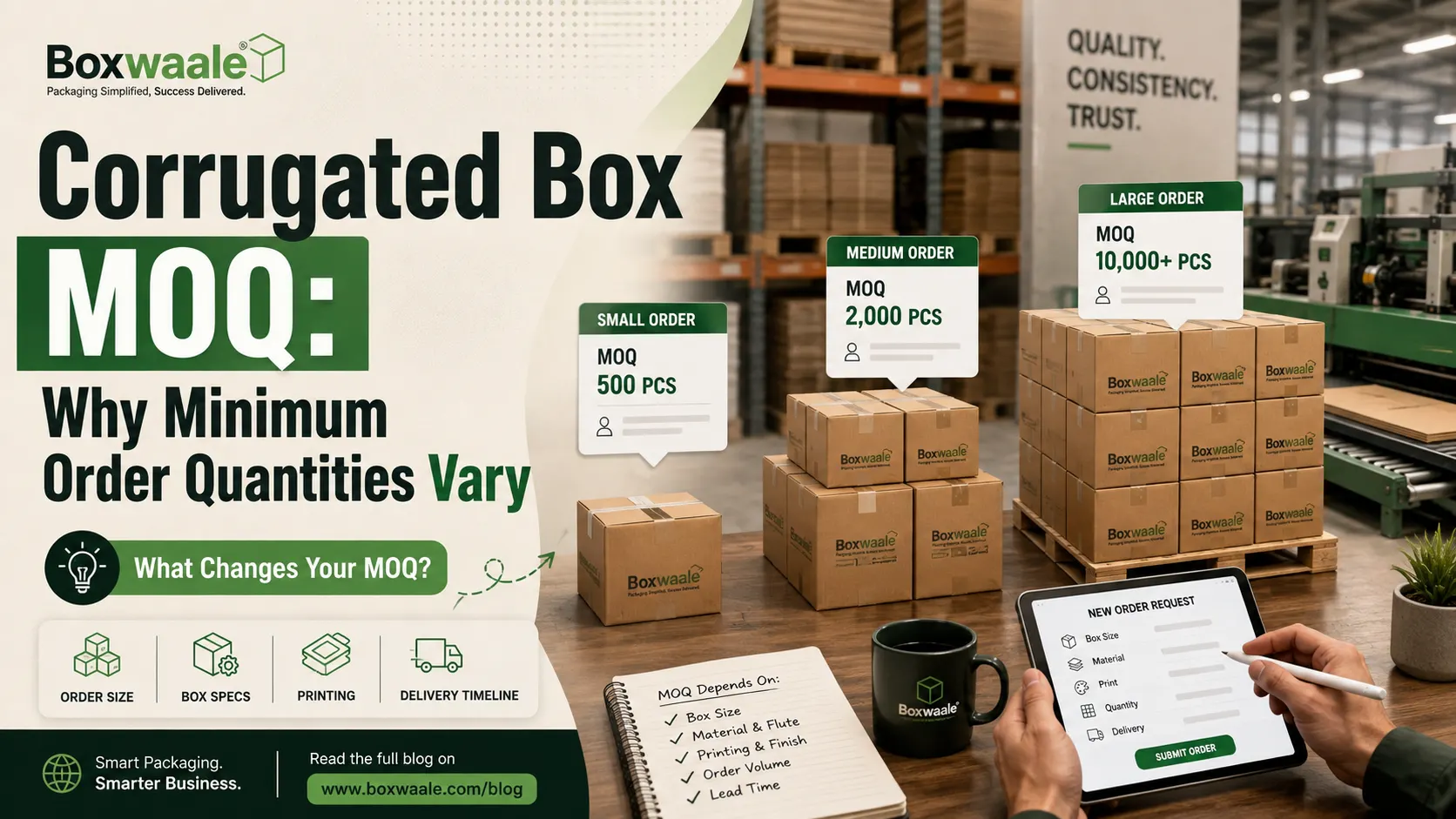
Corrugated Box MOQ: Why Minimum Order Quantities Vary
Read guide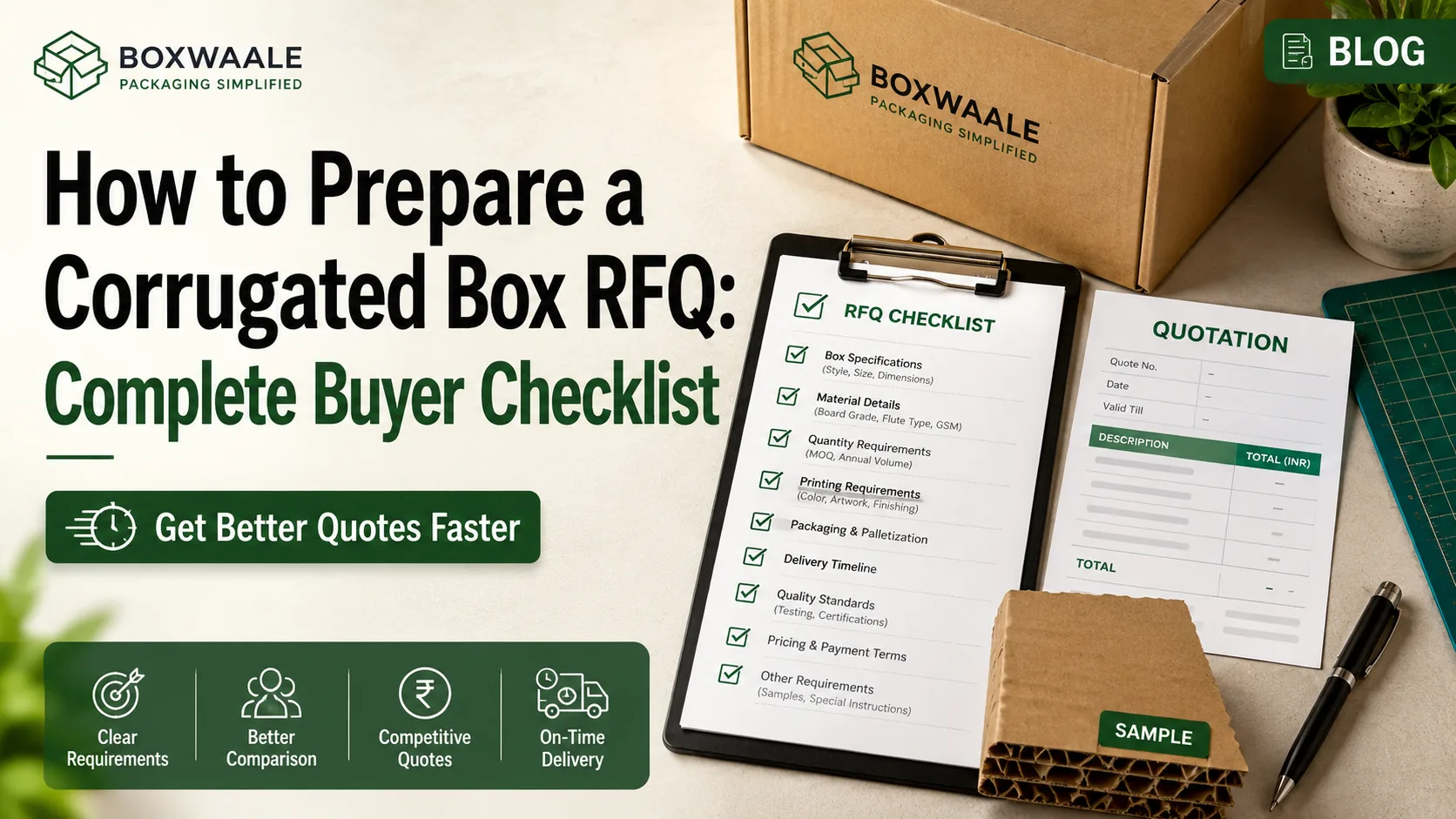
How to Prepare a Corrugated Box RFQ: Complete Buyer Checklist
Read guide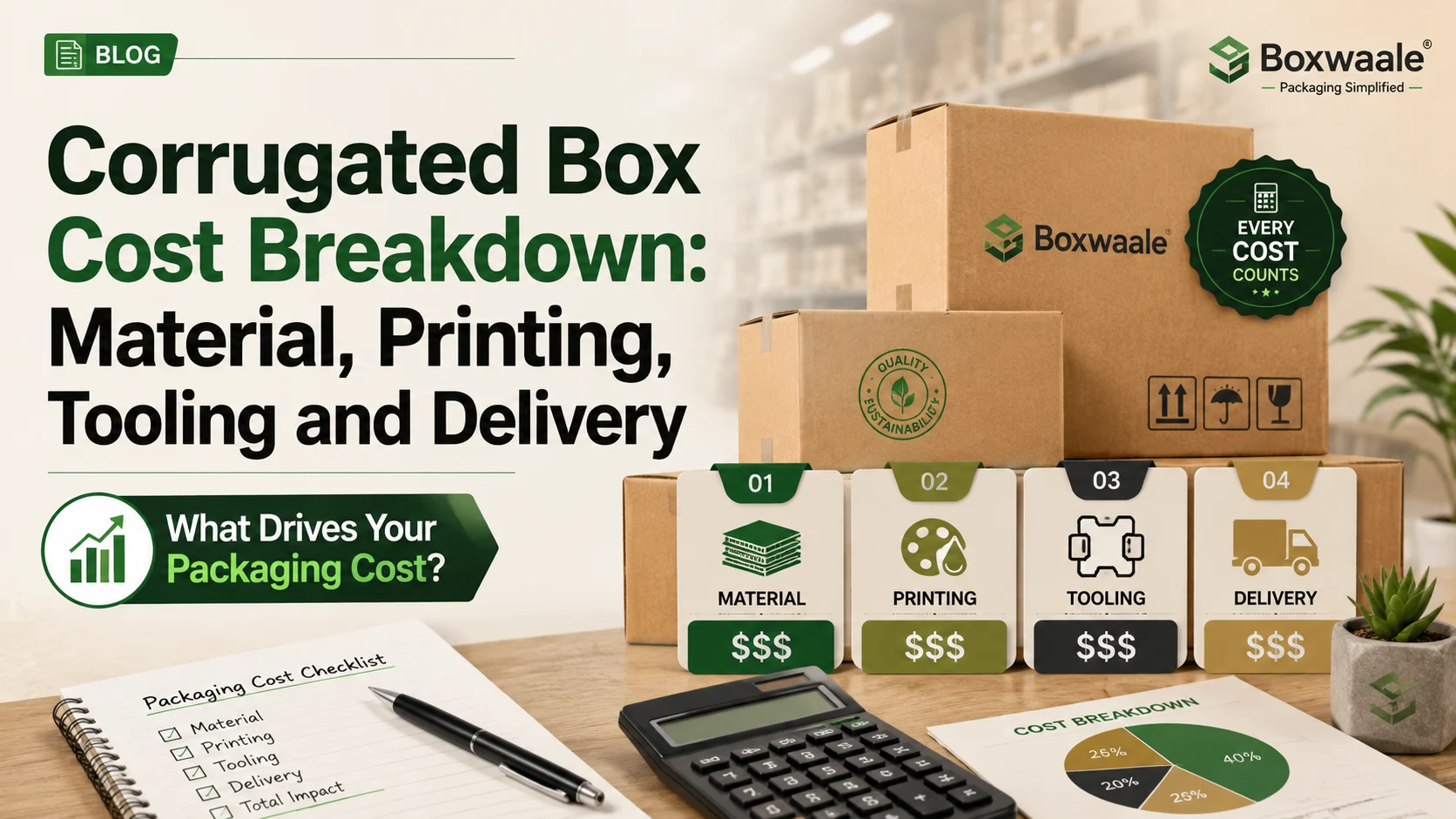
Corrugated Box Cost Breakdown: Material, Printing, Tooling and Delivery
Read guide
Corrugated Box Samples and Prototypes: What to Approve Before Production
Read guide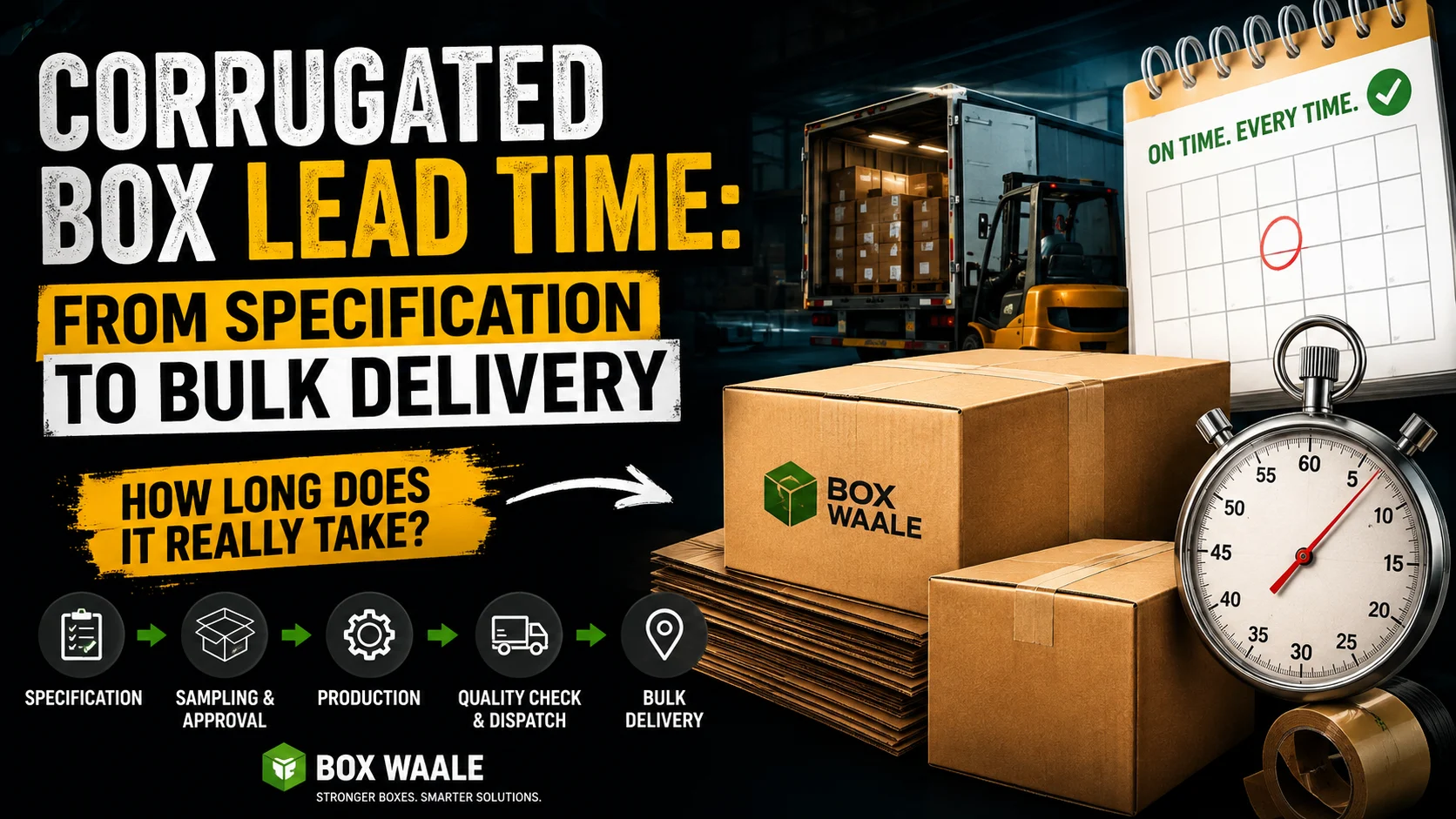
Corrugated Box Lead Time: From Specification to Bulk Delivery
Read guide