
Published 2 Aug 2026· Updated 29 Aug 2026
Corrugated Box Lead Time: From Specification to Bulk Delivery
Understand what drives corrugated box lead time, from board sourcing and print complexity to sample approval, and how to plan ordering ahead of demand.
Key Takeaways
- Corrugated box lead time covers multiple stages, including specification finalisation, board sourcing, printing, converting, quality checking, and dispatch and transit, not just manufacturing alone.
- Board availability, print complexity, whether new die-cutting tooling is required, order volume, and seasonal demand can all lengthen or shorten the overall production schedule.
- Bulk production scheduling typically does not start until a sample is approved, so time spent reviewing a sample is added on top of the manufacturing timeline rather than running alongside it.
- Repeat orders using an already-approved board grade, die and print artwork generally move through production faster than first-time orders.
- Ordering against a reorder point, based on average usage plus a buffer for the slower end of expected lead time, reduces the risk of running out of stock during a production delay.
- Demand tends to rise industry-wide ahead of festive or peak seasons, which can lengthen supplier queues and makes ordering well in advance more important during those periods.
Corrugated Box Lead Time: From Specification to Bulk Delivery
Table of Contents
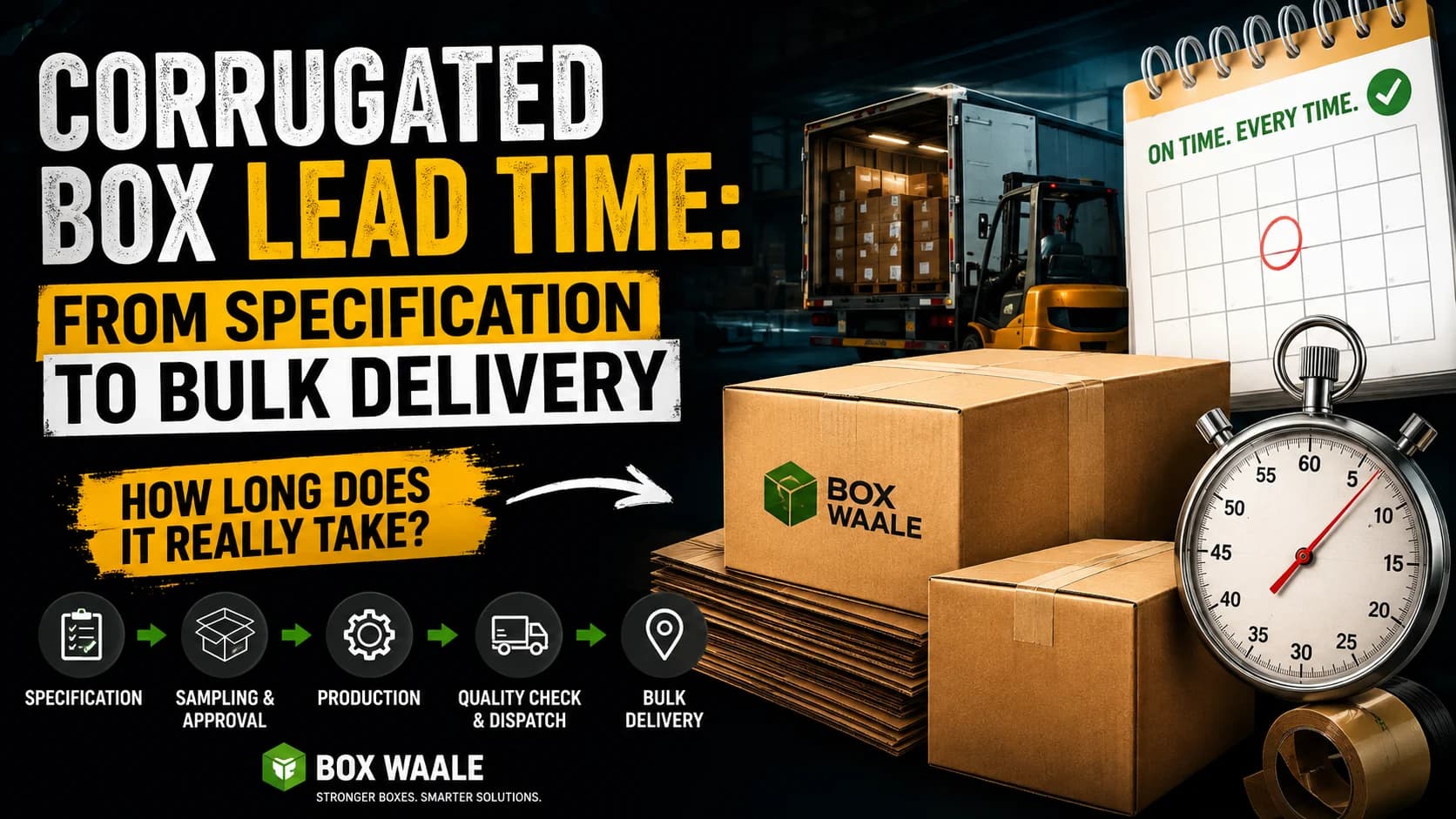
Ask several packaging suppliers how long a custom corrugated order takes and you'll likely get several different answers, because lead time isn't a fixed number — it's the sum of several variable steps that can each move independently. This article breaks down what those steps are, what commonly extends or shortens them, and how to plan an ordering calendar so lead time doesn't turn into a stockout.
What Lead Time Actually Covers, Start to Finish
Lead time for a custom corrugated box generally spans several distinct stages, not one single manufacturing step. It starts with specification finalisation — agreeing on size, ply, board grade, print and closure — which can take anywhere from a same-day confirmation to several rounds of back-and-forth depending on how defined the requirement already is. From there, board is sourced or pulled from stock in the required grade and quantity, followed by printing if the box is branded, and then converting: cutting, creasing, slotting and joining the board into the final box shape.
After conversion comes quality checking and bundling, and finally dispatch and transit to the delivery location. Each of these stages has its own scheduling dependencies — printing machines, converting lines and even transport availability are shared across multiple orders, so a supplier's overall order book at the time also affects how quickly your specific order moves through each stage.
Dispatch and transit time is often thought of separately from production time, but for planning purposes it helps to add the two together. A box that's ready to leave the factory floor still has to travel to your location, and that leg of the journey can vary meaningfully depending on distance, the logistics partner used, and whether the shipment is going to a single delivery address or being split across multiple warehouses.
Factors That Stretch or Shrink the Timeline
Several variables commonly move the schedule in either direction:
- Board availability — a common ply and grade combination that's regularly stocked moves faster than an unusual specification that needs to be sourced specifically for your order.
- Print complexity — a plain kraft box with no print is quicker than a multi-colour design that needs plate setup, colour matching and a separate print run.
- New tooling — a custom die-cut shape ordered for the first time requires die-making before conversion can begin, which adds time compared to a stock regular slotted carton.
- Order volume — very large volumes may need to be split across multiple production runs or machine slots, which can extend the overall schedule even though per-unit output is efficient.
- Seasonal demand — periods of high overall demand across the packaging industry, such as ahead of major festive or sale seasons, tend to lengthen queues at most suppliers.
Because these factors interact, the only reliable way to get a realistic timeline for your exact order is to share your specifications directly and ask for an indicative schedule against them, rather than relying on a general estimate.
Where Sample Approval Fits Into the Schedule
For any order that involves a new size, a new die, or new print artwork, sample approval usually sits between specification finalisation and the start of bulk production — and it's a step that's easy to underestimate when planning a delivery date. Bulk production scheduling typically doesn't begin until the sample is signed off, which means the time a buyer takes to review and approve a sample is effectively added on top of the manufacturing timeline, not run in parallel with it.
This is worth planning for deliberately: if a sample is dispatched and sits unreviewed for several days, that delay pushes the final delivery date back by the same amount. Building in a realistic internal turnaround time for sample review, and getting the right stakeholders to look at it promptly, keeps the rest of the schedule from slipping unnecessarily. It also helps to remember that suppliers often schedule converting and printing capacity around an expected approval date; a late sign-off doesn't just delay your specific order, it can mean losing an allocated production slot to another order that was ready to move forward, pushing your delivery date back further than the review delay alone would suggest.
Planning Your Ordering Calendar to Avoid Stockouts
Because lead time is variable rather than fixed, the safest way to avoid running out of boxes is to order against a reorder point rather than waiting until stock is nearly finished. A reorder point is generally calculated from your average usage rate plus a buffer that accounts for the slower end of expected lead time, so that even if a particular order takes longer than average, you're not left without packaging.
This buffer matters most around predictable demand spikes — festive seasons, sale events, or monsoon-related logistics disruptions — when both packaging suppliers and transport networks tend to be busier than usual. For repeat sizes and specifications, keeping the approved artwork, board grade and die details on file also helps, since reordering an already-approved specification generally moves through the early stages of the process faster than a first-time order.
As a general way to think about the buffer, consider a business that uses a fairly steady number of boxes each month and finds that a reorder typically takes a few weeks from specification to delivery. A sensible reorder point would trigger the next order well before existing stock is projected to run out, with enough margin to absorb a slower-than-average production run without ever risking a stockout. Holding a small amount of extra stock costs comparatively little next to the cost of a production or fulfilment line stalling because packaging isn't available when it's needed.
How Boxwaale Helps
Boxwaale provides an indicative production timeline once box size, ply, print and quantity are confirmed, so the schedule is based on your actual specification rather than a generic estimate. For businesses that reorder the same sizes regularly, Boxwaale keeps prior specifications on record, which helps keep repeat order scheduling more predictable across order cycles.
Frequently Asked Questions
Related Packaging Guide
Planning a packaging order?
Turn this guidance into a box specification
Share the product dimensions, packed weight, quantity, printing requirement and delivery postcode. Boxwaale will help narrow down the appropriate size, ply and board specification before quoting.
Frequently Asked Questions
Related Products
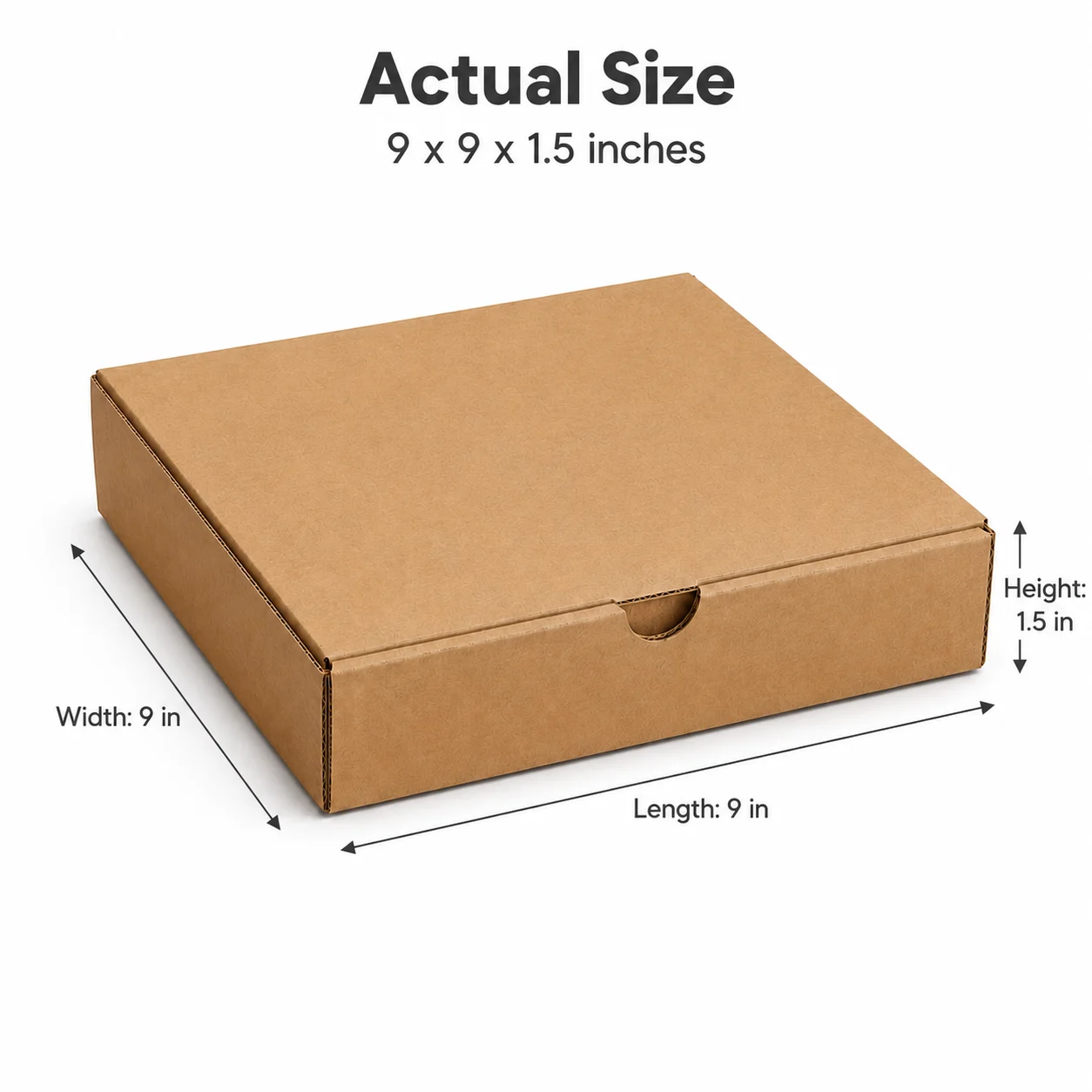
9x9 Inch Brown Corrugated Pizza Box for Food Delivery
Durable 9x9 inch brown corrugated pizza box designed for restaurants, cafes, cloud kitchens, and food delivery businesses.
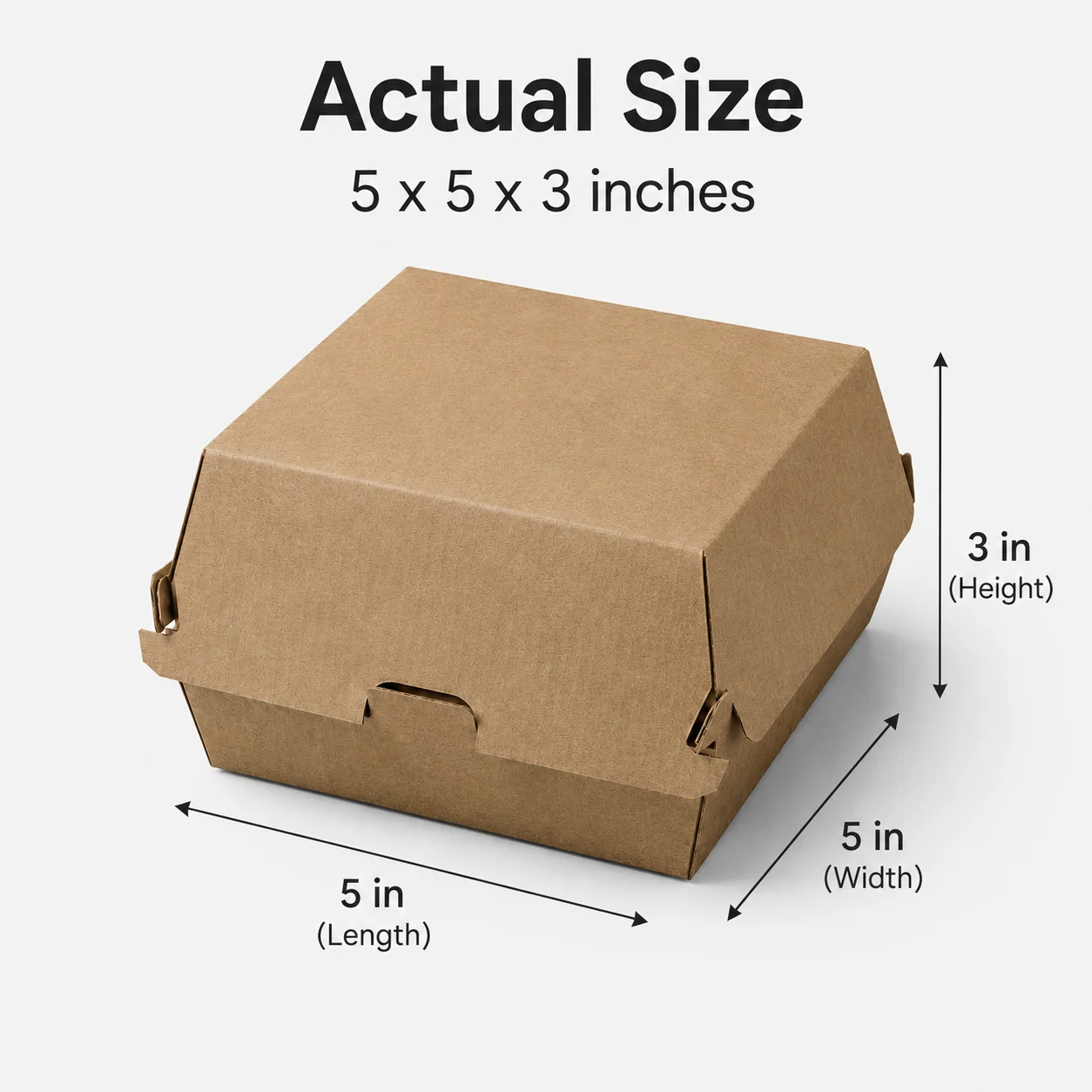
5x5 Inch Brown Kraft Burger Box for Takeaway & Food Delivery
Durable 5x5 inch brown kraft burger box designed for restaurants, cafes, cloud kitchens, and takeaway food packaging.
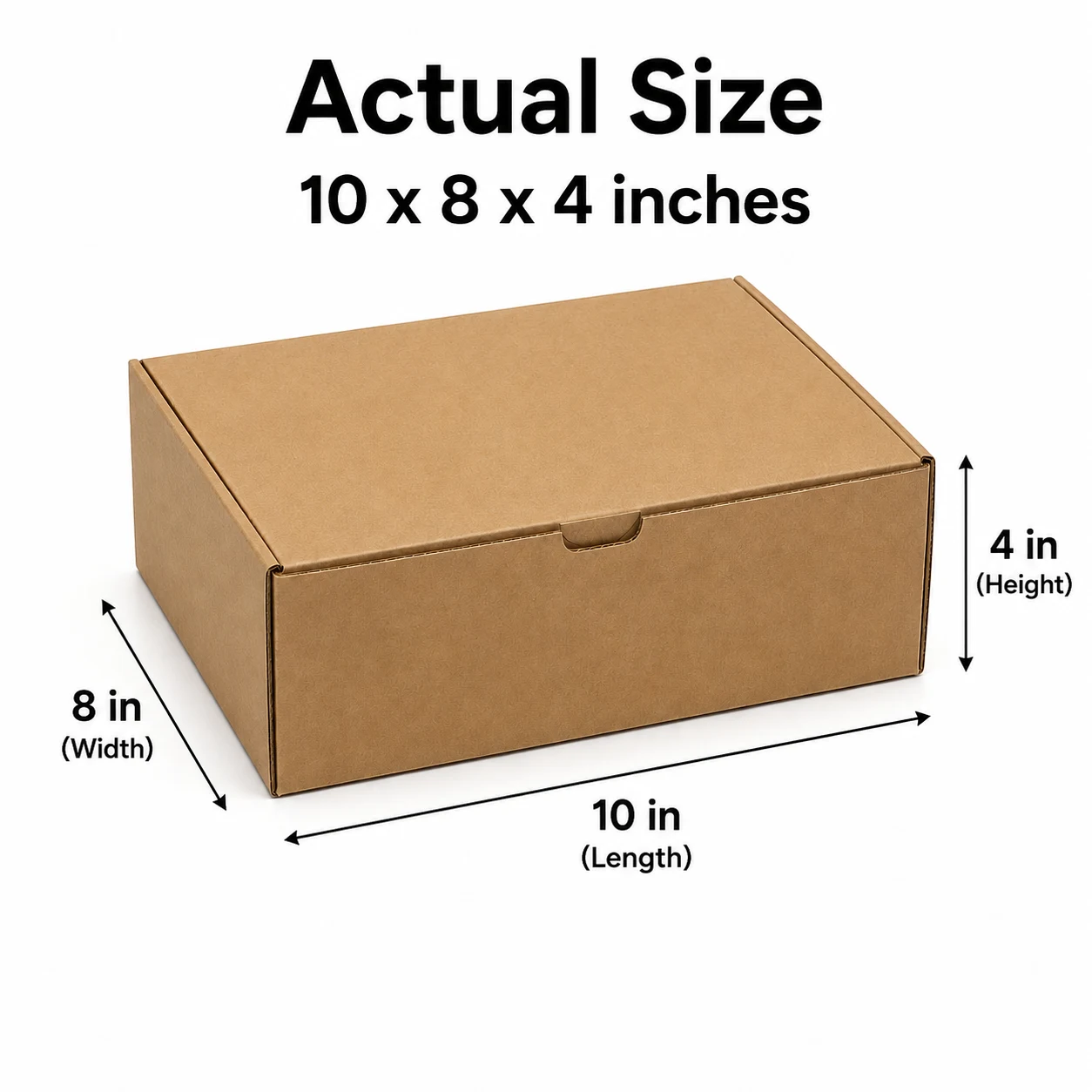
10x8x4 Inch Brown Corrugated Courier Box for E-commerce Shipping
Durable 10x8x4 inch brown corrugated courier box designed for e-commerce shipping, product delivery, storage, and secure packaging.
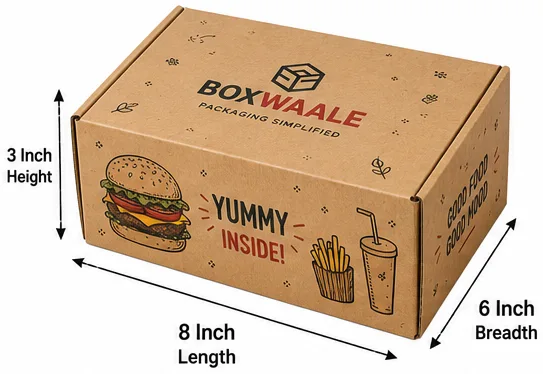
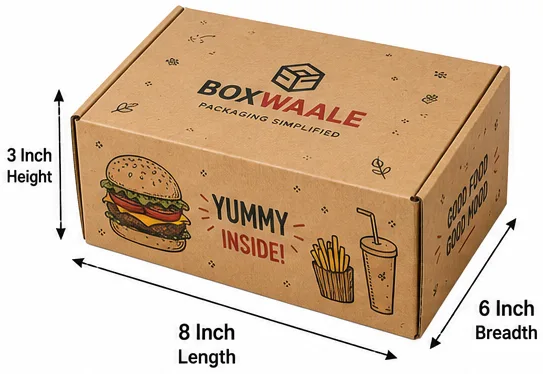
8x6x3 Inch Brown Kraft Burger Meal Combo Box for Food Delivery
Practical brown kraft burger meal combo box designed for burgers, fries, sides, snacks, and food delivery packaging.
10x10x5 Inch Brown Kraft 1 KG Cake Box for Bakeries
Premium 10x10x5 inch brown kraft 1 KG cake box designed for bakeries, home bakers, cafes, dessert brands, and safe cake delivery.
Related Buying Guides
Corrugated Box Cost Breakdown: Material, Printing, Tooling and Delivery
Read guide
Corrugated Box Samples and Prototypes: What to Approve Before Production
Read guide
Corrugated Box MOQ: Why Minimum Order Quantities Vary
Read guide
How to Prepare a Corrugated Box RFQ: Complete Buyer Checklist
Read guide
How to Plan Corrugated Box Inventory for Festive and Peak Seasons
Read guide