
Published 2 Aug 2026· Updated 29 Aug 2026
Corrugated Box Cost Breakdown: Material, Printing, Tooling and Delivery
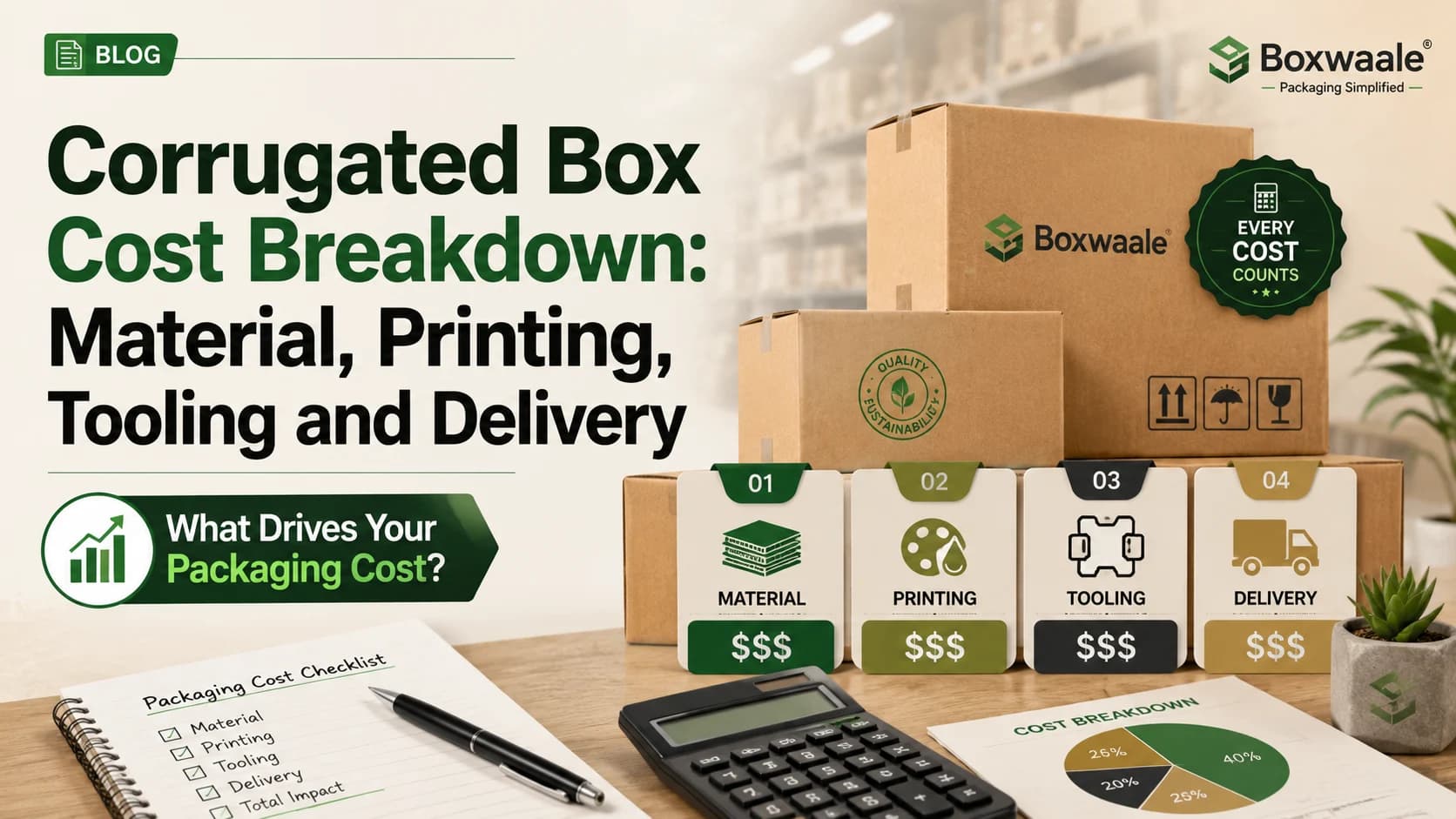
A procurement-focused look at the cost structure behind a corrugated box quote, covering material, ply, printing, tooling, order quantity and delivery, so you know exactly where the price actually comes from.
Key Takeaways
- A corrugated box quote is built from several cost categories layered together: raw material, conversion into a finished box shape, printing if applicable, tooling if a new die is needed, and delivery.
- Fixed costs like plate-making and die-cutting tools get spread across more units as order quantity increases, lowering the fixed-cost share of each individual box.
- Paper is usually the largest single cost component in a corrugated box, driven by liner and flute GSM, ply or wall construction, and paper quality grade.
- Printing costs include a mostly fixed component, such as plate-making and machine setup, plus a variable component like ink and press time that scales gently with quantity.
- Because corrugated boxes are bulky relative to their weight, delivery cost can be a meaningful share of total landed price, especially for smaller orders shipped long distances.
- Comparing quotes on total landed cost, including material, print, amortised tooling and delivery, gives a more accurate picture than comparing headline unit prices that may be quoted on different bases.
Corrugated Box Cost Breakdown: Material, Printing, Tooling and Delivery
Table of Contents
A corrugated box quote can look like a single number, but behind it sits a stack of individually variable costs. Understanding what each one covers helps procurement teams spot where they have genuine room to negotiate or optimise, rather than treating the quote as a black box.
The Building Blocks of a Corrugated Box Quote
At a structural level, every corrugated box quote is built from a handful of cost categories layered on top of each other: raw material, conversion (turning flat board into a finished box shape), printing if applicable, tooling if a new die or plate is needed, and delivery. Some of these scale directly with quantity; others are fixed regardless of how many boxes you order and simply get diluted as volume grows.
Recognising which costs are fixed and which are variable is the single most useful thing a buyer can do before negotiating — it clarifies where a bigger order genuinely saves money per unit, and where it doesn't.
Fixed Costs vs Variable Costs at a Glance
It helps to sort every line item on a quote into one of two buckets: costs that stay roughly the same no matter how many boxes you order, and costs that scale directly with quantity. Plate-making and die-cutting tools sit firmly in the fixed bucket. Paper, ink volume and per-box handling sit in the variable bucket. A buyer negotiating price is really negotiating how the fixed bucket gets divided across the order, since the variable bucket has comparatively little room to move without changing the actual specification of the box itself.
Material Cost: Paper, Ply and Board Quality
Paper is usually the largest single cost component in a corrugated box, and it's driven by three things: GSM (weight per unit area) of the liners and flute, the number of plies (single wall vs double wall), and the quality grade of the kraft or recycled paper used.
Heavier GSM liners and double wall constructions cost more per box simply because more raw paper goes into each one. This is where the specification conversations covered in our guide to corrugated boxes strength and construction options matter for cost, not just performance — over-specifying board for a light, well-protected product is one of the more common ways buyers overpay without realising it.
Box size also factors in directly here: larger boxes use more sheet area, so material cost scales with dimensions, though not always in a perfectly linear way once you account for how efficiently a given box shape can be cut from a standard sheet size.
Printing and Tooling Costs
Printing adds cost in two layers: a mostly fixed cost (plate-making, machine setup for the specific design) and a variable cost that scales gently with quantity (ink, press time). The fixed component is why printed boxes usually show a bigger cost-per-unit drop as quantity increases compared to plain, unprinted boxes.
Number of colours matters too — each additional colour in a flexographic print job typically needs its own plate and press pass, so a five-colour design costs meaningfully more in setup than a one or two colour design, independent of the actual ink volume used.
Die-cutting works similarly. A custom box shape needs a die cut specifically for that shape, and that's a one-time tooling cost that gets absorbed into the first order (or amortised across a few reorders, depending on how your supplier structures pricing). Reordering the same shape later, using the same die, avoids that cost a second time — which is why repeat orders are often noticeably cheaper per box than the initial run.
Delivery, Volume and Other Variables That Move the Final Price
Freight is easy to underweight when comparing quotes, but corrugated boxes are bulky relative to their weight, so delivery cost can be a real share of the total landed price — especially for smaller orders travelling long distances. Some suppliers quote ex-works (excluding delivery), while others build it into a delivered price; always confirm which basis you're comparing when weighing quotes from different manufacturers.
A few other variables worth asking about explicitly:
- Whether boxes are supplied flat (knocked-down) or pre-assembled, since flat-packed boxes ship far more efficiently
- Minimum order quantity thresholds that unlock lower per-unit pricing
- Sample or proofing charges, and whether they're credited against the full order
- Payment terms, which can sometimes affect quoted pricing depending on the supplier
Comparing quotes on total landed cost per box — material, print, tooling amortised, and delivery all included — gives a far more accurate picture than comparing headline unit prices that may be quoted on different bases.
Where Buyers Actually Have Room to Negotiate
Once the cost structure is visible, it becomes clearer where a buyer genuinely has room to influence price and where they don't. Quantity and repeat-order commitments generally offer the most leverage, since they directly dilute fixed costs like tooling and plate-making. Specification choices — ply, GSM, colour count — offer a second lever, but only make sense to adjust downward if the box is currently over-specified for its actual use, not simply to cut cost at the expense of adequate protection. Delivery terms and payment terms are a smaller but still real lever, particularly for buyers ordering regularly enough to negotiate standing terms rather than pricing each order individually.
How Boxwaale Helps
Boxwaale provides a transparent cost breakdown alongside every quote so you can see exactly what's driving the price, rather than a single bundled figure. If you'd like a quick estimate before a formal RFQ, try our box price calculator to get a starting reference point for your specification, then reach out for a firm quote once you're ready.
Frequently Asked Questions
Related Packaging Guide
Planning a packaging order?
Turn this guidance into a box specification
Share the product dimensions, packed weight, quantity, printing requirement and delivery postcode. Boxwaale will help narrow down the appropriate size, ply and board specification before quoting.
Frequently Asked Questions
Related Products
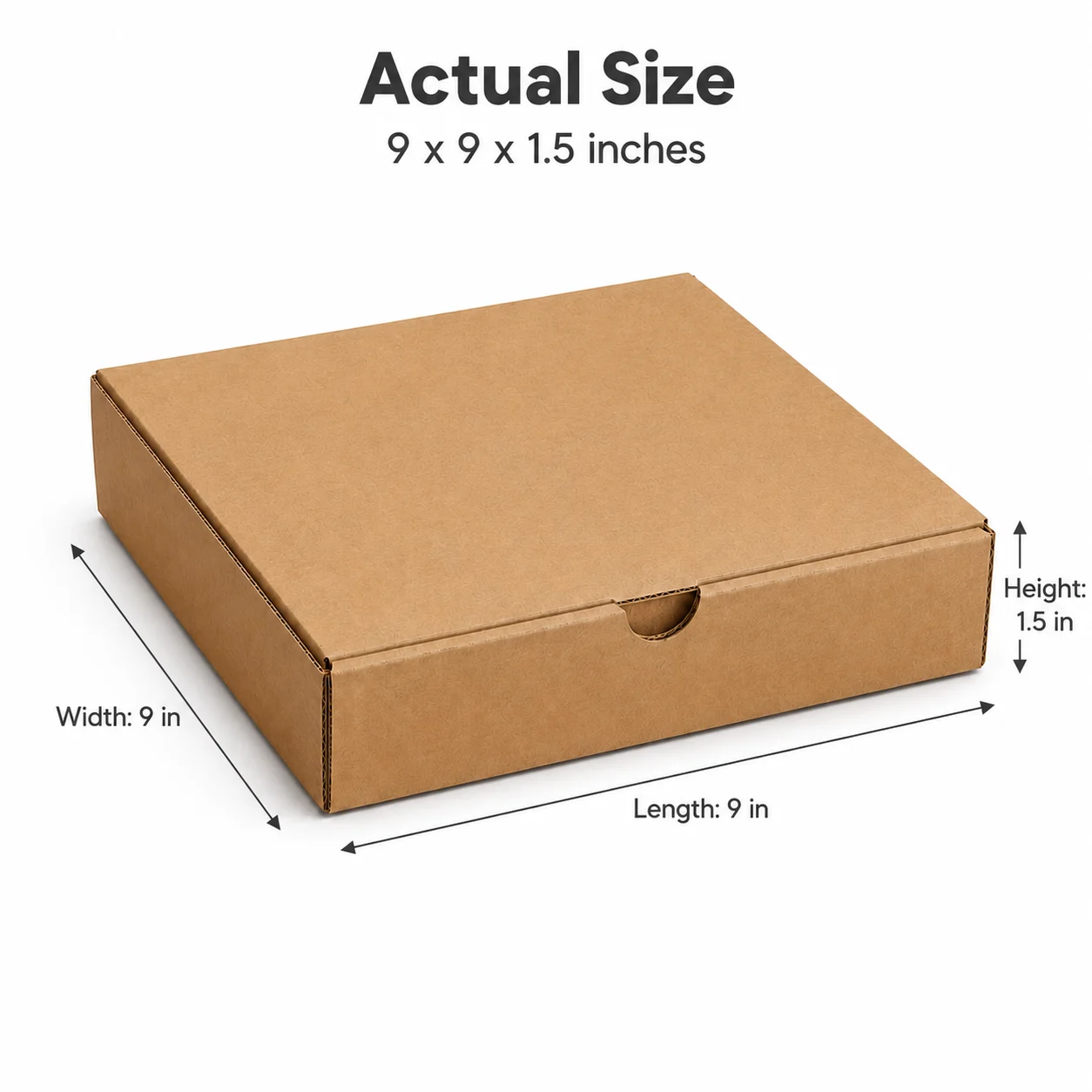
9x9 Inch Brown Corrugated Pizza Box for Food Delivery
Durable 9x9 inch brown corrugated pizza box designed for restaurants, cafes, cloud kitchens, and food delivery businesses.
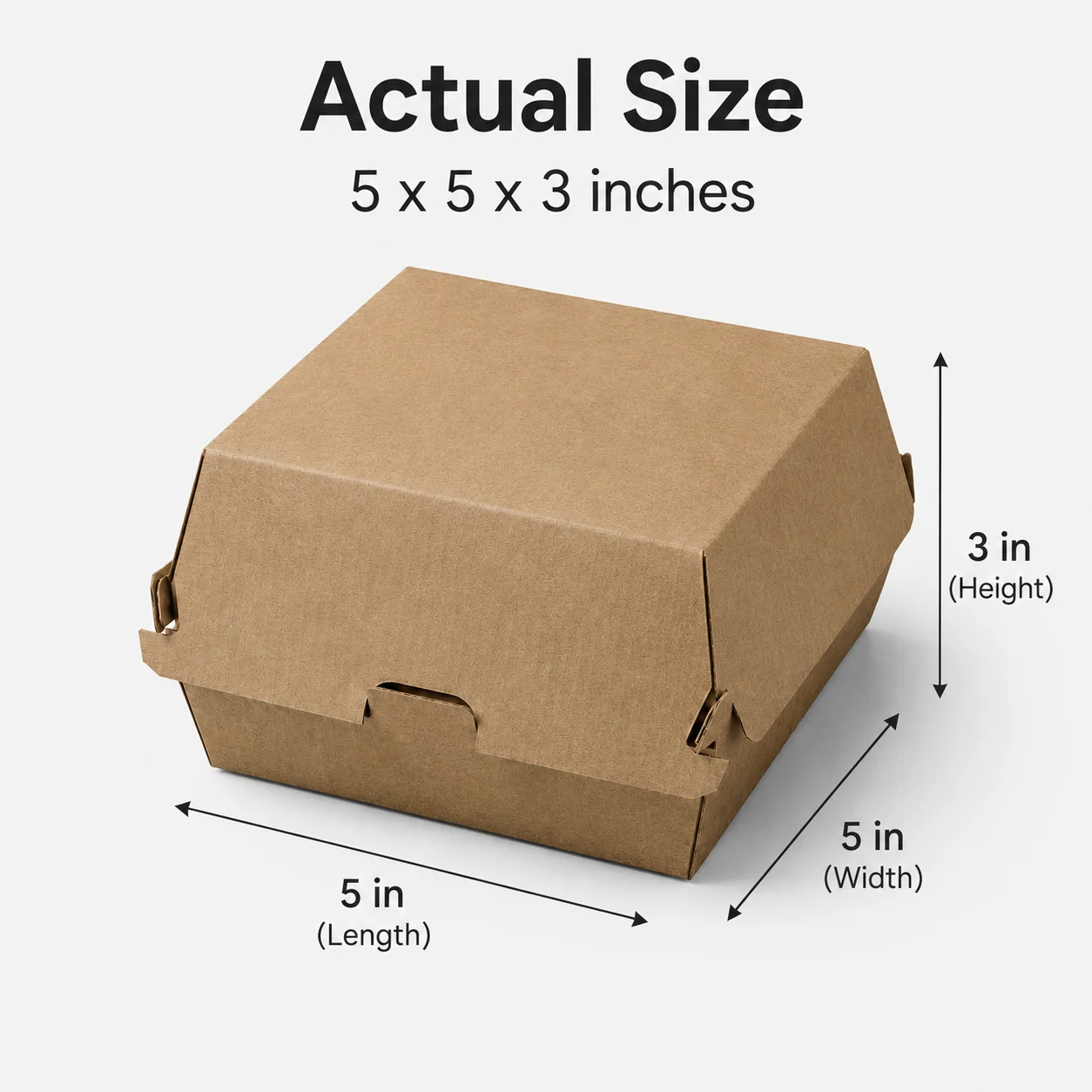
5x5 Inch Brown Kraft Burger Box for Takeaway & Food Delivery
Durable 5x5 inch brown kraft burger box designed for restaurants, cafes, cloud kitchens, and takeaway food packaging.
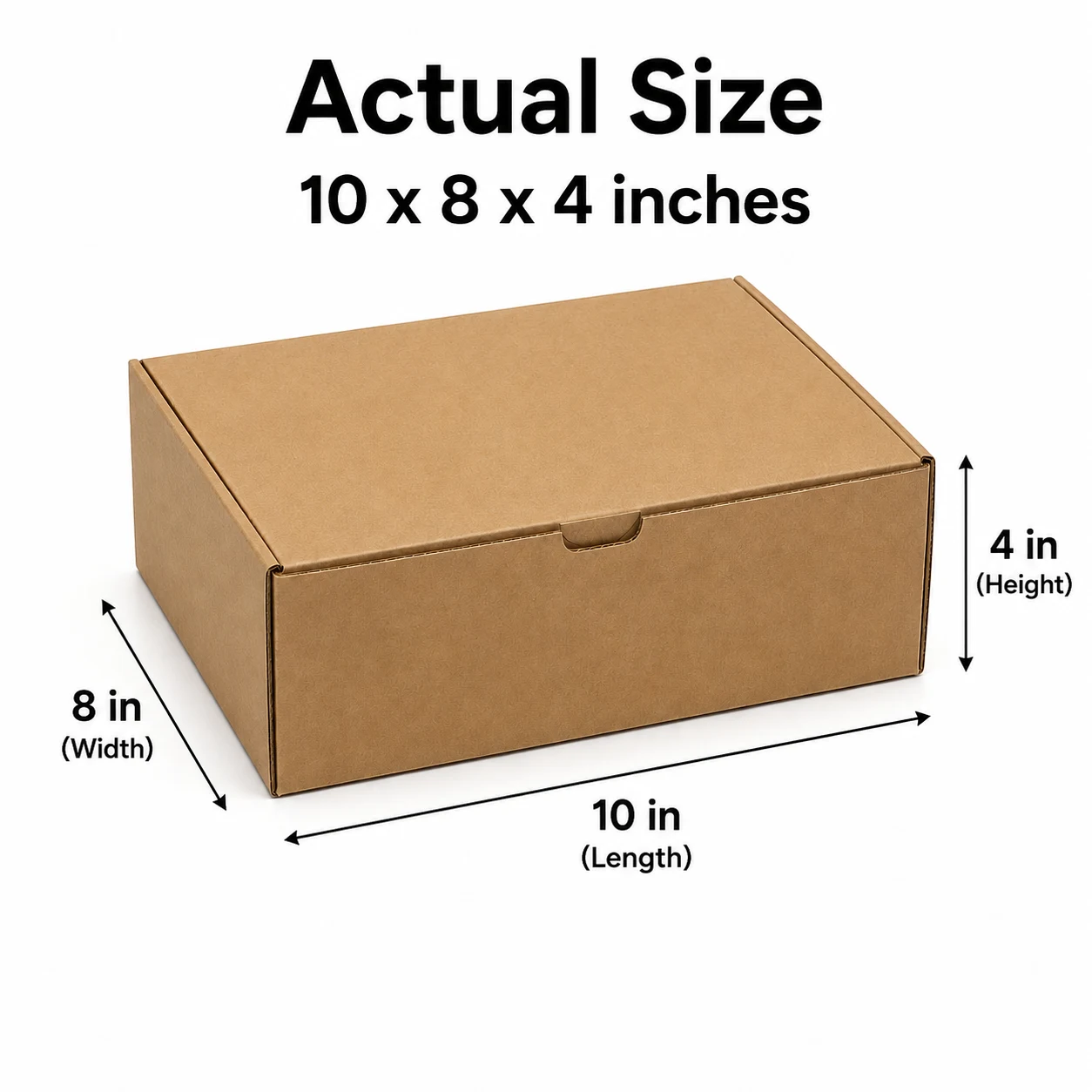
10x8x4 Inch Brown Corrugated Courier Box for E-commerce Shipping
Durable 10x8x4 inch brown corrugated courier box designed for e-commerce shipping, product delivery, storage, and secure packaging.
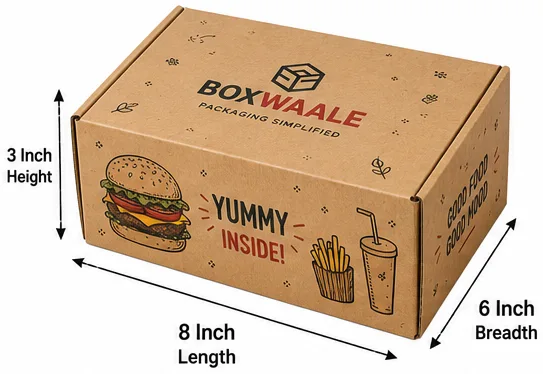
8x6x3 Inch Brown Kraft Burger Meal Combo Box for Food Delivery
Practical brown kraft burger meal combo box designed for burgers, fries, sides, snacks, and food delivery packaging.
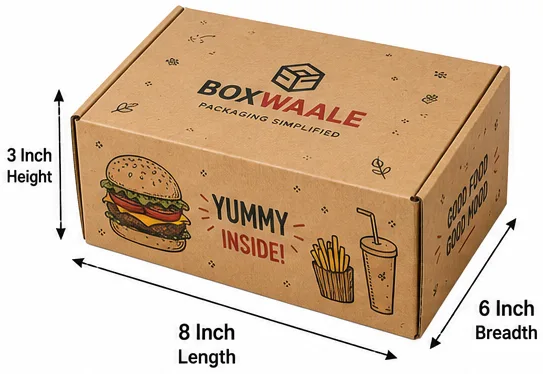
10x10x5 Inch Brown Kraft 1 KG Cake Box for Bakeries
Premium 10x10x5 inch brown kraft 1 KG cake box designed for bakeries, home bakers, cafes, dessert brands, and safe cake delivery.
Related Buying Guides
Corrugated Box Lead Time: From Specification to Bulk Delivery
Read guide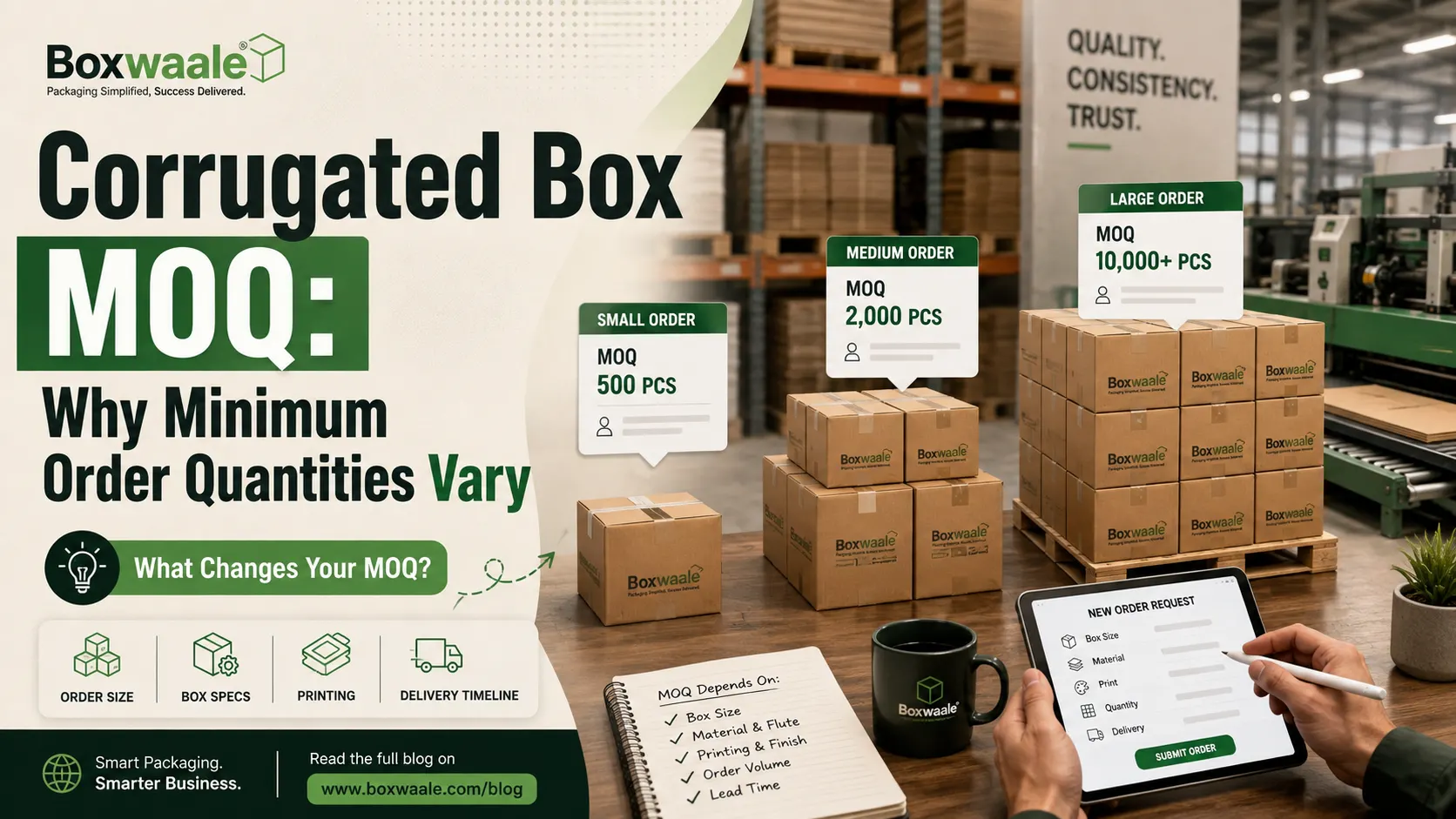
Corrugated Box MOQ: Why Minimum Order Quantities Vary
Read guide
How to Prepare a Corrugated Box RFQ: Complete Buyer Checklist
Read guide
How to Plan Corrugated Box Inventory for Festive and Peak Seasons
Read guide
Corrugated Box Samples and Prototypes: What to Approve Before Production
Read guide