Published 2 Aug 2026· Updated 29 Aug 2026
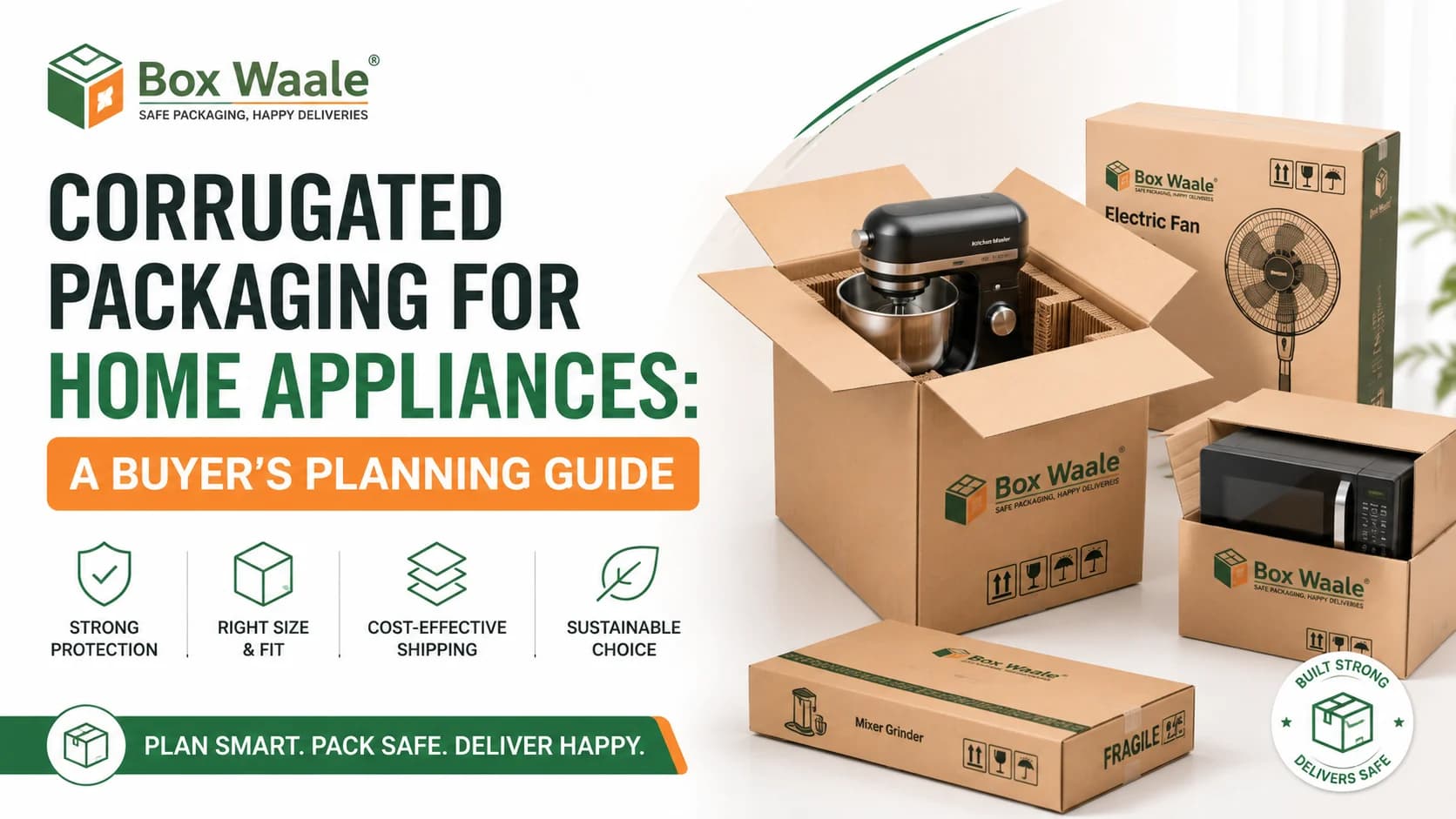
Corrugated Packaging for Home Appliances: A Buyer's Planning Guide
A planning guide for appliance brands and sellers covering weight distribution, fitments, stacking strength, handling and validation before a print run.
Key Takeaways
- Mid-to-large home appliances commonly move in 5-ply double-wall corrugated board because of their combined weight and stacking demands, while smaller electrical accessories can often use lighter single-wall constructions.
- Appliance packaging should be designed around the product's actual centre of gravity rather than its geometric centre, since weight is often concentrated in one component such as a motor, compressor or transformer.
- Foam corners, corrugated inserts or moulded pulp fitments hold an appliance in a fixed position inside the box so it cannot shift or strike the carton wall during transit.
- Glass or display panels generally need dedicated corner and face protection rather than generic void-fill, and loose-fitting foam can wear through on long journeys even if it passes a single drop test.
- Printed handling marks such as this-way-up arrows and stacking limits are guidance for handlers rather than a guarantee of careful handling, so they work best combined with a genuinely stack-resistant box design.
- A short validation batch that fills, stacks and transit-tests sample cartons before a full print run catches weight distribution and fitment problems while they are still inexpensive to fix.
Corrugated Packaging for Home Appliances: A Buyer's Planning Guide
Table of Contents
Home appliances present a different packaging problem than most consumer goods: uneven weight, protruding parts, and a genuine cost to the customer if the unit arrives damaged. This guide sets out how to plan corrugated packaging for appliances and electrical products from first principles, so the box design holds up through warehousing, transit and last-mile delivery.
Starting From Weight Distribution, Not Box Size
Most box specification exercises start with the product's outer dimensions and work outward. For appliances, that approach misses the real risk, which is usually where the weight sits, not how big the product is. A washing machine, a microwave with a heavy transformer, or a mixer-grinder base all carry their mass unevenly, and a symmetrical box built purely around outer dimensions can leave the heaviest section under-supported.
Before finalising a carton, map out roughly where the product's centre of gravity sits and design the base panel, any internal fitments, and the corner structure around that point rather than around the geometric centre of the box. This single step prevents a large share of the sagging, corner-splitting and base-bulging failures that show up in appliance shipments.
- Identify the heaviest sub-assembly (motor, compressor, transformer, drum) before finalising board grade.
- Check whether the product's weight is concentrated at the base, the back, or one side, and reinforce accordingly.
- Avoid assuming that a heavier board alone compensates for poor weight distribution — fitment design matters as much as board strength.
Foam, Fitments and Internal Support
A box is only half the packaging system for most appliances; the other half is what holds the product in a fixed position inside it. Foam end-caps, corrugated corner blocks, moulded pulp trays or die-cut inserts all serve the same purpose: stopping the appliance from shifting, rotating or striking the box wall during handling. Without this, even a strong outer carton can absorb an impact and transfer it directly to the product inside.
Fitment design should account for:
- Protruding parts such as handles, knobs, hoses or control panels that need clearance and cushioning of their own.
- Glass or display panels, which generally need dedicated corner and face protection rather than generic void-fill.
- Vibration during transit, not just drop impact — loose-fitting foam can wear through on long road journeys even if it survives a single handling test.
- Assembly time on the packing line; a fitment that takes too long to install correctly will eventually get skipped or done poorly under production pressure.
Many appliance sellers pair internal fitments with a 5-ply corrugated box for the outer shell, since the added wall gives more stacking margin for warehouse storage and multi-unit transport without excessive weight.
Stacking Strength and Warehouse Reality
Appliance cartons rarely travel alone. They sit stacked in warehouses, in delivery trucks, and sometimes in a customer's storeroom before installation, and the bottom carton in a stack carries the compressive load of everything above it for as long as that stack exists — which can be days or weeks, not just the seconds of a handling test. Board and flute selection should reflect the tallest realistic stack in your supply chain, not just a single-carton drop test.
A few planning questions worth answering before you lock in a specification:
- What is the maximum number of cartons realistically stacked in your warehouse or transport vehicle?
- How long do filled cartons typically sit in storage before dispatch, and does humidity or temperature in that storage area vary seasonally?
- Does your logistics partner stack appliance cartons with other, denser cargo on top, and if so, how does that change the compressive load?
These answers, more than any single spec sheet number, determine whether double-wall board or a reinforced single-wall construction is the right call for a given product line.
Handling Marks and Pre-Dispatch Validation
Printed handling instructions — this-way-up arrows, fragile marks, maximum stack height, keep-dry symbols — communicate intent to warehouse and delivery staff, but they are guidance, not a guarantee that every handler will follow them. They work best as one layer in a broader packaging approach, alongside a carton and fitment design that can tolerate some deviation from ideal handling, since that is closer to what actually happens across a real distribution network.
Before committing to a full print run, validate the design with a small batch: fill several sample cartons with real or realistic-weight product, stack them at your expected warehouse height, and run them through a genuine transit leg or a reasonable simulation. Open a few afterward and check the product condition, fitment position and box structure. Problems found at this stage are inexpensive to fix; the same problems found after a full production run and a season of complaints are not.
It also helps to build a short checklist that your packing team can apply consistently, rather than relying on individual judgement each time a carton is filled. A simple version might cover: is the fitment seated correctly before the flaps close, does the product sit centred rather than pressed against one wall, is the correct handling mark printed and visible on at least two faces of the carton, and does the sealed carton match the weight range the box was originally validated for. Consistency at the packing stage matters as much as the original design, since even a well-engineered box and fitment combination can fail if it's assembled incorrectly on the line. Revisiting this checklist periodically, especially after any change in product design, fitment supplier or board grade, keeps the packaging performing the way it was originally validated to.
How Boxwaale Helps
Boxwaale works with appliance brands and electronics sellers to build carton and fitment combinations around actual weight distribution rather than generic size charts, using double-wall and 5-ply constructions where stacking loads call for it. We can help plan a validation batch before you commit to a full print run, so weight-bearing weaknesses and fitment gaps get caught early rather than after dispatch.
Frequently Asked Questions
Related Packaging Guide
Planning a packaging order?
Turn this guidance into a box specification
Share the product dimensions, packed weight, quantity, printing requirement and delivery postcode. Boxwaale will help narrow down the appropriate size, ply and board specification before quoting.
Frequently Asked Questions
Related Products
10x10x5 Inch Brown Kraft 1 KG Cake Box for Bakeries
Premium 10x10x5 inch brown kraft 1 KG cake box designed for bakeries, home bakers, cafes, dessert brands, and safe cake delivery.

12x10x6 Inch Printed Home Decor Subscription Box for Brands
Premium 12x10x6 inch printed white corrugated home decor box designed for brands, retailers, manufacturers, and e-commerce sellers.
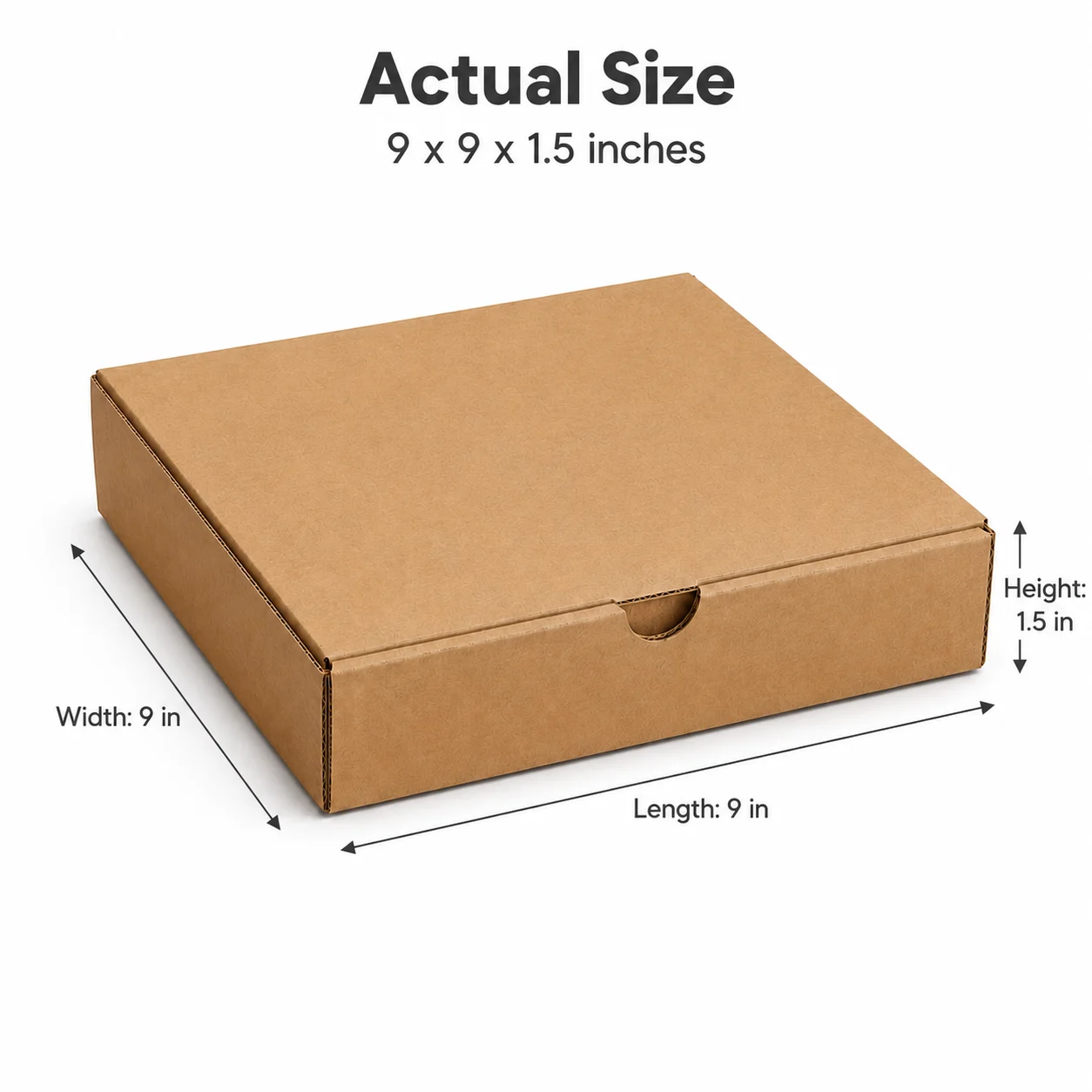
9x9 Inch Brown Corrugated Pizza Box for Food Delivery
Durable 9x9 inch brown corrugated pizza box designed for restaurants, cafes, cloud kitchens, and food delivery businesses.
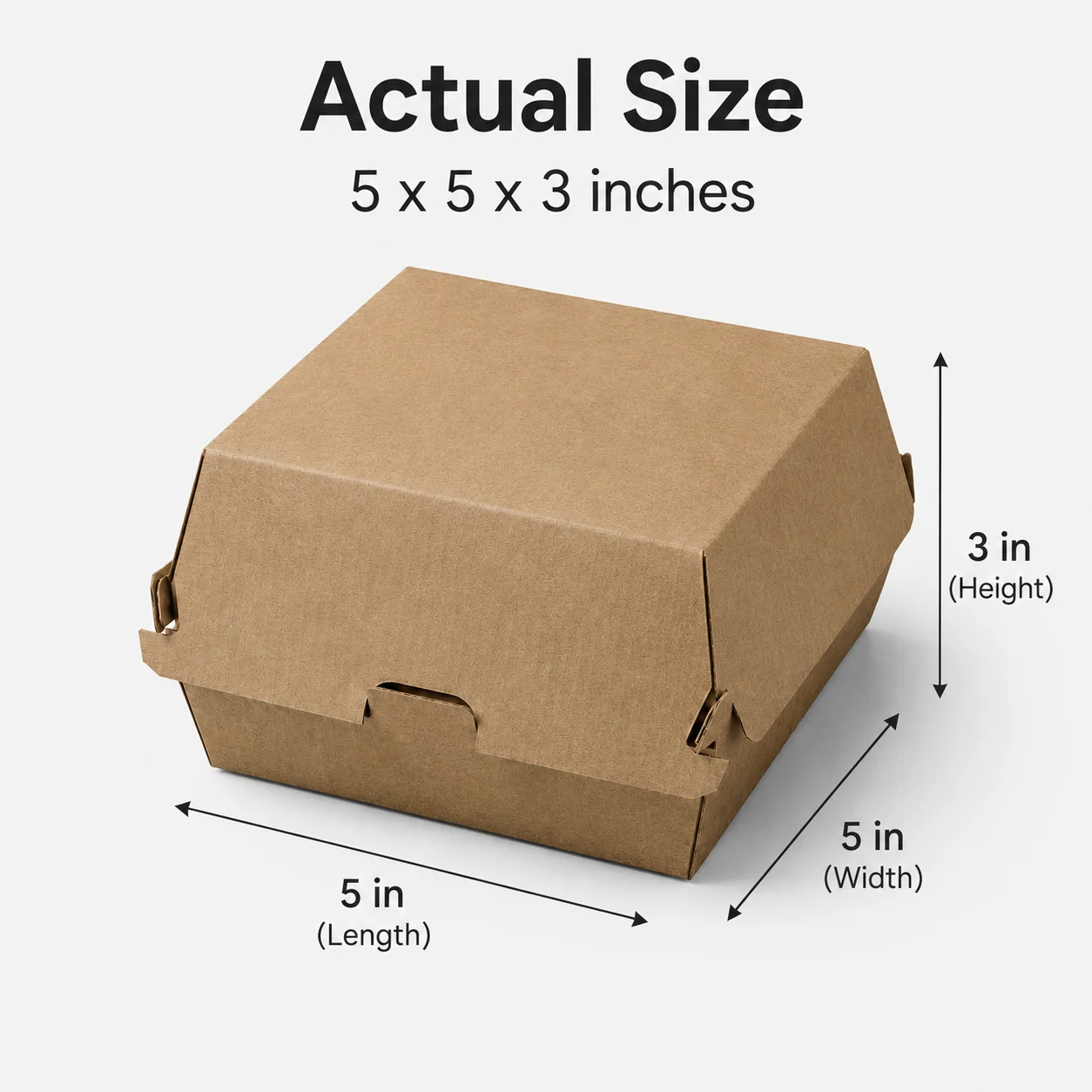
5x5 Inch Brown Kraft Burger Box for Takeaway & Food Delivery
Durable 5x5 inch brown kraft burger box designed for restaurants, cafes, cloud kitchens, and takeaway food packaging.

8x8 Inch Brown Kraft Cake Box for Bakery & Pastry Packaging
Premium 8x8 inch brown kraft cake box designed for bakeries, cafes, cloud kitchens, pastry shops, and dessert packaging.