
Published 2 Aug 2026· Updated 29 Aug 2026
How to Choose Corrugated Boxes for Books and Printed Materials
Practical guidance for publishers, distributors and print businesses on choosing corrugated boxes for books, covering weight density, corner protection, moisture and bundling.
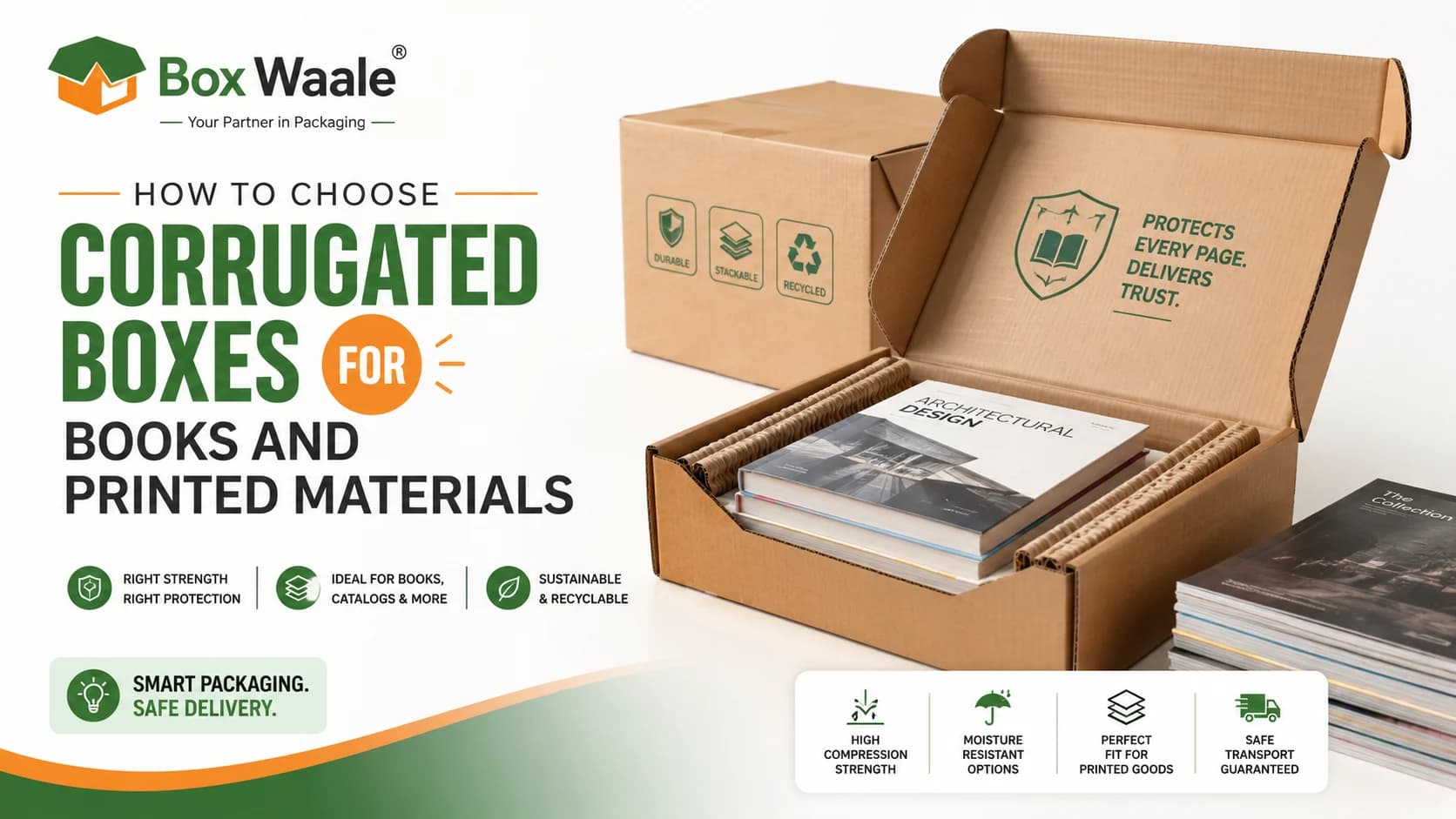
Key Takeaways
- Books are denser than most retail goods, so a small carton can already be near its practical weight limit even though it looks half-empty by volume.
- Common failure points in book cartons include bowing or splitting base panels, crushed bottom corners under stacking, and stressed joints, all caused by specifying a box for volume rather than actual packed weight.
- Many book distributors move to double-wall board or a higher BF single-wall board as carton weight increases, since stacking and handling strength is usually the limiting factor rather than volume.
- Corner and cover protection comes mainly from a snug-fitting carton, internal partitions or corrugated wraps for premium titles, and consistent book orientation rather than from extra board thickness alone.
- Cartons for books benefit from being kept away from damp storage and transport conditions, though exact moisture protection needs vary by shipping route, season and storage conditions and should be validated by the buyer.
- Most publishers and distributors settle on two or three standard box sizes tuned to their common formats rather than one universal size for their entire catalogue.
How to Choose Corrugated Boxes for Books and Printed Materials
Table of Contents
Books are one of the few products where a small carton can genuinely be too heavy for its own construction. This guide walks publishers, distributors, printers and college bookstores through the specific packaging decisions that keep printed materials intact from the press to the reader — board strength, corner protection, moisture handling and multi-book bundling.
Why Books Behave Differently in a Carton
A carton of paperback novels or textbooks is dense in a way that clothing, electronics accessories or most FMCG products are not. Paper is heavy relative to its volume, and a box that looks half-empty by size can already be near its practical weight limit. This changes the packaging math: instead of designing around cubic space, you need to design around weight-bearing capacity first and space second.
The common failure modes are predictable once you understand this. Base panels bow or split when a filled carton is lifted by its top flaps. Bottom corners crush when boxes are stacked several high on a pallet or in a godown. Joints — whether stitched, glued or taped — come under more stress than they would in a lighter box of the same dimensions. None of this is unusual; it is simply what happens when a box is specified for volume rather than for the actual density of books.
- Estimate weight per carton before finalising size, not after.
- Treat a "book box" as a different specification exercise than a general merchandise box of the same dimensions.
- Keep individual carton weight within a range your warehouse and delivery staff can lift safely and repeatedly.
Board Strength and Flute Selection for Dense Loads
For light-to-moderate book quantities, a good single-wall board with an appropriate flute can work well. As carton weight climbs — multi-copy bundles, textbook sets, coffee-table or hardbound titles — many buyers move to double-wall construction, which adds stacking strength and resistance to base flex without requiring an oversized box. You can review the range of constructions, including standard corrugated boxes suited to book and print cargo, when comparing options for your catalogue.
Flute choice matters as much as ply count. A flute with good crush resistance helps the box hold its shape under stacked pressure, which is exactly the stress books place on a carton in a warehouse rack or a delivery van loaded floor to roof. If you distribute through couriers who handle parcels roughly, err toward the stronger end of what your order volume can justify, since the cost difference between adjacent board grades is usually small compared to the cost of damaged stock and reprints.
It is worth testing a sample carton with your actual books rather than relying on a generic size chart, because "books" as a category spans everything from slim paperbacks to dense reference volumes, and their packed weight can vary several times over for the same box volume.
Protecting Corners, Covers and Spines
Most damage to books in transit shows up at the corners and along the spine edge, not on the flat faces. A carton that fits the books snugly, with little room to shift, does more to prevent this than any amount of extra board thickness. Loose packing lets books slide and rub against each other every time the carton is tilted, dropped a few centimetres onto a conveyor, or jolted in a vehicle, and repeated small abrasions add up to visibly worn covers by the time a shipment arrives.
For higher-value or hardbound stock, consider these additions:
- Corrugated partitions or dividers to stop books from shifting laterally inside the box.
- Corner guards or wraps for premium hardbound editions where cover condition matters to the buyer.
- Consistent orientation (spine down or spine to one side) across the pack, so books brace against each other predictably rather than at random angles.
- Void-fill only where genuinely needed — over-filling with loose paper can itself cause pressure points if packed unevenly.
None of this needs to be elaborate for standard trade paperbacks, but it becomes worth the extra minute of packing time for gift editions, art books or anything where the customer's first impression of the cover matters.
Moisture, Bundling and Pallet Planning
Paper and board are both moisture-sensitive, and a carton that sits on a damp warehouse floor or travels in a vehicle without weather protection can transfer that moisture straight into the books it holds. This is general handling guidance rather than a performance guarantee: exact protection needs depend on your route, season, storage conditions and how long stock sits before it moves, and should be checked against your own experience with a given shipping lane. Practical steps that most distributors find useful include storing cartons off the floor, avoiding prolonged exposure to open loading docks during monsoon months, and choosing board and any inner treatment appropriate to your typical storage duration.
For multi-book bundles — say, a set of textbooks or a boxed series — plan the carton around the bundle as a fixed unit rather than as loose books that happen to travel together. A dieline built for a specific bundle count reduces internal movement far more effectively than a generic box with the bundle wedged inside. When bundles are palletised for bulk distribution to schools, retailers or online marketplaces, check that carton footprint divides evenly across your pallet size; odd combinations waste pallet space and create unstable, overhanging stacks that are more prone to crushing at the base layer.
Finally, think about how the same carton performs across your full distribution chain — from press to warehouse, from warehouse to distributor, and potentially from distributor to individual online orders. A box specified only for the first leg of that journey often under-performs by the time it reaches the reader.
How Boxwaale Helps
Boxwaale works with publishers, print businesses and book distributors across India to specify cartons around actual packed weight rather than generic size charts, so base panels and joints hold up under real stacking loads. We can help you test single-wall against double-wall options for a specific title mix, build dielines around fixed multi-book bundle counts, and supply consistent sizes across repeat print runs so your packing process stays predictable order after order.
Frequently Asked Questions
Related Packaging Guide
Planning a packaging order?
Turn this guidance into a box specification
Share the product dimensions, packed weight, quantity, printing requirement and delivery postcode. Boxwaale will help narrow down the appropriate size, ply and board specification before quoting.
Frequently Asked Questions
Related Products
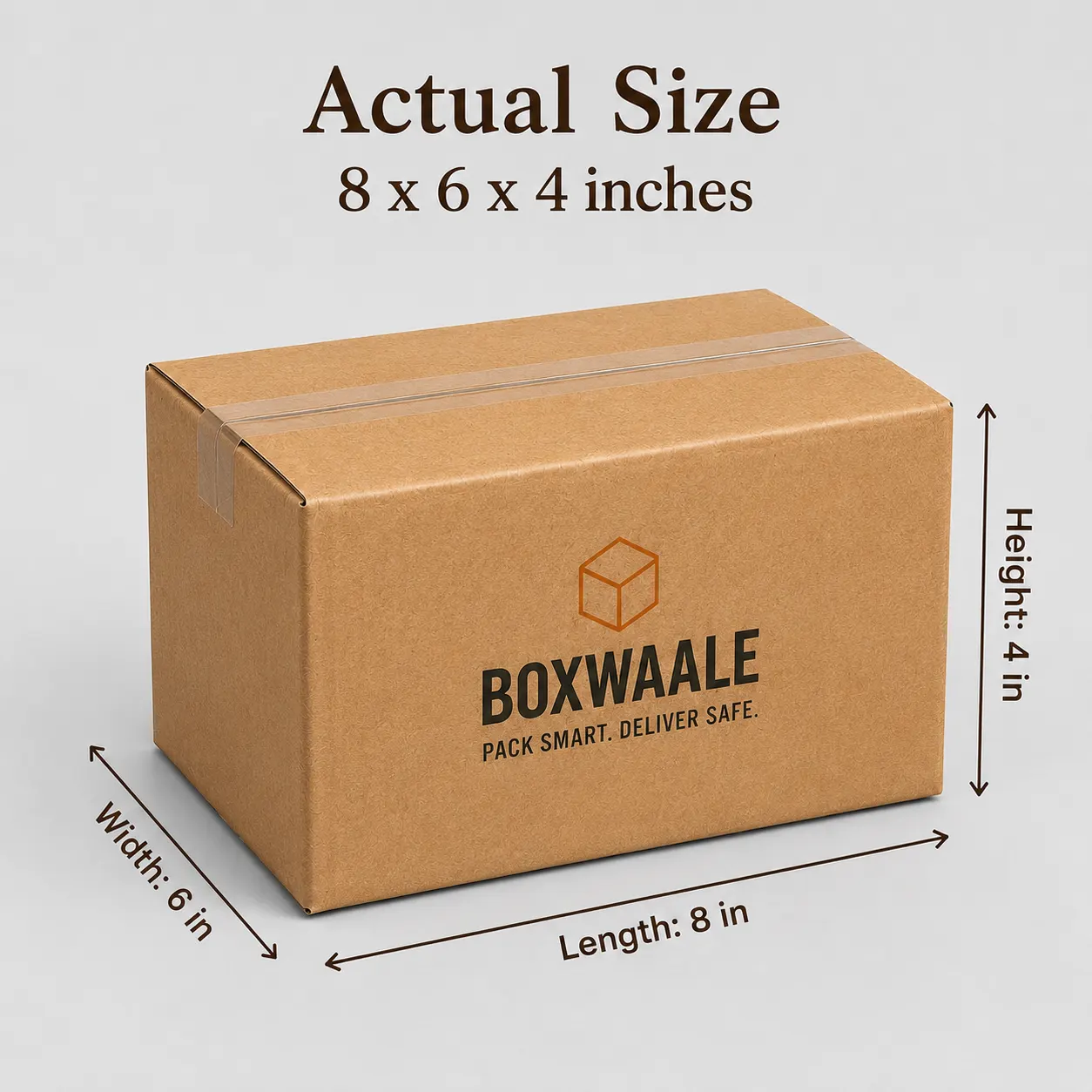
Custom Printed Brown Corrugated Courier Box with Logo
Custom printed brown corrugated courier box with logo designed for online sellers, D2C brands, retail businesses, and branded product delivery.
10x8x3 Inch Printed Book Subscription Box for Brands
Premium 10x8x3 inch printed white corrugated book box designed for brands, retailers, manufacturers, and e-commerce sellers.
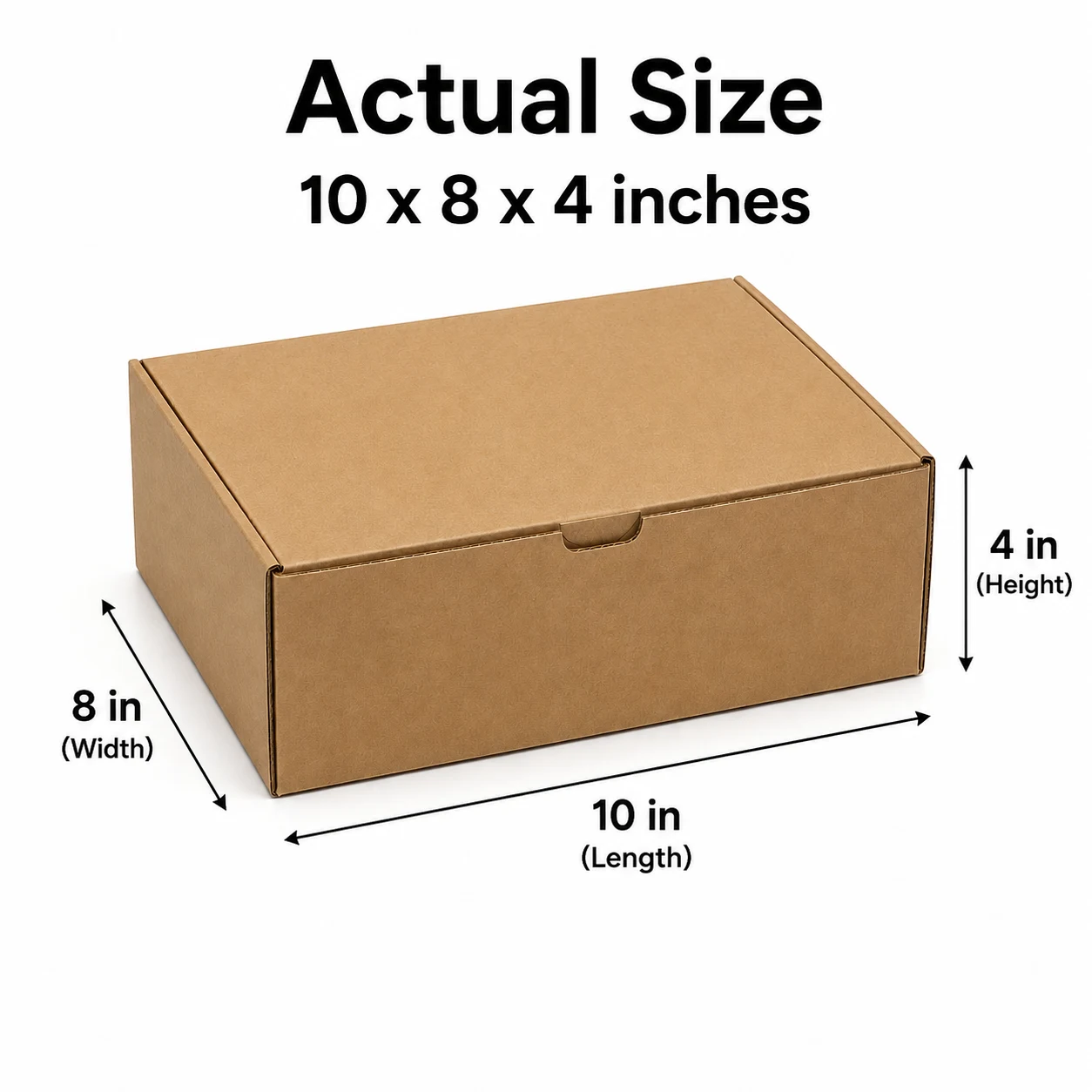
10x8x4 Inch Brown Corrugated Courier Box for E-commerce Shipping
Durable 10x8x4 inch brown corrugated courier box designed for e-commerce shipping, product delivery, storage, and secure packaging.
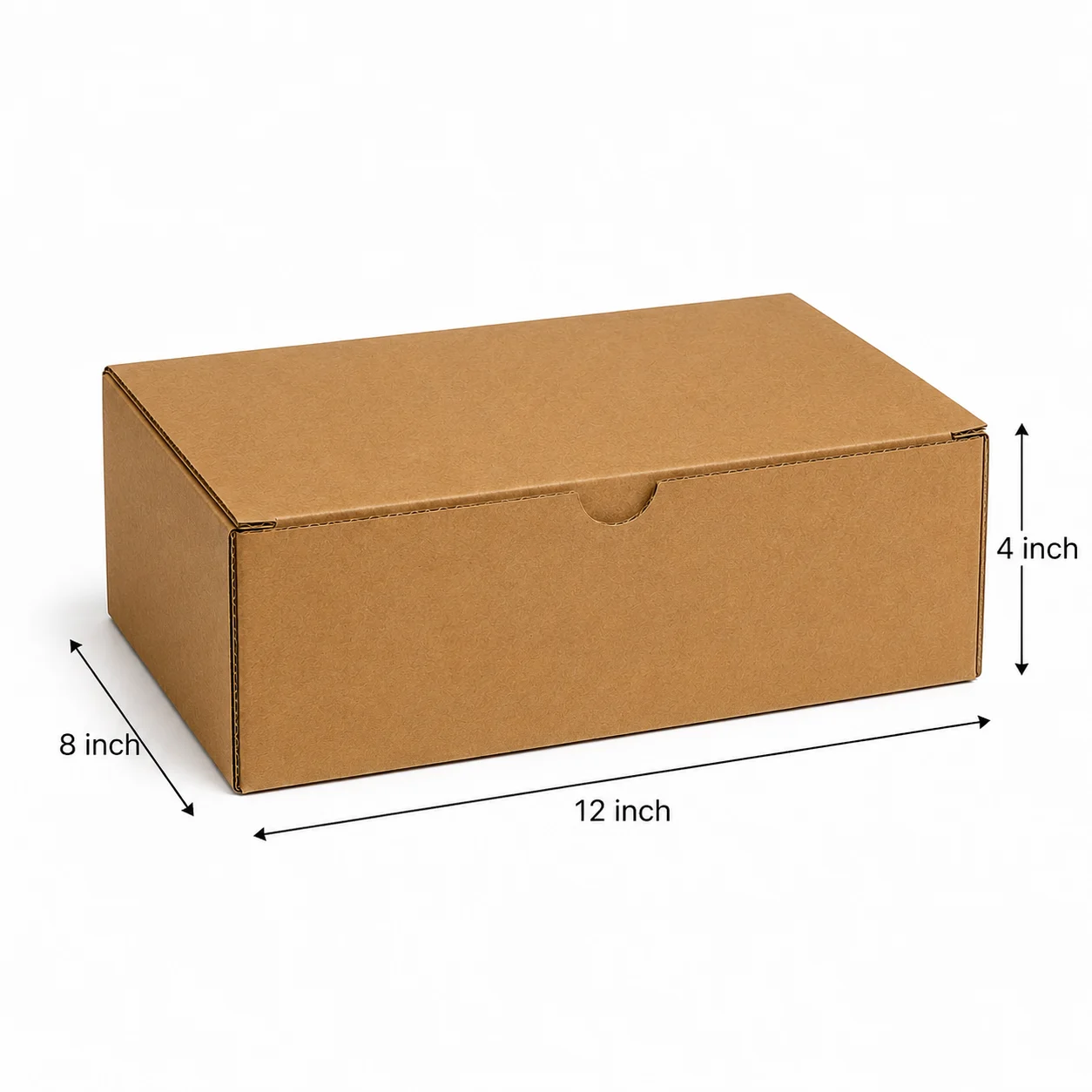
12x8x4 Inch Brown Corrugated 6 Bottle Nail Paint Packaging Box
Durable 12x8x4 inch brown corrugated nail paint box with six internal compartments, designed for cosmetic packaging, storage, gifting, and safe delivery.
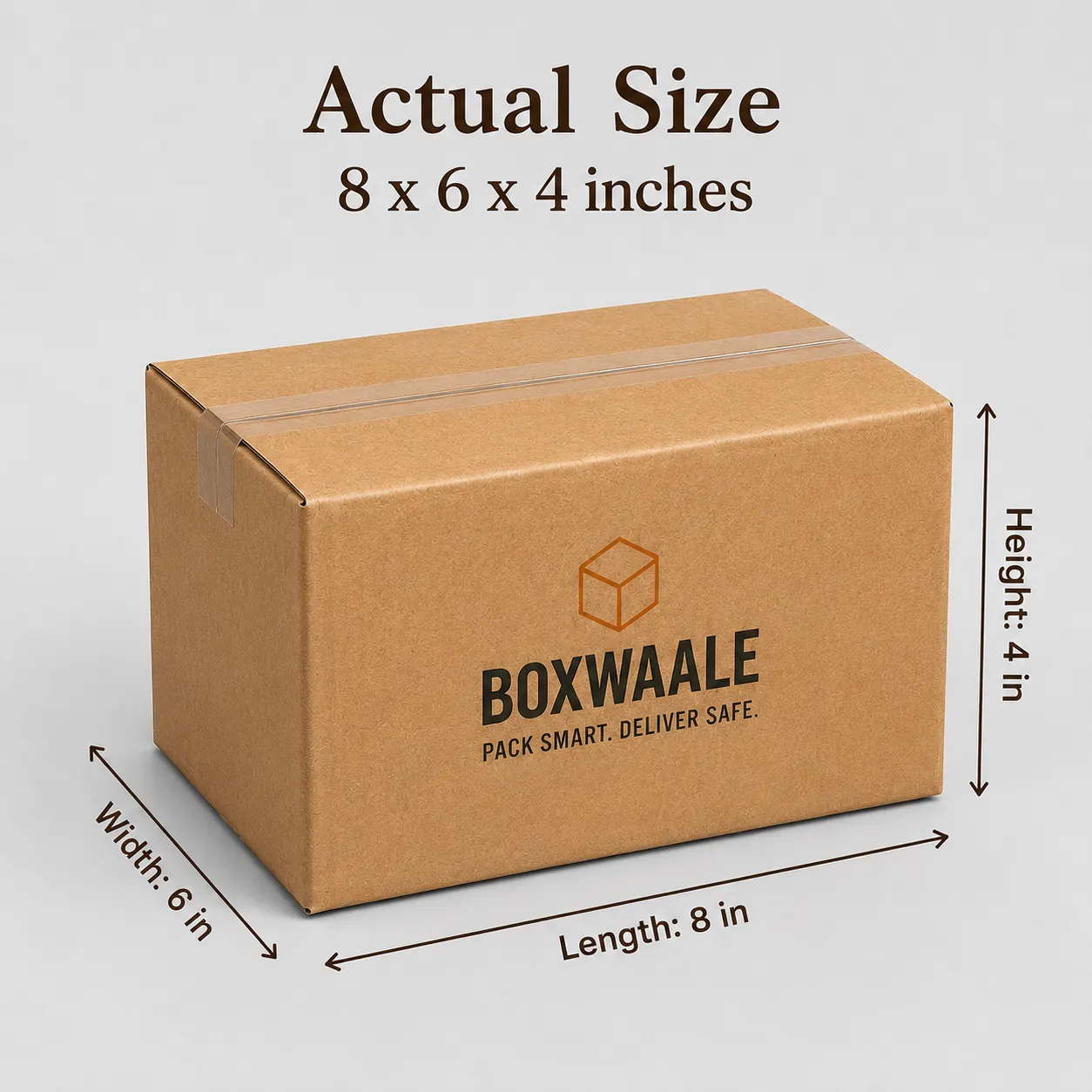
9x6x3 Inch Brown Corrugated Mailer Box for E-commerce Brands
Premium corrugated mailer box designed for e-commerce brands, subscription boxes, gifting, retail products, and custom branded packaging.
Related Buying Guides

Corrugated Transport Packaging for Pharmaceutical Products
Read guide
Corrugated Boxes for Cold and Frozen Supply Chains: Key Considerations
Read guide
Corrugated Packaging for Auto Parts: Weight, Oil and Transit Risks
Read guide
Corrugated Packaging for Home Appliances: A Buyer's Planning Guide
Read guide