Published 2 Aug 2026· Updated 29 Aug 2026
Corrugated Boxes for Cold and Frozen Supply Chains: Key Considerations
Practical considerations for choosing corrugated boxes in cold and frozen supply chains, covering condensation, liners, stacking and validation testing.
Key Takeaways
- The main risk to corrugated boxes in cold and frozen supply chains is moisture, from condensation at temperature transition points, ice or frost contact, and high humidity in cold rooms, rather than low temperature itself.
- Paper fibres lose a significant share of their stiffness and crush resistance once they absorb moisture, so a carton can look intact while its actual stacking strength has already dropped.
- Inner liners or moisture-resistant board treatments reduce moisture exposure but do not make a carton waterproof, and do not make it suitable for direct food contact unless that specific combination has been separately verified by the buyer.
- Standard corrugated boxes are generally used as the outer transport layer around a proper inner liner and insulation system, with the outer carton providing structural protection and stacking strength rather than moisture or food-contact control.
- Cold storage facilities often keep pallets stacked and static for longer periods than ambient warehouses, so bottom cartons bear compressive load for days or weeks and can gradually deform even under loads they would tolerate in shorter ambient storage.
- Because condensation and cold-chain performance are hard to predict from a spec sheet, a trial shipment through the actual distribution route is the most reliable way to validate a carton and liner combination before full production.
Corrugated Boxes for Cold and Frozen Supply Chains: Key Considerations
Table of Contents
Frozen and chilled distribution puts corrugated packaging through conditions it was not originally designed for — temperature swings, condensation and long static storage periods — and getting the carton wrong shows up as crushed cases and collapsed pallets, not just cosmetic damage. This article covers the general packaging engineering considerations for cold and frozen supply chains; it does not make food-contact safety or moisture-proofing claims, which are outside what a corrugated carton or its supplier can guarantee.
The Real Enemy Is Moisture, Not Cold
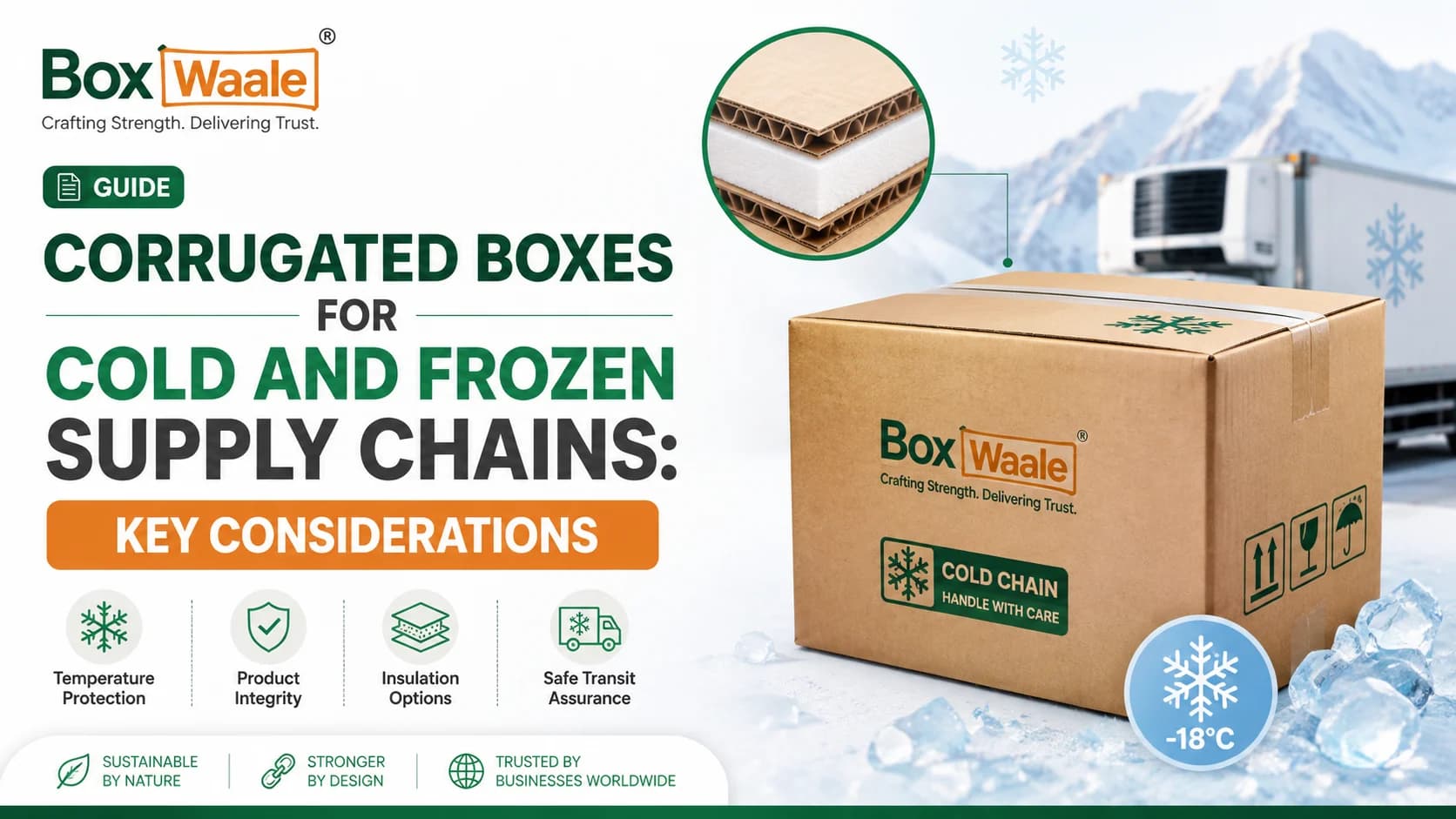
Corrugated board itself is not damaged by low temperature in the way many people assume. The actual failure mechanism is moisture: condensation that forms when a cold carton moves into a warmer, more humid area (or vice versa), direct contact with ice, frost or wet product surfaces, and high humidity inside cold storage rooms and refrigerated vehicles. Paper fibres absorb this moisture and lose a significant share of their stiffness and crush resistance as a result, even when the carton looks visually intact.
This is why a carton that performs well in an ambient warehouse can fail unexpectedly in a cold chain application — the board itself hasn't changed, but the moisture conditions around it have. Planning for cold and frozen distribution means planning for moisture exposure at every transition point in the route: loading dock, cold room, refrigerated vehicle, unloading, and any intermediate storage.
- Map the temperature and humidity transitions your carton will actually pass through, not just its final storage condition.
- Treat condensation at transition points as the primary design risk, more than the cold itself.
- Recognise that visual inspection at the time of packing won't reveal how the board will behave after hours in a humid cold room.
Liners, Coatings and Their Limits
To manage moisture exposure, many cold-chain packers use an inner liner (such as a polyethylene bag or film) between the product and the corrugated carton, or specify board with a degree of moisture-resistant treatment on the surface. These measures can reduce direct contact between moisture and the board, which helps preserve strength over a longer storage or transit period.
It's important to be precise about what these measures do and don't achieve. A liner or surface treatment reduces moisture exposure; it does not make a carton waterproof, and it does not make the carton or its printed surfaces suitable for direct food contact unless the specific liner material and product combination has been verified for that purpose by the buyer. Any claim of guaranteed water-resistance or food-contact safety needs to come with testing and documentation specific to the exact materials and product involved — general corrugated board and standard liners should not be assumed to meet that bar without verification.
When specifying a construction for a chilled or frozen application, standard corrugated boxes can serve as the outer transport layer around a proper inner liner and insulation system, with the outer carton's role being structural protection and stacking strength rather than direct moisture or food-contact control.
Stacking Strength in Cold Storage
Cold storage facilities often keep pallets stacked and static for longer periods than an ambient warehouse, which means the bottom cartons in a stack bear compressive load for days or weeks rather than the brief window of a handling test. Combined with any moisture absorption, this steady load can gradually deform or collapse cartons that would have held up fine in a shorter ambient-storage cycle.
A few practical planning points for stacking in cold environments:
- Test stacking strength under conditions close to your actual storage humidity and duration, not just at room temperature for a few minutes.
- Build in a strength margin above your calculated stacking load, since cold-chain conditions are harder to control precisely than ambient warehousing.
- Reassess stacking height limits seasonally if your facility's humidity varies significantly between seasons.
Validating a Design Before Full Production
Because moisture behaviour and cold-chain performance are difficult to predict precisely from a spec sheet, the most reliable way to confirm a carton and liner combination is a trial run through your actual distribution route — real cold storage, real transport, real unloading conditions — with cartons checked for board condition, stacking integrity and product protection at the point of delivery, not just at the point of packing.
This kind of validation is especially worthwhile before committing to a full production print run, since correcting a board grade or liner choice after printed cartons are already in stock is far more expensive than catching the issue in a small trial batch.
It also helps to keep a short internal record of how a given carton and liner combination performed on a specific route and season, including any observed condensation, board softening or stacking issues. Cold chain conditions can vary meaningfully between routes, vehicle types and even the time of year, so a specification that worked well on one lane is not automatically guaranteed to perform the same way on a different one. Reviewing this record periodically, particularly before a seasonal change or a new distribution lane, gives you an evidence-based starting point for future packaging decisions rather than relying purely on memory or assumption.
How Boxwaale Helps
Boxwaale supplies corrugated outer cartons designed for the stacking and handling demands of cold and frozen distribution, and can advise on board grade and liner-compatible construction for your specific route. We do not claim food-contact safety or guaranteed water-resistance for any product — we recommend a trial shipment through your actual cold chain to validate performance before a full order, and encourage buyers to verify suitability against their specific product requirements.
Frequently Asked Questions
Related Packaging Guide
Planning a packaging order?
Turn this guidance into a box specification
Share the product dimensions, packed weight, quantity, printing requirement and delivery postcode. Boxwaale will help narrow down the appropriate size, ply and board specification before quoting.
Frequently Asked Questions
Related Products
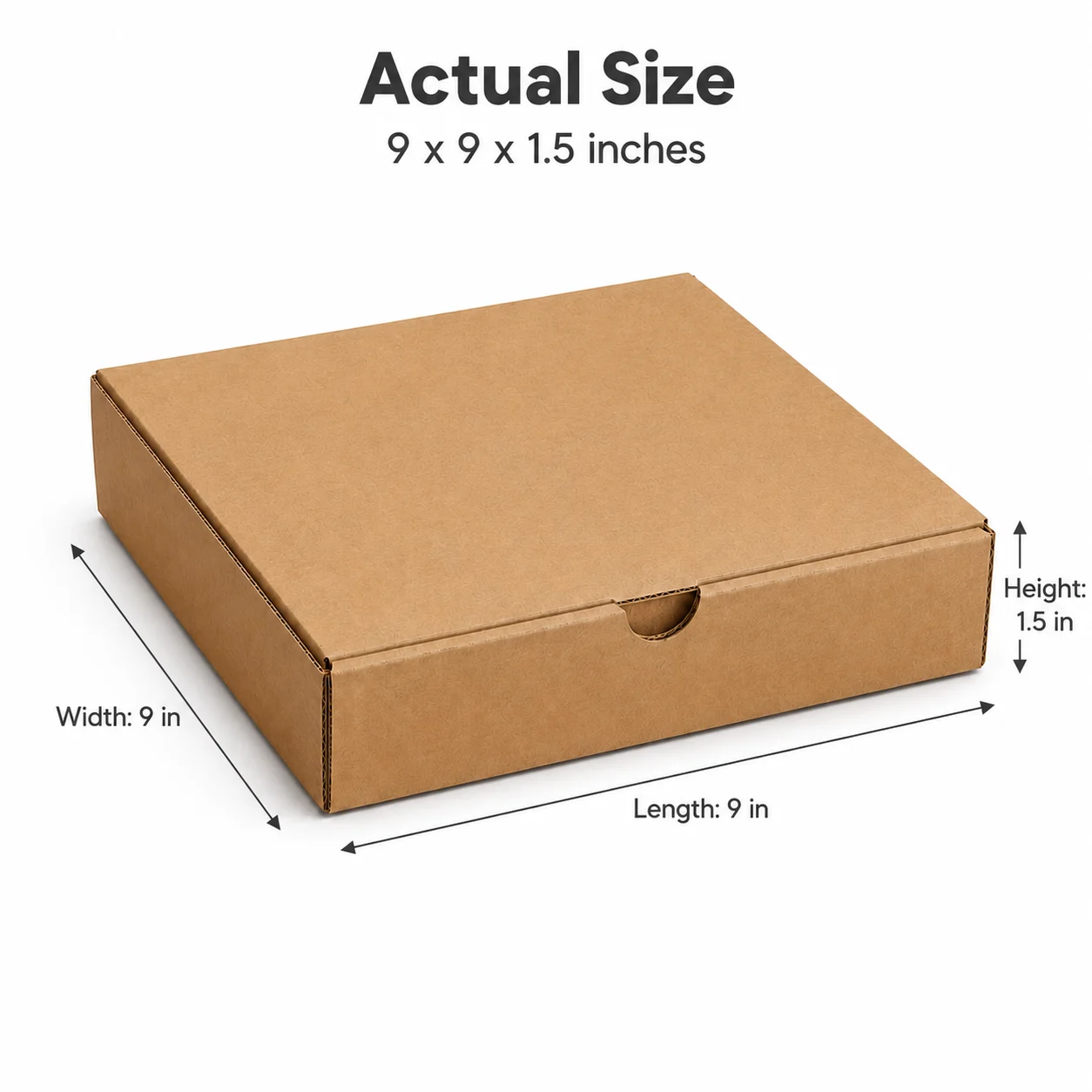
9x9 Inch Brown Corrugated Pizza Box for Food Delivery
Durable 9x9 inch brown corrugated pizza box designed for restaurants, cafes, cloud kitchens, and food delivery businesses.
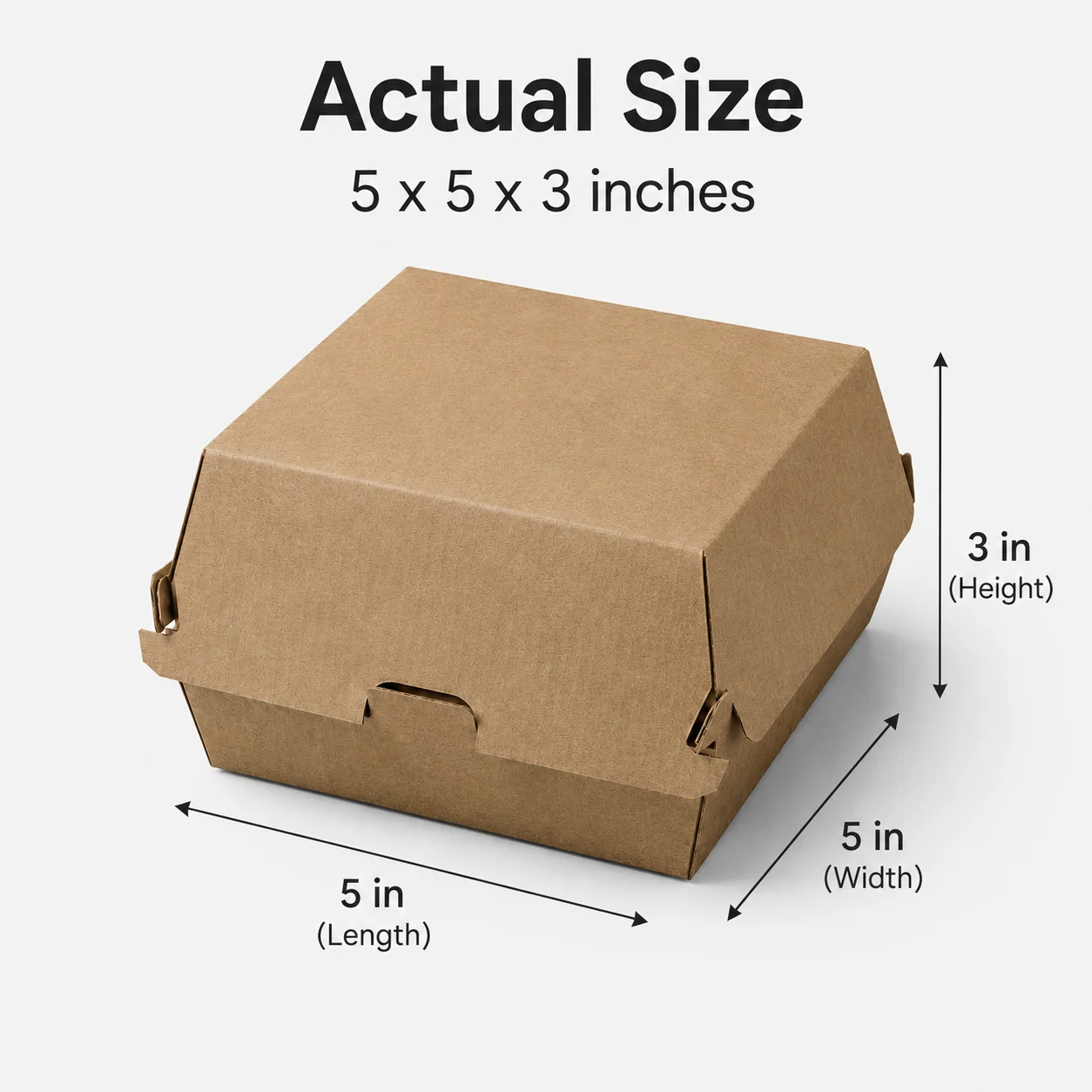
5x5 Inch Brown Kraft Burger Box for Takeaway & Food Delivery
Durable 5x5 inch brown kraft burger box designed for restaurants, cafes, cloud kitchens, and takeaway food packaging.
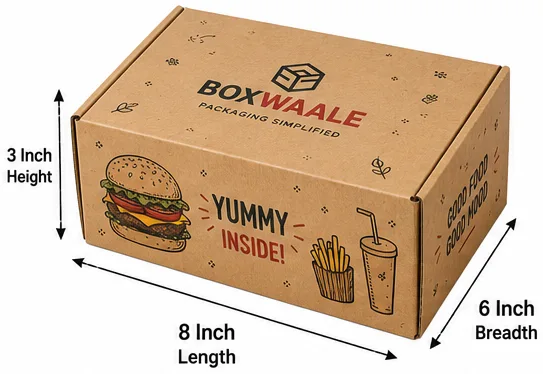
8x6x3 Inch Brown Kraft Burger Meal Combo Box for Food Delivery
Practical brown kraft burger meal combo box designed for burgers, fries, sides, snacks, and food delivery packaging.

8x8 Inch Brown Kraft Cake Box for Bakery & Pastry Packaging
Premium 8x8 inch brown kraft cake box designed for bakeries, cafes, cloud kitchens, pastry shops, and dessert packaging.
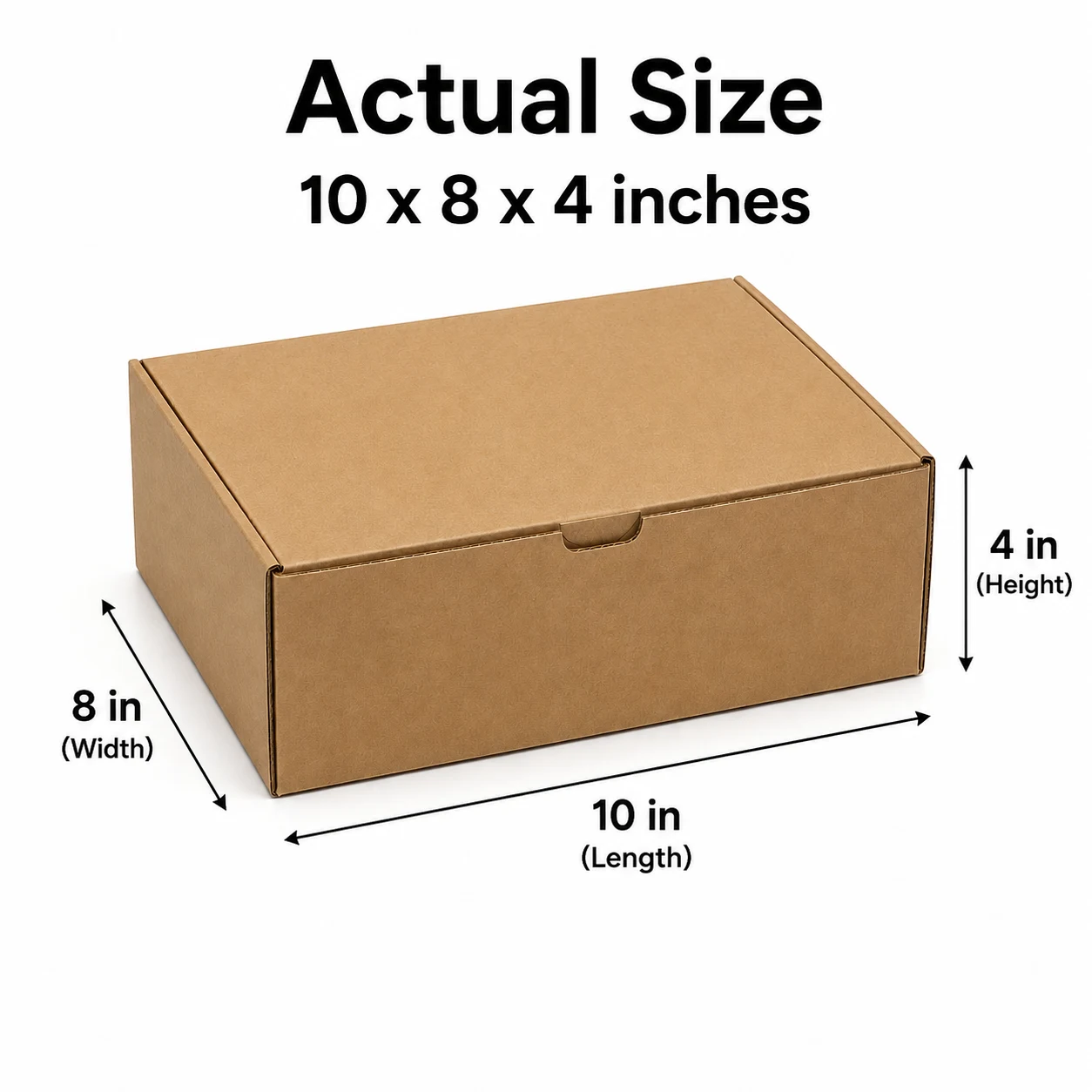
10x8x4 Inch Brown Corrugated Courier Box for E-commerce Shipping
Durable 10x8x4 inch brown corrugated courier box designed for e-commerce shipping, product delivery, storage, and secure packaging.