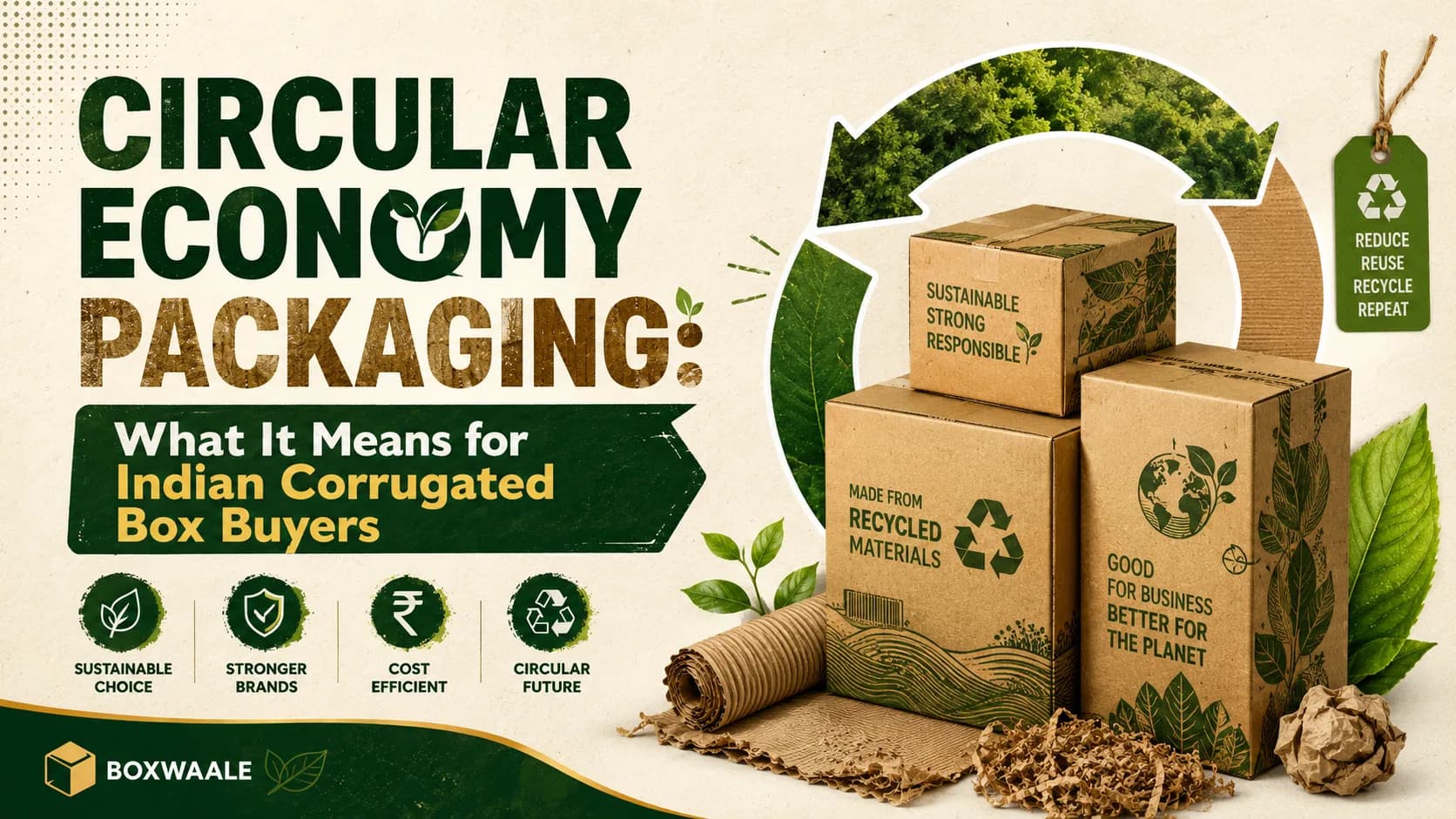
Circular Economy Packaging: What It Means for Indian Corrugated Box Buyers
What circular economy packaging actually means for corrugated and paper packaging in India, covering fibre recycling limits, recycled vs virgin kraft, and practical steps business buyers can take.
Key Takeaways
- Paper fiber can typically be recycled around 5-7 times before the fibers degrade too much for reuse.
- India's paper recovery rate is meaningfully lower than the global average, so specifying recycled content actively supports the loop rather than assuming it happens automatically.
- The kabadiwala/informal waste-paper trade is the backbone of India's corrugated recycling supply chain.
- Recycled (B-grade) kraft is usually slightly lower strength than virgin kraft — a real trade-off to weigh against sustainability goals.
- Avoiding plastic tape, lamination, and void-fill keeps a corrugated box's fiber recyclable instead of contaminating the recycling stream.
Circular Economy Packaging: What It Means for Indian Corrugated Box Buyers
Table of Contents
- What Circular Economy Means for Corrugated and Paper Packaging
- How Many Times Can Paper Fibre Actually Be Recycled
- India's Waste Paper Recovery System — and Where It Falls Short
- Recycled Kraft vs Virgin Kraft: The Trade-Off Buyers Should Understand
- What Breaks Circularity (and What Buyers Can Actually Do About It)
- How Boxwaale Helps
- Frequently Asked Questions
"Circular economy" gets used loosely in packaging conversations, but for corrugated and paper packaging it has a fairly concrete meaning — one grounded in how paper fibre is actually collected, repulped and reused in India. This article explains what circularity looks like for corrugated buyers specifically, how India's recycling system already supports it, and what a business can realistically do to participate without over-promising on sustainability claims.
What Circular Economy Means for Corrugated and Paper Packaging
At its core, a circular economy means keeping material in productive use for as long as possible instead of a one-way path from raw material to landfill. For corrugated packaging specifically, that means used cartons being collected, repulped and turned back into new paper or board rather than discarded after a single shipment. Corrugated is naturally well suited to this compared with most plastic packaging: the fibre is biodegradable, the material is largely single-stream (mostly just paper, unlike multi-material plastic laminates), and India already has a functioning — if largely informal — collection network built around it.
How Many Times Can Paper Fibre Actually Be Recycled
Paper and cardboard fibre isn't infinitely reusable. Each time it's pulped, the fibres are physically shortened and weakened by the mechanical and chemical process, so bonding strength drops with every cycle. Industry sources commonly cite a range of roughly five to seven cycles — some put the practical limit as low as four, others as high as seven to ten — before the fibre becomes too short and weak to hold together well in new board. This is exactly why corrugated manufacturing can't run on 100% recycled fibre indefinitely: some proportion of virgin or longer-fibre pulp needs to keep entering the system to maintain overall strength, even in board that carries a high recycled content.
India's Waste Paper Recovery System — and Where It Falls Short
The bulk of India's used-carton recovery still runs through the informal network of kabadiwalas and itinerant scrap buyers rather than formal municipal recycling. Households and shops sell packaging waste directly to scrap dealers, who aggregate it and sell it on to paper mills as old corrugated containers, generally referred to as OCC. This system already supports a meaningful share of the industry — various industry estimates put recycled fibre's share of India's total paper production at around 70–75%. At the same time, India's overall paper recovery rate is estimated at under 30%, compared with a global average closer to 58%, which means a large share of potentially recoverable fibre in India still isn't being captured at all, and mills partly cover the shortfall through imported waste paper. To put a rough scale on the informal collection layer: estimates suggest households, itinerant waste merchants and local garbage collectors together recover several million tonnes of cardboard and newsprint annually across India, almost entirely outside any formal municipal system. That scale is exactly why the corrugated industry can already run on a majority-recycled fibre mix — the informal economy has effectively been doing large-scale collection for decades, well before "circular economy" became a term used in packaging conversations. In short: the corrugated industry already runs fairly circular in how it uses recovered fibre, but the collection side has real room to improve.
Recycled Kraft vs Virgin Kraft: The Trade-Off Buyers Should Understand
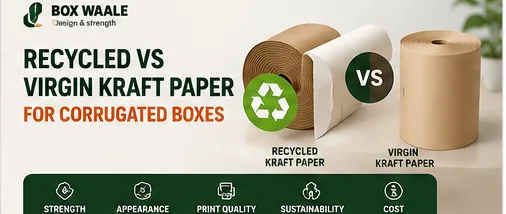
Recycled kraft — often produced from OCC as lower-burst-factor "B grade" paper, roughly in the 12–16 BF range — is generally weaker than virgin kraft at an equivalent weight, precisely because of the fibre-shortening effect described above. Virgin kraft offers higher tear resistance and stiffness for the same paper weight. That's why most corrugated board in practice uses a blended approach rather than 100% of either: virgin or longer fibre where burst strength and printability matter most, often on the outer liner, and recycled content elsewhere where it doesn't compromise the box's job. For a buyer, this means "recycled" and "durable" aren't automatically at odds, but a box specified with a high recycled content may need a heavier GSM or an extra ply to match the strength of a lighter virgin-kraft equivalent — worth checking with your supplier rather than assuming either way. Our detailed comparison of recycled vs virgin kraft paper for corrugated boxes goes deeper into when each makes sense.
What Breaks Circularity (and What Buyers Can Actually Do About It)
None of this requires a large sustainability programme to act on — most of it comes down to a handful of sourcing and packing decisions a business already controls, and that make a real difference to whether a box actually stays in the paper recycling loop:
- Avoid laminating boxes with plastic film, foil or heavy wax coatings — these bond so tightly to the fibre that mills often can't repulp the board at all, so it ends up as reject material despite being "made of paper"
- Minimise plastic packing tape where possible, switching to paper or gummed tape, since tape residue is a common contaminant in baled OCC
- Skip unnecessary plastic void-fill such as air pillows or bubble wrap where paper-based cushioning would do the job, since mixed loads are harder for the informal collection chain to sort cleanly
- Where a product doesn't need maximum burst strength, specifying recycled-content board is a straightforward way to use less virgin fibre without changing anything else about how the box performs
Individually, none of these changes will show up on a scorecard, but together they determine whether a box that says "recyclable" on the outside is something a recycler can actually process at scale — which is the practical definition of circularity that matters more than the label.
On regulation, it's worth being precise rather than assuming: India's Extended Producer Responsibility framework under the Plastic Waste Management Rules is currently built around plastic packaging specifically, with recycled-content and collection targets phasing in through 2028–29. Paper and corrugated packaging isn't governed by that same formal EPR regime today, so treat any specific compliance question for your own business as one for your legal or compliance advisor rather than general guidance like this. For more background on where kraft packaging fits into this shift, see our posts on why kraft packaging is growing in India and why brown kraft boxes are a smart choice.
How Boxwaale Helps
Boxwaale manufactures corrugated boxes in Delhi and ships pan-India, working with both virgin and recycled-content kraft depending on what a product actually needs. We're upfront that we don't carry formal sustainability certifications, so if a buyer needs a specific certified recycled-content percentage for their own compliance reporting or brand claims, that's worth confirming directly with us before ordering rather than assuming it by default.
Frequently Asked Questions
Related Packaging Guide
Planning a packaging order?
Turn this guidance into a box specification
Share the product dimensions, packed weight, quantity, printing requirement and delivery postcode. Boxwaale will help narrow down the appropriate size, ply and board specification before quoting.
Frequently Asked Questions
Related Products
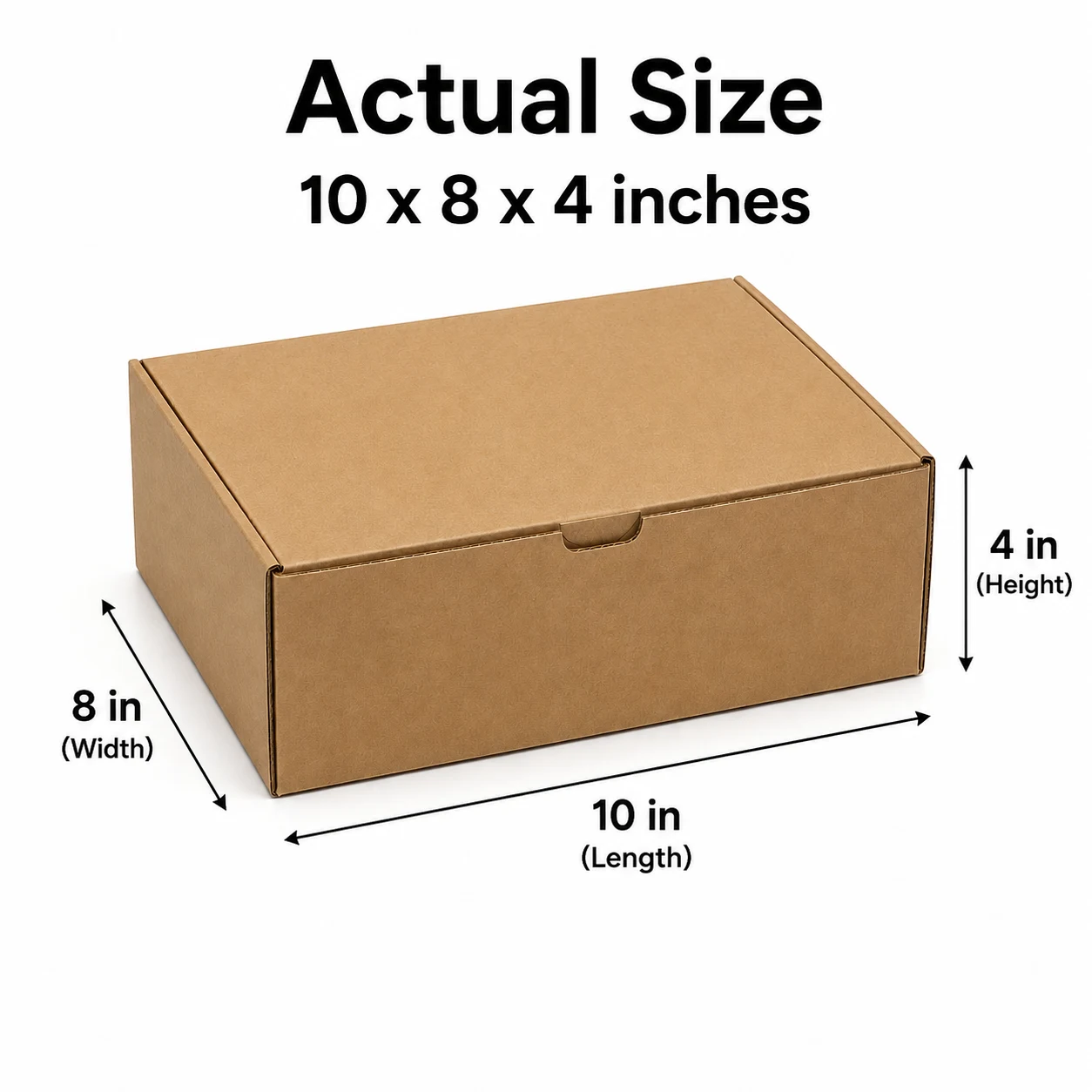
10x8x4 Inch Brown Corrugated Courier Box for E-commerce Shipping
Durable 10x8x4 inch brown corrugated courier box designed for e-commerce shipping, product delivery, storage, and secure packaging.
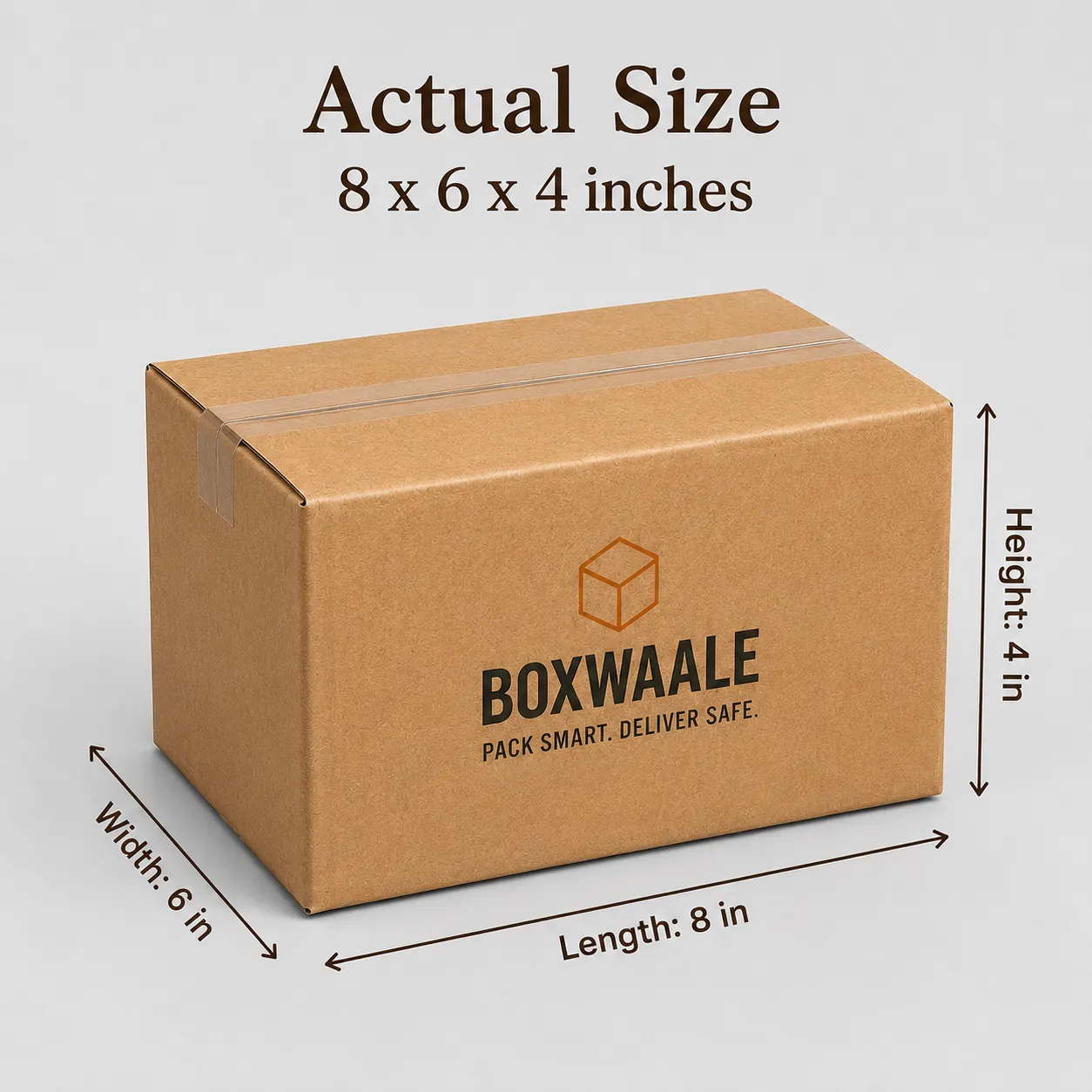
9x6x3 Inch Brown Corrugated Mailer Box for E-commerce Brands
Premium corrugated mailer box designed for e-commerce brands, subscription boxes, gifting, retail products, and custom branded packaging.
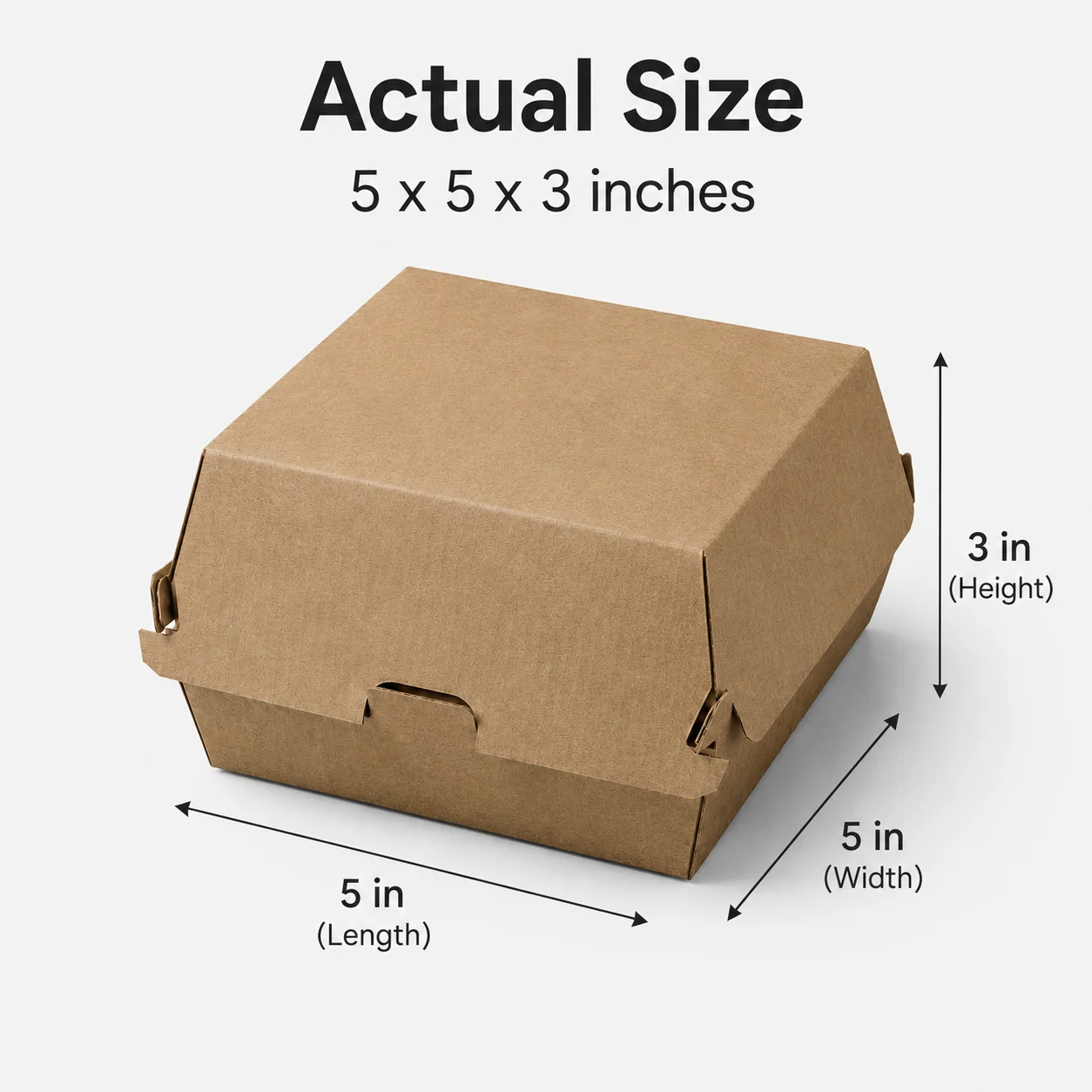
5x5 Inch Brown Kraft Burger Box for Takeaway & Food Delivery
Durable 5x5 inch brown kraft burger box designed for restaurants, cafes, cloud kitchens, and takeaway food packaging.