
7 Ply Corrugated Boxes: When Do You Need Extra Heavy-Duty Packaging?
7 ply (triple wall) corrugated boxes explained: construction, typical GSM and ECT ranges, real use cases, and how to decide if your business needs 7 ply or if 5 ply is enough.
Key Takeaways
- 7-ply (triple-wall) board uses 4 liners and 3 flutes, giving meaningfully higher stacking and compression strength than 5-ply.
- Typical use cases are heavy machinery parts, large appliances, furniture, and export freight — not everyday e-commerce shipping.
- ECT (edge crush test) and burst strength are different measurements; both matter when specifying heavy-duty board.
- 7-ply is more expensive and harder to source in small quantities than 5-ply, so confirm 5-ply genuinely isn't enough before upgrading.
- Weight capacity for 7-ply boxes commonly ranges from roughly 25kg up to 75-100kg+ depending on box size and flute combination.
7 Ply Corrugated Boxes: When Do You Need Extra Heavy-Duty Packaging?
Table of Contents
7 ply corrugated boxes sit at the far end of the strength spectrum from the 3-ply and 5-ply boxes most e-commerce sellers use daily. They're built for a narrower set of jobs — heavy machinery parts, large appliances, furniture, export freight — and specifying one when a 5-ply box would do just adds cost and weight without a real benefit. This article covers what 7 ply board actually is, the GSM and strength ranges typically involved, and how to tell whether your product genuinely needs it.
What Is a 7 Ply (Triple Wall) Corrugated Box
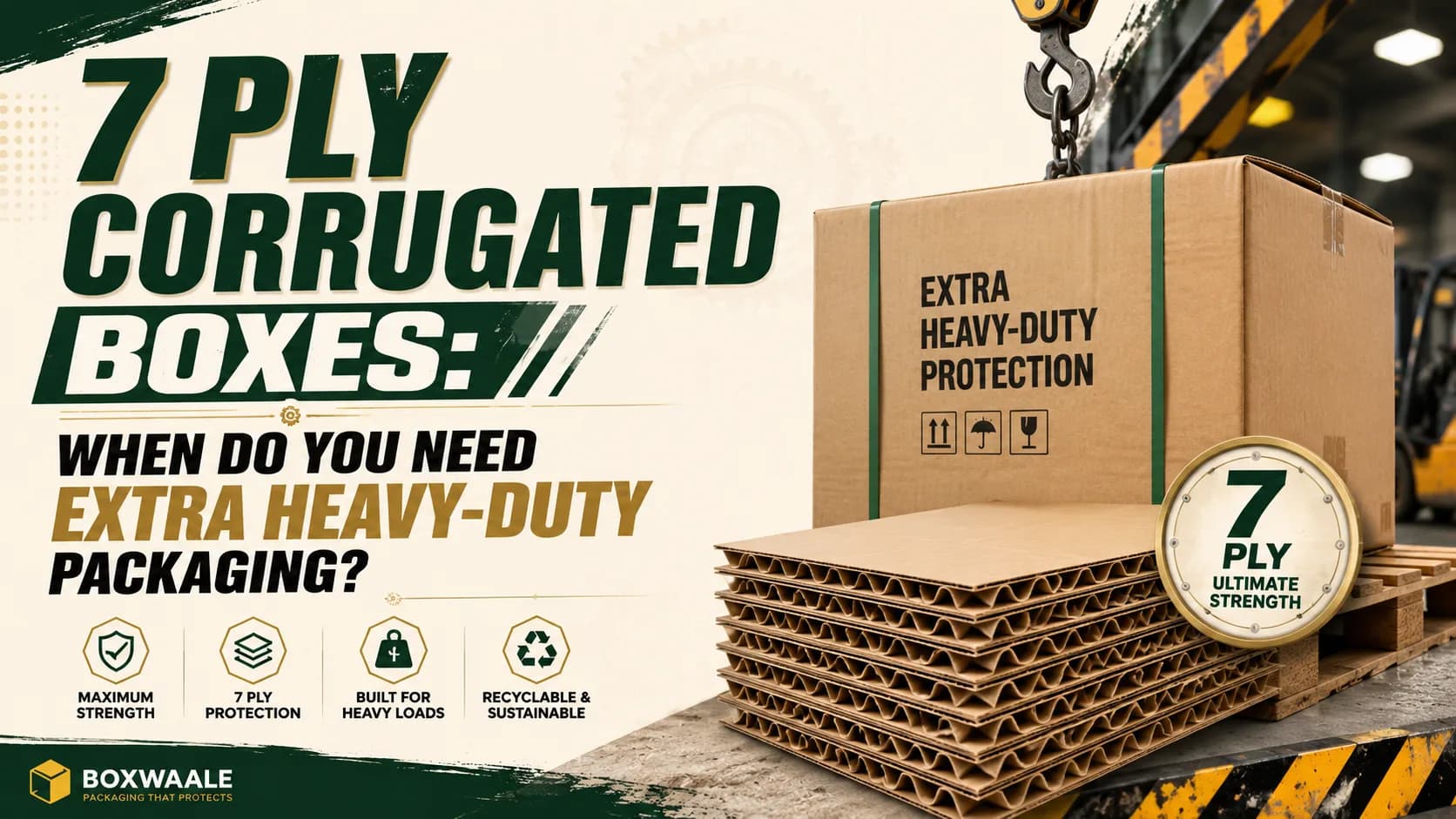
Ply refers to the number of paper layers in the board. A 7 ply board — also called triple wall — is built from four flat liner sheets and three fluted (corrugated) mediums layered alternately between them, compared to a 5-ply (double wall) board's three liners and two flutes, or a 3-ply (single wall) board's two liners and one flute. Each additional liner-and-flute pair adds compression strength and puncture resistance, at the cost of extra board thickness, weight and price. Triple wall board is thick enough that it's sometimes used as a direct substitute for wooden crates on export shipments — a point worth knowing if you currently pay for wooden crating, since it can remove the need for ISPM-15 fumigation treatment that timber packaging requires for international shipping.
Typical GSM, ECT and Weight Capacity for 7 Ply Board
Specifications vary by supplier and application, but export-grade 7 ply board commonly runs liner weights around the 200/180/200 GSM range (outer liner / inner mediums / inner liner), sometimes using imported kraft top liners in the 200 GSM class with an Edge Crush Test (ECT) rating around 45 points. ECT measures edgewise compressive strength — how much force the board resists when compressed on its edge, which correlates closely with how well a stacked box holds up under warehouse and transit loads. Bursting strength (measured in BF, or burst factor) is a related but different test measuring puncture and rupture resistance rather than compression, and it's worth asking your supplier which figure they're quoting, since the two aren't interchangeable.
On weight capacity, figures reported across suppliers vary with box size and specification, but 7 ply boxes are commonly rated to carry anywhere from roughly 25kg up to 75–100kg or more for larger dimensions and higher-spec board — well above what a single-wall or double-wall box is built for. For a comparison of how ECT and burst testing actually get measured and what the numbers mean for your specific shipment, see our guide on box compression testing and carton stacking strength.
- Structure: four liners, three fluted mediums (triple wall)
- Typical liner GSM: often in the 180–200+ GSM range per liner on export-grade board
- ECT: commonly rated around 40–45+ points on heavier specifications
- Weight capacity: roughly 25kg on the lower end up to 75–100kg+ depending on box size and spec
When You Actually Need 7 Ply
7 ply board is built for genuinely heavy, bulky or high-value goods where a box failure means real cost — not for standard e-commerce parcels. Common legitimate use cases include:
- Heavy machinery parts and industrial components — metal parts, tooling, and equipment with high point-loads that would puncture or crush a lighter board
- Large home appliances — washing machines, refrigerators and similar goods that are heavy, bulky, and often stacked or palletised during warehousing and transit
- Furniture — particularly flat-pack or assembled furniture with sharp edges and significant weight concentrated over a small footprint
- Export and long-haul freight — shipments that pass through multiple handling points, get palletised, and travel longer distances where cumulative handling stress is higher than a single domestic courier leg
- Heavy automotive parts — engine components, metal assemblies and similar high-weight, often irregular-shaped parts
The common thread is weight combined with rough handling exposure — multiple transit legs, palletisation, stacking in a warehouse, or replacing a wooden crate. If your product is light-to-medium weight and moves through a single domestic courier network, 7 ply is very likely more board than the job needs.
It also helps to think in terms of failure mode rather than just weight. A 5-ply box can fail under a single sharp impact even for a moderately heavy product if the impact is concentrated — a corner drop, a forklift tine catching an edge, a box shifting and taking the full weight of a pallet stacked above it. 7 ply's extra liners and flutes spread that kind of point-load across a thicker structure, which is why it shows up disproportionately in warehouse-to-warehouse and export shipments where boxes get palletised, shrink-wrapped and stacked several units high for days at a time, rather than in last-mile parcels that go from a dispatch bay straight to a doorstep.
7 Ply vs 5 Ply: Deciding Without Overspending
The practical decision usually comes down to three questions: how heavy is the product, how many handling and stacking events will the box go through, and does it need to survive export logistics or long-haul freight versus a single domestic delivery leg. A 5-ply (double wall) box already offers a substantial strength jump over single-wall board and comfortably handles most heavier e-commerce products, footwear, and mid-weight appliances — our comparison on when to use 5 ply or stronger heavy-duty corrugated boxes covers this middle ground in more depth. 7 ply is the step beyond that, reserved for the heavier, rougher-handling scenarios described above.
Because 7 ply board costs meaningfully more per box than 5 ply — more raw material, more liners, more converting complexity — over-specifying it across a product line that doesn't need it adds real cost at volume. It's worth testing rather than guessing: if you're unsure whether your current 5-ply box is holding up, a compression and drop test on the actual packed product is a more reliable answer than assuming higher ply automatically fixes a damage problem, since flute type and box design also affect strength independent of ply count — see our guide on corrugated box flute types A, B, C, E and F compared. If your issue is specifically about wall count rather than flute profile, our single wall vs double wall comparison and the 3 ply vs 5 ply guide are good starting points before jumping straight to triple wall.
A useful middle-ground check before committing to 7 ply is to look at what's actually failing today. If damage complaints trace back to corners crushing or boxes collapsing under stack weight in the warehouse, that's a genuine strength problem where moving up a wall count — from single to double, or double to triple — is the right fix. If damage instead traces back to loose product movement inside an oversized box, poor taping, or rough courier handling on a light parcel, no amount of extra ply will fix it, and the money is better spent on right-sizing the box and improving internal cushioning first. Ply upgrades and box-fit issues get treated as the same problem more often than they should be, and it's worth ruling out the cheaper fix before paying for the more expensive one.
How Boxwaale Helps
Boxwaale manufactures corrugated boxes across single, double and triple wall (7 ply) constructions out of Delhi, shipped pan-India through courier and freight partners. If you're not sure whether your product needs 7 ply or whether a well-specified 5 ply box would do the job at lower cost, we can talk through your product weight, handling path and current damage rates before recommending a board grade — rather than defaulting you to the heaviest, most expensive option.
Frequently Asked Questions
Related Packaging Guide
Planning a packaging order?
Turn this guidance into a box specification
Share the product dimensions, packed weight, quantity, printing requirement and delivery postcode. Boxwaale will help narrow down the appropriate size, ply and board specification before quoting.
Frequently Asked Questions
Related Products
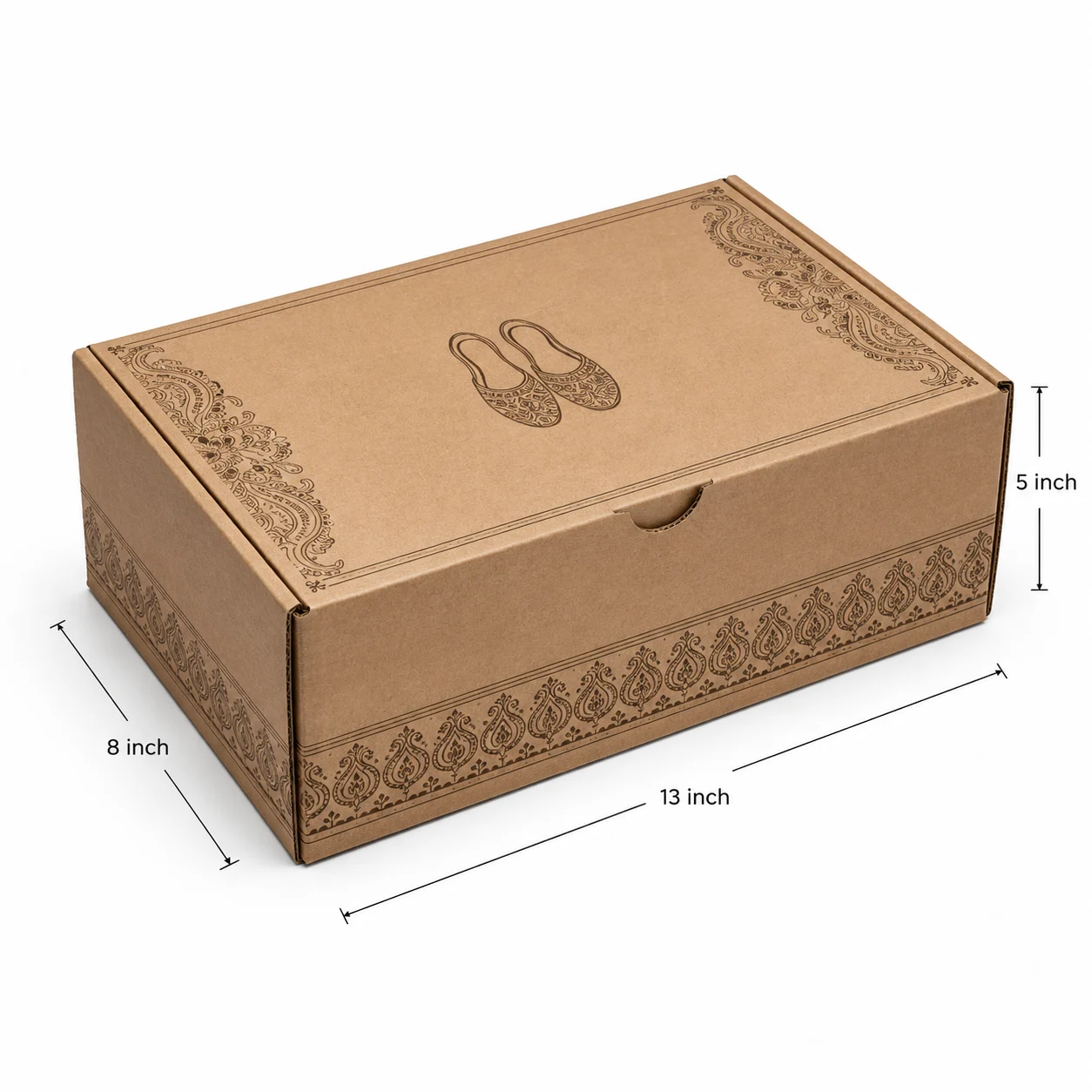
Custom Printed Ethnic Footwear Shipping Box - 13 x 8 x 5 Inch, 7 Ply
13 x 8 x 5 inch 7 ply custom printed corrugated box for juttis, mojaris, sandals and premium ethnic footwear. Built for branded presentation, organized packing and bulk business orders.
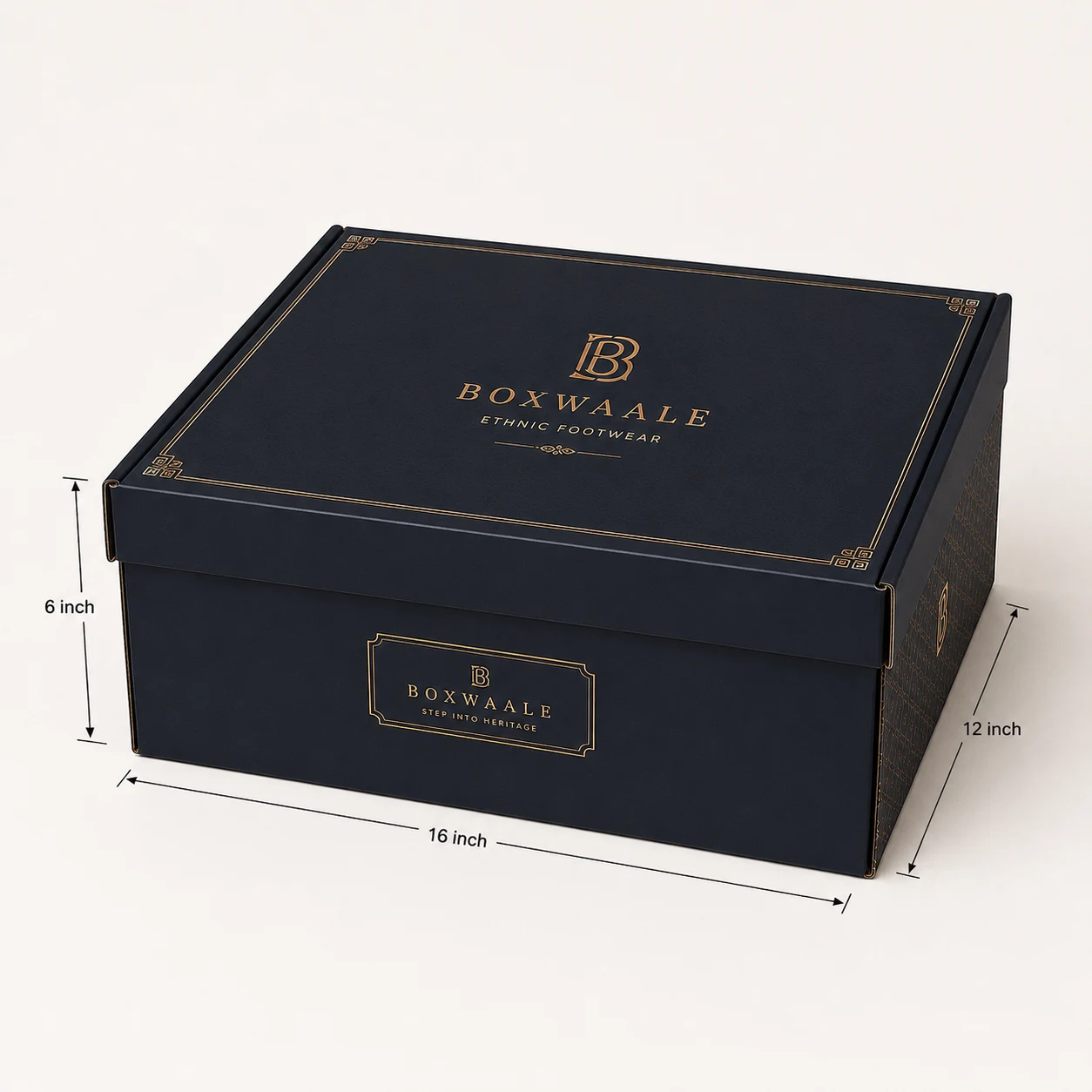
16x12x6 Inch Printed Boot Box for Fashion Brands
Premium 16x12x6 inch printed white corrugated boot box designed for fashion brands, retailers, manufacturers, and e-commerce sellers.
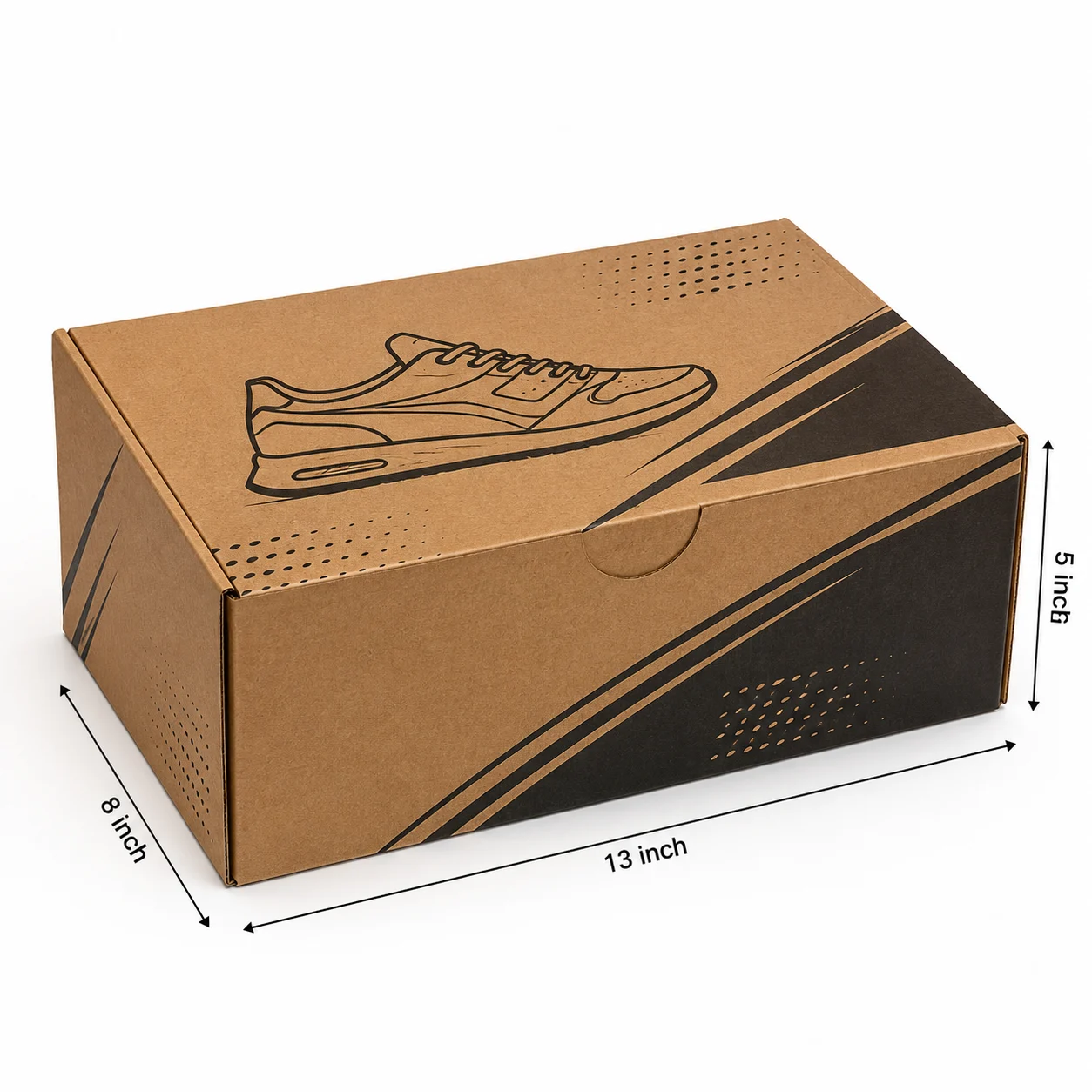
Custom Printed Sneaker Shipping Box - 13 x 8 x 5 Inch, 5 Ply
13 x 8 x 5 inch 5 ply custom printed corrugated box for sneakers, casual shoes and footwear accessories. Built for branded presentation, organized packing and bulk business orders.
Related Buying Guides
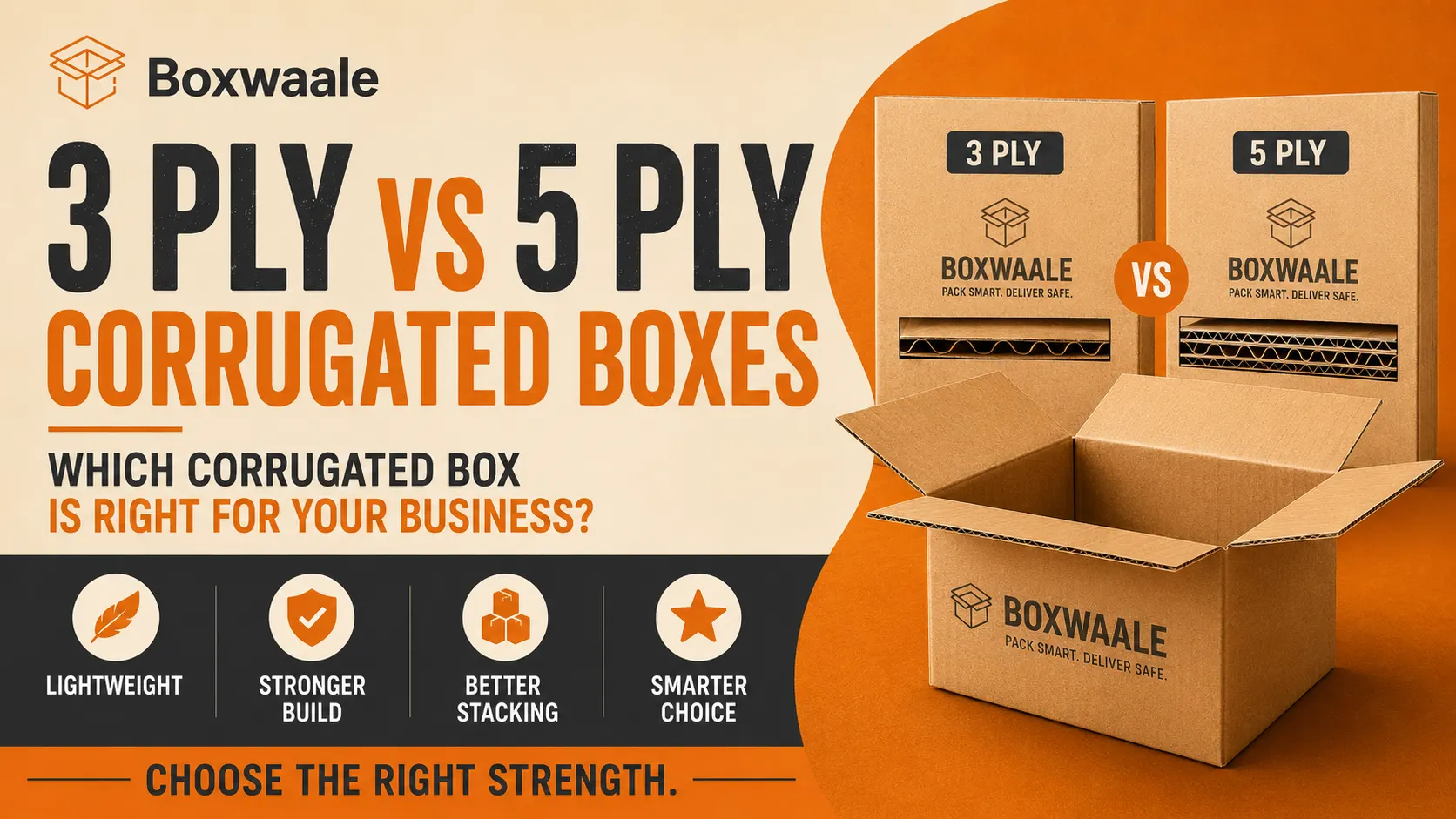
3 Ply vs 5 Ply Corrugated Boxes: Which One Should Your Business Use?
Read guide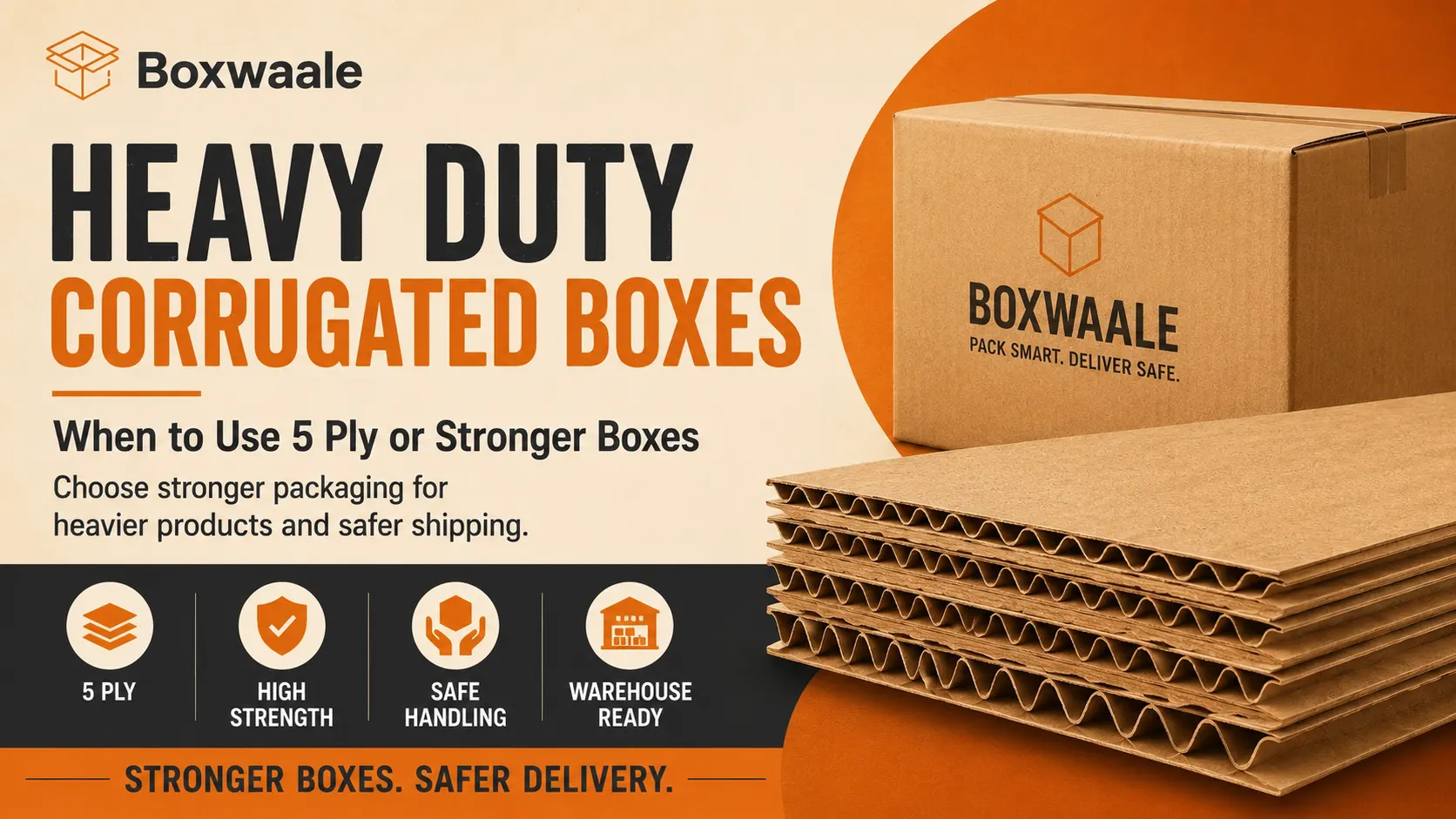
Heavy Duty Corrugated Boxes: When Should You Use 5 Ply or Stronger Boxes?
Read guide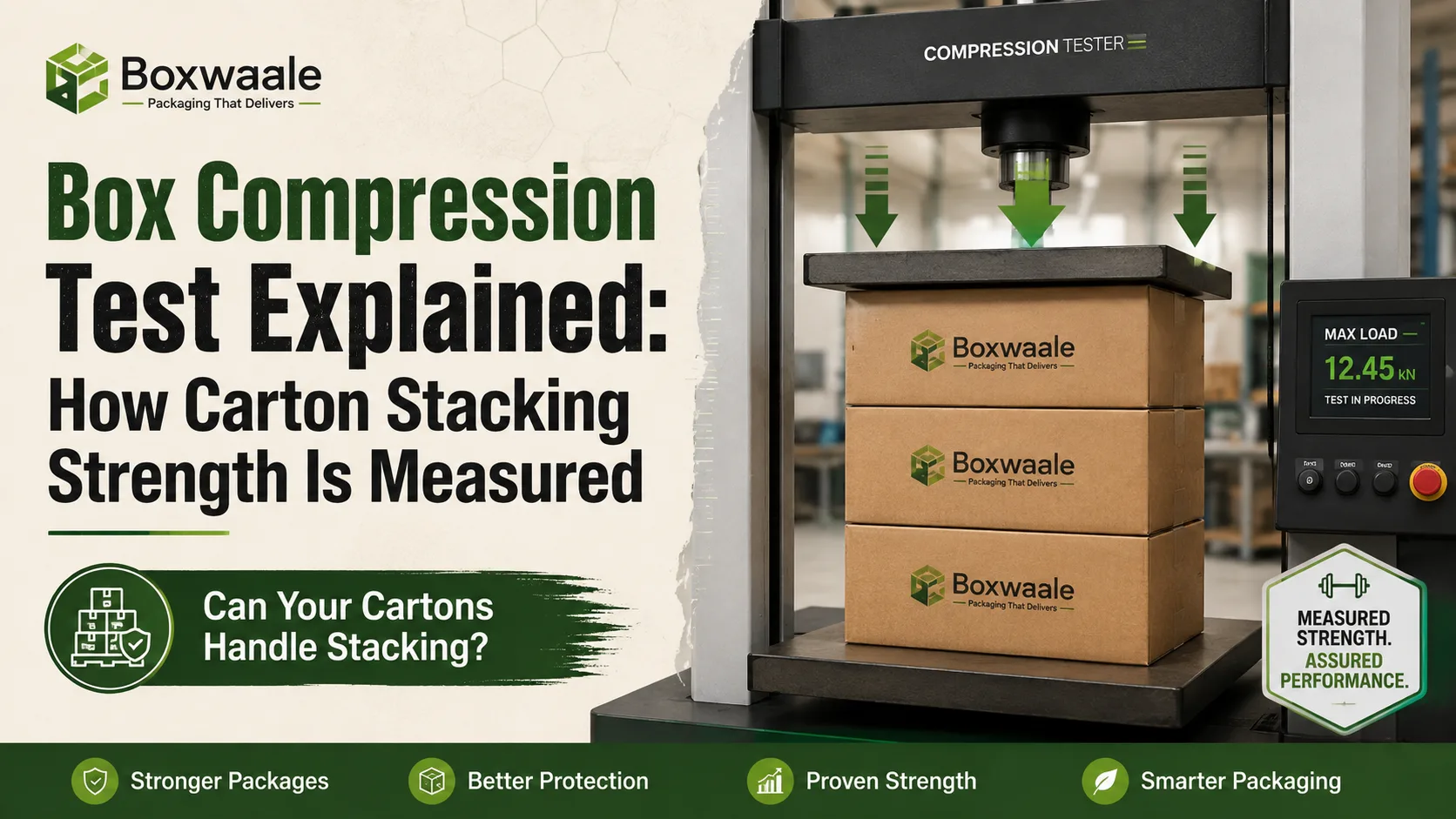
Box Compression Test Explained: How Carton Stacking Strength Is Measured
Read guide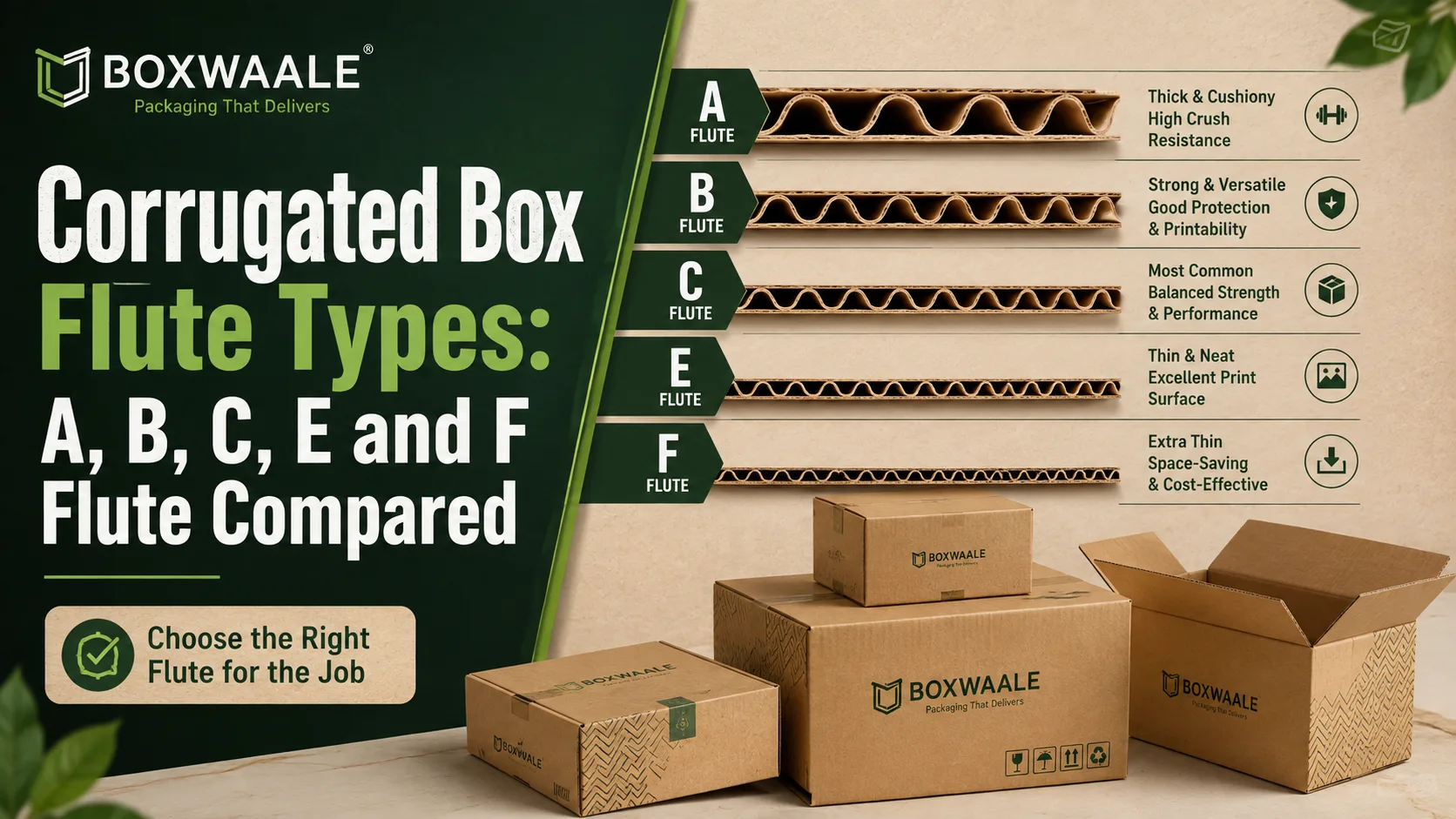
Corrugated Box Flute Types: A, B, C, E and F Flute Compared
Read guide