Rigid Box vs Corrugated Box for Premium Diwali Sweets
Rigid boxes and corrugated boxes are different product categories, not just a strength comparison. Here's when premium Diwali mithai brands need which one — and why many use both.
Key Takeaways
- Rigid boxes (non-collapsible chipboard/greyboard) and corrugated boxes (fluted, collapsible) are different product categories, not just different strength tiers.
- Rigid suits in-store/gifting premium presentation (magnetic lids, foil printing); corrugated suits shipping durability and bulk mithai orders.
- Rigid boxes typically cost roughly 5-10x more per unit than an equivalent corrugated box, with higher minimum order quantities.
- Many premium sweet brands use both together — a rigid presentation box nested inside a corrugated shipping box for e-commerce delivery.
- Diwali 2026 falls on November 8, with the broader festival window November 6-10 — order timing should work backward from that date.
Rigid Box vs Corrugated Box for Premium Diwali Sweets
Table of Contents
With Diwali 2026's main Lakshmi Puja falling on Sunday, November 8, and the broader five-day festival running November 6-10, premium mithai brands are already deciding how to box their sweets for the season. The question "rigid or corrugated" comes up constantly, but it's often framed wrong — these aren't two grades of the same box, they're two different constructions built for different jobs. Understanding that difference, rather than treating it as a strength ranking, is what actually determines the right choice for a Diwali sweet order.
Two Different Products, Not Two Strength Levels
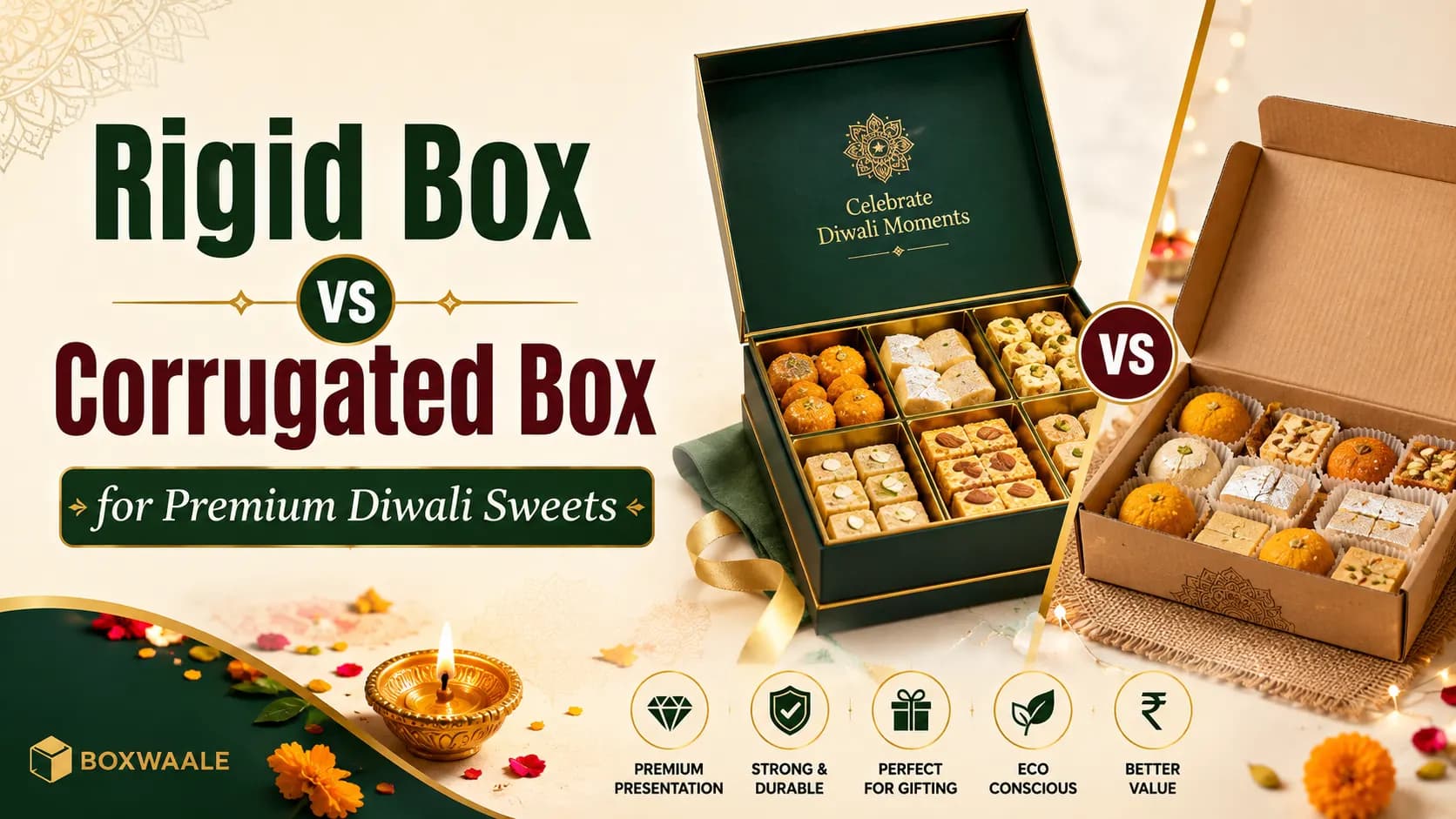
A rigid box is built from thick, dense chipboard or greyboard — typically 1.5 to 3 mm — wrapped in printed paper, textured stock, or specialty material to form the outer finish. It doesn't fold flat; it ships and stores fully assembled, at its full volume, the way a mobile phone box or a premium chocolate box does. Its strength comes from the density and rigidity of that solid board core.
A corrugated box is built entirely differently: one or more fluted (wavy) paper layers sandwiched between flat linerboards. The flutes create air pockets that absorb impact and distribute pressure across the whole panel, which is what makes corrugated board disproportionately strong for its weight, and why it's the standard for shipping. Corrugated boxes fold flat before assembly and pop into shape at the point of use, which also makes them dramatically cheaper to store and transport in bulk before filling.
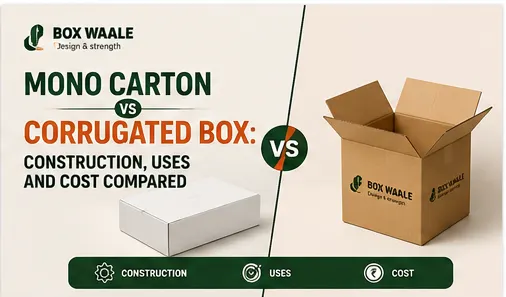
The practical result: rigid boxes protect against crushing and look premium sitting still on a shelf or in a gift bag. Corrugated boxes protect against drops, vibration and stacking pressure during transit. Neither is simply "better" — they solve different problems. For a broader look at how rigid-style boxes compare with other box formats generally, see our mono carton vs corrugated box comparison.
When Premium Mithai Brands Choose Rigid Boxes
Rigid boxes are the default choice when the box itself is part of the perceived value of the gift — which is exactly the positioning premium Diwali mithai brands are chasing. A rigid box:
- Holds its shape permanently, so it looks identical on a retail shelf, in a gifting catalogue photo, and in the recipient's hands — no risk of the box looking "squashed" the way a lightly built folding carton can after handling.
- Supports premium finishing that corrugated board can't take as cleanly — gold and silver foil stamping, deep embossing and debossing, soft-touch lamination, spot UV, and magnetic-closure lids are now fairly standard on rigid gifting boxes from Indian manufacturers.
- Signals price point instantly. A magnetic-lid rigid box with foil branding reads as premium before the recipient even opens it — useful when a brand is charging a premium price for its Diwali mithai range and needs the packaging to justify that at first glance.
This is why brands positioned at the higher end of the Diwali gifting market — the kind covered in our corporate gifting boxes guide — lean on rigid construction for the outer presentation box, even when the actual sweets ship in something sturdier underneath.
When Corrugated Wins: Shipping, Bulk Orders, Cost
Corrugated is the right call the moment volume, transit, or budget enters the picture:
- Courier and e-commerce delivery. A box that has to survive a courier network — multiple handling points, stacking in a delivery van, being dropped at a doorstep — needs the cushioning corrugated fluting provides. Rigid boxes are not designed for rough transit; they crush at the corners under compression rather than absorbing it.
- Bulk mithai orders for corporate gifting or wholesale distribution, where hundreds or thousands of units need to be produced, stored flat, and assembled quickly — corrugated's flat-pack nature makes this logistically far easier than storing pre-assembled rigid boxes at volume.
- Cost-sensitive festive SKUs where the sweets themselves, not the box, carry the value — many sweet shops selling mid-range Diwali mithai boxes by weight use printed corrugated or duplex boxes rather than rigid construction, because the margin doesn't support rigid box costs at that price point.
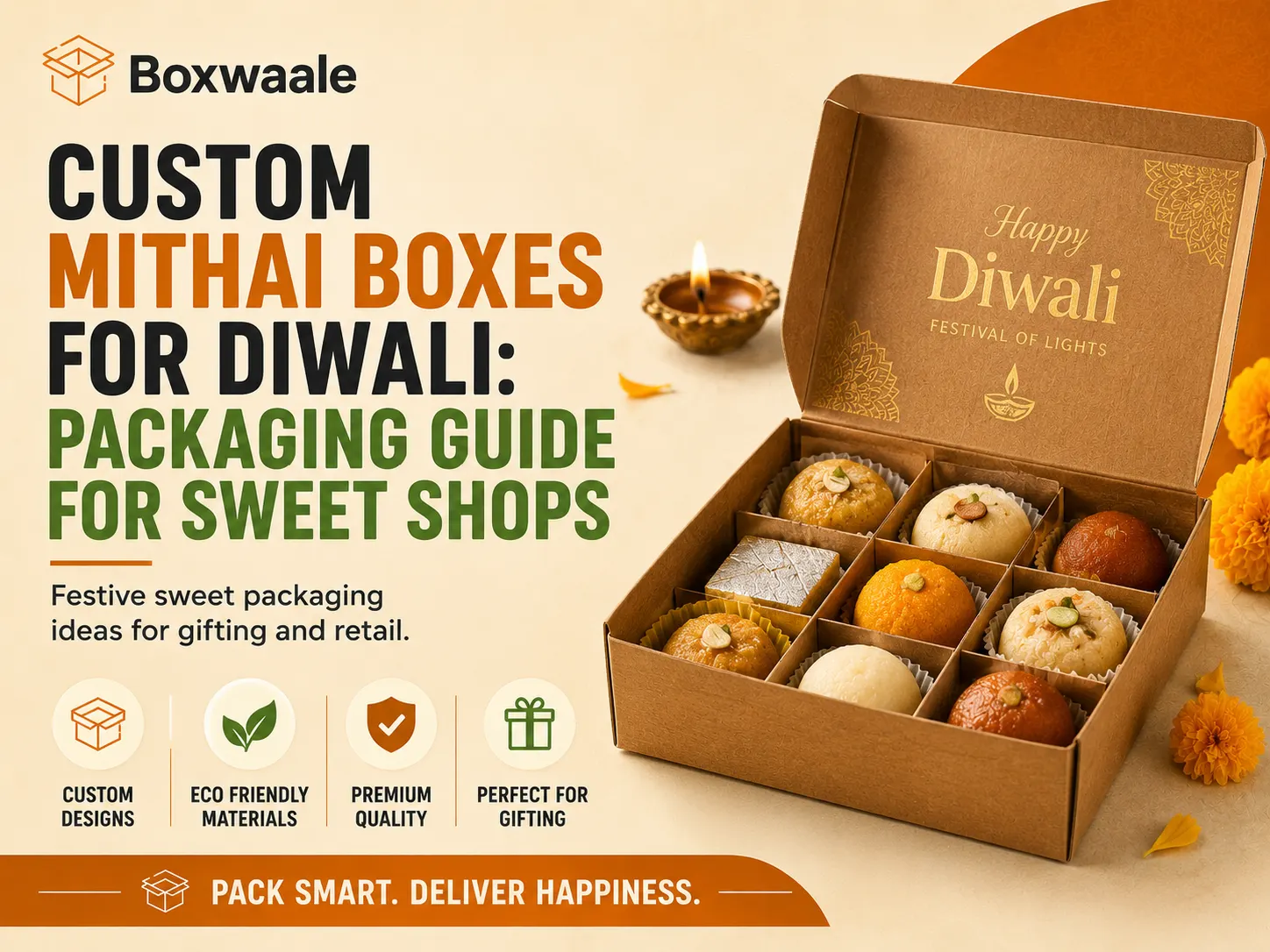
See our detailed custom mithai boxes for Diwali guide for sizing and sealing choices specific to sweet shops working primarily in corrugated and duplex board.
The Real Cost Gap
The price difference between the two is significant and worth planning for early, given Diwali is barely weeks away by the time most brands finalise packaging. Standard corrugated boxes typically run from a few rupees per piece at high volume up to roughly Rs 15-20 per piece at lower order quantities, depending on ply, size and printing. Rigid boxes, by contrast, generally cost several times more per unit once premium wraps, foiling or magnetic closures are added — industry pricing puts rigid boxes at roughly five to ten times the per-unit cost of a comparable corrugated box, and rigid box manufacturers commonly set minimum order quantities of 500 to 2,000 units per SKU, which is a meaningful commitment for a brand testing a new Diwali sweet line.
That gap is exactly why the choice shouldn't be made on "which looks better" alone — it has to be weighed against order volume, price point of the sweets, and how the box will actually travel.
Why Many Brands Use Both, Together
The most common solution among premium Diwali sweet brands selling online isn't rigid or corrugated — it's both, layered. The sweets sit in a rigid presentation box for the unboxing experience and shelf appeal, and that rigid box then travels inside an outer corrugated shipping box sized to leave minimal internal movement, sometimes with a partition insert or void-fill to stop the rigid box shifting in transit. This gives the recipient the premium first impression while protecting the investment in foiling and finishing from getting crushed by a courier network the rigid box alone was never built to survive.
For brands selling both in-store and online, it's worth budgeting for this two-box approach specifically for the e-commerce channel, while retail or hand-delivered corporate orders can often skip the outer corrugated layer entirely.
A practical way to decide is to ask three questions before finalising packaging for a Diwali sweet SKU: Will this box be handled by a courier network at any point, even occasionally? Is the box itself expected to carry part of the perceived gift value, or are the sweets the entire value proposition? And does the order volume and price point support a rigid box's higher per-unit cost and MOQ? A brand selling a Rs 2,000 assorted mithai box direct-to-consumer online almost always needs the outer corrugated layer regardless of what's inside it; a brand selling the same box only through a handful of corporate walk-in orders delivered by their own staff may not.
How Boxwaale Helps
Boxwaale manufactures corrugated boxes in Delhi and ships pan-India, and for Diwali 2026 we're seeing exactly this two-box pattern from mithai and gifting brands — a rigid or premium presentation box sourced separately, protected inside a corrugated outer box sized and structured for courier transit. If your sweets are boxed for retail but sold online too, we can help size a shipping-safe corrugated outer box around your existing presentation packaging well before the Diwali rush hits converters in early November.
Frequently Asked Questions
Related Packaging Guide
Planning a packaging order?
Turn this guidance into a box specification
Share the product dimensions, packed weight, quantity, printing requirement and delivery postcode. Boxwaale will help narrow down the appropriate size, ply and board specification before quoting.
Frequently Asked Questions
Related Products
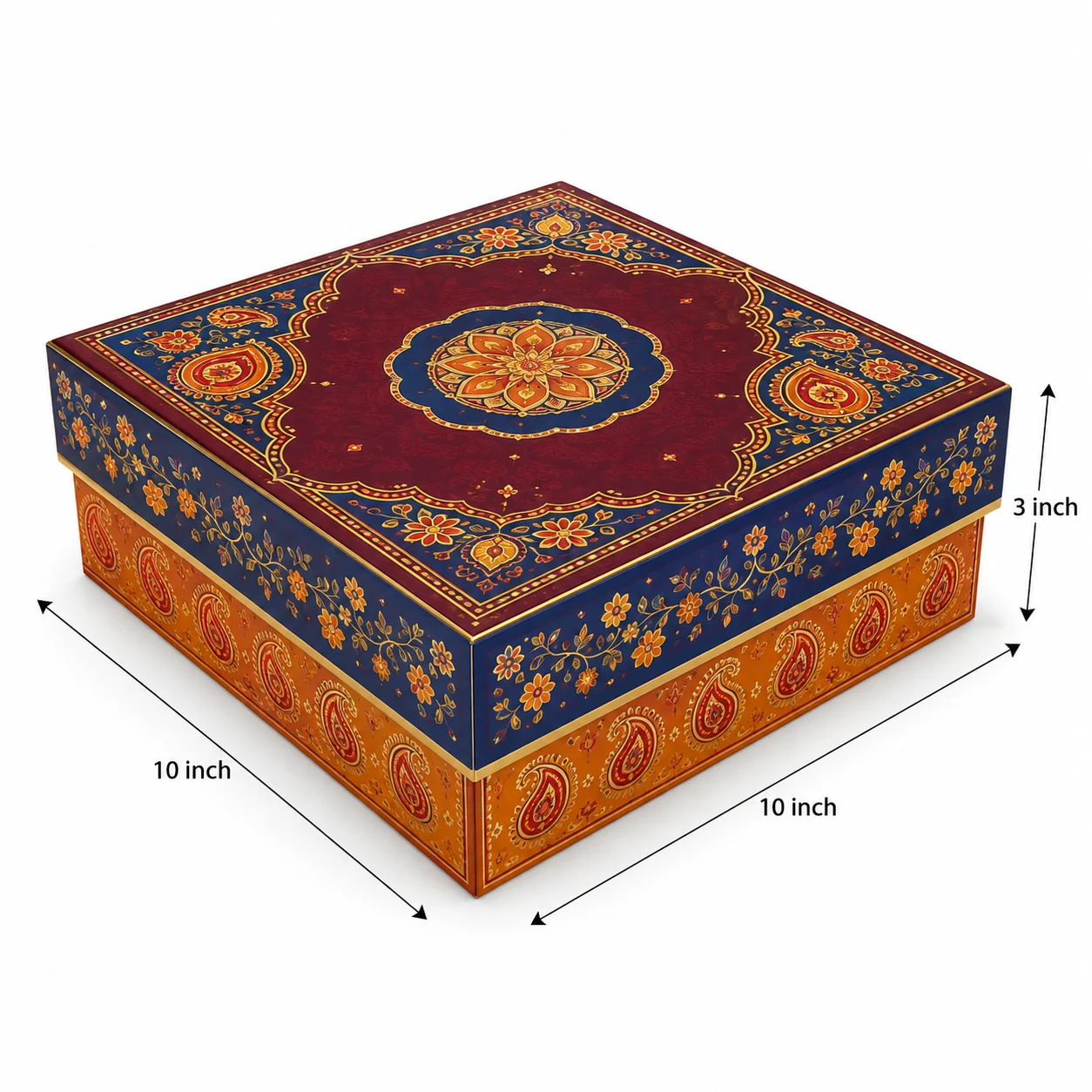
Custom Printed Festive Mithai Box - 10 x 10 x 3 Inch, 3 Ply
10 x 10 x 3 inch 3 ply custom printed corrugated box for assorted mithai, dry sweets and festive confectionery. Built for branded presentation, organized packing and bulk business orders.
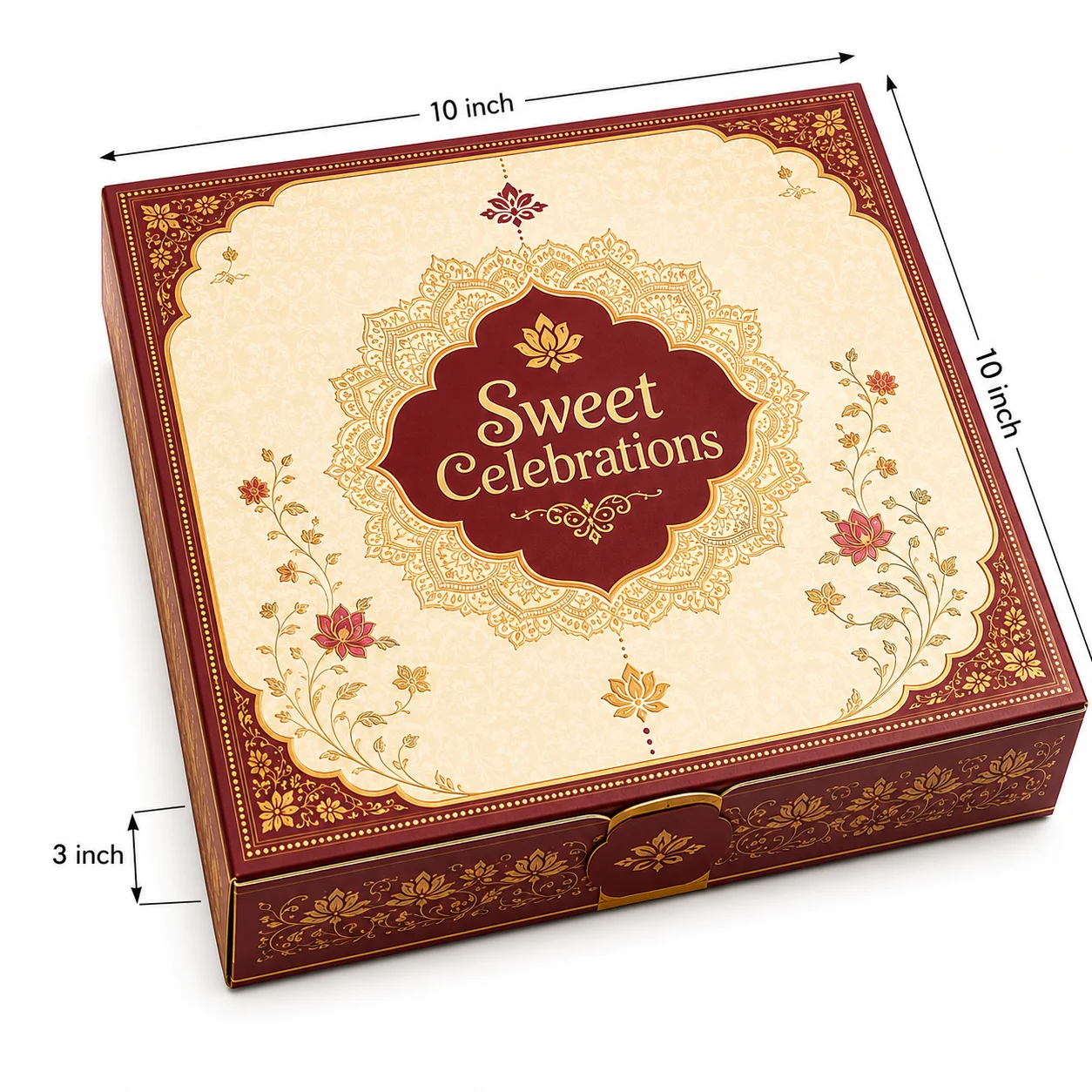
10x10x3 Inch Premium Printed Mithai Box for Sweet Shops
Premium 10x10x3 inch printed white corrugated mithai box designed for sweet shops, bakeries, gifting businesses, and food delivery brands.
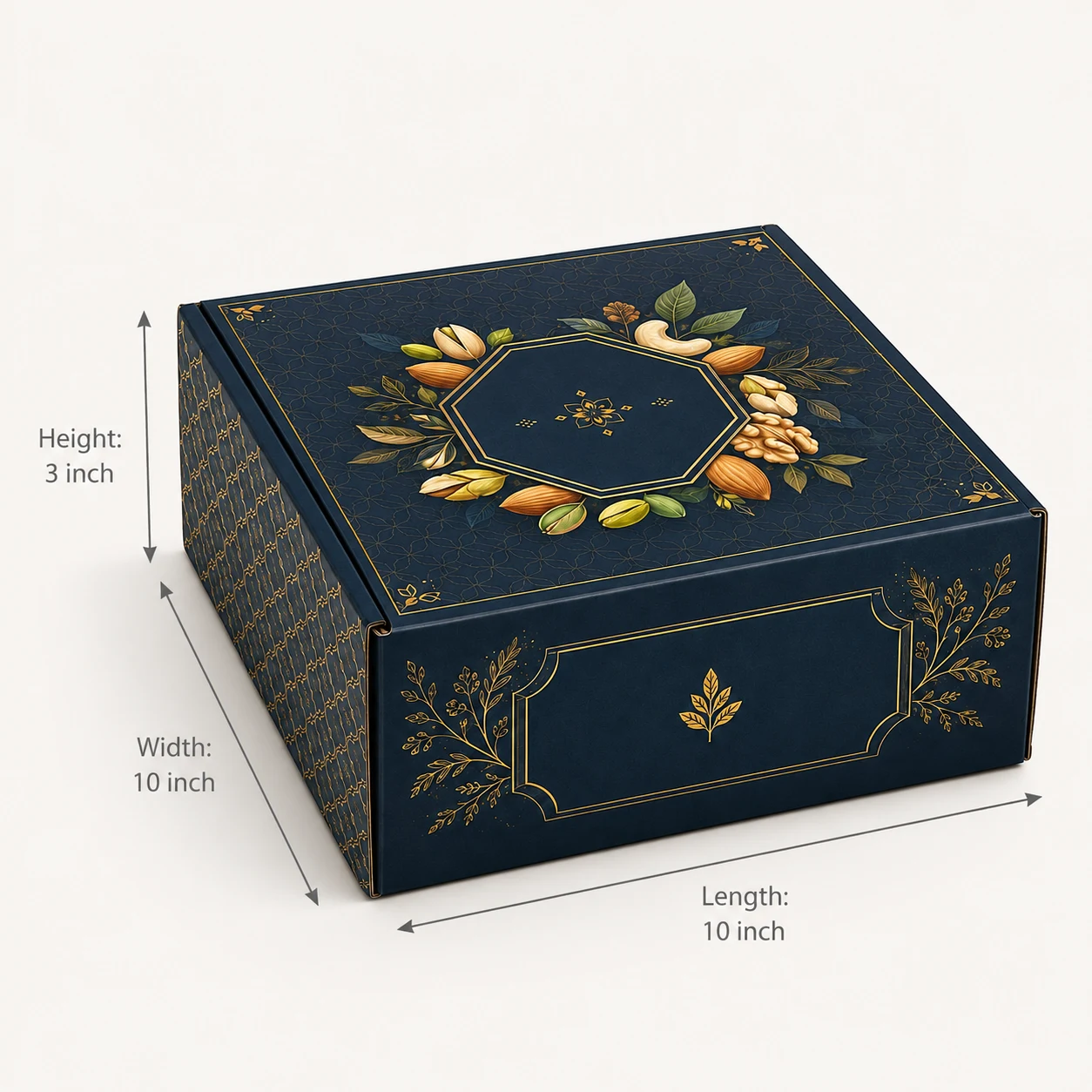
Custom Printed Corporate Dry Fruit Hamper Box - 10 x 10 x 3 Inch, 5 Ply
10 x 10 x 3 inch 5 ply custom printed corrugated box for dry-fruit jars, gourmet snacks and corporate gift assortments. Built for branded presentation, organized packing and bulk business orders.