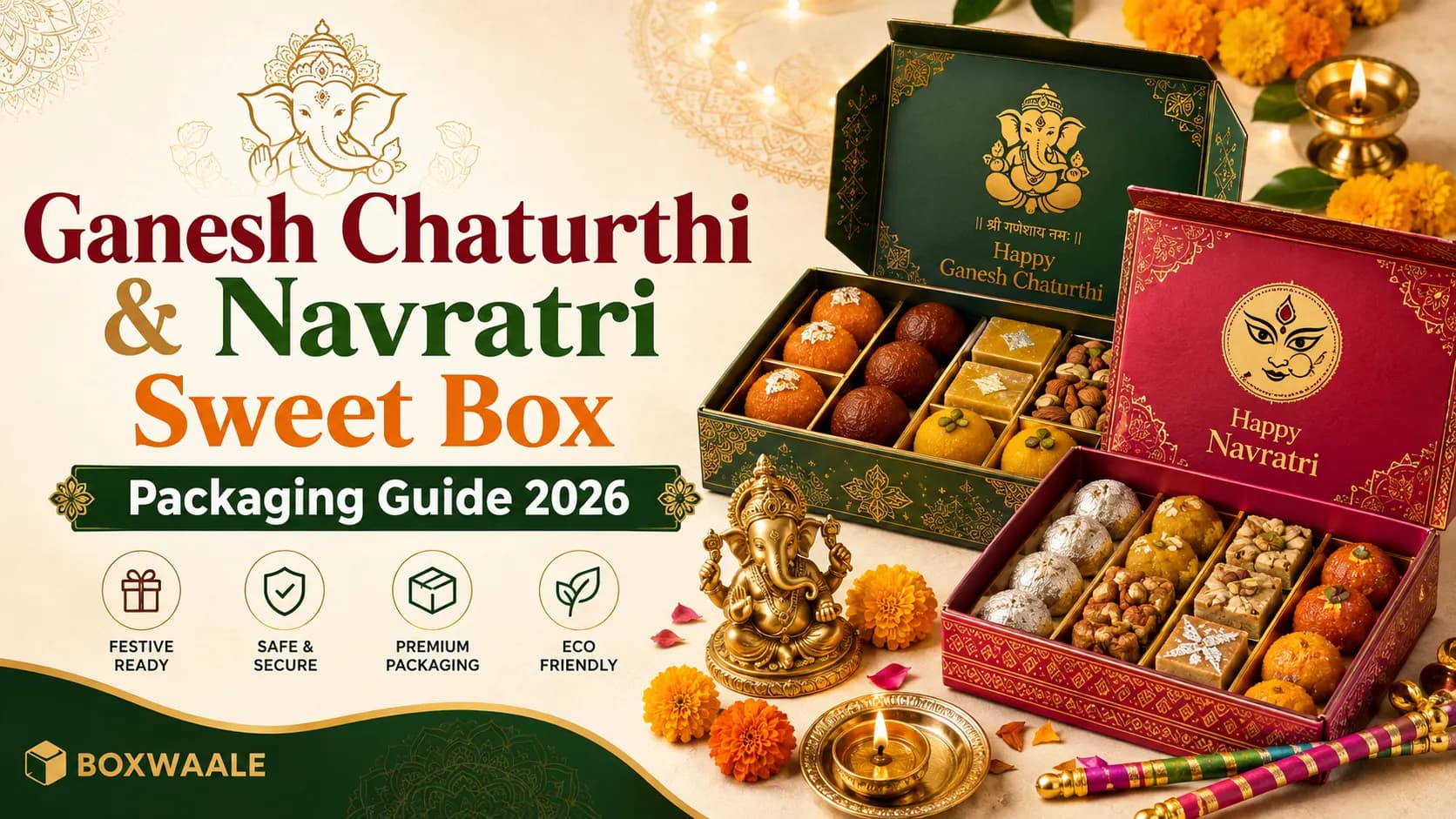
Ganesh Chaturthi & Navratri Sweet Box Packaging Guide 2026
How sweet shops, home bakers and D2C mithai brands should pack modak, prasad and Navratri fasting sweets in 2026 — box formats, food-safe board, and sizing for the Sept-Oct festival stretch.
Key Takeaways
- Modak and other steamed sweets need ventilated, cavity-tray packaging, not a sealed box, to avoid sogginess in transit.
- Ganesh Chaturthi 2026 runs September 14-25; Navratri 2026 runs October 11-19 — both drive a shorter, more frequent sweet-gifting cycle than Diwali's single peak.
- Festival sweet boxes are typically smaller-format (single-sweet or small assortment) compared to large Diwali hampers.
- Food-contact board should meet FSSAI food-safe packaging expectations, not just look festive.
- Ordering lead time matters even for smaller festival runs — plan ahead of the date, not during festival week.
Ganesh Chaturthi & Navratri Sweet Box Packaging Guide 2026
Table of Contents
Ganesh Chaturthi 2026 begins Monday, September 14, with the visarjan period running through September 25 — and Navratri follows almost immediately, from October 11 to 19, closing with Dussehra on October 20. For sweet shops, home bakers and D2C mithai brands, that's roughly six weeks of near-continuous festive sweet demand sandwiched between two very different occasions: modak-centric Ganpati offerings and the lighter, often fasting-friendly sweets of Navratri. This guide covers the box formats, sizes and material choices that actually fit how these sweets are bought and gifted — smaller and more frequent than Diwali hampers, but no less important to get right.
Why These Two Festivals Belong in One Packaging Plan
Unlike Diwali, where one large hamper often covers the whole season, Ganesh Chaturthi and Navratri generate repeat, smaller-ticket purchases. A household might buy a fresh modak box every few days during the ten-day Ganpati period, and pick up small prasad packs through all nine nights of Navratri. That changes the packaging math for sellers — you're not optimising for one impressive box per customer, you're optimising for a format that's cheap enough to reorder often, sturdy enough to survive same-day local delivery, and still looks presentable enough to place in front of the idol or distribute to neighbours.
Sweet shops report that packaging during this stretch functions less as an afterthought and more as part of the offering itself — a box handed over for prasad distribution is often photographed, shared, and judged the same way a gift box is. That means even a low-cost daily box needs decent print and a lid that doesn't gape open when stacked.
Modak Boxes: The Ganesh Chaturthi Signature Format
Modak is the one sweet that defines Ganesh Chaturthi packaging. Most sweet shops and online mithai sellers now offer modak in assorted boxes of 6 or 12 pieces, mixing classic ukadiche modak with flavoured versions — rose, kesar, til, chocolate, kaju-mango, and dry-fruit variants have all become standard SKUs at established sweet brands. Because modak is steamed and delicate (the rice-flour or mawa shell tears easily), the box format matters more than for drier sweets like laddoo or barfi.
- Individual cavity trays: A 6-piece or 12-piece modak box almost always needs a moulded or die-cut paper/pulp tray inside so pieces don't touch, slide, or crush each other — loose modak in a flat box is one of the most common damage complaints for online mithai orders.
- Shallow, wide formats: Modak boxes are typically shallow (single layer) rather than tall stacked boxes, since stacking modak vertically damages the pleated shell.
- Ventilation for steamed sweets: Freshly steamed modak retains moisture; boxes sealed completely airtight while the sweet is still warm can trap condensation and turn the outer layer soggy. Some sellers use small pin-hole ventilation on the lid for this reason.
- Festive print, modest cost: Given the repeat-purchase nature, most modak boxes use one or two-colour print on kraft or duplex board rather than full offset printing — keeping unit cost low enough to reorder every few days.
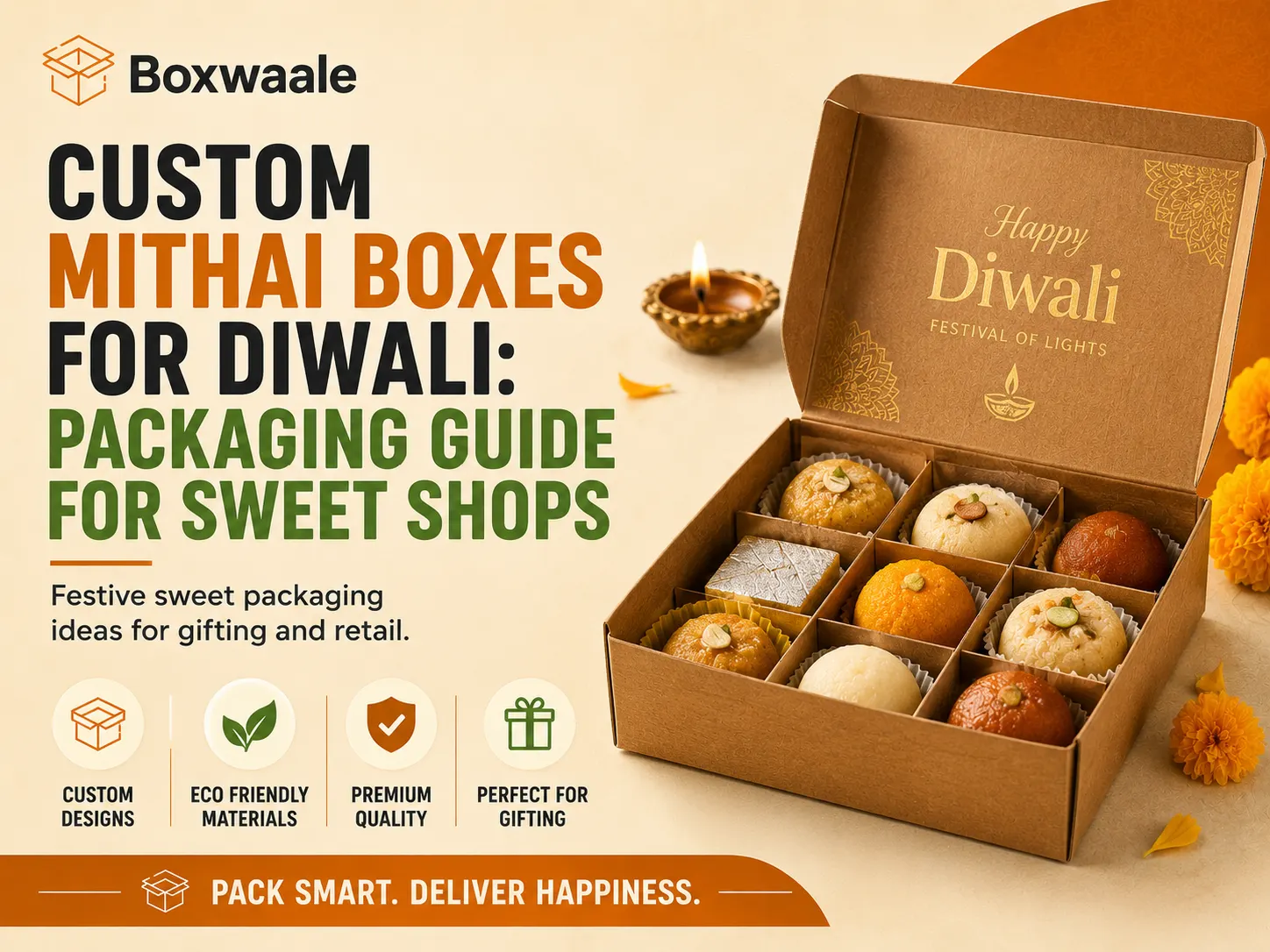
These principles carry over closely from mithai boxes generally — see our detailed guide to custom mithai boxes for sweet shops for tray and sealing choices that apply here too.
Prasad Boxes and Daily Distribution Packs
Prasad distribution during Ganpati visarjan days and through Navratri creates its own packaging category, distinct from retail gifting. Prasad boxes are generally bought in bulk by households, societies and temples for distribution to guests and neighbours rather than as a single premium gift, so cost-per-unit and stackability during transport (often carried by hand or two-wheeler, not couriered) matter more than embellishment.
- Small single-serve or 2-4 piece formats are common for prasad, since the box is meant to be handed to many people rather than gifted to one.
- Flat-pack, quick-assemble boxes reduce the packing time when a household or shop needs to fill 50-200 boxes in one sitting before visarjan processions or Navratri aartis.
- Tamper-evident or sealed lids reassure recipients the prasad wasn't handled after packing — a small but real trust signal for food offered as prasad.
Navratri Fasting Sweets and Vrat-Friendly Packaging
Navratri packaging has a quirk that Ganesh Chaturthi doesn't: a meaningful share of demand is for vrat (fasting) foods, not just sweets. Traditional Navratri fasting recipes exclude regular grains, onion and garlic — think sabudana khichdi, kuttu poori, singhare ke laddoo, rajgira halwa, and makhana-based sweets. Several sweet brands now sell dedicated Navratri sweet collections built around these vrat-compliant ingredients rather than standard mithai.
- Clear labelling matters more here than in most festival packaging — buyers specifically checking for "no onion, no garlic" or "vrat-friendly" need that stated on the box, not just implied by the sweet's name.
- Smaller box formats suit the daily-purchase pattern of a nine-night festival, where many buyers pick up fresh sweets closer to each day's puja rather than stocking up once.
- Moisture control matters for makhana and dry-fruit-based sweets, which lose crunch faster than syrup-based mithai if the board isn't sufficiently moisture-resistant.
Food-Safe Board and Sizing Choices That Actually Matter
Whatever the sweet, the board touching it needs to be food-grade. Under India's Food Safety and Standards (Packaging) Regulations, 2018, corrugated fibreboard is an accepted packaging material for food, but any layer in direct contact with the sweet should be food-safe and free of recycled content that hasn't been certified for food contact — a distinction many first-time D2C sellers miss when they source cheap recycled board for cost reasons. Single-use plastic wrap directly around sweets is also restricted under India's Plastic Waste Management Rules, which is part of why paper-based trays and liners inside corrugated or duplex boxes have become the default rather than plastic cling film.
- 350 GSM+ duplex or kraft board is a reasonable minimum for a lidded sweet box that needs to hold its shape through a day of handling; lighter board tends to bow once syrup-heavy sweets like gulab jamun or rasgulla are added.
- Match the box to the sweet count, not a generic size — a 250g modak box, 500g assorted mithai box, and 1kg festival box each need different internal dimensions and tray cavity counts; using one oversized box for all of them wastes cost and lets sweets shift in transit.
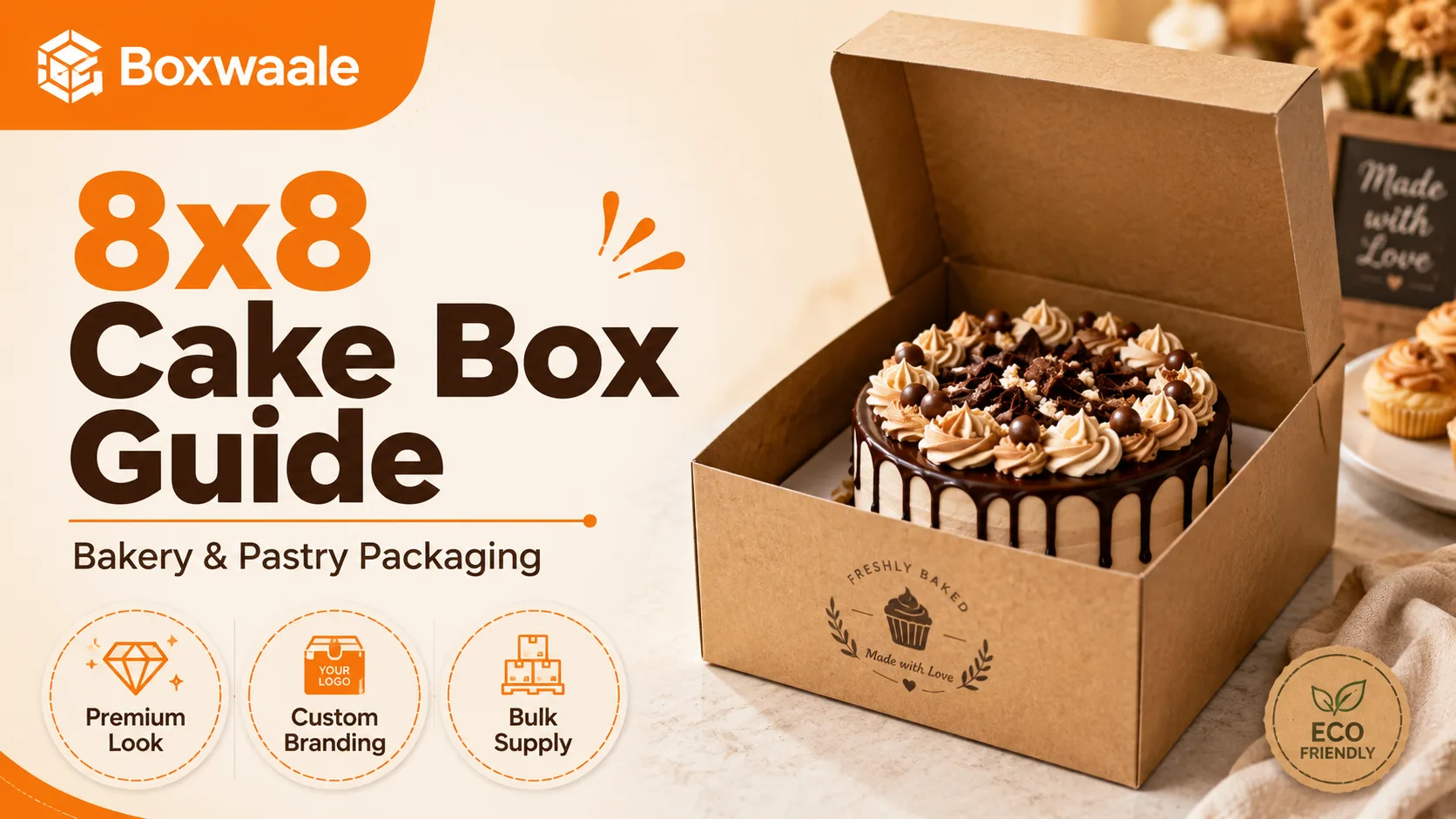
- Consider a cake-box-style format for barfi and slab sweets — the same shallow, wide-lid construction used in 8x8 inch brown kraft cake boxes works well for cut mithai slabs sold by weight during both festivals.
How Boxwaale Helps
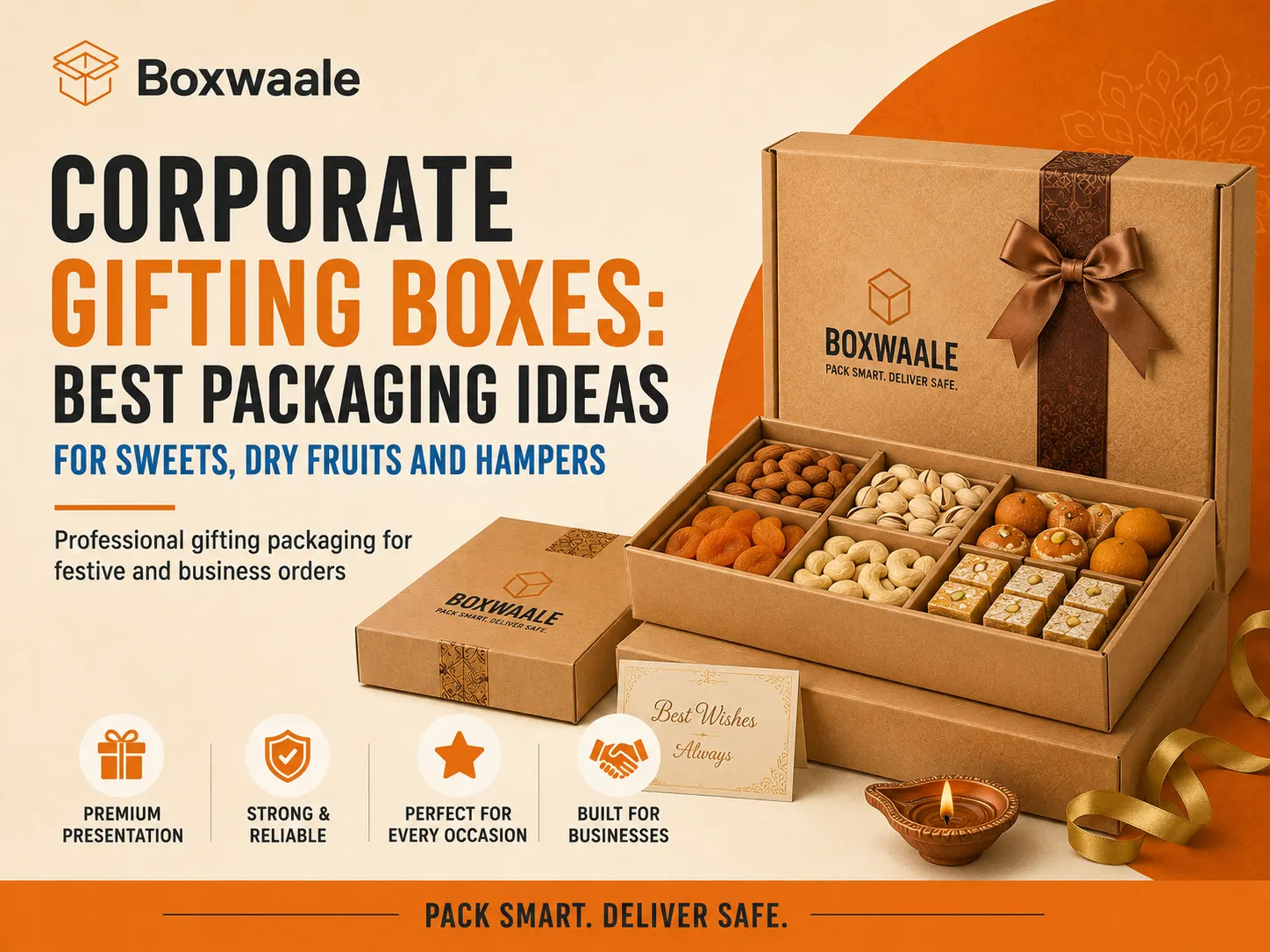
Boxwaale is a Delhi-based corrugated box manufacturer supplying sweet shops, bakers and D2C food brands across India through courier and logistics partners. For the Ganesh Chaturthi-to-Navratri stretch, we produce food-safe corrugated and duplex boxes in modak, prasad and mithai-slab formats, with custom print runs sized to match order volumes — from a single sweet shop's daily prasad packs to a D2C brand's pan-India festive dispatch. If you're planning box quantities for this season, reach out early; converters across Delhi NCR get backed up in the weeks right before Ganesh Chaturthi.
Frequently Asked Questions
Related Packaging Guide
Planning a packaging order?
Turn this guidance into a box specification
Share the product dimensions, packed weight, quantity, printing requirement and delivery postcode. Boxwaale will help narrow down the appropriate size, ply and board specification before quoting.
Frequently Asked Questions
Related Products
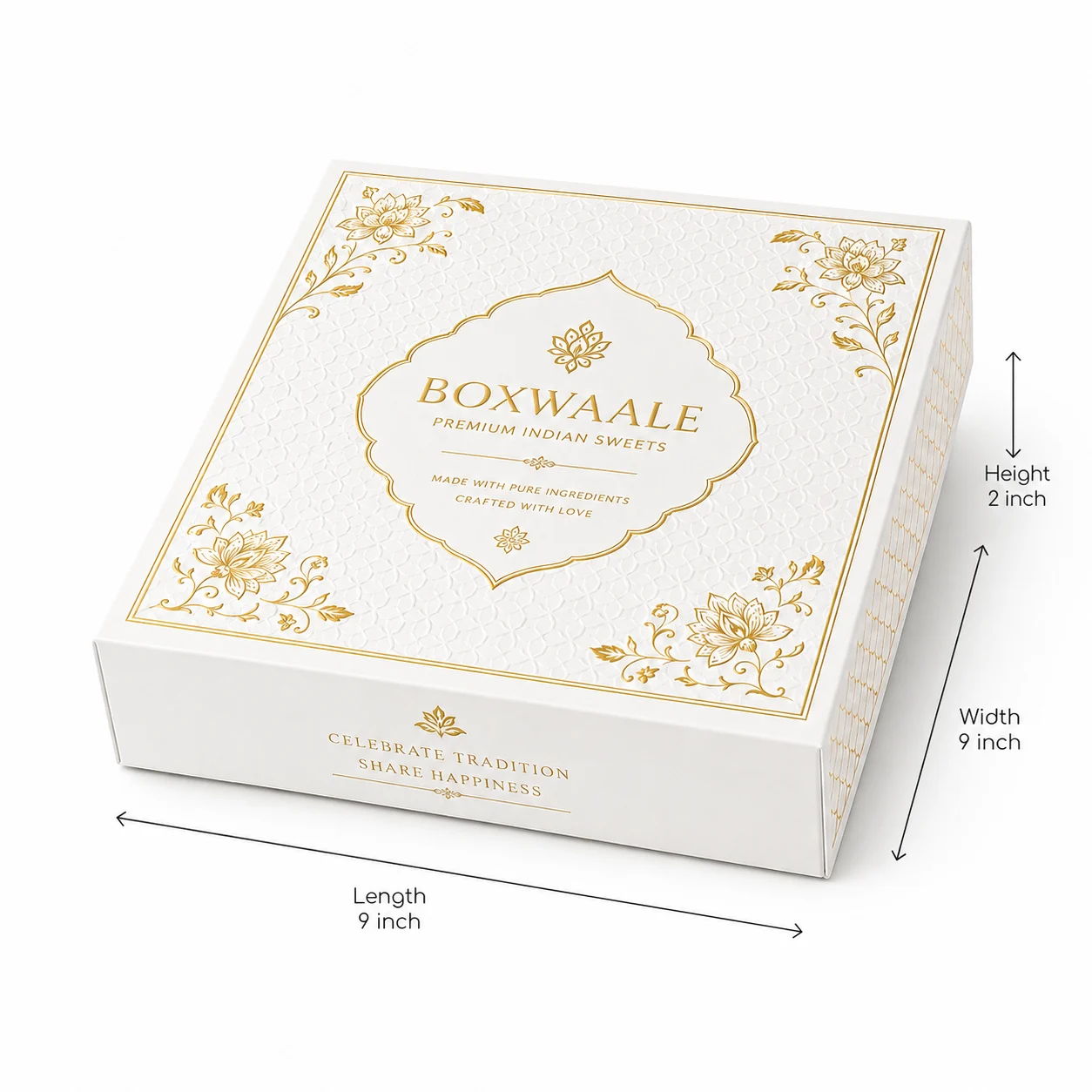
9x9x2 Inch White Mithai Box for Sweet Shops
Premium 9x9x2 inch white corrugated mithai box designed for sweet shops, bakeries, gifting businesses, and food delivery brands.
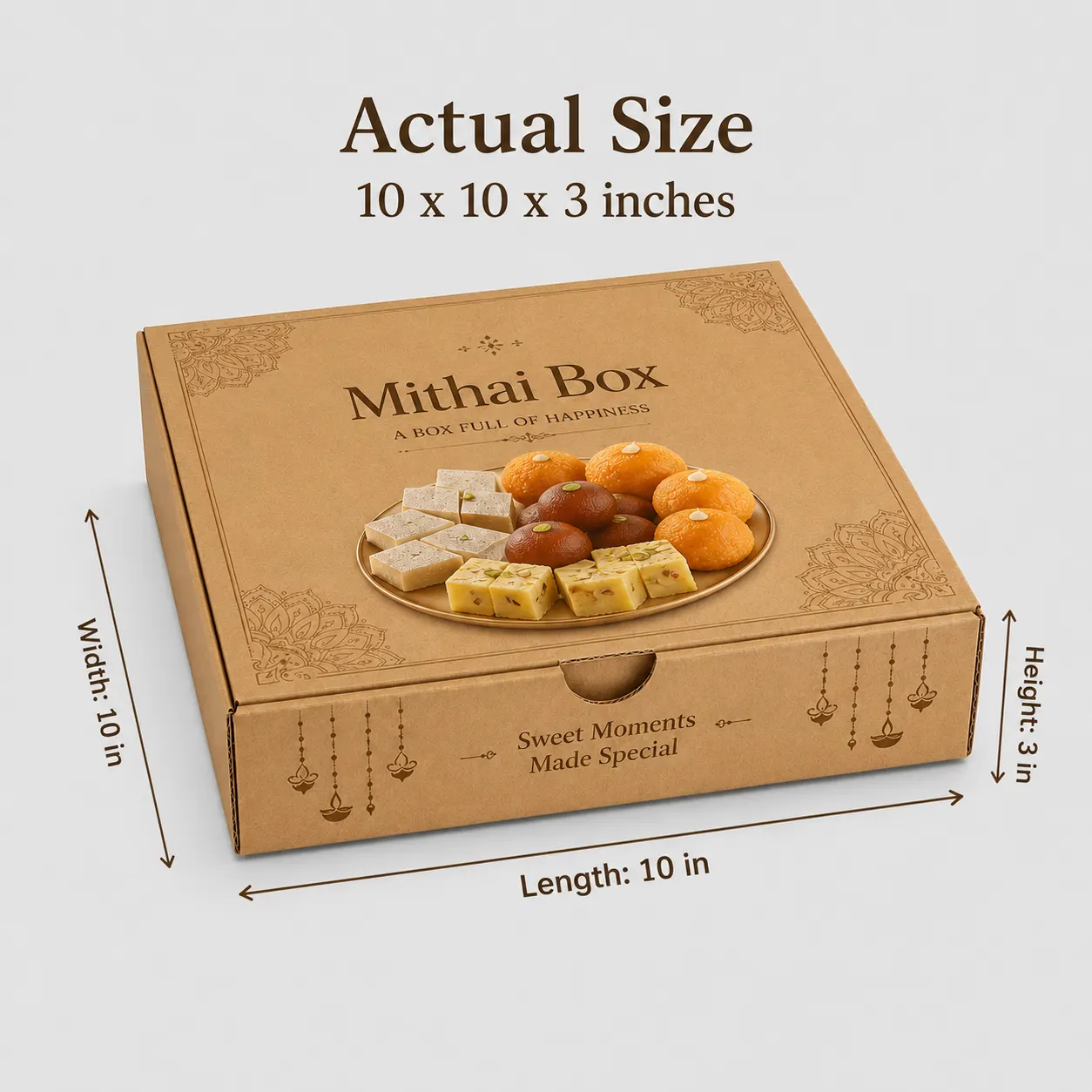
10x10x3 Inch Brown Corrugated Mithai Box for Sweet & Dry Fruit Packaging
Premium 10x10x3 inch brown corrugated mithai box designed for sweet shops, bakeries, dry fruit sellers, festive gifting, and safe delivery.
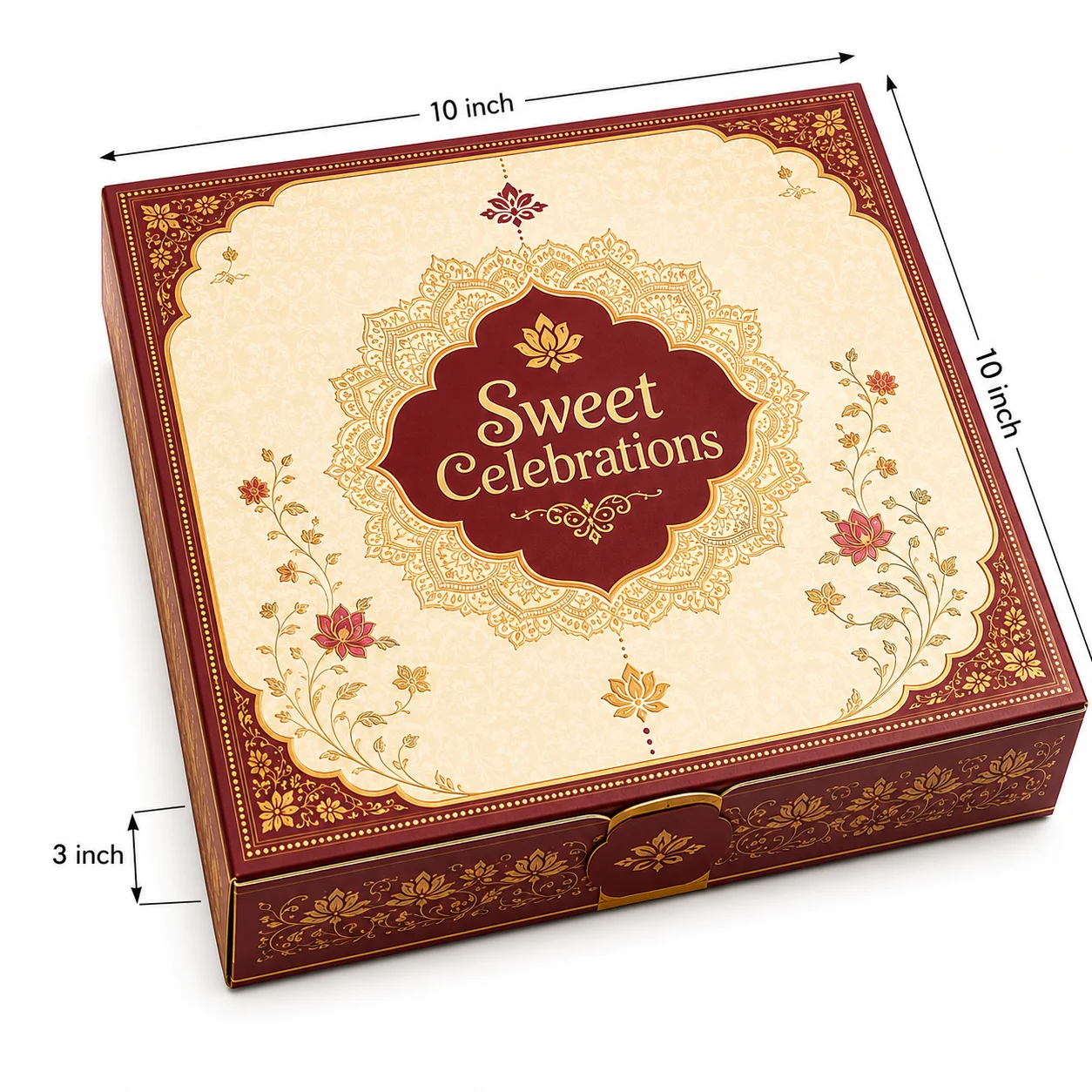
10x10x3 Inch Premium Printed Mithai Box for Sweet Shops
Premium 10x10x3 inch printed white corrugated mithai box designed for sweet shops, bakeries, gifting businesses, and food delivery brands.