
Published 2 Aug 2026· Updated 29 Aug 2026
Tamper-Evident Corrugated Packaging for E-commerce Shipments
A practical look at tamper-evident seals, tear strips and closure design for ecommerce shipments, including what these measures can and cannot guarantee.
Key Takeaways
- Tamper-evident packaging is designed to show a visible sign, such as a torn seal, a void pattern or a broken strip, if the box has been opened, whereas tamper-proof would mean the box cannot be opened without authorisation at all, a standard no ordinary corrugated packaging can honestly meet.
- Boxwaale describes its security options as tamper-evident, not tamper-proof, since any single seal can in principle be defeated by someone sufficiently determined and skilled.
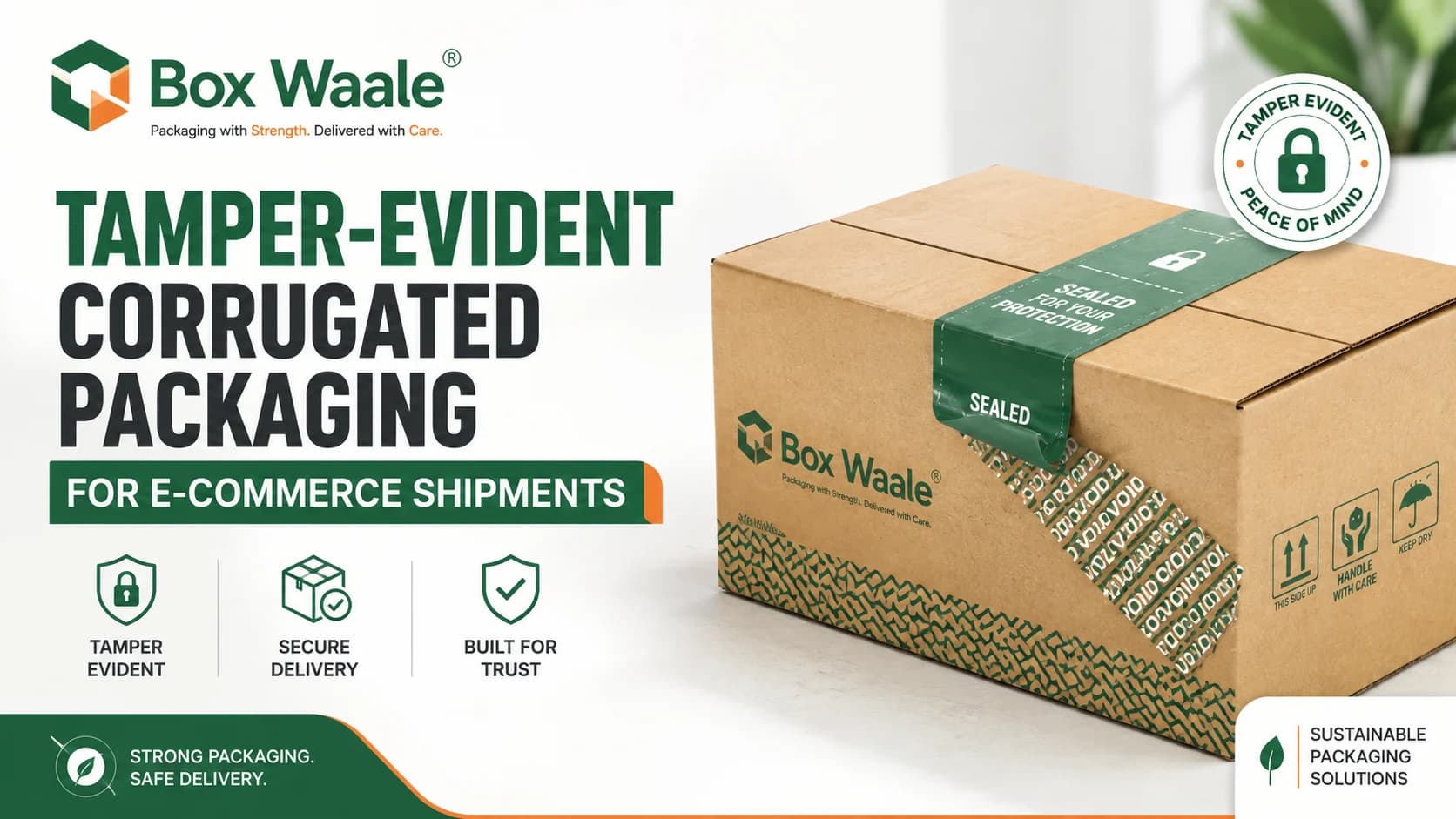
- Common tamper-evident measures include security tape that leaves a visible VOID or checkerboard pattern when peeled, perforated tear strips that must be broken to open the box, and closure or joint designs that make a resealed box look visibly different from a factory-sealed one.
- The value of tamper-evident measures lies in raising the likelihood that an unauthorised opening leaves a visible trace, not in making unauthorised access impossible.
- Sellers of higher-value items such as electronics or jewellery often combine multiple measures, like security tape on the outer carton plus a sealed inner pouch, since each added layer increases the chance tampering is noticed.
- Tamper-evident packaging can provide useful visible evidence for a claims or dispute process, but it does not by itself resolve disputes or replace a seller's own verification process.
Tamper-Evident Corrugated Packaging for E-commerce Shipments
Table of Contents
Sellers of electronics, jewellery, cosmetics and other higher-value categories often ask for "tamper-proof" packaging, but the honest answer is that no standard corrugated box can promise that. What corrugated packaging can offer is tamper-evidence — design choices that make an unauthorised opening visible — and this article explains what those measures are, how they work, and where their limits sit.
Tamper-Evident vs Tamper-Proof: An Honest Distinction
These two terms get used interchangeably in casual conversation, but they describe different things. Tamper-proof implies a package cannot be opened without authorisation at all — a standard that essentially no cardboard packaging, and very few packaging systems of any material, can genuinely meet against a sufficiently determined attempt. Tamper-evident is a more modest and more achievable claim: the packaging is designed so that an opening attempt leaves a visible sign, whether that's a torn seal, an exposed adhesive pattern, or a broken strip.
This distinction matters because it sets the right expectation. A seller who tells customers their packaging is "tamper-proof" is making a claim that's difficult to defend if a determined bad actor does manage to open and reseal a box cleanly. Describing the same measures as "tamper-evident" is both more accurate and, in practice, still communicates real security intent to customers.
Security Tape and Void Seals
The most common tamper-evident measure on ecommerce packaging boxes is security tape engineered to leave a visible pattern — often the word "VOID" or a checkerboard texture — on the box surface if the tape is peeled back after application. The tape itself remains largely intact when removed carelessly, but the adhesive layer separates in a way that leaves a permanent visual record on the carton underneath.
This works well as a first-line deterrent and detection method because it's visible at a glance to both the receiving customer and, if needed, to a delivery or warehouse team checking a package before final dispatch. Its limits are worth stating plainly: a sufficiently careful attempt using heat, solvents or very slow peeling can sometimes reduce the visibility of the void pattern, and the tape only protects the specific seam it covers, not the entire carton. It is one useful layer, not a complete solution on its own.
Tear Strips and Closure Design
A second approach builds the tamper-evidence into the carton's own construction rather than relying purely on an applied tape. Perforated tear strips positioned across a critical seam mean the box cannot be opened along its intended line without visibly breaking the perforation. Because the strip is part of the board itself rather than an add-on, it's harder to disguise a break than it might be with tape alone.
Closure and joint design also play a role. A carton with a factory-glued or stitched manufacturer's joint, combined with a flap arrangement that makes resealing visibly different from the original factory close, gives an attentive recipient another cue to check. None of these measures work in isolation as well as they do combined — a tear strip alone can sometimes be worked around at a different seam, and a joint design alone doesn't protect the main opening flaps. The practical approach is choosing combinations that suit your product's risk profile and cost tolerance, not chasing a single perfect mechanism.
Layering Measures for Higher-Value Shipments
For categories where the cost of an undetected tamper event is high — electronics, jewellery, high-value cosmetics, controlled or restricted items — a common approach is layering more than one measure rather than depending on any single one. A typical combination might include security tape on the main outer seam, a tear strip on a secondary seam, and a sealed inner bag or pouch around the product itself, so that defeating the outer measures still leaves an inner layer that shows evidence of tampering.
Each additional layer raises the practical difficulty and the likelihood that tampering leaves some visible sign, but it's worth being clear-eyed that no combination of measures available on standard corrugated packaging removes the risk entirely. The goal of a well-designed tamper-evident system is to make unauthorised access difficult and detectable, and to give both the seller and the customer a clear, visible basis for raising or resolving a dispute — not to offer an absolute guarantee that no claim of "tamper-proof" packaging can honestly make.
When specifying tamper-evident packaging, it also helps to think about how you'll communicate it to customers: a printed note near the seal explaining what an intact seal should look like sets expectations and makes the measure more useful in practice, since a customer who doesn't know to check for it may not notice a broken seal at all.
It's also worth training your own warehouse and dispatch staff to recognise what a correctly applied seal looks like before a package leaves your facility, not just briefing customers on what to check upon arrival. A seal applied inconsistently, at the wrong stage of packing, or over a seam it wasn't designed to cover reduces its effectiveness regardless of how good the underlying tape or tear-strip design is. A short internal checklist at the packing stage, covering which seal goes where and how it should look once applied, helps keep tamper-evident measures working as intended across every shipment rather than only on the ones a packer happens to get right.
How Boxwaale Helps
Boxwaale supplies security tape, perforated tear strips and closure designs that make unauthorised opening visible on e-commerce shipments, and we describe these consistently as tamper-evident measures rather than tamper-proof claims. For higher-value categories, we can help you combine outer and inner sealing layers appropriate to your product's risk profile and cost budget.
Frequently Asked Questions
Related Packaging Guide
Planning a packaging order?
Turn this guidance into a box specification
Share the product dimensions, packed weight, quantity, printing requirement and delivery postcode. Boxwaale will help narrow down the appropriate size, ply and board specification before quoting.
Frequently Asked Questions
Related Products
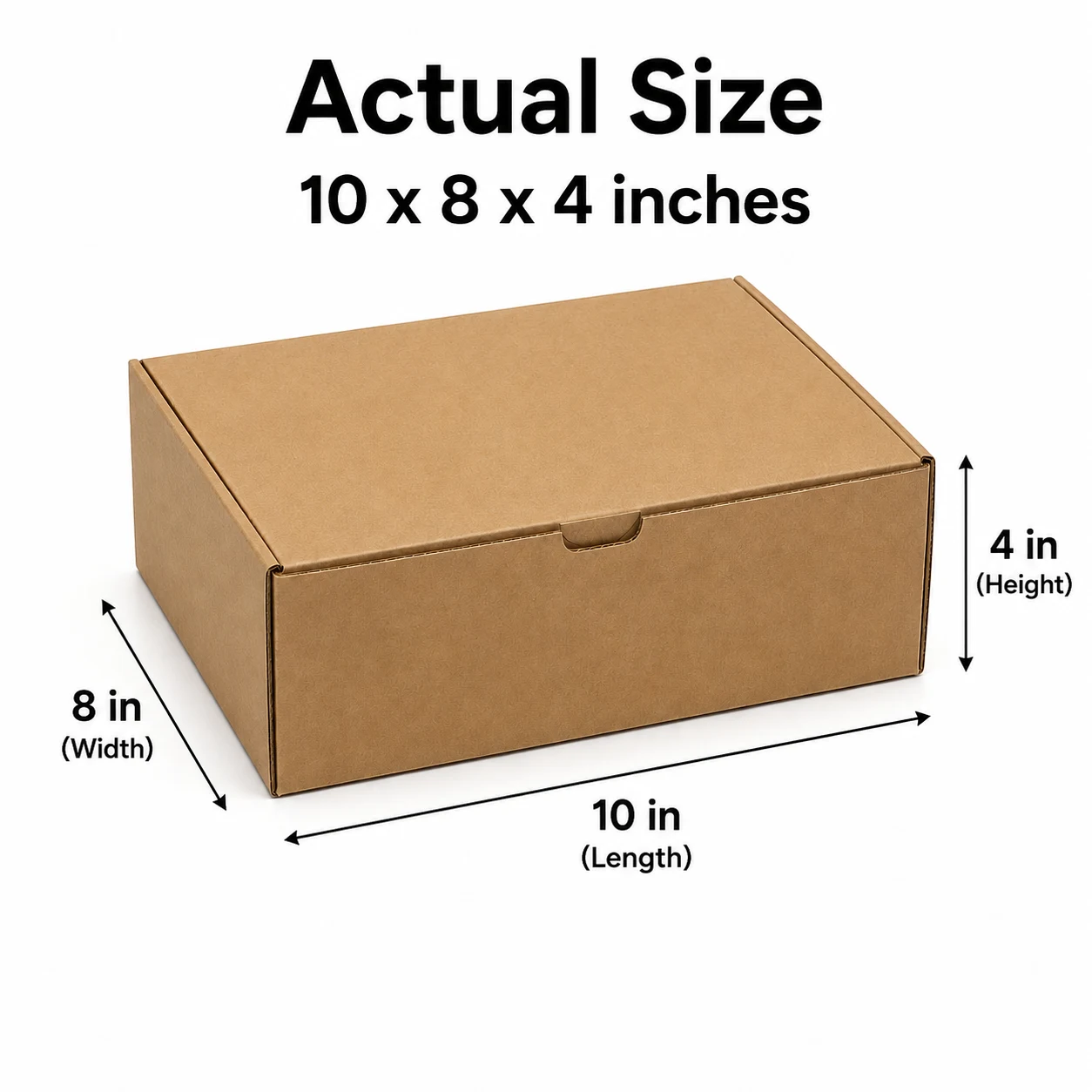
10x8x4 Inch Brown Corrugated Courier Box for E-commerce Shipping
Durable 10x8x4 inch brown corrugated courier box designed for e-commerce shipping, product delivery, storage, and secure packaging.
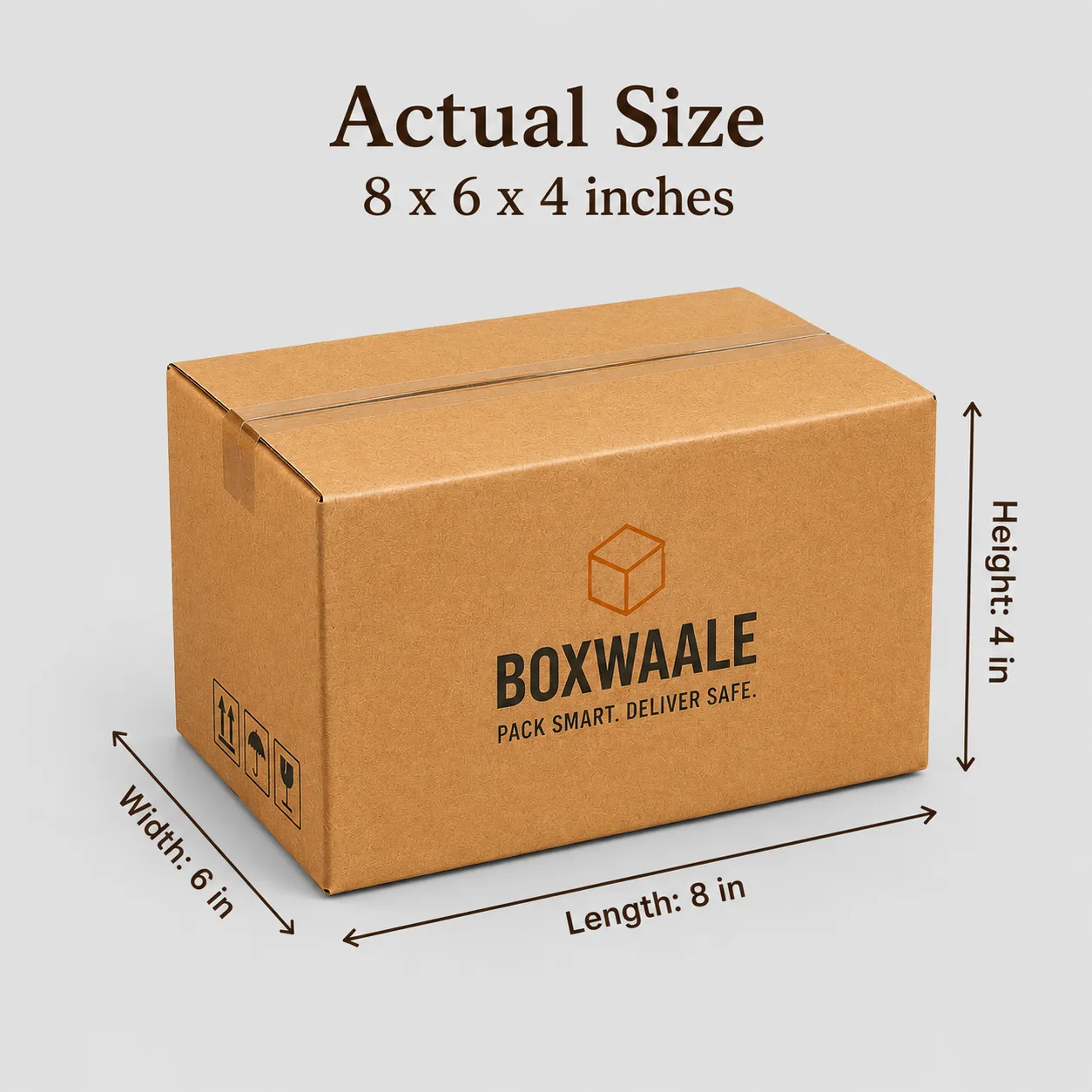
8x6x4 Inch Brown Corrugated Courier Box for E-commerce Shipping
Durable 8x6x4 inch brown corrugated courier box designed for e-commerce shipping, D2C delivery, retail product packing, and safe courier dispatch.
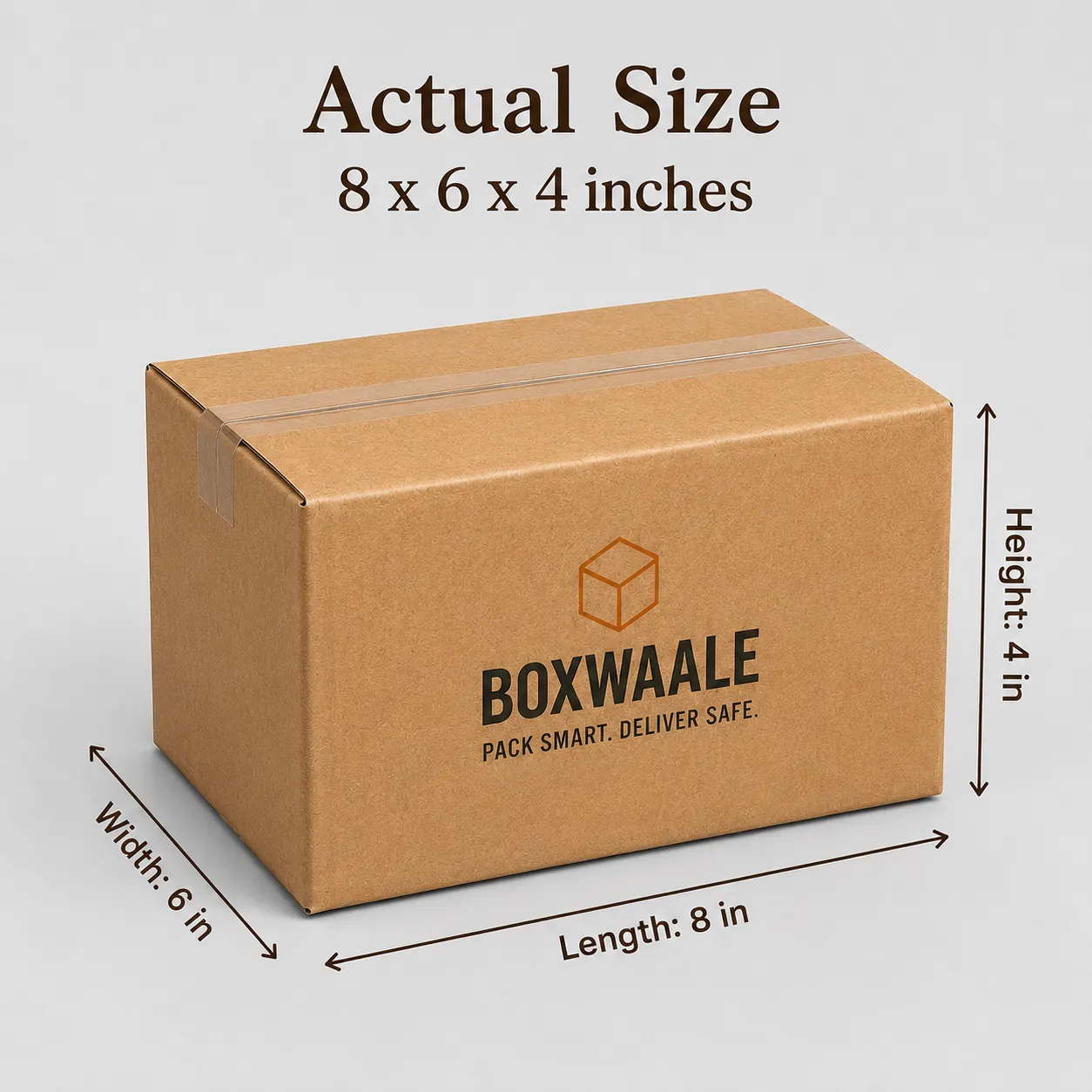
9x6x3 Inch Brown Corrugated Mailer Box for E-commerce Brands
Premium corrugated mailer box designed for e-commerce brands, subscription boxes, gifting, retail products, and custom branded packaging.
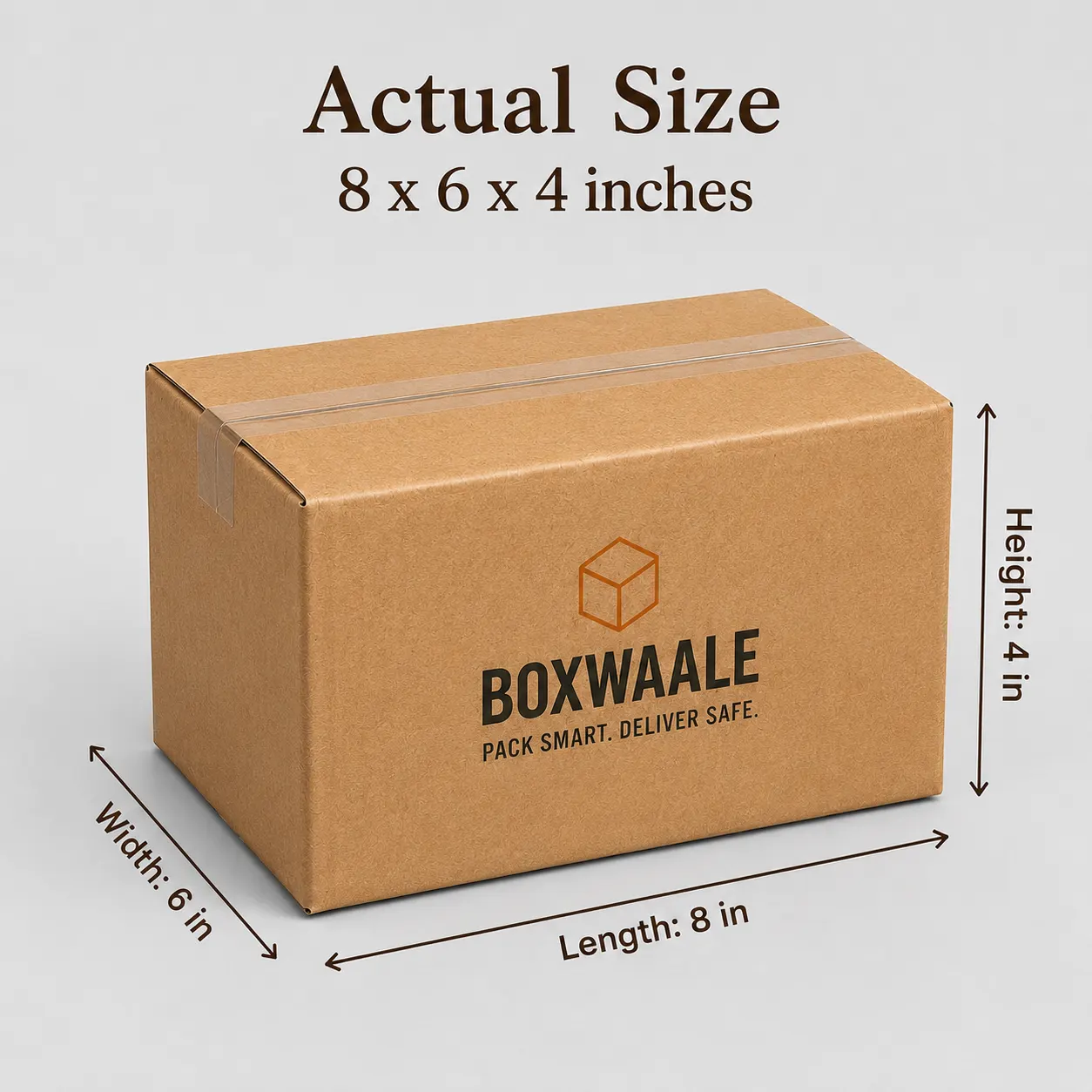
Custom Printed Brown Corrugated Courier Box with Logo
Custom printed brown corrugated courier box with logo designed for online sellers, D2C brands, retail businesses, and branded product delivery.
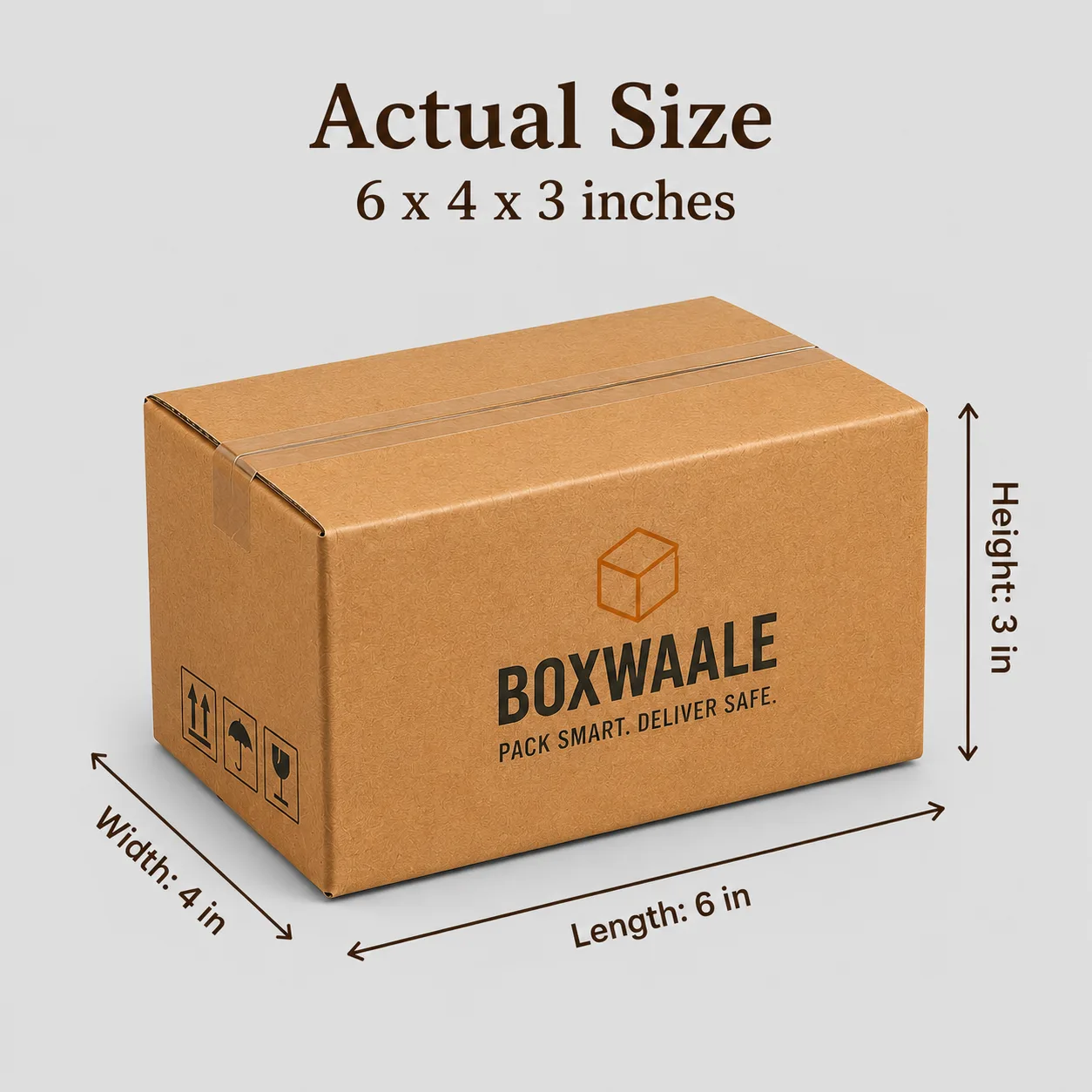
6x4x3 Inch Small Brown Corrugated Courier Box for Jewellery, Cosmetics & Accessories
Compact 6x4x3 inch brown corrugated small courier box designed for jewellery, cosmetics, mobile accessories, samples, and small product shipping.
Related Buying Guides
10x8x4 Inch Brown Corrugated Courier Box for E-commerce Shipping – Complete Guide
Read guide
Why Custom Printed Boxes Help Your Brand Look More Professional
Read guide
Best Packaging Boxes for E-commerce Sellers and D2C Brands
Read guide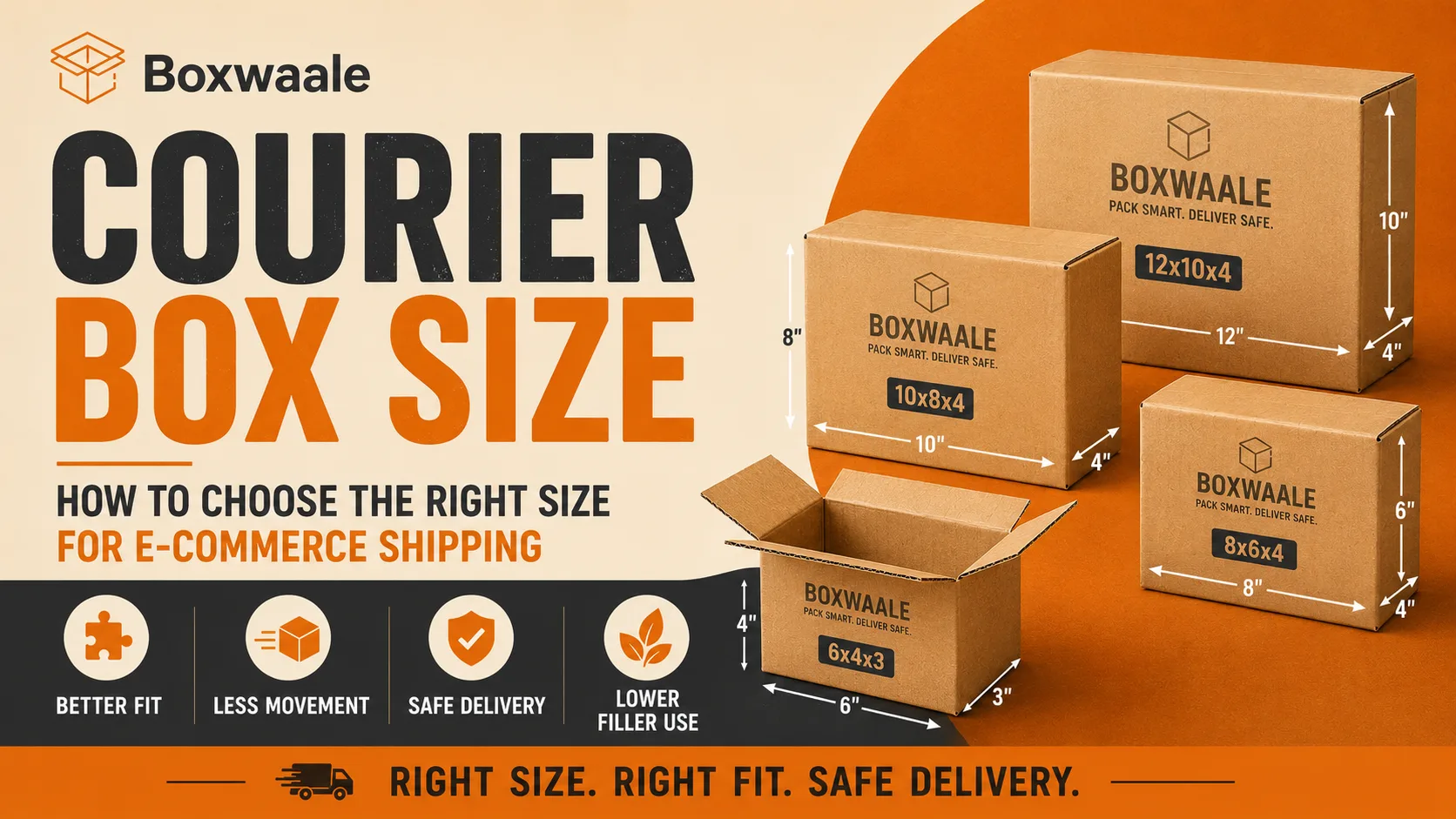
How to Choose the Right Courier Box Size for E-commerce Shipping
Read guide
Custom Courier Boxes with Logo: Why Online Sellers Should Use Branded Packaging
Read guide