
Custom Mailer Boxes: Why This Packaging Style Is Leading 2026 Trends
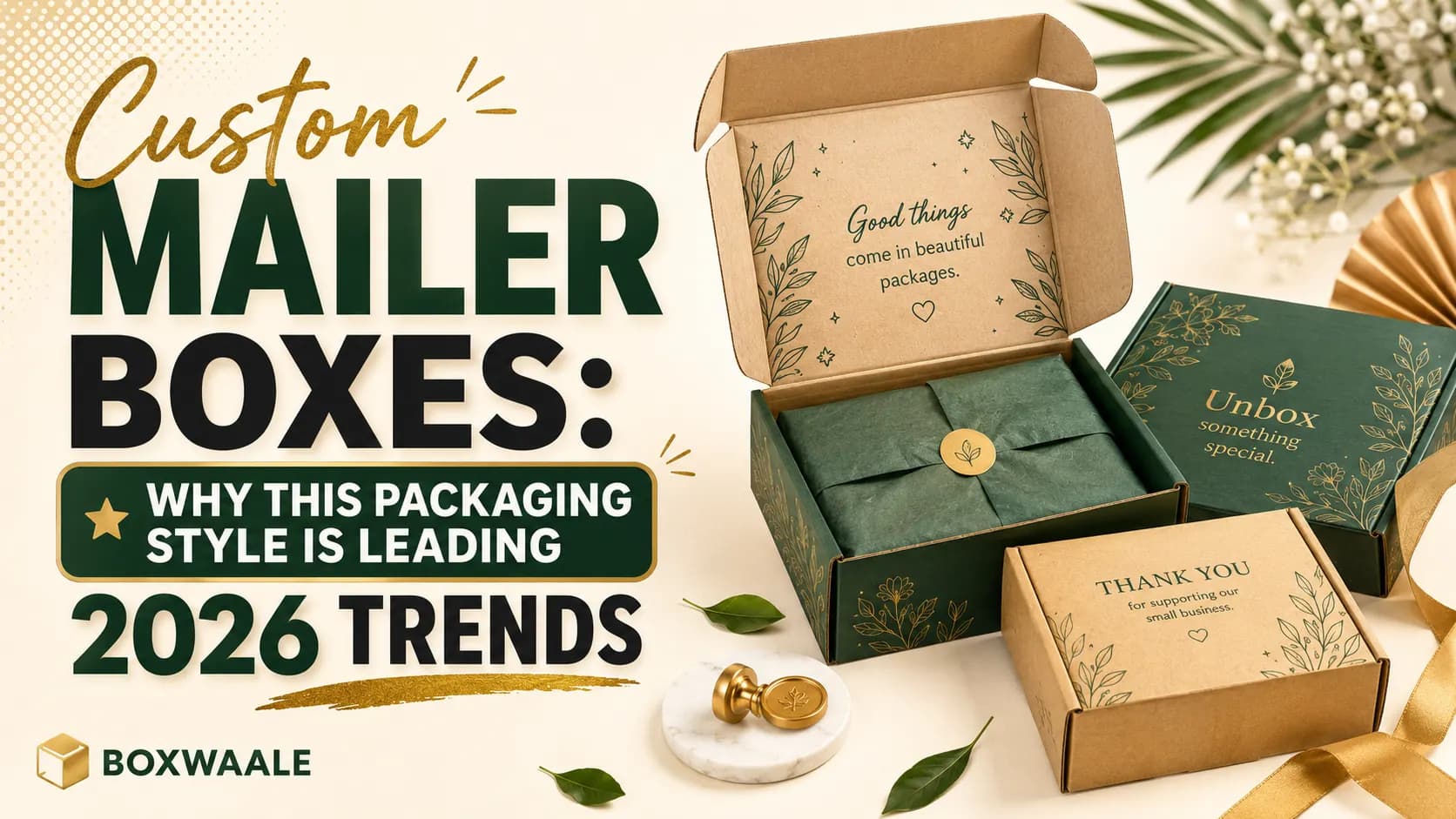
Custom mailer boxes are replacing plain shipping cartons across D2C brands in 2026. See what defines a mailer box, why demand is rising, and real GSM, ply and cost trade-offs.
Key Takeaways
- Mailer boxes differ from standard shipping cartons in construction — a snug-fit design reduces or eliminates the need for extra void fill.
- Unboxing and social sharing are driving D2C brands toward printed mailer boxes over plain courier cartons in 2026.
- Rigid mailer boxes (800-1500+ GSM chipboard) suit premium in-hand unboxing; corrugated mailers suit shipping durability at lower cost.
- Short-run digital printing has lowered the cost barrier for small brands to order custom-printed mailer boxes.
- Box size still affects the courier bill through dimensional weight, so mailer design should balance branding with right-sizing.
Custom Mailer Boxes: Why This Packaging Style Is Leading 2026 Trends
Table of Contents
Ask five D2C sellers what a "mailer box" is and you will likely get five different answers — some mean a plain brown shipping carton, others mean a printed, snug-fit box designed to double up as unboxing packaging. This article separates the two, explains why mailer-style boxes are becoming the default for online brands going into 2026, and covers the practical GSM, ply and cost questions a buyer actually needs answered before ordering.
What Actually Makes a Box a "Mailer Box"
A plain shipping carton — technically a Regular Slotted Carton (RSC) — is built from a standard stock size, has simple flaps on top and bottom, and is sealed shut with tape. It is not designed to be seen; it is designed to survive transit and get discarded. A mailer box is a different construction: usually a one-piece fold with a tuck-in flap or a separate lid-and-base, sized close to the product's actual dimensions rather than picked from a generic size chart, and printed on the outside — often the inside too — so the box itself becomes part of the brand experience the moment the customer opens it.
There are two broad categories worth knowing before you get a quote. Rigid mailer boxes use dense, non-fluted chipboard, typically in the 800–1500+ GSM range and 1.5–3mm thick, wrapped in printed paper — think of the material used for a hardcover book spine. They feel premium and are common for jewellery, electronics accessories and gifting SKUs, but the board is heavier and the cost per box is higher. Corrugated mailer boxes, by contrast, use a fluted medium sandwiched between liner sheets — the same basic construction as a regular carton, just die-cut and printed as a mailer shape. For most Indian D2C sellers shipping apparel, cosmetics, books, accessories and small home goods, a printed corrugated mailer is the more common and more cost-effective choice; rigid boxes tend to get reserved for a small subset of premium or gifting SKUs rather than the full catalogue.
Why Demand for Mailer Boxes Is Rising in 2026
The clearest driver is unboxing behaviour. Reports tracking online shopper habits put the share of consumers who post their unboxing experience on social media somewhere between 40% and 52%, rising further among Gen Z and millennial shoppers, and one widely cited figure suggests each share reaches an average of roughly 150 followers. More tellingly, over 65% of shoppers say they are more likely to photograph or share a product if it arrives in packaging that feels unique or gift-like — a plain taped-shut carton rarely earns that reaction, while a mailer box designed to open cleanly and reveal branding often does.
Two specific tactics are showing up repeatedly in 2025–2026 packaging coverage. The first is "inside printing" — putting a message, pattern or thank-you note on the interior flap so the brand stays visible for the full duration of an unboxing video rather than only on the exterior. The second is short-run digital customization: digital printing now lets a brand order 50–100 custom-printed mailers at a quality comparable to a 10,000-unit offset run, which matters a great deal for smaller D2C brands and new SKUs that previously could not justify a bulk print minimum order quantity.
The underlying business reason is structural, not just aesthetic. D2C brands don't have a retail shelf to compete on, so the box arriving at someone's door is often the first and only physical brand touchpoint before the product itself is even seen. Brands that have invested in custom packaging report a meaningful lift in social media mentions as a result — which is a large part of why mailer-style boxes have moved from a "nice to have" for premium brands to something mid-market D2C sellers are budgeting for as a standard line item.
GSM, Ply and Cost: What a Mailer Box Costs Over a Plain Carton
Most corrugated mailer boxes for light-to-medium products — apparel, cosmetics, books, small accessories — are built on single-wall (3-ply) board, typically combining liners in the 150–250 GSM range depending on product weight and how much stacking or courier handling the box will face. Heavier or bulkier products (small appliances, footwear, multi-item kits) sometimes move up to double-wall (5-ply) construction for extra compression strength, though this adds both cost and box weight, which matters for courier billing.
The price gap between a mailer box and a plain courier carton usually comes from three things, not the raw board itself: precision die-cutting for a one-piece fold (versus simple slotting), print complexity (single-colour exterior stamp versus multi-colour exterior-plus-interior printing), and any lock or glue mechanism used to hold the shape without tape. Many sellers find the premium over a plain brown box lands somewhere in the range of a modest markup for a simple single-colour print, rising as print coverage, colours and interior printing are added — it is worth getting your supplier to break the quote into board cost, die cost and print cost separately rather than accepting one bundled number, since the die is often a one-time cost that amortises across reorders. Our detailed breakdown on mailer box vs courier box, which one should your brand use goes further into when the extra spend is justified and when it isn't.
- Single-wall 3-ply, 150–250 GSM combined liners — typical for apparel, cosmetics, books, small accessories
- Double-wall 5-ply — for heavier or bulkier items needing extra compression strength
- Print cost scales with colours and whether the interior is printed, not just the exterior
- Die-cut tooling is usually a one-time cost, not repeated on every reorder
Snug-Fit Mailers and Dimensional Weight
Indian couriers — Delhivery, Blue Dart, DTDC, Ekart and others — bill larger shipments on volumetric (dimensional) weight, calculated roughly as (Length × Width × Height in cm) ÷ 5000, and charge whichever is higher between that figure and the actual weight. A box that is oversized for its contents inflates this number for no reason. One commonly cited example: a garment weighing 0.4kg shipped in a close-fitting 30 × 25 × 2cm mailer works out to a volumetric weight of roughly 0.3kg, while the same product in a loosely sized 30 × 25 × 8cm box jumps to roughly 1.2kg of volumetric weight — a difference that can add ₹35–55 per shipment on a typical metro route, and more on longer routes or heavier surcharge slabs.
This is the quieter, less-talked-about reason mailer boxes are gaining ground alongside the unboxing trend: a snug-fit mailer sized close to the product needs little or no void fill — no air pillows, no oversized bubble wrap — because the flute structure and tight fit provide the cushioning a loose-fitting carton would otherwise need packed around the product. For brands shipping thousands of parcels a month, the dimensional-weight savings alone can offset a meaningful part of the extra print and die cost of moving to a custom mailer. If your product line ships as recurring monthly kits, our guide on choosing mailer boxes for subscription and monthly kits covers sizing for repeat, multi-item shipments specifically, and if branding is the main driver for your switch, see custom printed boxes with logo, a complete guide for D2C brands for print and logo placement specifics.
How Boxwaale Helps
Boxwaale manufactures corrugated boxes out of Delhi and ships pan-India through courier and logistics partners, so sellers outside Delhi work with us the same way local sellers do — through sampling, approval and dispatch, without needing a local factory visit. If you're evaluating a move from a plain courier carton to a custom mailer, we can quote both single-wall and double-wall constructions, walk you through GSM options for your product weight, and separate out board, die and print costs so you know exactly what you're paying for before committing to a production run.
Frequently Asked Questions
Related Packaging Guide
Planning a packaging order?
Turn this guidance into a box specification
Share the product dimensions, packed weight, quantity, printing requirement and delivery postcode. Boxwaale will help narrow down the appropriate size, ply and board specification before quoting.
Frequently Asked Questions
Related Products
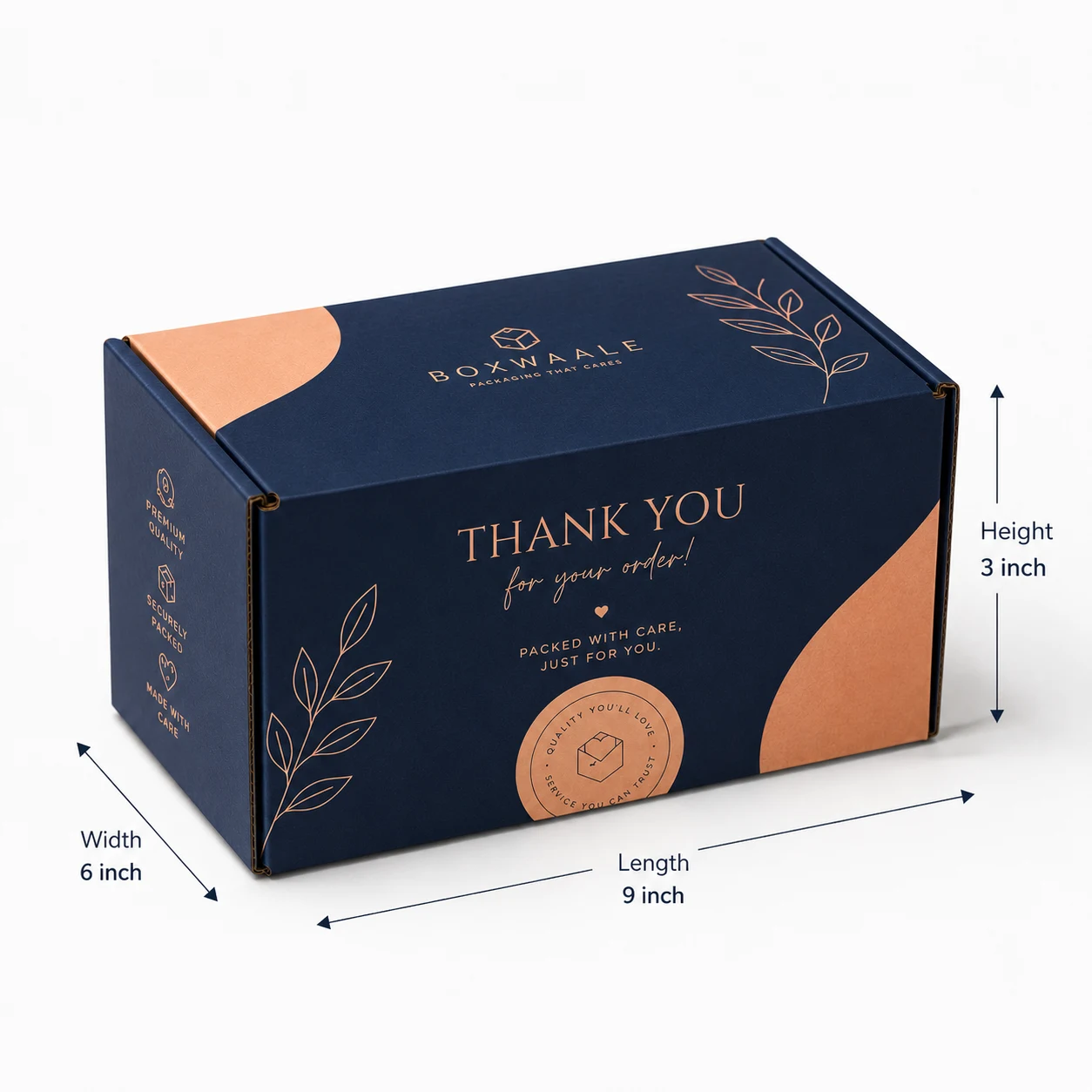
9x6x3 Inch Custom Printed Mailer Box for E-Commerce Sellers
Premium 9x6x3 inch printed white corrugated mailer box designed for e-commerce sellers, D2C brands, small businesses, and courier shipping.
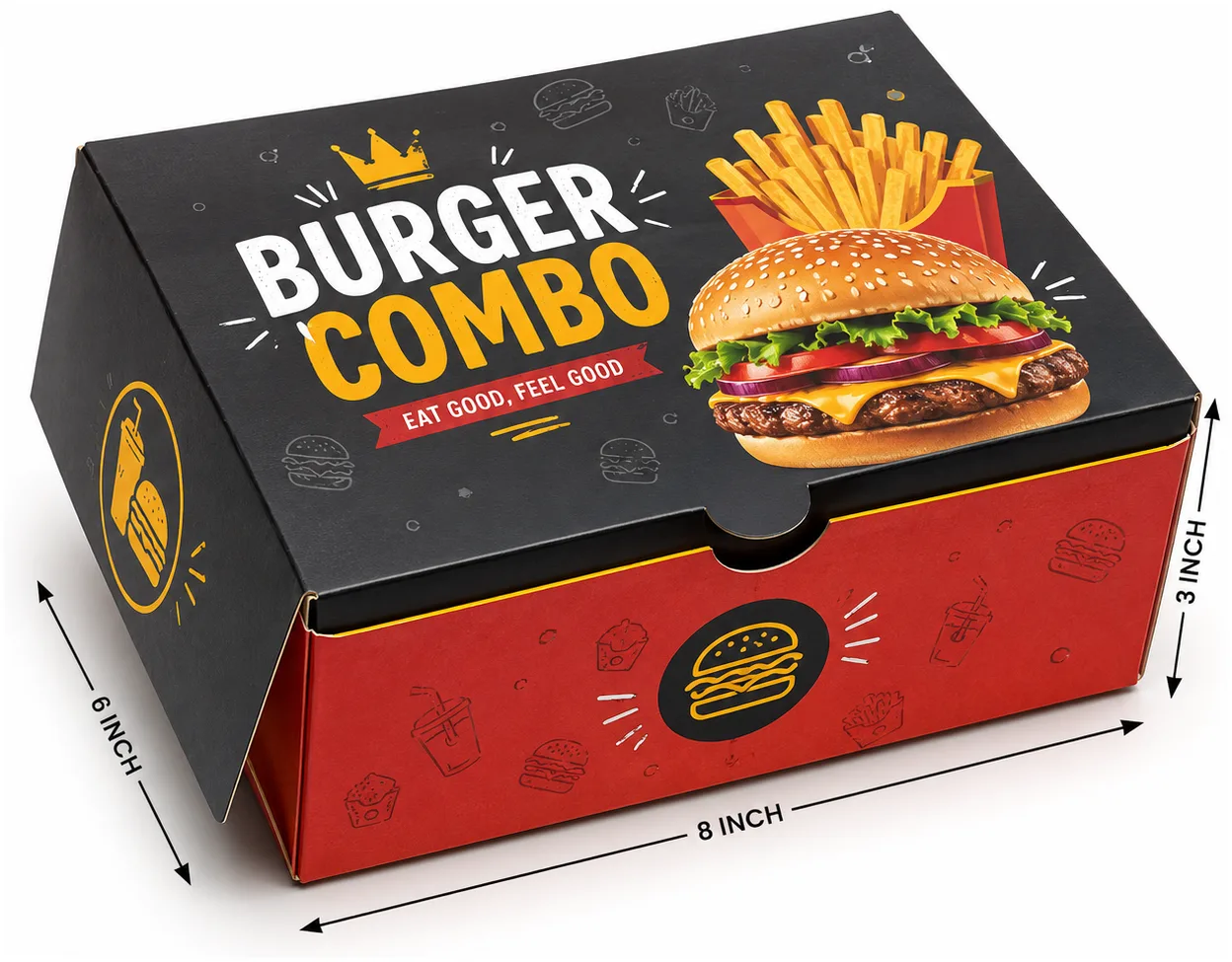
8x6x3 Inch White E-commerce Mailer Box for E-Commerce Sellers
Premium 8x6x3 inch white corrugated mailer box designed for e-commerce sellers, D2C brands, small businesses, and courier shipping.
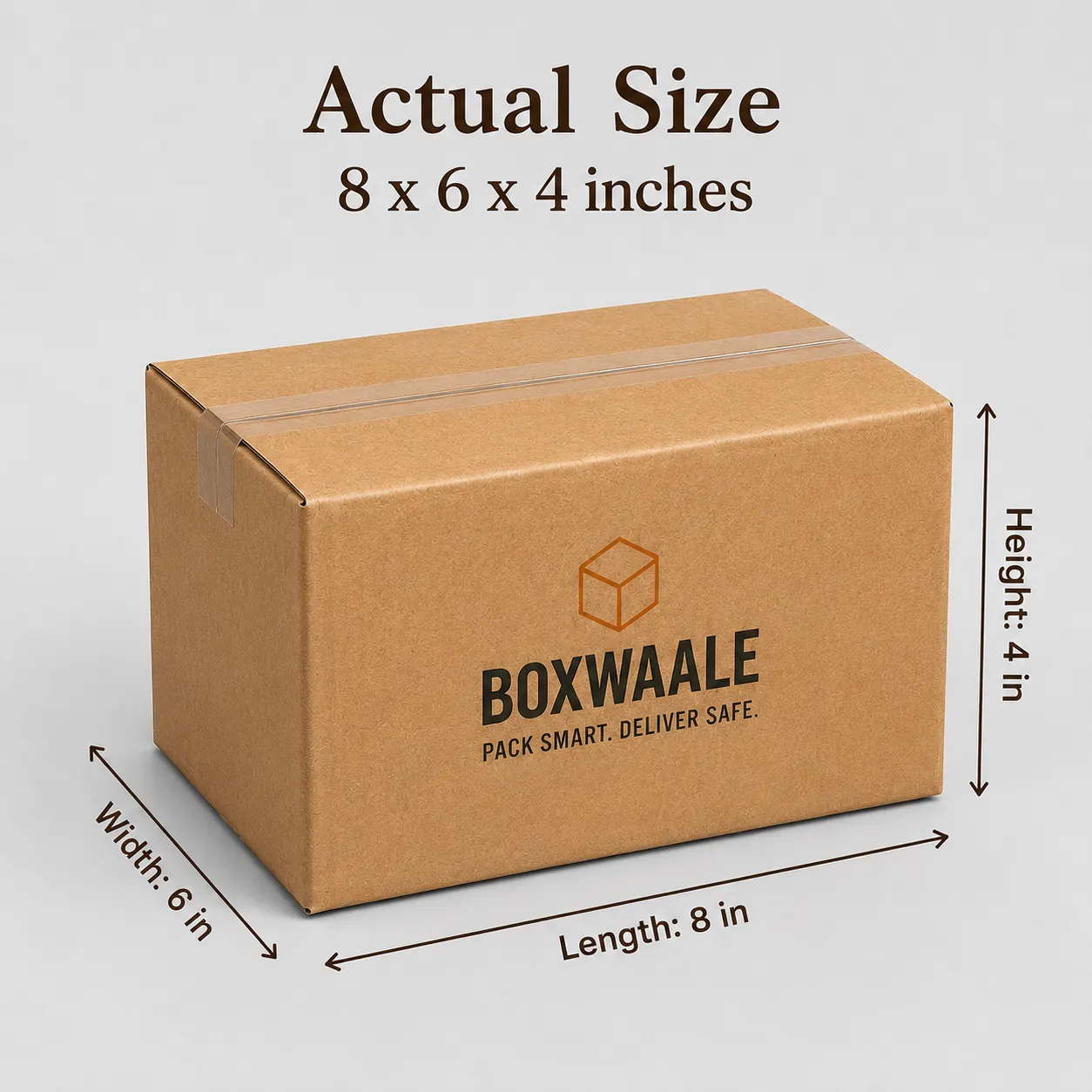
9x6x3 Inch Brown Corrugated Mailer Box for E-commerce Brands
Premium corrugated mailer box designed for e-commerce brands, subscription boxes, gifting, retail products, and custom branded packaging.
Related Buying Guides
Custom Printed Boxes with Logo: Complete Guide for D2C Brands
Read guide
Mailer Box vs Courier Box: Which One Should Your Brand Use?
Read guide
Subscription Box Packaging: How to Choose Mailer Boxes for Monthly Kits
Read guide
Jewellery Mailer Boxes: Small Packaging Guide for Rings, Earrings and Accessories
Read guide