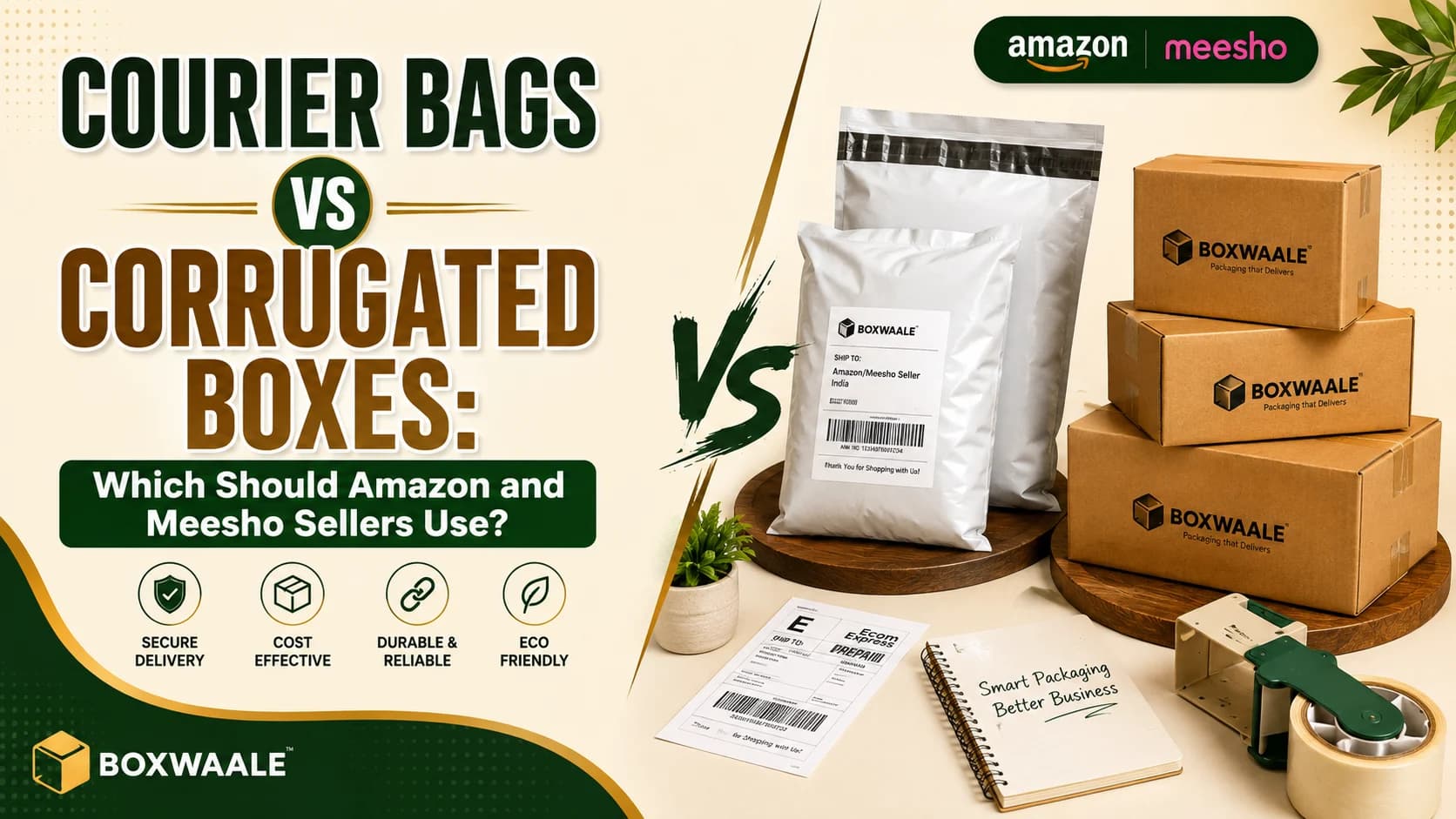
Courier Bags vs Corrugated Boxes: Which Should Amazon and Meesho Sellers Use?
A practical decision framework for Amazon, Flipkart and Meesho sellers choosing between poly courier bags and corrugated boxes, covering real cost, damage risk and marketplace rules.
Key Takeaways
- Poly courier bags are cheaper and fine for soft, uncrushable goods like apparel; corrugated boxes are necessary for anything fragile or shaped.
- Amazon, Flipkart and Meesho seller expectations differ by category — check marketplace-specific packaging guidance before defaulting to the cheaper option.
- The wrong packaging choice tends to show up later as a higher return/damage rate, which usually costs more than the box savings.
- Poly bags are plastic and fall under India's tightening single-use plastic and EPR rules; corrugated is paper-based.
- This is a per-category decision, not a blanket 'always use one or the other' rule.
Courier Bags vs Corrugated Boxes: Which Should Amazon and Meesho Sellers Use?
Table of Contents
- What's Actually Different Between a Poly Courier Bag and a Corrugated Box
- The Real Cost Difference — Per Piece and Per Shipment
- When a Poly Bag Is Genuinely Fine (and When It Isn't)
- What Amazon, Flipkart and Meesho Actually Expect From Sellers
- Damage Rates, Returns and the Plastic Question
- How Boxwaale Helps
- Frequently Asked Questions
Every seller shipping through Amazon, Flipkart or Meesho eventually has to decide whether a poly courier bag is enough for an order or whether it needs to go out in a corrugated box. The two aren't interchangeable — picking the wrong one either wastes money on unnecessary packaging or invites damage claims and returns. This guide walks through the real cost difference, where each option genuinely works, what the marketplaces actually expect by category, and how the choice shows up in your damage and return numbers.
What's Actually Different Between a Poly Courier Bag and a Corrugated Box
A poly courier bag is a sealed LDPE plastic film pouch, typically in the 40–60 micron range, with a self-adhesive tamper-evident strip along the opening. It's water-resistant, dust-resistant and folds flat, and an empty bag usually weighs only 15–20 grams, so it adds almost nothing to the shipment's chargeable weight. A corrugated box, on the other hand, is built from paper — a fluted layer sandwiched between one or more flat liners, commonly supplied as 3-ply for lighter items and 5-ply for heavier or fragile ones. Because it holds a rigid shape on its own, it resists crushing when boxes are stacked in a delivery van or warehouse bin, something a poly bag simply cannot do. If you're also weighing this against branded mailer boxes specifically, our mailer box vs courier box comparison covers that related decision in more detail.
The Real Cost Difference — Per Piece and Per Shipment
Plain poly mailer bags typically run somewhere around Rs 1.30–1.40 per piece when bought in bulk, with printed or branded versions starting from roughly Rs 4–4.25 per piece. Corrugated boxes cost more per unit because of the paper weight and multi-ply construction, and that price climbs further with box size, ply count and board GSM. But packaging cost in isolation is the wrong number to optimise. A poly bag weighs almost nothing, so it barely touches your chargeable weight on the courier invoice, while a bulky, oversized corrugated box can add real volumetric weight to a shipment that didn't need it. The number that actually matters is packaging cost plus damage-and-return cost together — a cheaper bag that leads to a crushed item and a refunded order usually costs more overall than a slightly pricier box that gets the item there intact the first time.
It also helps to think about this at the ply level rather than as one generic box price. A basic 3-ply box sized for a single small item typically costs a modest amount more per piece than a plain poly bag of comparable size. A 5-ply box built for a heavier or fragile product costs more again, because of the extra liner and higher board GSM — but that's also exactly the category where a poly bag was never a realistic substitute in the first place, so the comparison isn't really apples to apples once you factor in what the product actually needs to survive transit.
When a Poly Bag Is Genuinely Fine (and When It Isn't)
A poly bag is a reasonable, often smart choice for goods that can be folded or compressed without damage and don't hold a fixed shape:
- Apparel — t-shirts, shirts, tops, innerwear, kurtas
- Soft textiles and linens
- Footwear that's already boxed by the manufacturer, with the poly bag used only as the outer wrap
- Soft accessories like scarves, caps and bags with no rigid internal structure
Many experienced sellers also land on a hybrid approach rather than a strict either/or: the product ships in its own manufacturer box or a smaller inner box, which then goes inside a poly bag as the outer layer for a courier-friendly, water-resistant finish. This works well when the inner packaging already provides the structural protection and the poly bag is only doing the job of a tamper-evident, weatherproof wrapper — but it isn't a substitute for a proper corrugated outer on genuinely fragile or heavy items.
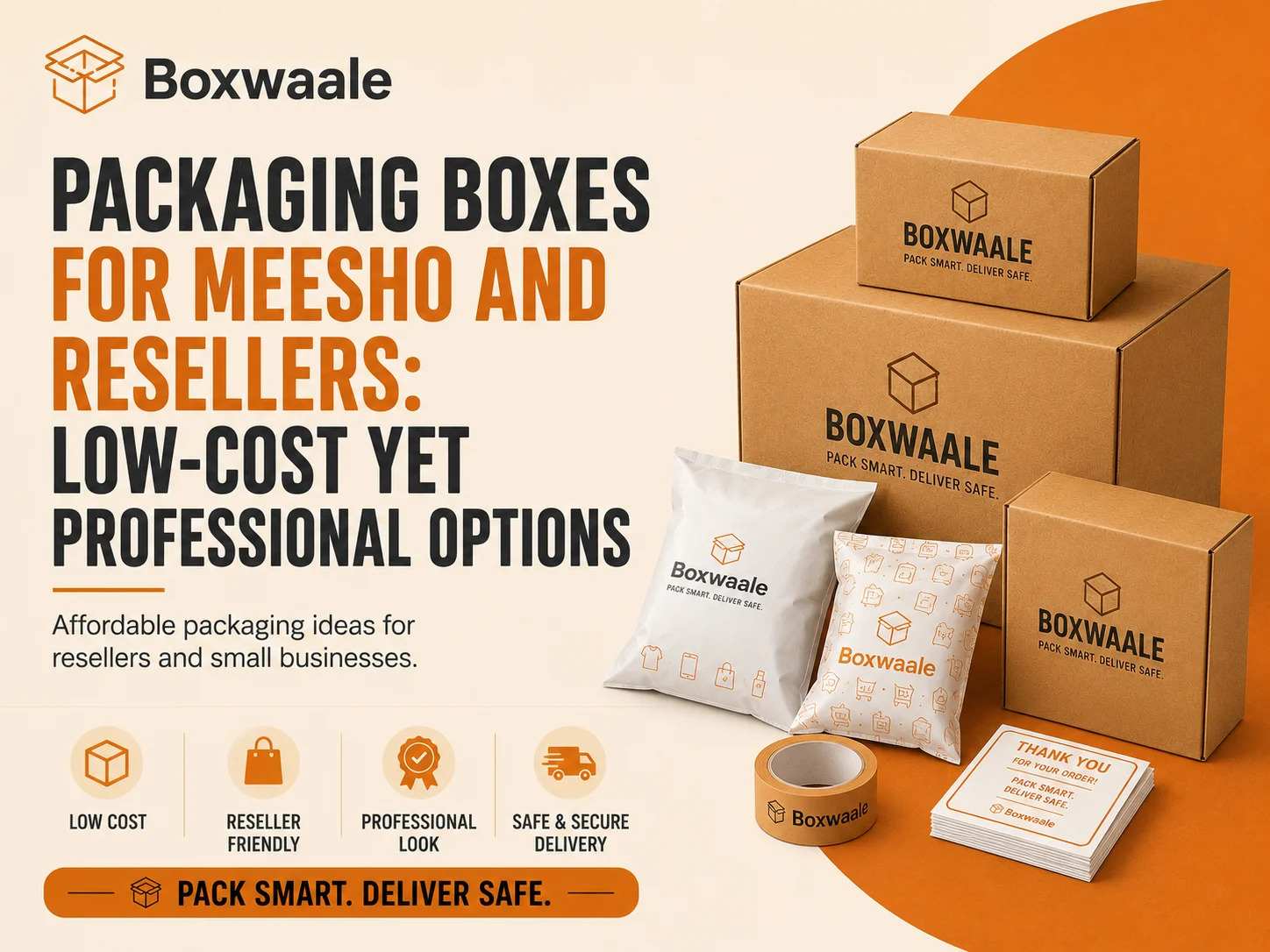
A corrugated box becomes necessary once the product has any of the following: a fixed shape or corners, glass or ceramic components, electronics, cosmetics in glass or rigid plastic bottles, a manufacturer's retail box that itself needs outer protection, or multiple items in one order that could shift and collide in transit. Resellers juggling a mix of categories often find it easier to standardise this decision once rather than deciding order by order — our guide on low-cost, professional packaging options for Meesho and resellers goes into this by category.
What Amazon, Flipkart and Meesho Actually Expect From Sellers
Amazon's seller packaging guidance calls for sturdy, new corrugated boxes — 3-ply as a minimum, 5-ply for heavier or fragile items — and generally reserves poly mailers for correctly-sized apparel rather than treating them as a default. Reused, weakened or damaged boxes aren't acceptable, since poor packaging drives up damage-related returns, and Amazon explicitly ties damage rates to seller performance metrics that affect things like buy box eligibility. Meesho works on a similar category split in practice: shipping label stickers are meant to go on corrugated boxes, not on poly bags, and apparel sellers commonly use transparent LDPE poly bags with a self-seal strip for exactly that reason, while non-apparel categories move to boxes. Flipkart follows a broadly comparable pattern. The practical takeaway is to check your specific category's packaging expectations on each marketplace's seller dashboard rather than defaulting to whichever packaging is cheaper across your whole catalogue — our roundup of packaging boxes for Amazon, Flipkart, Meesho and D2C sellers covers what tends to work well across these platforms.
Damage Rates, Returns and the Plastic Question
A poly bag offers no rigidity and very little impact protection, so fragile or rigid items shipped in one tend to show up with higher damage-related return rates — and on marketplaces that track seller-level damage metrics, that has knock-on effects for account health, not just the individual order. Damage-driven returns also tend to cost more than the refund itself once reverse logistics, restocking and lost selling days on that unit are counted, so a marginally more expensive box that meaningfully cuts damage on a fragile SKU often pays for itself within a small number of orders. There's also a growing plastic dimension to this choice. India's plastic waste rules mandate a minimum 120 micron thickness for carry bags, push QR/barcode traceability on plastic packaging, and set Extended Producer Responsibility recycled-content targets that ramp up through 2028–29 — pressure that's nudging some large platforms and sellers toward paper-based mailers or certified compostable PBAT/PLA courier bags as alternatives to standard LDPE. Corrugated board, being paper-based, slots directly into India's long-established waste-paper trade through kabadiwalas and recyclers, so it's inherently easier to keep out of landfill than plastic film. None of this makes poly bags the wrong choice for the categories they suit — for the right product they remain a genuinely efficient option — but it's a factor worth weighing alongside cost and damage protection rather than an afterthought.
How Boxwaale Helps
For sellers shipping a mix of apparel and non-apparel across Amazon, Flipkart and Meesho, Boxwaale supplies corrugated boxes in 3-ply and 5-ply, in stock and custom sizes, manufactured in Delhi and shipped across India. If most of your damage claims are coming from crushed corners or dented packaging rather than genuine product returns, that's usually a sign it's time to move that particular SKU from a poly bag into a right-sized corrugated box, rather than simply upgrading to a bigger bag or a bigger box across the board.
Frequently Asked Questions
Related Packaging Guide
Planning a packaging order?
Turn this guidance into a box specification
Share the product dimensions, packed weight, quantity, printing requirement and delivery postcode. Boxwaale will help narrow down the appropriate size, ply and board specification before quoting.
Frequently Asked Questions
Related Products
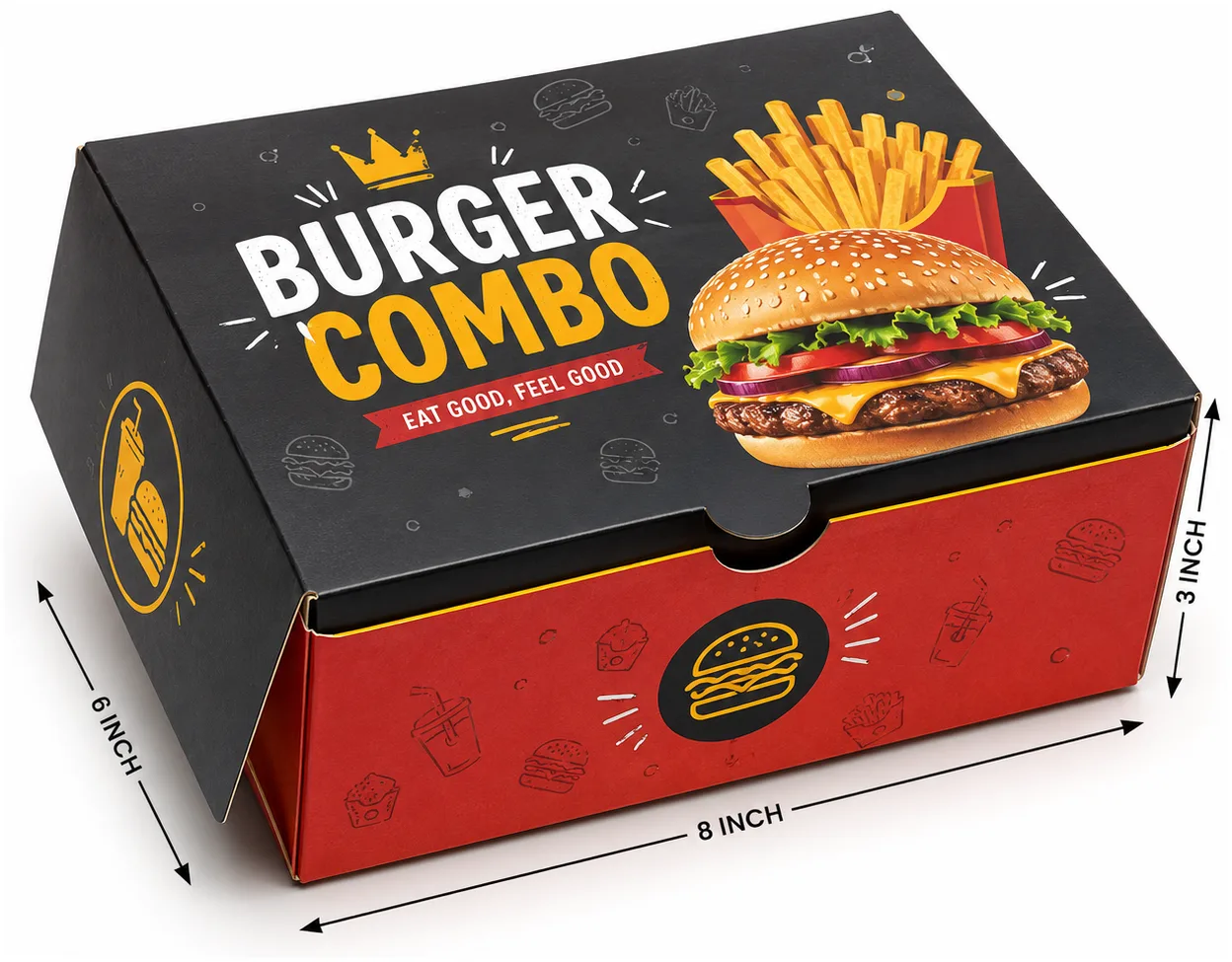
10x8x4 Inch White Courier Box for E-Commerce Sellers
Premium 10x8x4 inch white corrugated courier box designed for e-commerce sellers, retailers, warehouses, and logistics.
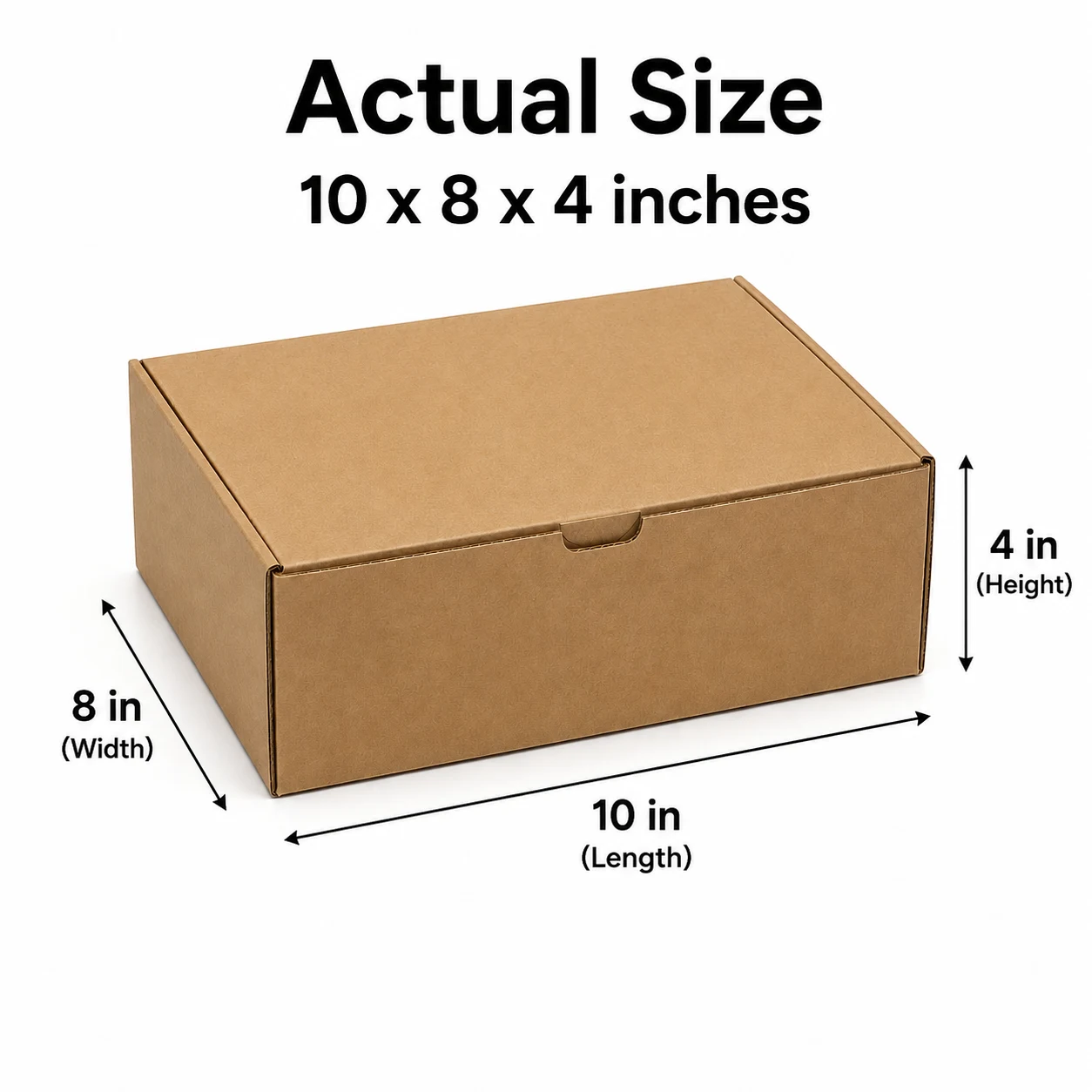
10x8x4 Inch Brown Corrugated Courier Box for E-commerce Shipping
Durable 10x8x4 inch brown corrugated courier box designed for e-commerce shipping, product delivery, storage, and secure packaging.
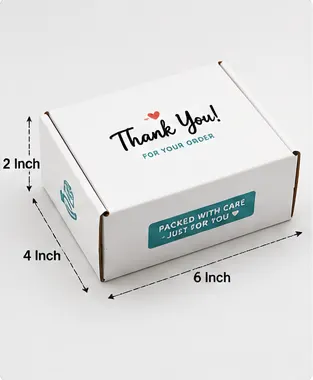
6x4x2 Inch White Corrugated Mailer Box for E-Commerce Sellers
Premium 6x4x2 inch white corrugated mailer box designed for e-commerce sellers, D2C brands, small businesses, and courier shipping.